


GCSE English past papers don’t work the same way as past papers in maths or science. There’s no formula to memorise, no method to repeat. Each question asks your child to read, think, and write something original, which means doing paper after paper without a clear strategy often produces little improvement. The students who do well in GCSE English aren’t practising more. They’re practising differently.
If your child has been working through past papers and the marks aren’t shifting, here’s what’s likely going wrong and what to do about it.
The real reason English marks don’t shift
Most students re-read texts or write essays without checking whether they are hitting the mark scheme requirements. The repetition feels productive. The technique is not improving.
Is Your Child Stuck at the Same English Grade?
Our GCSE English tutors identify exactly what’s keeping your child in one mark band and show them how to move up.
Why do GCSE English past papers feel different from other subjects?
In most subjects, past papers are predictable. The same types of questions appear year after year, and practising them builds familiarity with the method. English Language and English Literature are less formulaic, which makes students, and parents, feel like revision doesn’t quite work.
But the truth is that GCSE English papers are more predictable than they appear. The question types repeat reliably. AQA Paper 1 will always ask for four things: information retrieval, language analysis, structural analysis, and an evaluative response. Paper 2 follows its own consistent pattern. Edexcel and OCR have their own structures, but the principle holds. Once your child knows what each question is really asking, they can prepare for it properly.
GCSE English Language Past Papers by Exam Board
Find past papers and mark schemes for your child’s exam board:
How should you use GCSE English past papers properly?
Learn the question types, not just the texts
Before your child attempts any past paper, they should understand the anatomy of the exam. How many marks is each question worth? What skill is each question testing? How long should they spend on each one? Once these basics are internalised, your child stops being surprised by the paper and starts being strategic.
For English Literature, knowing which texts your child is studying and which questions apply to them matters enormously. There’s no point practising a question on a text they haven’t studied, but practising the style of response (comparing themes, analysing a key extract, writing about context) transfers across texts.
Read examiner reports, not just mark schemes
Mark schemes for English can feel vague, phrases like “perceptive analysis” or “judicious use of textual references” don’t always tell a student what to do. Examiner reports, published by every exam board after each sitting, fill that gap. They explain in plain language what the best answers did, what the common mistakes were, and where students typically lost marks. They’re free to download from your exam board’s website, and they’re one of the most underused revision tools available.
Practise one question type at a time
Rather than doing a full paper in one sitting, isolate individual questions. Spend a session only on the language analysis question (AQA Q2 or equivalent). Do three or four of them from different years. Compare your child’s answers against the mark scheme each time. This builds the specific skill that question tests, and it’s far more useful than doing one of everything and moving on.
Write under time pressure only when the technique is solid
Timing is a genuine issue in GCSE English, many students run out of time on the writing section because they spent too long on the reading questions. But practising under timed conditions before the technique is in place just cements bad habits. Your child should first get comfortable producing strong answers without a clock, and then introduce timing in the last few weeks before the exam.
Has your child been stuck at the same grade for a while?
A tutor can read their answers and show them precisely what the examiner is looking for and how to close the gap.
Book a LessonWhen past papers aren’t enough
English is the subject where students most often feel they “just can’t improve.” They read the feedback, try again, and get a similar mark. The reason is usually that the gap isn’t in effort or knowledge, it’s in analytical technique. Your child might understand the text perfectly but not know how to structure a response that hits the top mark band, or they might write fluently but miss the specific skill the question is testing.
This is where a GCSE English tutor makes the biggest difference. A good tutor reads your child’s work and identifies exactly what’s keeping them in one mark band rather than the next, whether that’s weak topic sentences, underdeveloped analysis of language, or a tendency to narrate rather than argue in Literature responses. It’s precise, targeted feedback that past papers alone can’t provide.
Meet some of our GCSE English tutors

Laurie
Laurie Churchman read English Language and Literature at the University of Oxford (Queen’s College), graduating with a rare Double First and winning the J.A. Scott Prize for the highest finals mark in English or History. Alongside tutoring, Laurie works as a foreign correspondent for Agence France-Presse, so your child is learning from someone who writes professionally every day. With over 500 hours of tutoring across more than a decade, Laurie is particularly strong at helping students move from competent answers to the kind of precise, analytical writing that lands in the top mark bands. Previous students have gone on to Oxford, Cambridge, Johns Hopkins, and Stanford.
George
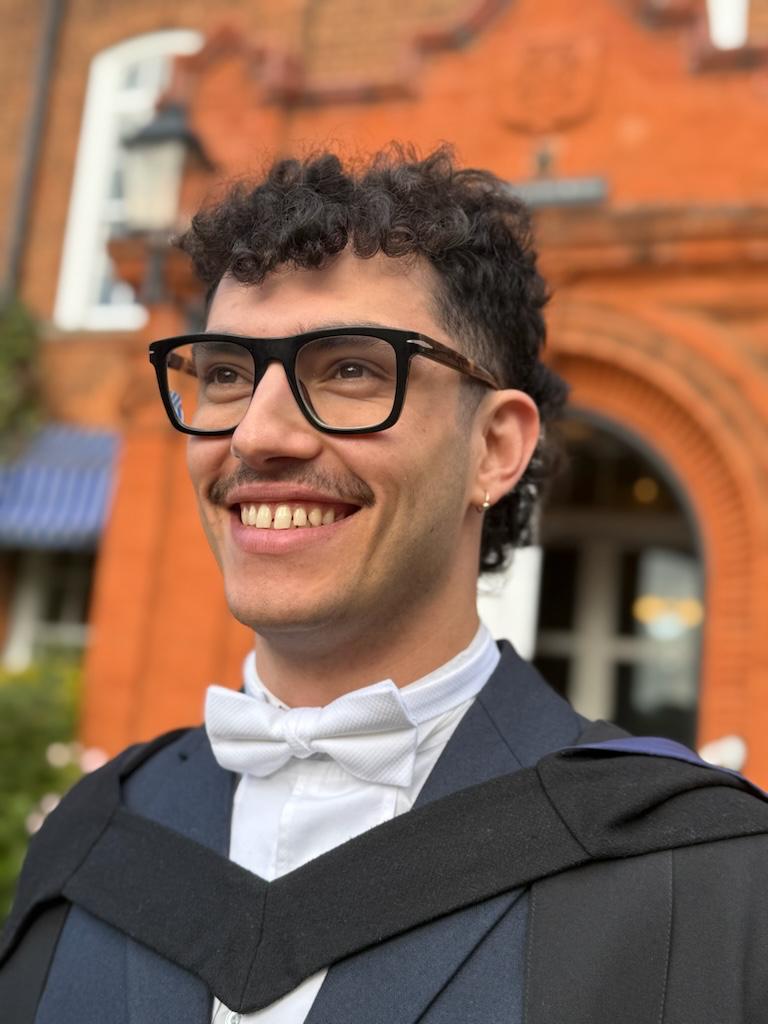
George holds an MPhil in Linguistics from the University of Cambridge (High Distinction) and a First in English Literature from Manchester, with over 500 hours of tutoring experience across English Language, Literature, and the humanities. George is a natural at helping students find their critical voice, he teaches them to argue rather than describe, which is the single biggest difference between a Grade 6 and a Grade 8 in Literature. He’s starting a PhD in Psycholinguistics at Cambridge in October and will continue tutoring alongside his research.

Louis
Louis graduated from Oxford with a First in Philosophy and French, and previously achieved top IB marks including 7s in Higher Level French, Philosophy, and Physics. With three years of tutoring experience across 13+, GCSE, and A Level, he is particularly strong at building students’ confidence in essay writing and critical thinking. His lessons are well-prepared, clearly structured, and tailored to each student’s pace, and he also supports Oxbridge applicants with personal statements, written work, and interview preparation.
Which GCSE English tutors can help your child write with more confidence?
If your child is putting in the revision hours but the English grades aren’t reflecting it, the right tutor can identify what’s holding them back and fix it. Get in touch and we’ll match your child with a specialist GCSE English tutor who knows exactly what the examiners are looking for.
Expert GCSE English Tutoring with Greenhill Academics
SPECIALIST GCSE ENGLISH TUTORS FROM OXFORD AND CAMBRIDGE
Our tutors read your child’s work and tell them exactly what the examiner wants to see. One-to-one support personalised to your child’s exam board, set texts, and current level.
Book a LessonFrequently asked questions
