
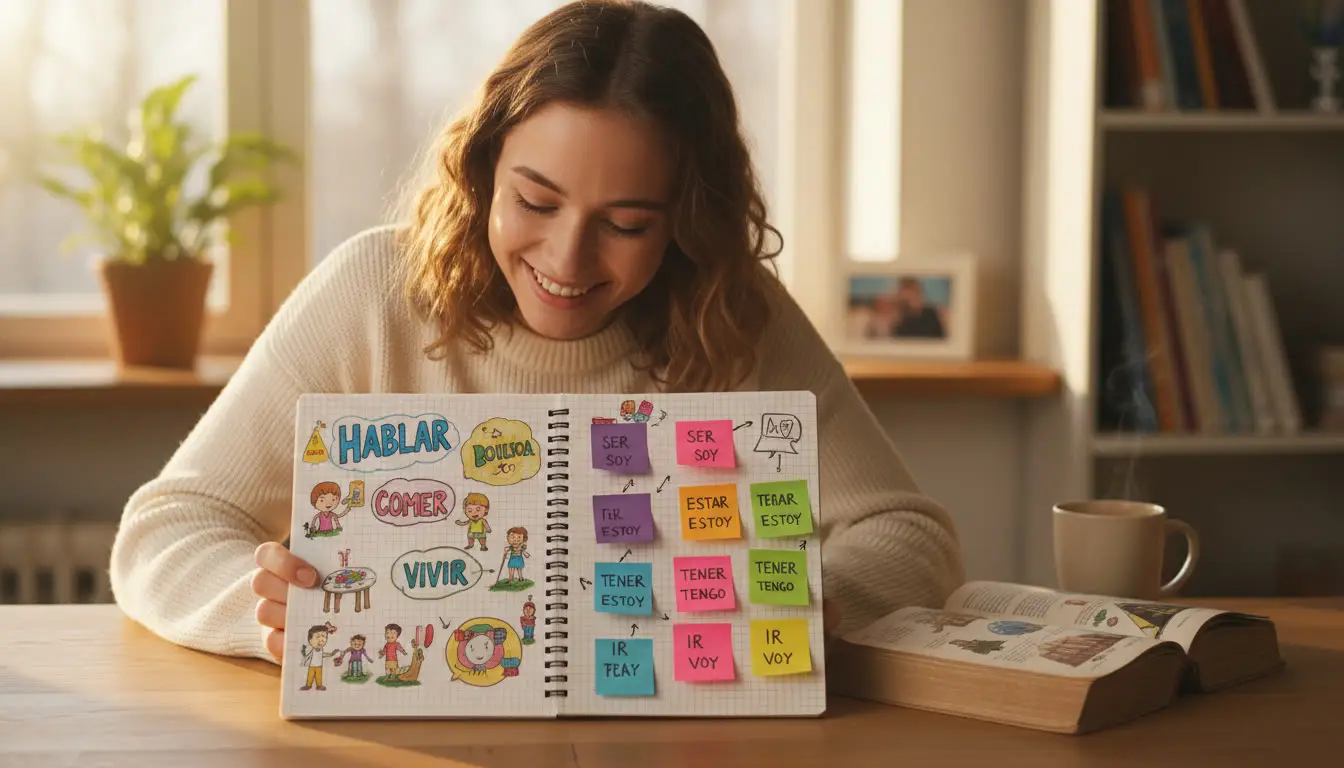

IB Spanish rewards consistency more than talent. Indeed, students who walk away with a 7 are rarely the most naturally gifted linguists. However, they are the ones who write to the mark scheme on Paper 1, listen actively in Paper 2, and walk into the Individual Oral with a structured plan rather than improvising on the day. The Spanish language part is the easier half. The exam technique is what most students underprepare.
This guide explains how to get a 7 in IB Spanish. Specifically, we cover the three pathways (Ab Initio, B SL, and B HL), the two written papers, the Individual Oral assessment, and the five course themes. Whether your child is targeting modern languages at Oxford, business at LSE, or international relations elsewhere, the strategies below apply.
Where the 7 actually comes from
Most IB Spanish students at the 5-to-6 boundary have the vocabulary. What separates them from a 7 is technique. Specifically, that means writing in the correct text type on Paper 1, scanning audio with confidence on Paper 2, and structuring the Individual Oral around the photo and theme. The lift comes from precision, not from learning more verb tables.
Want a 7 in IB Spanish?
Our Oxford-educated language tutors work with IB families across Ab Initio, B SL, and B HL Spanish. They focus on the writing technique, listening fluency, and oral structure that earn the top grades. Sessions run online and adapt to your child’s school timetable.
Which IB Spanish pathway is your child taking?
The IB offers three Spanish pathways, and they look quite different from each other. Therefore, the right tutoring approach depends on which one your child sits.
Ab Initio (SL only)
Ab Initio is the entry-level pathway for true beginners. It is only available at Standard Level. Specifically, the course focuses on five themes (identities, experiences, human ingenuity, social organisation, sharing the planet) and builds basic communicative competence. Notably, students aiming at language-focused university degrees rarely sit Ab Initio. However, it is widely taken by IB Diploma students who need a language credit alongside science or maths-heavy choices.
Spanish B SL and HL
Spanish B is the language acquisition route for students with prior experience. Both SL and HL share the same five themes as Ab Initio but go deeper. In addition, HL students study two literary works in Spanish, which appear on Paper 1 and in the Individual Oral. As a result, HL students need broader vocabulary, stronger grammar, and the ability to discuss literature fluently. Top UK universities for modern languages (such as Oxford, Cambridge, Durham, and St Andrews) generally expect Spanish at HL for admissions.
Want a tutor matched to Ab Initio, SL, or HL?
Tell us your child’s pathway, current grade, and target. We will match them with a tutor who has worked through that exact route.
How to get a 7 in IB Spanish Paper 1
Paper 1 is the productive writing paper. Specifically, students choose one of three tasks and write in Spanish in a specified text type. The text types include blog posts, articles, formal letters, speeches, diary entries, and interviews. Notably, each text type has its own conventions, and examiners reward students who match register, structure, and tone to the brief.
Text type fluency wins Paper 1 marks
The single biggest lift on Paper 1 comes from learning the text type conventions. For example, a blog post needs a personal voice, a hook, and direct address to the reader. In contrast, a formal letter needs the correct salutation, structured paragraphs, and a sign-off. Furthermore, a speech needs rhetorical devices, addressing the audience, and a clear call to action. Students who write good Spanish but pick the wrong text type lose marks they should have banked. Therefore, your child should drill at least three text types until each becomes muscle memory.
Tense range and grammatical accuracy
Examiners look for a wide range of tenses used accurately. Specifically, your child should be comfortable with the preterite versus imperfect distinction, the subjunctive mood, and the conditional. In addition, complex sentence structures (relative clauses, conditional sentences, reported speech) earn higher band marks. Notably, accuracy beats ambition. A 7-scoring response uses ambitious vocabulary and complex grammar without errors, rather than reaching for advanced structures the student cannot control.
How to get a 7 in IB Spanish Paper 2
Paper 2 is the receptive skills paper. It is split into two sections: listening and reading. Notably, the listening section is one of the highest-pressure assessments in the entire IB Diploma because students cannot revisit the audio after it has played.
Listening: scanning and prediction
Top scorers on the listening section do two things consistently. First, they use the reading time before each audio to predict what they will hear. Second, they listen for specific information rather than trying to understand every word. Furthermore, they take notes in Spanish, not English, since translation slows them down. Specifically, the audio is played twice in most cases, but the gap between plays is short. Therefore, your child should be reading the next question while the audio is still ringing in their ears from the first play.
Reading: inference and context
The reading section uses authentic texts from Spanish-speaking media, including articles from El País, El Mundo, and Latin American publications. Specifically, the texts often include idiomatic expressions and cultural references your child may not have met. Therefore, the trick is to use context. Students who panic at unfamiliar vocabulary lose marks. In contrast, students who read for the overall meaning, identify the question type (true/false, multiple choice, gap fill), and use surrounding text to infer meaning score consistently higher.
How to get a 7 in IB Spanish through the Individual Oral
The Individual Oral is worth 25 percent of the final grade. Specifically, your child speaks for around 15 minutes about a stimulus image (B SL and HL) or a stimulus (Ab Initio), linked to one of the five themes. Notably, this is the largest single block of marks your child controls before they sit an external paper. The Oral is also where structure matters more than spontaneity.
The structure that scores 7
Top-band Individual Orals follow a clear three-part structure. First, the student describes the stimulus image in detail. Second, they link the image to the relevant course theme and develop an argument or perspective. Finally, the conversation with the teacher extends the discussion to broader cultural or social issues in the Spanish-speaking world. Furthermore, your child should walk into the Oral with prepared opinions on each theme. Vocabulary alone is not enough. Examiners reward thoughtful argument far more than memorised lists of phrases.
Cultural depth across the Spanish-speaking world
The IB explicitly tests cultural knowledge of the Spanish-speaking world. Specifically, that means going beyond Spain to include Mexico, Argentina, Colombia, Chile, and other Latin American countries. For example, a strong response might discuss migration in Mexico, climate policy in Costa Rica, or indigenous languages in Peru. In contrast, students who only know Spanish culture from Madrid and Barcelona miss easy marks. Therefore, a tutor who has lived, studied, or worked across the Spanish-speaking world brings depth that a textbook cannot match.
Which Oxbridge tutors help students get a 7 in IB Spanish?
The right tutor lifts an IB Spanish grade band in a single term. They diagnose where marks are leaking, fix the technique, and model the kind of response the examiner rewards. Below are three Greenhill tutors who work with IB families across all three Spanish pathways.

George
George holds a First Class degree in Modern Languages (Spanish and Portuguese) from the University of Oxford. Notably, he speaks five languages fluently: French, Spanish, Portuguese, Italian, and German. He has been recognised twice as the “Best Portuguese Language Student in the UK”, once as a beginner and again as a finalist. George teaches Spanish at GCSE and A Level with several years of experience. His warm, clear, and rigorous teaching style suits IB students aiming for top grades at HL, particularly those preparing for Oxbridge modern languages applications.
Mimi
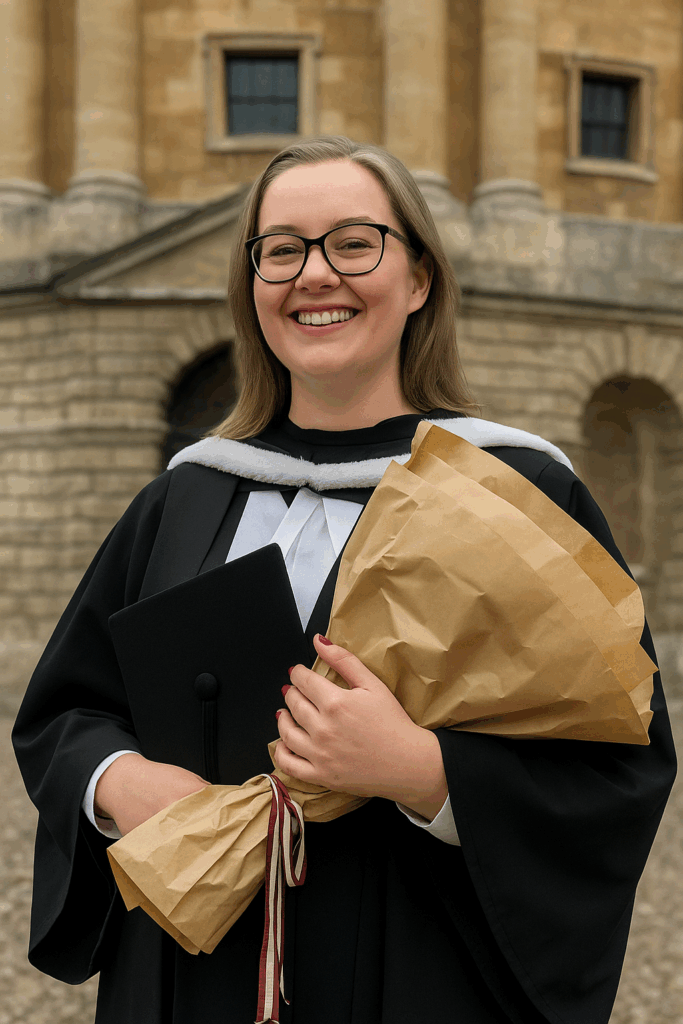
Mimi is completing an MSc in Behavioural Science at the London School of Economics. She graduated with a high 2:1 in Modern Languages (French and Spanish) from the University of Oxford. Importantly, during her undergraduate degree, she was awarded the Ramón J. Silva Prize for achieving the highest mark in Spanish speaking across the entire university. She also received a Distinction in Speaking. At A Level, she achieved 3 A*s including a D1 in Spanish Pre-U. Mimi has extensive experience supporting Oxbridge applications for language courses, including personal statements, admissions tests, and interview preparation.
When should your child start IB Spanish tutoring?
The earlier your child builds the right habits, the smoother Year 13 becomes. In general, most families benefit from starting in Year 12 (DP1). Specifically, the right moment is once your child has settled into the course and seen the first set of teacher feedback. A tutor at this stage diagnoses technique gaps before they harden. Furthermore, they introduce text type structures early and build oral confidence well before the assessment window.
Year 13 (DP2) students can still get a 7 in IB Spanish with a focused block of weekly sessions. Indeed, eight to twelve weeks is often enough to move a 5 to a 6 or a 6 to a 7. The key is choosing a tutor who can mark Paper 1 responses quickly. They should give specific feedback on text type, grammar, and tense range. For families thinking ahead to UK university applications, the same tutor often supports modern languages admissions, including the Oxford MLAT, written work submissions, and interview preparation. Our guides on how to get a 7 in IB Physics and how to get a 7 in IB Maths HL are useful companions for IB Diploma students balancing multiple subjects.
Expert IB Spanish tutoring with Greenhill Academics
TARGETED SUPPORT FROM OXFORD AND CAMBRIDGE GRADUATES
Our IB Spanish tutors identify the technique gaps costing your child marks. They then close them before the next exam.
Part of our IB grade guides series
This post is part of a series for parents whose children sit the International Baccalaureate Diploma Programme. Each guide covers the technique that lifts a grade band, written by an Oxbridge tutor who has worked with IB students directly.
Other guides in the series:
→ How to Get a 7 in IB Physics
→ How to Get a 7 in IB Maths HL
→ How to Get a 7 in IB Computer Science
→ All IB Tutoring
Frequently asked questions about getting a 7 in IB Spanish
