


Your child is sitting GCSE English Language at one of the UAE’s British curriculum schools. Dubai College, GEMS Wellington, Brighton College Dubai, Cranleigh Abu Dhabi, Repton Dubai. The exam looks deceptively simple. Two papers, no set texts to memorise, just unseen extracts and creative writing. Yet a 9 in GCSE English Language is rarer than a 9 in many other subjects, because it rewards a specific kind of writing your child has to actively learn rather than absorb from set texts. School covers the technique. The exam is approaching. The marks come back at a 6 or 7 and it is hard to know what specifically is missing. This guide does something different. It walks through one real pupil’s full year of GCSE English Language with a tutor at Greenhill Academics, drawn from our own lesson records, to show the three specific skills that lift a 7 toward a 9.
On this page
- A real GCSE English Language year, paper by paper
- The three skills behind a 9
- Paper 1 versus Paper 2: what each rewards
- When to bring in a GCSE English Language tutor
- Past papers and exam board resources
- Three GCSE English Language tutors we’d recommend for UAE families
- Questions UAE parents ask about GCSE English Language
The short version
A 9 in GCSE English Language rewards sentence-level control, precise analytical verbs, and a confident grasp of tone-matched transactional writing. School rarely has time to teach all three to top-band depth.
From a 7 toward a 9 in English Language
UK-based Oxbridge tutors for UAE families, teaching Paper 1 and Paper 2 to the depth a 9 demands.
A real GCSE English Language year, paper by paper
What follows is the genuine arc of a GCSE English Language student we worked with at Greenhill Academics across her exam year. Her name and a few identifying details have been changed for privacy, so we will call her Yasmin. The target was a 9. Every focus area, struggle, and breakthrough below is real, drawn straight from our lesson records across fifteen sessions. We worked through Paper 1 creative writing, Paper 1 reading analysis, and Paper 2 comparative and transactional writing in that order. The skills that emerged as the difference between a competent answer and a top-band one are what this guide is built around, and the same year applies to any UAE family targeting a 9.
The Paper 1 creative writing block
Yasmin’s first sessions focused on Question 5 of Paper 1, the 40-mark creative writing task that opens the second half of the paper. Her tutor began by walking through a real past paper, the Tuesday 7 November 2023 paper, exploring the prompt about a mysterious event and discussing two different narrative approaches. The session built foundational confidence. By the second session, the focus moved to transactional writing exemplars and structure. Yasmin engaged well with persuasive techniques, identifying emotive language and rhetorical questions in the exemplar text.
Subsequent sessions deepened the creative writing technique. Her tutor introduced narrative planning frameworks, focused on embedding ambitious vocabulary without forcing it, and worked on strengthening sentence-level variety. Yasmin developed a personal toolkit: opening lines that create immediate atmosphere, controlled use of dialogue, and structural shifts that mirror emotional change. The note from one session captured the breakthrough simply. She was now consolidating narrative planning, embedding newly acquired vocabulary, and producing creative writing of genuine quality. This took five sessions of focused work, and it shows that the 40-mark creative task is rarely the casual exercise it appears.
Paper 1 reading: Questions 3 and 4
By spring, the focus shifted to Paper 1 reading analysis. Yasmin had been writing about Little Women by Louisa May Alcott, responding to an evaluative question about how the writer creates atmosphere. The challenge her tutor identified was specific. Yasmin could identify language techniques accurately, but her analytical vocabulary was thin. She used the same handful of verbs (“shows,” “suggests,” “highlights”) across every essay, which capped her marks at a competent rather than perceptive level.
So the next several sessions concentrated on building Yasmin’s stock of high-level analytical verbs. Words like “illuminates,” “encapsulates,” “evokes,” and “underscores.” Her tutor also pushed her to write more developed explanations of how structural techniques shape meaning, not just identify them. By the end of this block, Yasmin was responding to Question 3 and Question 4 with the precision the top band demands. She could now zoom in on a single word and analyse its connotations across two sentences of detailed unpacking. That is what a 9 requires, and it is rare in school responses because there is rarely time to drill the analytical vocabulary that hard.
Paper 2: comparison and tone-matched writing
Yasmin’s final block focused on Paper 2. The reading section of Paper 2 requires comparative analysis between two non-fiction texts of different time periods, which is a different skill from the single-text close reading of Paper 1. Her tutor opened with Question 7(b), the comparative analysis question, walking Yasmin through how to identify shared themes and divergent methods between two extracts. Yasmin grasped the structural approach quickly. The harder work was the precision of comparison. Vague phrases like “both writers use” capped her marks.
The writing section of Paper 2 needed its own focus. Letters, reviews, speeches, articles. Each form has a different register, structure, and audience expectation. Yasmin had been writing the same way regardless of the brief. Her tutor’s note from the next session showed the shift. Yasmin now clearly understood the structure and purpose of each form and was adapting her tone to suit different audiences. By the final review session before the exam, she was writing a speech that sounded like a speech, an article that sounded like an article, and a formal letter that sat correctly between authority and politeness. The grade at the end of it is between Yasmin and the exam board. The journey is what a GCSE English Language tutor makes possible for any UAE family willing to commit to the weekly writing work.
If your child is sitting GCSE English Language in the UAE and the marks are not lifting the way they should, the right tutor can find the gap and close it. Book a free consultation.
The three skills behind a 9
Across the year of work above, three distinct skills emerged as the difference between a competent 6 or 7 and a top-band 9. They recur across most of the GCSE English Language students we have tutored, and they are worth naming clearly because school teaching rarely has time to develop all three to depth.
First, sentence-level control in creative writing. The 40-mark Question 5 on Paper 1 rewards varied sentence structure, controlled use of punctuation, and ambitious vocabulary integrated naturally rather than thrown in. Most pupils know to vary sentence length. Few practise it deliberately enough for it to read as natural. A 9-grade creative piece sounds composed rather than performed.
Second, precise analytical verbs in reading analysis. Question 3 and Question 4 on Paper 1 reward precision of language. The 9-grade response does not write that the writer “shows” or “suggests” something. It uses verbs that pin the writer’s intention down: illuminates, encapsulates, evokes, undermines, destabilises, complicates. This is a learnable skill. It just requires deliberate practice across many short responses, which a tutor builds in.
Third, tone-matched transactional writing. Paper 2 includes a transactional writing task, which can be a letter, review, speech, or article. Each form has a distinct register. The 9-grade response writes a speech that sounds like a speech and a letter that reads as a letter, with the appropriate level of formality, rhetorical structure, and audience awareness. Most pupils write everything in the same default register and lose marks on AO5.
Build the Skills That Reach a 9
A specialist GCSE English Language tutor drills each of the three skills in turn, until they become instinctive.
Paper 1 versus Paper 2: what each rewards
Paper 1 of GCSE English Language is built around fiction. The reading section asks your child to analyse a single twentieth or twenty-first century literary fiction extract across four questions. The writing section is the 40-mark creative writing task. The skills rewarded are close reading of literary fiction and original creative composition.
Paper 2 is built around non-fiction. The reading section presents two non-fiction extracts from different time periods, usually one nineteenth century and one twenty-first century. The questions test comprehension, summary, language analysis, and comparison of writer’s viewpoints. The writing section is a transactional task: letter, review, speech, or article on a topic. The skills rewarded are comparative analysis of non-fiction and audience-aware transactional writing. Many pupils prepare hard for Paper 1 because fiction and creative writing feel familiar, then underprepare for Paper 2 where the marks often run thinner. A tutor balances the preparation so both papers go in strong.
When to bring in a GCSE English Language tutor
Year 10 is the most common starting point. It gives a tutor a full year to develop the analytical vocabulary, build the creative writing technique, and drill the comparative skills across multiple practice papers. For a pupil targeting a 9 specifically, this is the timeline that compounds. The high-level analytical verbs need months of repeated use before they become instinctive.
However, useful work happens at any stage. A Year 11 pupil sitting mocks can rebuild Paper 2 technique in a focused block of six to eight sessions. A Year 9 pupil moving into Year 10 can start ahead, working on reading analysis and sentence-level control in their summer before formal preparation begins at school. The earlier the start, the more the skills compound. The later the start, the more focused the work needs to be.
Past papers and exam board resources
The official sources for GCSE English Language past papers and specifications are the exam boards themselves. Most British curriculum schools in the UAE use AQA or Edexcel. AQA’s GCSE English Language specification 8700 is the most common across UK schools. Edexcel’s specification 1EN0 is also widely sat, particularly internationally. Check which board your child’s school uses before purchasing revision materials.
We have also pulled together full past paper libraries for the three main boards, with every paper and mark scheme in one place. Browse the set that matches your child’s school: our AQA GCSE English Language past papers, the Edexcel GCSE English Language past papers, and the OCR GCSE English Language past papers.
GCSE English Language past papers by board
Every paper and mark scheme, sorted by exam board.
Three GCSE English Language tutors we’d recommend for UAE families
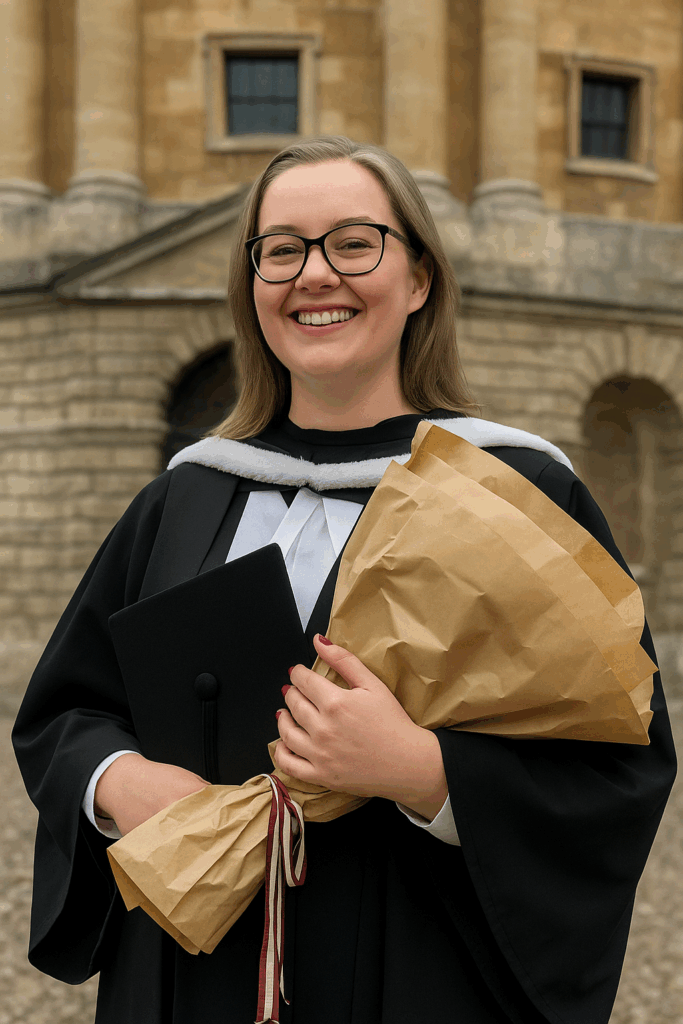
Mimi
Mimi read Modern Languages (French and Spanish) at the University of Oxford and is now completing an MSc in Behavioural Science at the London School of Economics. She was awarded the Ramón J. Silva Prize for the highest mark in Spanish speaking across the university, alongside a Distinction in Speaking. Mimi teaches GCSE English Language and Literature, and her cross-language background sharpens her work on the sentence-level control and tone-matched writing that lift a GCSE English Language response into the top band.
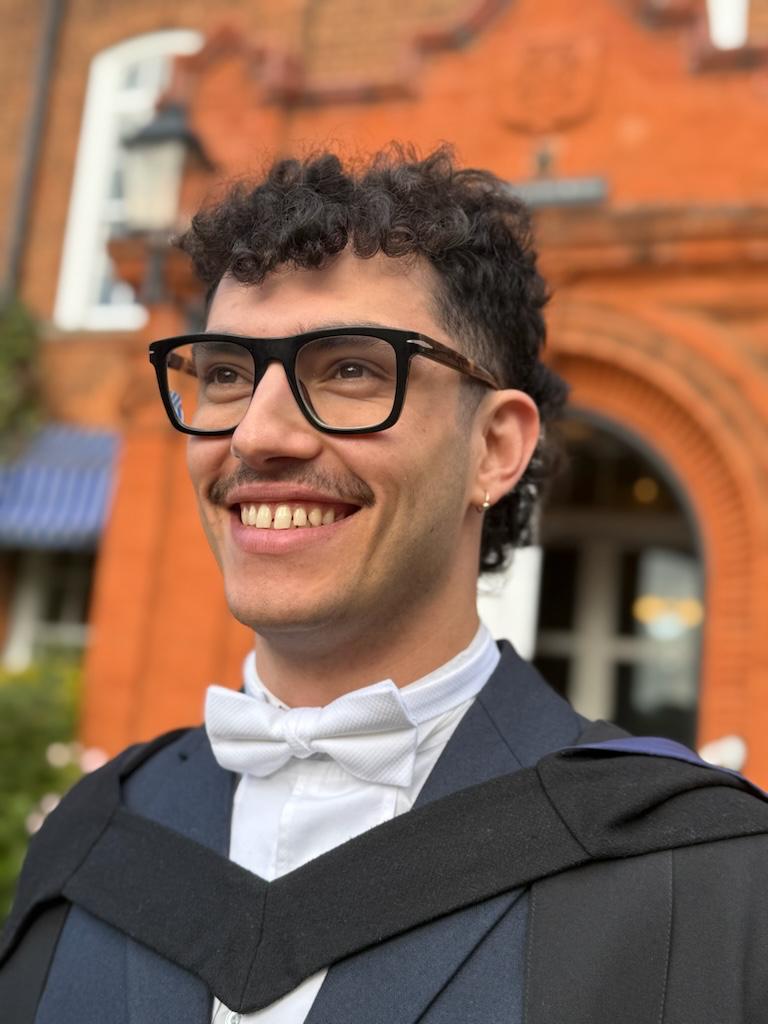
George
George holds an MPhil in Theoretical and Applied Linguistics from the University of Cambridge (High Distinction) and a First Class BA in English Literature from the University of Manchester. He begins a PhD in Psycholinguistics in October 2026. With over 500 hours of tutoring experience, George brings a linguist’s precision to the analytical vocabulary and structural analysis that Paper 1 Questions 3 and 4 reward.

Laurie
Laurie read English Language and Literature at The Queen’s College, University of Oxford, where she earned a Double First Class degree. She holds A*AAA at A Level in English, French, History, and Latin. With over 500 hours of tutoring across a decade, Laurie’s previous pupils have gone on to Oxford, Cambridge, Johns Hopkins, and Stanford. She specialises in essay-writing skills, which is precisely the area where most GCSE English Language pupils plateau before reaching a 9.
These are three of our GCSE English Language tutors. We match each family with a tutor based on the specific exam board, current grade, and skill gaps your child needs to close to reach a 9, whether they are sitting AQA, Edexcel, or another board at their UAE school.
Ready to work toward a 9?
If your child is putting in the work but the marks are stuck at a 6 or 7, the right tutor can identify which of the three skills is missing and drill it. Get in touch and we will match your UAE family with a specialist GCSE English Language tutor for a free consultation.
A 9 in GCSE English Language Is Closer Than It Feels
START YOUR CHILD’S PATH TO A 9
Our UK-based Oxbridge tutors drill the three skills that separate a competent answer from a top-band one. The kind of focused writing coaching a class of thirty cannot give your child.
More English Language resources from our blog
Worth reading next
Questions UAE parents ask about GCSE English Language
About content and the 9
About working with a UK-based tutor in the UAE
