

The quick read
- A child can know the texts well and still bring home essay marks that do not improve.
- One reason can be a paragraph that reaches the quotation but does not explain why it matters to the point being made.
- There is a one-sentence check you can run at home on your child’s last marked answer. One paragraph cannot diagnose everything, but it gives you somewhere real to look.
Your child knows the texts and the essays are not getting better
When essay marks stay the same term after term, the natural assumption is that your child needs to know the texts better. They may already know them well. They can name the technique and find the right quotation, and the answer can still stop before explaining why that quotation matters or what the writer’s choice achieves. For families in Oman looking for an IGCSE English tutor, Greenhill Academics’ English tutors are based in the UK and teach online.
You can see the shape of this in a marked essay. The comment in the margin says develop this, or explain further, and more revision of the texts does not change it. The reading is not the problem. The writing is where the work is.
British curriculum schools in Oman teach these courses through Years 10 and 11. The British School Muscat runs (I)GCSE and A Level programmes, and The Sultan’s School takes students through IGCSE in Years 10 and 11 before the IB Diploma. At both schools, written English matters, but the exact papers and assessment route depend on the qualification. That is why a tutor needs to work from your child’s own board and set texts.
Why the right quotation alone is not enough for a stronger essay
A strong analytical paragraph does three jobs. It makes a point about what the writer is doing. It supports that point with a short quotation, woven into the sentence. Then it explains why the quotation matters: what the choice achieves, and what it does to the reader. The first two jobs can be learned from revision notes. The third is where your child has to commit to a reading of their own, and it is the part of the paragraph this page is about.
An essay can do the first two jobs in every paragraph and still read as undeveloped, because each paragraph closes just as it reaches the interesting part. The evidence is right there on the page. What the evidence proves is left unsaid.
Talia, a student we have put together from moments across many lessons rather than any one child, wrote exactly these paragraphs. Her quotations were well chosen, and her final sentences said the same thing again in slightly different words, so each paragraph ended without telling the reader anything new. Nothing about her reading needed fixing. The last sentence of each paragraph did.
The essay is not improving, but one paragraph gives you a clue
You do not need to mark the essay, and you do not need to know the text. One sentence gives you somewhere real to look.
A one-sentence check
The check
Take one paragraph and read its last sentence. Nothing else. Any recent English answer will do.
If it repeats
The sentence mainly restates the point or the quotation. That may be a sign the explanation needs developing.
If it develops
The sentence says what the writer’s choice achieves. That job is being done here. The question is whether it happens in every paragraph.
One paragraph cannot diagnose the whole problem, but it gives you and a tutor something specific to look at.
Worth doing today
Run the check on one paragraph and keep the answer your child wrote. Should you decide on a first lesson, send that page over with the booking: the paragraph where the writing stops short gives the tutor a clear starting point.
Does your child’s essay stop too early?
Tell us which English course your child takes, GCSE or IGCSE, and what their last marked essay looked like. We will match them with an English tutor who can pick up from there.
Book a LessonHow a tutor works on the paragraph that needs developing
The work can start inside one paragraph of your child’s own writing. The point and the quotation stay, and the missing sentence gets written by asking two questions of the quotation already chosen. One of our English tutors puts those questions plainly:
How our tutors put it
“Embed the short quote, so you would kind of weave that quote into your paragraph. And then analyse your quote. What techniques is Heaney using here? And what is their effect?
”
Laurie, English tutor
The two questions at the end are the sentence your child’s paragraph needs: what is the writer doing, and what does it achieve.
Marco, blended from real teaching moments in the same way as Talia, worked on exactly this. His paragraphs looked fuller, but the closing sentences translated the quotation into simpler words rather than saying what the writer’s choice was doing. His tutor worked on the difference one paragraph at a time: meaning first, then what the choice achieves, with that sentence written last in every paragraph.
Once one paragraph has been rebuilt together on the shared board, a natural next step is for your child to write the following one themselves, with the tutor responding to what they wrote. The practice can stay on their own set texts and their own recent essays, so the lessons work on the writing they will actually be marked on.
Can an IGCSE English tutor help when essay marks are not improving?
Yes, where the issue sits in the writing, and that is what the lessons work on. A first lesson can start from a recent marked essay rather than a fresh worksheet, so the tutor sees what your child actually writes under real conditions. From there the lessons follow your child’s own course and set texts, whether the school follows Cambridge or Edexcel, for Language and for Literature.
You receive a written report after every lesson. When homework is set, a reminder goes out before the next lesson.
Inside a lesson
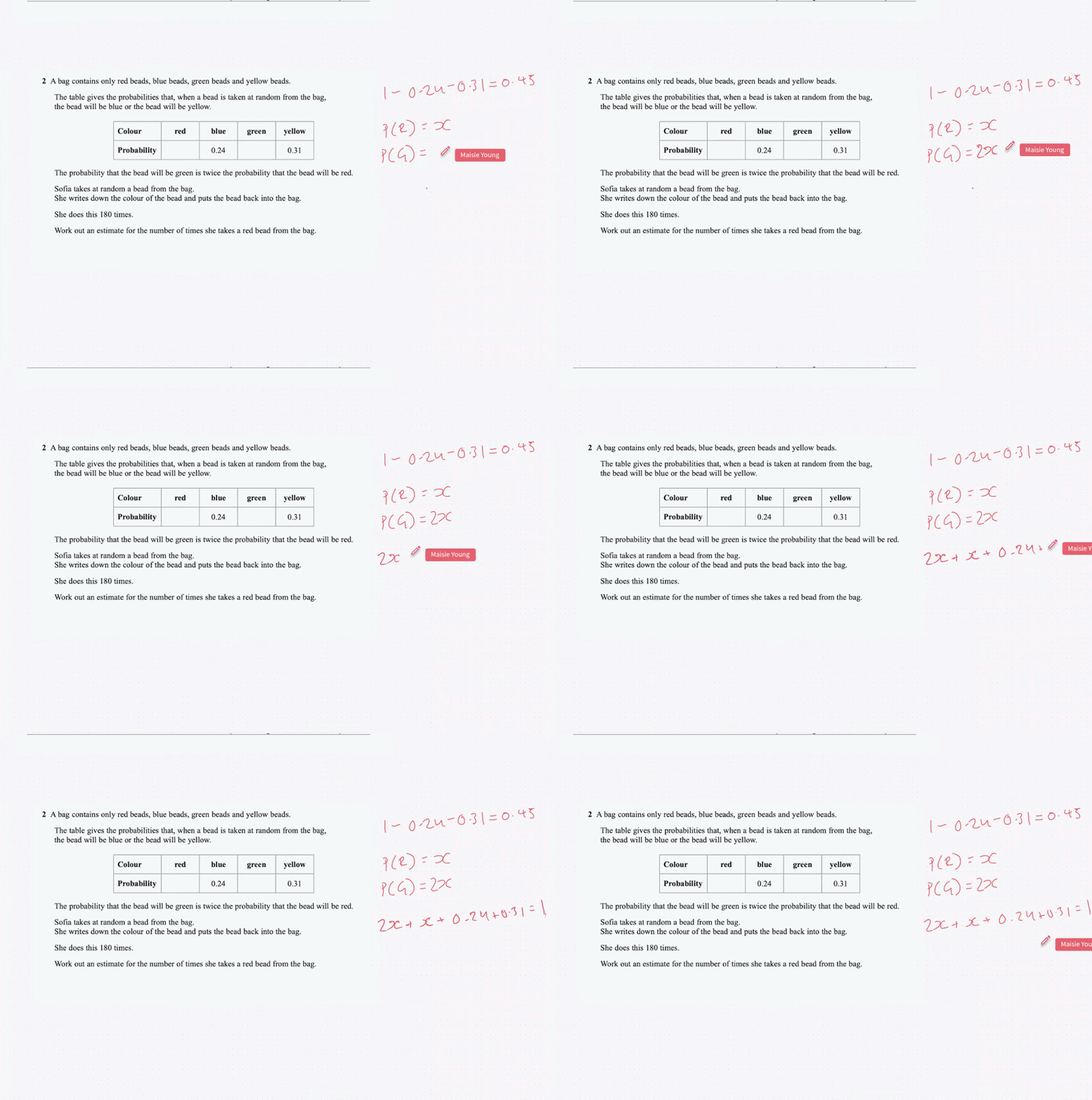
A real Greenhill Academics lesson, recorded live on the shared board. The clip shows a maths lesson, and English lessons run the same way, with your child’s writing and the tutor’s notes on one screen.
UK-based English tutors, teaching students in Oman online
English specialists from Oxford and Cambridge
Laurie · English, Oxford
Laurie took a Double First in English at Oxford and teaches GCSE and IGCSE English. The quote above is his, and it shows how he teaches: the quotation goes into the sentence, then the analysis answers what the writer is doing and what it achieves.

Louis · Philosophy and French, Oxford
Louis holds a First in Philosophy and French from Oxford and sat the IB himself, with three 7s at Higher Level. He teaches IGCSE and GCSE English with a focus on essay writing and critical thinking, helping students turn what they notice into a developed written argument.
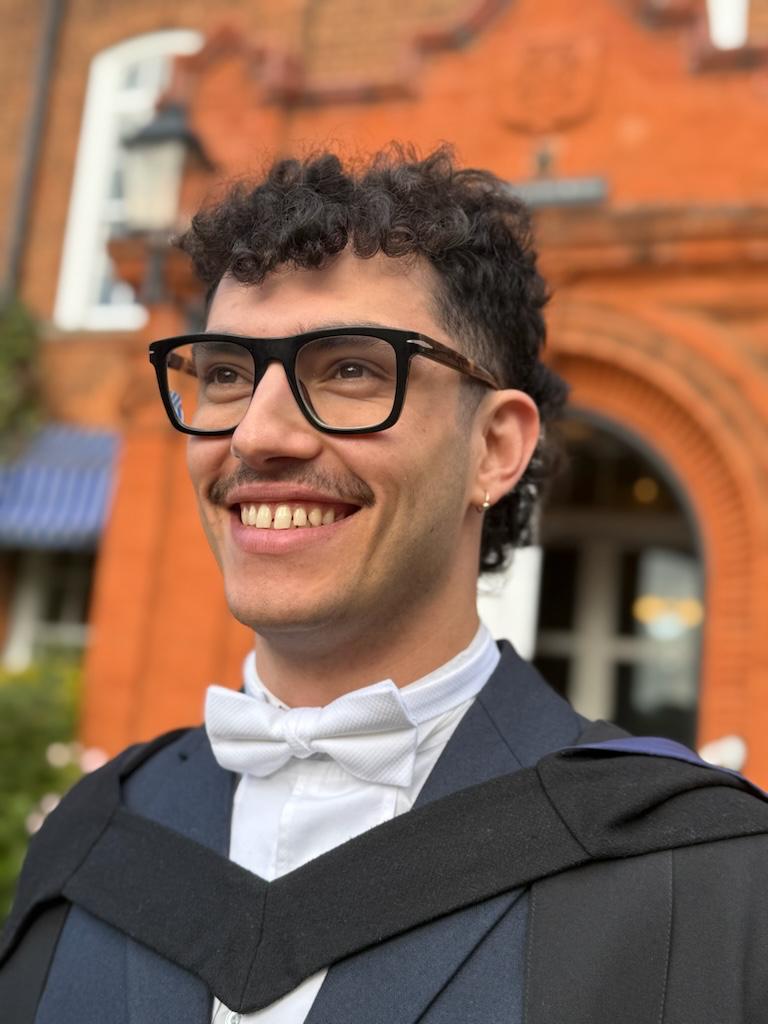
George · English Literature and Linguistics
George is an English Literature specialist with a first-class BA in English Literature and a master’s in Linguistics from Cambridge, passed with high distinction. He teaches English Literature at A Level, where the explanation of a writer’s choices carries even more of the answer.
Questions worth asking before you choose an IGCSE English tutor
How do I find a good IGCSE English tutor in Oman?
Ask what they would change in your child’s writing, and how they would know. A good tutor reads a recent marked essay, finds the paragraph that stops short, and works on that sentence with your child, matched to their board and set texts. At Greenhill Academics we teach online, with lessons arranged around the school day in Oman.
What is the difference between IGCSE and GCSE English?
They are taken at the same stage of school, in Years 10 and 11. The course content, the papers and the assessment route depend on the qualification, the board and the school, so the tutor should confirm the exact course and set texts your child follows.
Does it matter whether the school follows Cambridge or Edexcel?
It matters for the course details. Cambridge and Edexcel structure their qualifications differently, so the tutor should confirm the exact papers, set texts and assessment route your child follows. Many core analytical-writing skills overlap, but the teaching still needs to match the board.
Are your IGCSE English tutors based in Oman?
No, and we are straightforward about that. They are based in the UK and teach online on a shared board, with lesson times arranged around the school day in Oman. You receive a written report after every lesson.
The teacher says the analysis is fine, so why is the mark mid-range?
Look at where the paragraphs end. An answer can name the technique and support it with a quotation, and still stop before saying why the quotation matters. Adding that final step is what develops the essay, and it can be practised paragraph by paragraph.
When should my child start with a tutor?
Work back from the exam dates and start from what a recent essay shows. A first lesson can begin with your child’s own writing, so the plan is built on what the essays need rather than on a standard course. Before mocks, there is more time to make the stronger paragraph a habit.
The essays can improve, one paragraph at a time
Send us a recent English answer and tell us your child’s school year and exam board. We will match them with an English tutor who works on the writing itself. Oxbridge-educated tutors, teaching online.
Book a LessonIGCSE English tutoring in Doha
The same qualification in another Gulf city, and how the online lessons work there.
How to revise for GCSEs
A practical guide to revision that works, for English and every other subject.
AQA GCSE English Literature past papers
Past papers to practise analytical essays on, with the real exam wording.