

Maybe your child knows a lot of history, but the essay marks never match it. The writing is fluent, the facts are there, and the grade still comes back middling. One reason is simple: A-level History essays stay too general. The argument talks around the topic instead of naming the evidence that proves the point. That is a writing skill, and it can be taught.
In short
- A fluent essay can still be too general, and a general essay throws away marks your child has earned by knowing the subject.
- A specific argument uses named evidence to answer the exact question asked.
- There is a simple ladder: a vague claim, then a named example, then that example tied back to the question.
- Your child can practise this on one paragraph at a time, with an essay they already have.
- This is one writing skill, not a whole revision plan. Your child can start by working on one paragraph from an essay they already have.
What too-general A-level History essays look like
A too-general essay makes claims that sound right but name nothing. “There was a lot of change.” “This was very important.” “It affected a lot of people.” A reader cannot tell whether your child knows the detail or is guessing, because no real evidence is on the page.
The giveaway is that you could swap the topic and the sentence would still work. If a line about one war would fit any war, it is too general. A specific argument could only be about this question, because it names the thing that proves the point.
How specific evidence strengthens your argument
A specific piece of evidence does a job a general claim cannot. It shows the examiner that your child knows what actually happened, and it proves the point instead of asserting it. A name, a date, an event or a figure turns an opinion into an argument.
There is one more step, and it is the one students miss. The evidence has to answer the exact question asked, not just sit on the page. A true fact that does not speak to the question still reads as general, because it is not doing any work. Specific means named and pointed at the question.
The specificity ladder: name it, detail it, link it
Here is the same claim shown at three levels, as a shape to copy. Each rung is more specific than the last, and the top rung is the one that answers the question. The brackets are slots, where your child puts the real detail from their own topic. This is a structure, not a history lesson.
Rung 1: a vague claim
“This change was very important.” True, maybe, but it names nothing and could sit in almost any essay.
Rung 2: a named example
“[Name the exact change: the specific event, policy, person or figure].” Now the claim names one real thing instead of a general idea.
Rung 3: the example linked to the question
“[The named change], which directly [does what the exact words of the question ask about].” The evidence is now tied to the question, not just sitting on the page.
Name it, detail it, link it. That is the whole ladder.
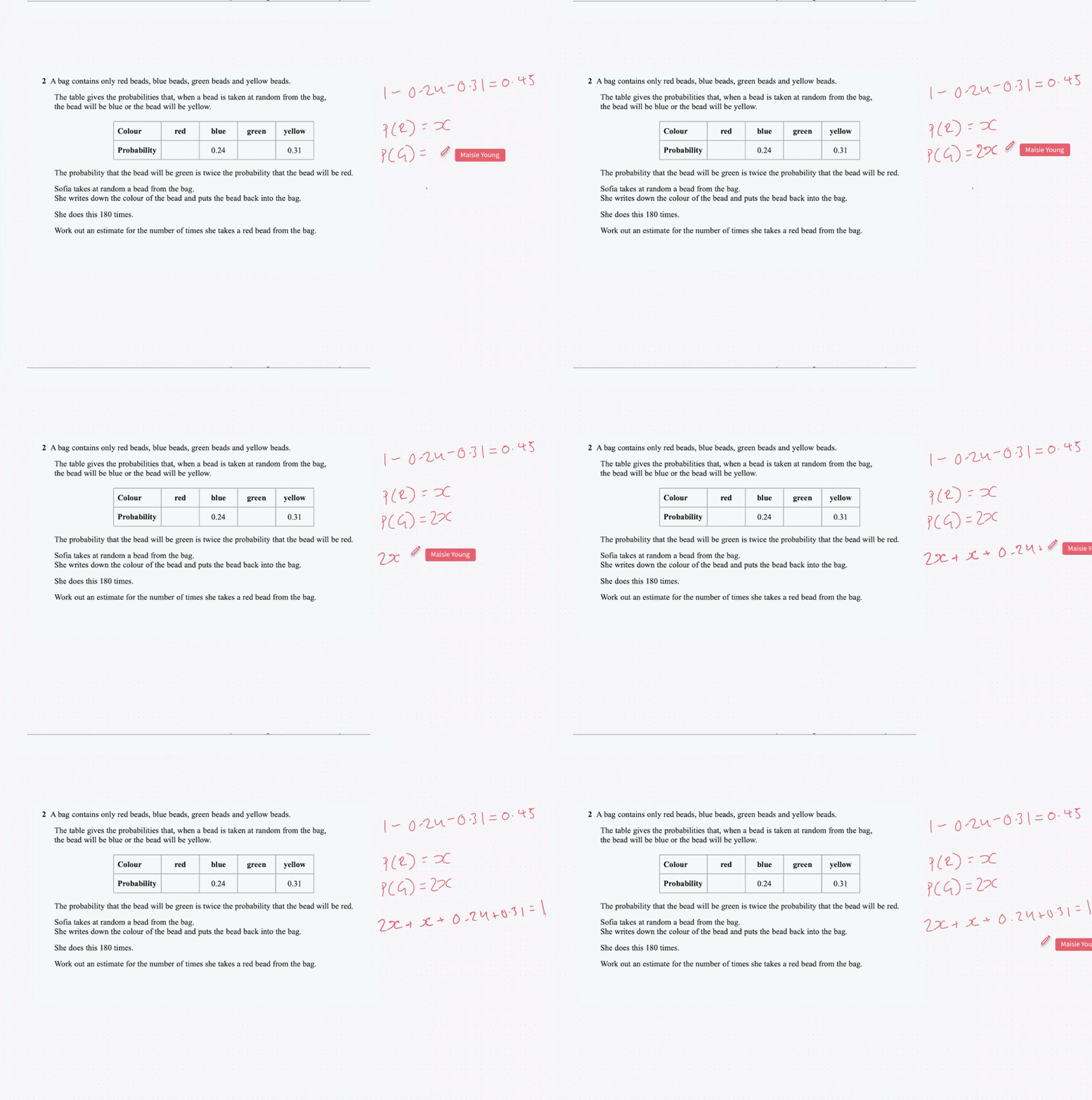
This clip shows a maths lesson recorded in Pencil Spaces, the online classroom used by Greenhill Academics.
Want a tutor to read one of your child’s essays?
Send us the subject and the sort of marks they are getting. A tutor can show exactly where the argument stays general.
Ask about a tutorTry this at home: make one paragraph specific
You can do this in about ten minutes. You need one of your child’s own marked history essays and the essay question it answered. Work on one body paragraph, not the whole essay.
- Pick one paragraph (1 minute). Choose a single body paragraph from the marked essay.
- Underline the general claims (3 minutes). Underline every sentence that names no person, date, event or figure.
- Add a named example (3 minutes). For each underlined claim, add one real, named piece of evidence.
- Link it to the question (3 minutes). After each example, add a short phrase that ties it back to the exact words of the question. Then read the paragraph back.
What should you look for?
If the paragraph now names real evidence and ties it to the question, it has moved up the ladder. If it still reads like “things that were going on”, it is still general. This cannot set the overall grade or judge the whole essay. It only shows whether one paragraph has become specific enough to answer the question. A tutor can take the same essay and work through it paragraph by paragraph, building the habit.
Want a tutor to work on this with your child?
Tell us the subject and the exam board. A tutor can start with the essays your child already has.
Send an enquiryHow a tutor marks an essay for specificity
In a lesson, a tutor reads a paragraph and asks two plain questions of every claim: what is the named evidence, and does it answer the question? Where the answer is “none” or “not really”, that is the line to fix, and the tutor shows your child how to fix it on the spot.
Then they build the habit, paragraph by paragraph, using your child’s own essays. Name the evidence. Tie it to the question. With practice on their own essays, your child works on making arguments more specific. There is no promise of a set grade. The aim is simple: help your child show what they know on the page.
The tutors who can help
These tutors studied history and humanities at Oxford and teach essay writing alongside the subject. They work on making arguments specific, using your child’s own essays.

Ryan read History and Modern Languages at Jesus College, University of Oxford, and holds a master’s in Modern European History. He teaches History at GCSE and A level, and works in defence and security policy at a think tank.

Naomi read Politics, Philosophy and Economics at Exeter College, University of Oxford, with A* in Politics, Religious Studies and History at A level. She teaches History, Economics and Politics at A level.

Laurie read English at The Queen’s College, University of Oxford, graduating with a Double First. He teaches English and History at A level, and works as a foreign correspondent for Agence France-Presse.
Questions parents ask us about history essays
My child writes a lot but still gets middling marks. Why?
Writing more does not earn more marks. A specific argument is what counts: named evidence, used to answer the exact question. A long essay that stays general still reads as vague, so the length does not help.
What does “too general” actually mean?
It means claims with no named example, no person, date, event or figure, and ideas that are not tied to the exact question. If a sentence would fit almost any question on the topic, it is too general.
Is this the same as just revising more history?
No. This is not about knowing more. It is one writing skill: turning a general claim into a specific one and pointing it at the question. A child who already knows the content is working on how they show it, not on learning more.
Can my child practise this at home?
Yes. The ten-minute paragraph rewrite above is built for exactly that, using an essay they already have. It works best on one paragraph at a time, in short, regular sessions.
What can a tutor do that we cannot do at home?
A tutor reads a paragraph and names, line by line, where it stays general and how to make it specific. They build the habit using your child’s own essays, working on it essay by essay.
Want your child’s essays to show what they actually know?
A general essay throws away marks your child has earned. Tell us the subject and the marks they are getting, and we can talk about a plan to work on making arguments more specific.
Send an enquiry