

This article is for a parent who wants their child to write better English essays and to understand how a tutor could help. You will see how a GCSE English tutor in Abu Dhabi could work on the essay’s shape, one paragraph and one clear change for the next piece of writing.
If you only have a minute
- One thing you can notice is an essay’s shape: its opening, main paragraphs and ending.
- Turning an idea into a paragraph is a skill of its own, and it can be taught.
- English Language and English Literature are different subjects, and your child may need help with one or both.
- Lessons run online, and the enquiry form has space to say what your child finds difficult.
What makes a better English essay?
Marking an essay takes training, but you do not need that training to see how it is organised. In an essay that makes an argument, you may be able to point to an opening, the main paragraphs and an ending. If those parts are hard to find, that gives you one useful question to ask about the writing without judging the ideas yourself.
Here is one real example of shape being taught. In one recent GCSE English Literature lesson, before the student wrote a word of a poetry essay, the tutor set out the whole thing: a short introduction, then three paragraphs that would each make a point, show the line from the poem that backs it, and explain what that line adds, then a short conclusion. That was one plan for one task, not a rule for every essay your child will ever write. But it shows the useful idea: the essay had a shape before it had sentences.
Try the essay shape count
- Take one recent English essay your child has written.
- Mark the parts: the opening, each main paragraph, and the ending.
- Write a simple count at the top, such as one opening, three main paragraphs and one ending.
- Compare only how much space each part takes up. You are observing the essay’s shape, not judging the literary ideas.
There is no rule that says every essay needs exactly three main paragraphs, and one task’s plan is not the correct structure for every course. A missing or shorter part may be something to look at more closely, not proof of what is wrong. This check cannot measure a grade, judge the whole essay, or show how your child performs under timed conditions.
Your child may not know how to turn an idea into a paragraph
Having an idea and turning it into a paragraph are different parts of essay writing. In an essay about a text, a paragraph might make one clear point, include a quotation and explain how the quotation supports that point. A tutor can work on those parts separately.
In the same lesson as the essay plan above, the tutor gave the student two small, concrete pieces of guidance. The first was about how a paragraph opens: treat the first sentence as its own small introduction, the big picture before you move into the detail. The second was about quotations: a line from the poem can sit inside your child’s own sentence, and the tutor showed the student how, by dropping the quoted line’s final full stop so the sentence could carry on afterwards. Later in the lesson, when the point was about a whole moment rather than a single word, a longer stretch of the quotation did the work instead.
These were one tutor’s suggestions for one task, not rules for every paragraph. They show how specific the work can be. A tutor can look at how a sentence opens and where a quotation sits, rather than simply telling a child to write more.
Where does your child get stuck in an English essay?
The enquiry form has space to explain whether your child needs help finding ideas, organising them or writing them clearly. We will use that information when looking for a tutor.
Share what they find difficultWhat should your child change in the next essay?
It can help to give the next essay one clear focus. Your child might choose one specific thing to practise rather than trying to change every part at once.
That might be opening each paragraph with its main point or fitting quotations into their own sentences. The change needs to be clear enough to remember while writing and easy to check when the essay is finished.
A tutor can read a recent essay, explain one useful change and practise it with your child during the lesson. This does not promise that one change will improve the whole essay straight away, but it gives your child something specific to work on.
Does your child need help with English Language or English Literature?
These are two different subjects with different exams. English Language is about reading texts your child has not seen before and writing their own pieces. English Literature is about the novels, plays and poetry studied in class. A child can find one hard and the other fine, or need help with both.
It is worth checking which one is behind the essays you are worried about, because the help looks different. If the reports mention both, say both. Whether one tutor can cover both depends on your child’s courses, the support they need and who is available, so tell us the full picture and we will work from there.
Add your child’s English subjects
The form lets you select English Language, English Literature or both. Choose the subjects your child studies, then add what they find difficult in the space provided.
Select their subjectsHow do lessons with a GCSE English tutor in Abu Dhabi work?
Lessons take place live online with the tutor. Your child can bring a recent essay or a text they are studying, and the lesson can focus on one part of the writing at a time.
That might mean building one paragraph or fitting a quotation into a sentence. You can describe what your child finds difficult on the enquiry form, and we can use that information when looking for a tutor.
Inside an online lesson
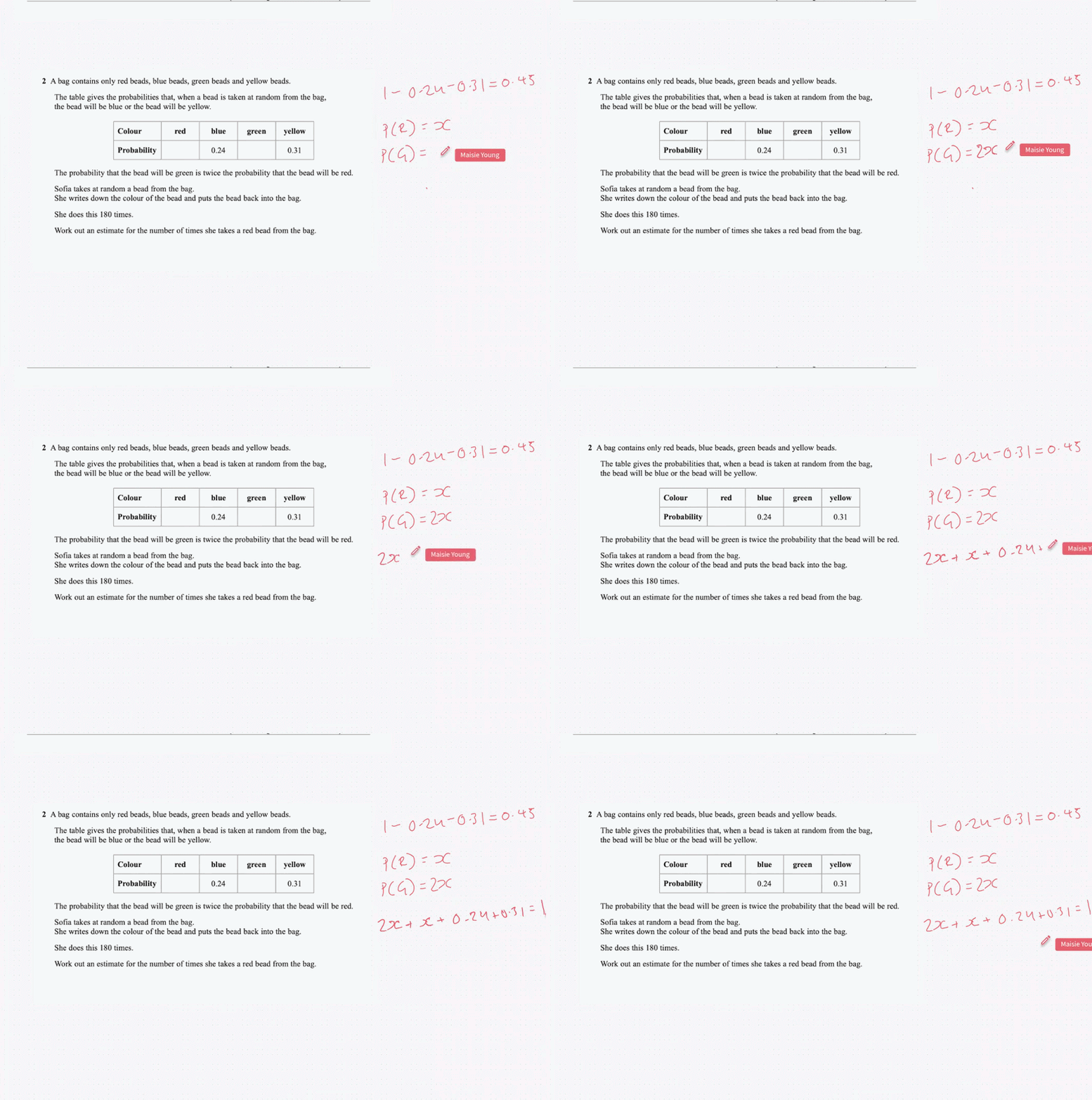
A Greenhill Academics online lesson recorded live on the shared whiteboard. English lessons use the same online format.
Louis and Naomi teach GCSE English

Louis has a First from Oxford in Philosophy and French. He teaches English at GCSE, IGCSE and A Level, alongside French and Philosophy.

Naomi achieved A*AA at A Level, plus an A in Maths, and studies Philosophy, Politics and Economics at Oxford. She teaches English at GCSE, alongside History and Geography.
Louis and Naomi may be able to help
Both teach GCSE English online. Complete the form with your child’s level, subject and what they find difficult. We will check who is available and reply by email.
Check current availabilityFive questions about GCSE English tutoring
How is GCSE English Language different from English Literature?
English Language focuses on how your child reads and writes. English Literature focuses on the novels, plays and poetry they study. The exact texts and tasks depend on the course and exam board. Our enquiry form lists the subjects separately, so tell us whether your child needs help with one or both.
My child reads a lot. Why is essay writing still difficult?
Reading for pleasure and reading for an essay are different skills. An essay asks your child to slow down, look at individual words and explain what they add to the text. Close reading gives them more details to consider when planning what to write.
Will the tutor use the books my child is studying at school?
A tutor can work with the texts your child is studying and the essays they are writing for school. Tell us the titles in your enquiry if you know them.
Will the UK time difference affect lesson times?
We take the time difference between the UK and Abu Dhabi into account when checking tutor availability.
How long does it take for essays to get better?
There is no fixed timetable. Writing improves through practice and specific feedback, and the pace is different for every child. A tutor can show your child what to work on next without promising a quick result.
Ask about support with English essays
Give us your child’s details and what they want to improve. Our team will review the enquiry and email you about how we may be able to help.
Enquire about essay support