

Your child makes a relevant point in an A-level Economics answer, then stops. The point is right, but it does not go anywhere. An examiner is looking for the next step, and the one after that. This is where a chain of analysis comes in, and it is a skill your child can practise.
The short version
- A-level Economics answers reward reasoning that is developed step by step, not a single point left on its own.
- A chain of analysis is a run of linked steps: this happens, which leads to that, which leads to the next thing.
- A strong point can still fall short if your child does not explain the steps that follow from it.
- The fix is a habit your child can build: after each point, ask ‘and what does that cause?’
- You can try this at home in about ten minutes with one marked answer.
Where the analysis stops
A student may write a point that is correct and relevant, then move on before explaining what follows from it. The first point is there, but the reasoning stops before the next causal step.
The gap may be in developing one point into a run of steps, where each step explains the next. That run of steps is the chain of analysis.
What a chain of analysis looks like
A chain of analysis is a set of linked steps. Each step causes the next, and you can say why. One exam board, OCR, describes this as building a chain of reasoning, a series of logical steps rather than a single claim. Here is one worked example from the topic of monopoly.
Each arrow carries a short ‘so’ or ‘which means’. That is the move your child is missing. The first point is there. The links that follow it are what turn a single idea into developed analysis.
The one question that builds the next link
There is a single question that builds the next step: ‘and what does that cause?’ Your child says a point, then asks it, and the answer is the next link. They say that, then ask again. Each time, the chain grows by one step.
They are following the cause from one step to the next, which is the kind of developed reasoning OCR describes in its guidance on chains of reasoning.
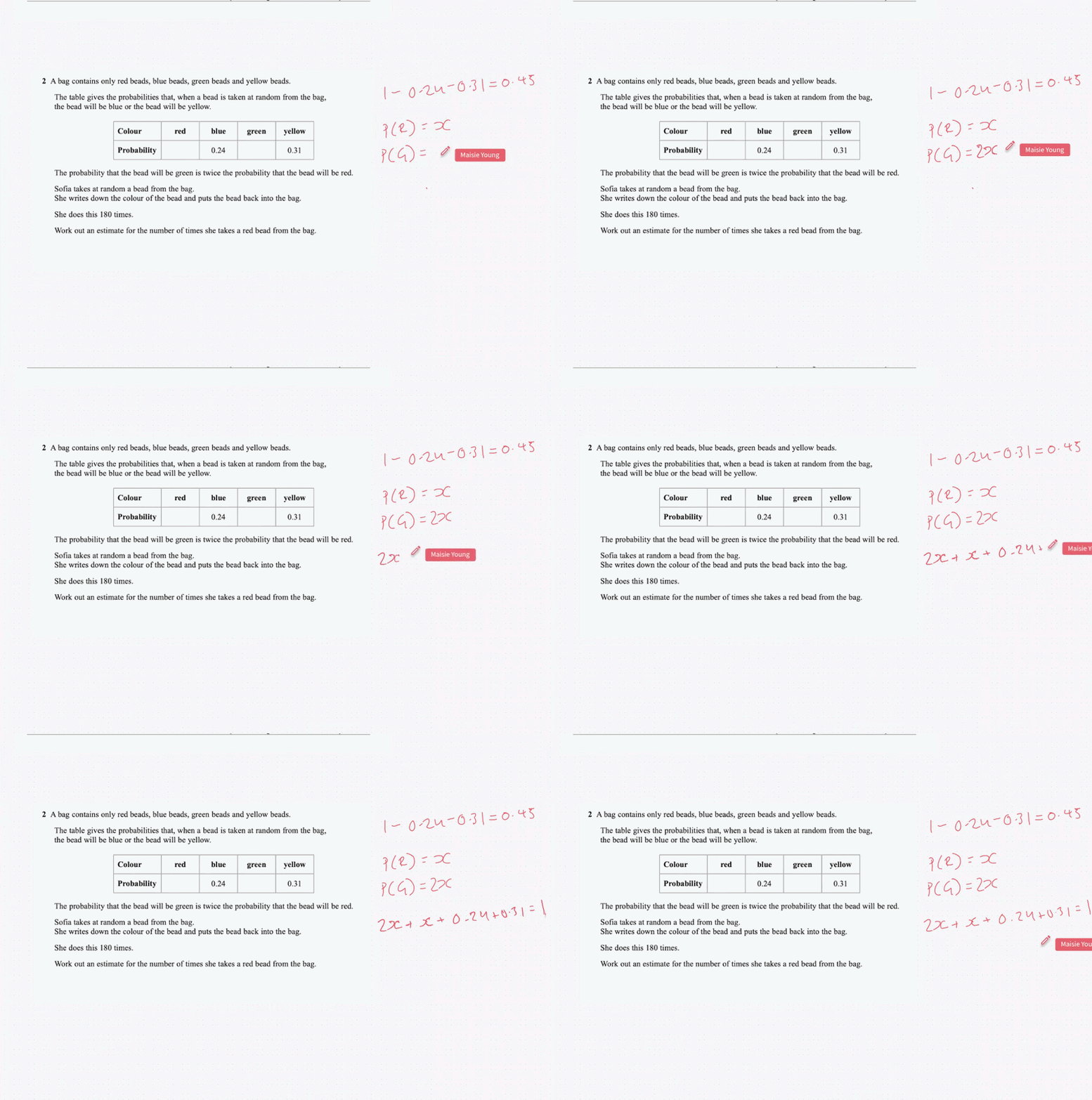
This clip shows a maths lesson recorded in Pencil Spaces, the online classroom used by Greenhill Academics.
Not sure where the answers stop short?
Send us how your child’s A-level Economics answers read. A tutor can look at a marked answer and see where the chain breaks off.
Ask about a tutorTry this at home: ten minutes extending one answer
This takes about ten minutes. You need one of your child’s already-marked A-level Economics answers. So you are only working on one point, not re-marking the whole answer.
- Pick one point that stops early (2 minutes). Find a place where your child made a correct point but did not develop it.
- Add the next link (3 minutes). Ask your child to finish the sentence ‘and this leads to…’, in one clear step.
- Add one more link (3 minutes). Do it again from the new step, so there are three steps in a row.
- Check each link (2 minutes). For each arrow, ask ‘does this say why?’ Put a dot next to any step that only repeats the point.
What should you look for?
You are looking for whether your child can extend the chain, or stalls after the first step. If they stall, that is the thing to practise, and the question above is where to start. One ten-minute try cannot grade your child, say why it is happening, or cover evaluation and the whole essay. It only shows whether the analysis is being developed. A tutor can take the same answer and build the chain out with your child.
Want a tutor to practise this with your child?
Tell us the exam board and how the Economics is going. A tutor can start with an answer your child has already written.
Send an enquiryHow a tutor works on it
In a lesson, a tutor sits with your child on a real answer and stops at the point where the chain breaks off. They ask what that point causes, and have your child say the next step out loud before writing it.
Then they practise it on the questions where it matters, building the chain one step at a time. There is no promise of a set grade. The aim is simple: help your child turn a single point into developed analysis. It is one of the habits we work on in our guide to A-level Economics essays.
The tutors who can help
These tutors teach A-level Economics and work on developing reasoning step by step, including the links between one economic effect and the next.

Will holds an MSc in Financial Economics from the University of Oxford and an MSc in Finance from UCL. He has taught Economics at GCSE, A Level, IB and university level.

Kevin holds an MSc in Financial Economics from the University of Oxford (Saïd Business School) and a BSc in Economics from Erasmus Rotterdam. He teaches A-level and IB Economics.
Questions parents ask us about A-level Economics
My child knows the content, so why do the answers fall short?
Knowing the content and developing it are two different steps. A-level Economics rewards reasoning that is built out step by step. A useful next step is to practise following one point into the steps that come after it.
What is a chain of analysis?
It is a run of linked steps where each one causes the next and your child can say why. One point leads to another, which leads to another. Exam boards such as OCR call this a chain of reasoning.
How do I tell if this is my child’s problem?
Take a marked answer and find a point that stops after one step. If your child cannot add the next cause and then one more, developing the chain may be a useful thing to work on.
Is this the same as essay structure?
No. Essay structure is how the whole answer is organised, from introduction to conclusion. A chain of analysis is how one point is developed inside a paragraph. They work together, but they are different skills.
Can my child practise this at home?
Yes. The ten-minute try above is a good start, using an answer they have already written. A tutor adds live practice, catching the moment a point stops and building the next step with your child.
Want a tutor to work on A-level Economics with your child?
Tell us the exam board and how the Economics is going, and we can talk about a plan to build stronger analysis.
Send an enquiry