

Your A-level Maths child can do the chain rule. They can do the product rule and the quotient rule too. Tell them which one to use, and they are fine. But a question sits there and they go quiet, because they cannot tell which rule it needs. The rules are not the problem. Choosing the right one is.
The honest version
- The hard part is picking the rule, not doing it.
- You read the shape of the expression, then name the rule.
- A function inside another points to chain. Two multiplied and left as a product point to product. One divided by another and left as a quotient point to quotient.
- There is a short sorting task at the end you can try at home this week.
Where A-level Maths students get stuck
A child who gets stuck here can still be good at Maths. They can do each rule once you tell them which one. The trouble comes earlier. They look at an expression and are not sure if it needs the chain rule, the product rule or the quotient rule. So they guess, or they stop. The fix is not more practice at the rules themselves. It is a quick way to read the shape of the expression and name the rule first, before any working.
Spot the structure
Before your child differentiates anything, they look at how the expression is built. The shape gives them a first check on which rule to use.
A bracket raised to a power, or one function wrapped inside another, like (2x + 1) to the power 5, or sin(3x).
Two separate parts multiplied together, like x squared times sin x.
A fraction with x in the top and the bottom, like (x + 1) over (x minus 1).
Name the rule first, then differentiate. This is a first check on the expression as written. Some expressions can be rearranged into a simpler form before you start.
How we teach it
We get the child to say the shape out loud before they write anything. As a first check on the expression as written: a function inside another points to the chain rule; two functions left multiplied point to the product rule; one function left divided by another points to the quotient rule. It is a Greenhill way of reading the question, not an exam-board rule. Once they can name the rule from the shape, the differentiation itself is the part they already know. We keep the two jobs apart: first pick the rule, then do it.
Greenhill tutor
Martin, Maths tutor
Martin is a PhD researcher in Applied Mathematics at the University of Cambridge who specialises in A-level Maths with Greenhill.
Is it the rule, or picking the rule?
Tell us where your child’s differentiation answers break down. A tutor can look at one and see whether it is the choice or the working.
Ask about a tutorSee it on two expressions
These expressions are ones we made up to show how to spot the rule. They are not from a real pupil’s paper.
A function inside another
Take (3x + 2) to the power of 4. There is a function, 3x + 2, sitting inside another function, the power of 4. That inside-and-outside shape is the flag for the chain rule. So before any working, your child writes chain rule next to it.
Two functions multiplied
Take x squared times cos x. There are two separate functions multiplied together, x squared and cos x. That is the flag for the product rule. Again, they name the rule first, then differentiate.
Try this at home this week
This takes about eight minutes. It checks whether your child can pick the right rule, which is the step that trips them up.
What you need. Paper, a pen, and the short list below, which we have written out for you.
The question. Here are four expressions. Ask your child to write chain, product or quotient next to each one, and to leave the differentiating until later. The expressions are: (3x + 1) to the power of 5; x cubed times sin x; (x + 2) over (x minus 3); and cos(4x).
- Read each expression and look at its shape.
- If one function sits inside another, write chain.
- If two functions are multiplied, write product.
- If one function is divided by another, write quotient.
- Only when all four are labelled, check them together.
What to watch. Watch whether your child names the rule quickly and surely, or stops and guesses. If they stop or guess on several of the expressions, rule selection may be worth practising separately from the differentiation itself.
What it cannot tell you. This only checks whether your child can pick the right rule. It does not check whether they can then carry out the differentiation correctly, which is a separate step.
Where a tutor takes it next. That is where a tutor picks it up: pairing the right rule with clean working, then the trickier questions where more than one rule appears at once.
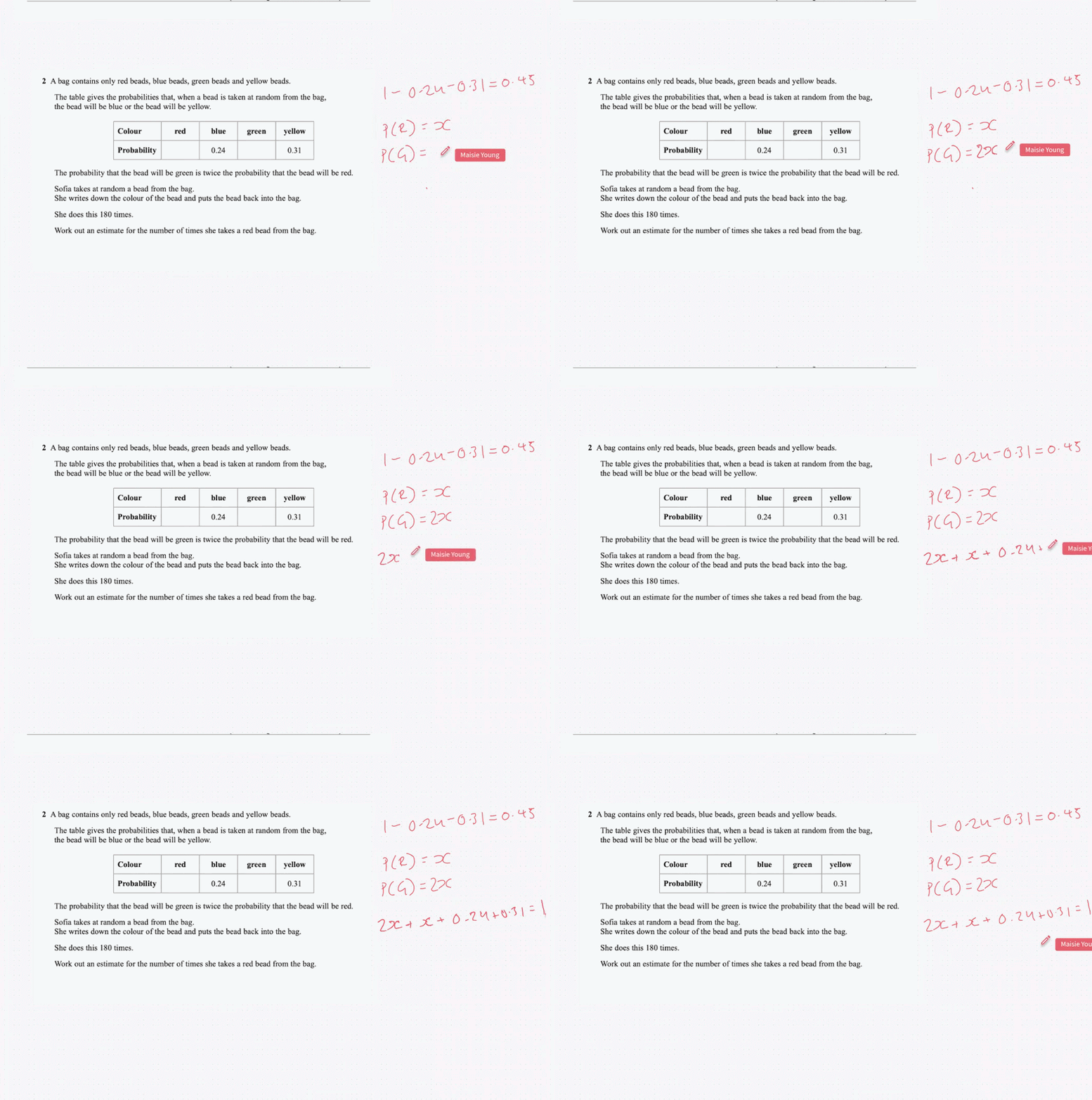
This clip shows a maths lesson recorded in Pencil Spaces, the online classroom used by Greenhill Academics.
Our A-level Maths tutors

Martin specialises in A-level Maths, and also teaches Further Maths and IB Maths. He is a PhD researcher in Applied Mathematics at the University of Cambridge, with a First from Bath and a Distinction in his Oxford MSc.

Ramsay is a third-year Maths student at Exeter College, Oxford, who achieved A*A*A*A*A* at A level, including Maths, Further Maths and Physics. He teaches A-level and GCSE Maths with Greenhill.
Questions parents ask us
My child can do each rule but can’t tell which one to use. Why?
Picking the rule and doing the rule are two different skills. Your child has the second one. The first comes from reading the shape of the expression, which is a separate habit they can practise directly.
What is the quick way to choose the rule?
Look at the shape of the expression as written. A function inside another points to the chain rule. Two functions multiplied point to the product rule. One function divided by another points to the quotient rule. It is a first check, because some expressions can be rearranged into a simpler form first.
Is this just A-level?
This article is written for A-level Maths. Choosing the right rule matters across the harder differentiation questions, from a single rule to ones that mix more than one.
Do you tutor A-level Maths online?
Yes. We tutor A-level Maths online for UK and international families. Tell us the exam board and where your child gets stuck, and we can talk through the help they need.
How quickly can this improve?
It depends on the child and the exam board. The check itself is short, but using it reliably takes practice on real questions. A tutor can show you what that practice looks like.
Want a tutor to work on A-level Maths with your child?
Tell us the exam board and where your child gets stuck, and we can talk through the help they need.
Send an enquiry