

Your child knows the IB Business Management content. They can define the terms and apply them to the case. But in an evaluate or discuss question, the answer lists points and stops. One thing worth checking is whether it ever reaches a verdict.
The short version
- An evaluate or discuss question wants a judgment, not just a list.
- A list of points on its own is not enough. Strong evaluation weighs the points and reaches a justified view in context.
- A verdict is one clear view, with a reason, for the business in the question.
- There is a short task at the end you can try at home this week.
Where IB Business Management evaluation answers fall short
A child who stalls here can know the IB Business Management content well. They define the terms and apply them to the business. One place to check is the end of a discuss or evaluate answer. If it lists advantages and disadvantages and then stops, it is not yet a strong evaluation. A strong evaluation weighs the points and reaches a justified view, in the context of the business. The judgement is one part of that, not the whole of it.
From a list to a verdict
An evaluate or discuss question wants a judgment, not just a list. Here is the difference, and the short way to get there.
Just a list
Gives the advantages, then the disadvantages, and stops. The points are there, but there is no decision.
A real answer
Weighs the stronger points against each other, then gives a clear view and says why, for this business.
How to reach a verdict
Weigh the points. Which ones matter more here, and why?
Decide. Give one clear view, not a fence-sit.
Say why, in context. Tie it to this business and its situation.
A list on its own is not enough. Strong evaluation weighs the points and reaches a justified view in context. The verdict is one useful part of that.
How we teach the verdict
We get the child to write the two sides first, then stop and ask one question: so what is the answer? Then they weigh the points, pick a view, and say why, for this business. We keep the judgment short and clear, tied to the case. It is a Greenhill way of turning a list into an argument that lands.
Greenhill tutor
Theo, Business tutor
Theo is studying Economic History at the London School of Economics, on track for a First, and teaches IB Business Management with Greenhill.
Answers stopping at the list?
Tell us where your child’s evaluate answers break down. A tutor can look at one and see if the verdict is missing.
Ask about a tutorA discuss question, two answers
The business and the answers here are made up to show the point. They are not from a child’s own work.
The question
A small bakery called Rise is deciding whether to open a second shop. Discuss whether it should.
List, then verdict
A list answer gives reasons for, like more sales and a bigger name, and reasons against, like higher costs and harder management, and stops. A real answer weighs them. The cash flow risk is the biggest factor for a small bakery, so it should wait until the first shop’s profit is steady. Weighing the points like that, and giving a justified view in context, is what a strong evaluation does.
Try this at home this week
This takes about eight minutes. It shows you whether your child adds a judgment or stops at the list.
What you need. Paper, a pen, and one evaluate or discuss answer your child has written, or one from a past paper.
The task. Ask your child to read their answer and add one more line: a clear view, with a reason, for that business. No new points, just the verdict.
- Read the answer and find where it stops.
- Underline the two or three strongest points on each side.
- Decide which side wins for this business, and why.
- Write one sentence: the view, the reason, and the business it applies to.
- Check it is a decision, not a fence-sit.
What to watch. Watch whether the last line is a real view or just a summary. If it restates the points without deciding, that is the part to practise.
What it cannot tell you. This short task does not cover the longer case-study questions, the knowledge and application marks, or the full mark scheme. It checks the verdict step only.
Where a tutor takes it next. That is where a tutor picks it up: the verdict first, then the full shape of a strong evaluate answer.
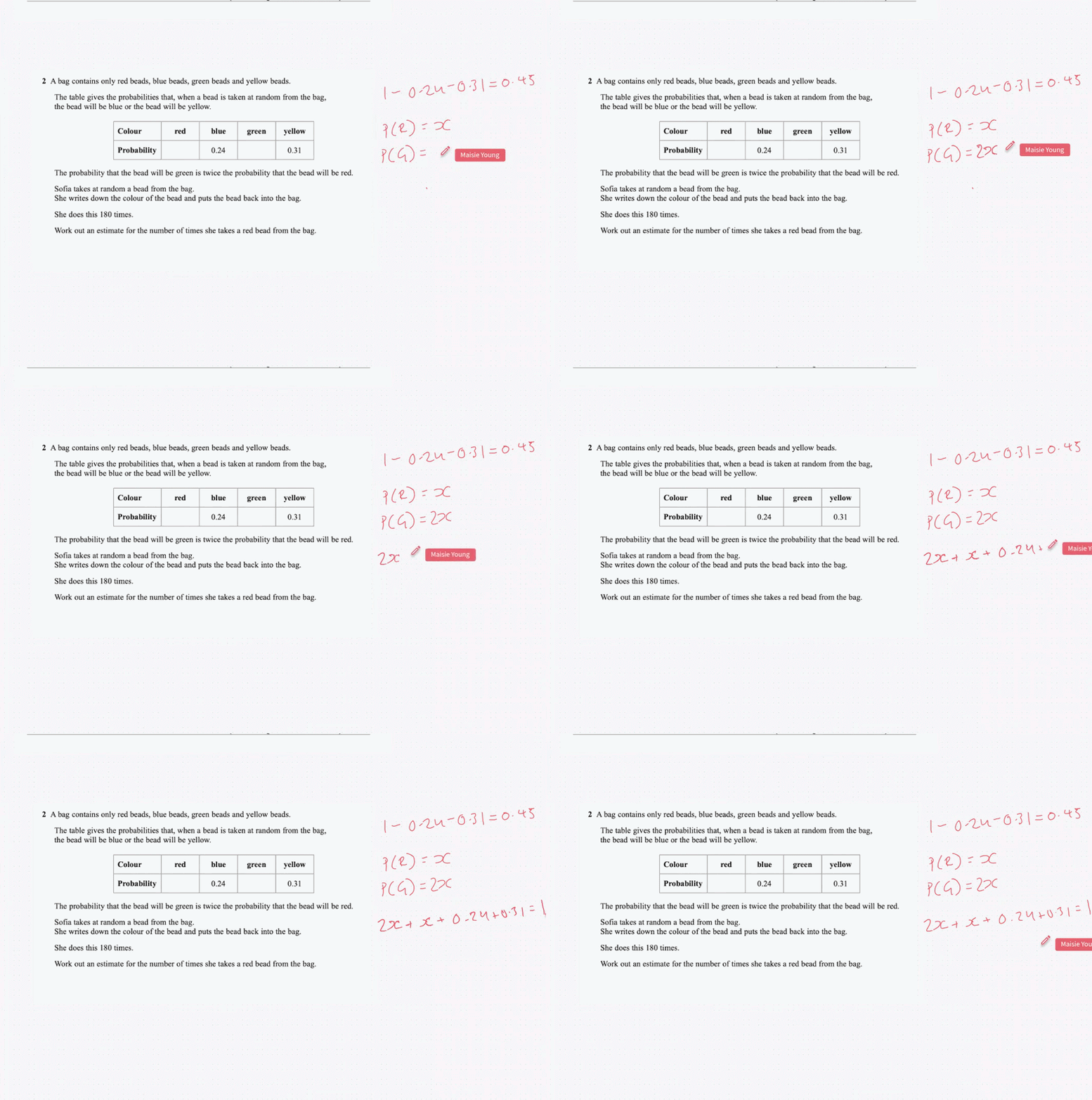
This clip shows a maths lesson recorded in Pencil Spaces, the online classroom used by Greenhill Academics.
Our IB Business Management tutors

Theo is studying Economic History at the London School of Economics, on track for a First, and teaches IB Economics and Business Management with Greenhill.

Will holds an MSc in Financial Economics from the University of Oxford and teaches IB Economics and Business Management with Greenhill.
Questions parents ask us
Why does my child list points but never give a verdict?
A list of points on its own is not enough for a strong evaluation. An evaluate or discuss question wants you to weigh the relevant points and reach a justified view, in context. The judgement is one useful part of that, not a single step that earns the marks by itself.
What counts as a verdict?
One clear view, backed by a reason, tied to the business in the question. Not a fence-sit, and not a summary of both sides.
Is this an IB skill?
Yes. Evaluation runs through IB Business Management, and the habit of weighing both sides before giving a view is the same one behind building a clear argument in other subjects.
Do you tutor IB Business Management online?
Yes. We tutor IB Business Management online for UK and international families. It is the same judgment skill we work on in essay-style answers too. Tell us where your child gets stuck, and we can talk through the help they need.
How quickly can this improve?
It depends on the child. The verdict step is short, but doing it well on real questions takes practice. A tutor can show you what that looks like.
Want a tutor to work on IB Business Management with your child?
Tell us where your child gets stuck, and we can talk through the help they need.
Send an enquiry