

If your child struggles to fit quotes into sentences, read one answer together. To fit a quote into a sentence means to make a short quotation part of your own sentence. Does the quotation fit the grammar, and does it support the point? The examples below show how to join short quotations to a sentence without changing their words.
Before your child rewrites a line
- Check the grammar and the connection to the point separately.
- Keep the selected quoted words unchanged when joining them to your sentence.
- A separately introduced quotation can also work.
- Integrating evidence does not by itself develop an analysis.
- Try the short repair task using the supplied passages.
What a detached quote looks like
Consider this invented draft: “Mara is nervous. ‘Her hands trembled.’ This shows she is scared.” The evidence supports the point, but the quotation stands alone. Joining a short part of it to the writer’s sentence gives another way to present that evidence.
A separate quotation is not automatically wrong. It may be introduced clearly and discussed afterwards. Here we are practising a different option: making a short quotation part of the grammar of your own sentence.
These are made-up practice lines, not taken from any real pupil’s work.
How to help your child fit quotes into sentences
Choose the short words you want to quote, then build your sentence around them. In this example, both repairs use “hands trembled” unchanged from the passage.
The passage (made up for practice)
Mara waited beside the locked gate. Her hands trembled.
Detached
Mara is nervous. “Her hands trembled.”
Two possible repairs
Repair 1
Mara’s nervousness is suggested by the description of how her “hands trembled”.
Repair 2
The detail that her “hands trembled” suggests Mara is nervous.
Say it out loud
Ask your child to read the repaired sentence aloud. If the join sounds awkward, they can move the words around until it flows. Reading aloud is a way to hear a clumsy join. It does not prove the grammar is right or that the answer earns marks.

Greenhill tutor
Francesca, English tutor
Francesca studied English at Christ Church, Oxford, and has tutored English since 2017. She teaches GCSE and IGCSE English Language and Literature.
Three sentence repairs to try at home
Allow eight to ten minutes with paper and a pencil. These passages are invented. For this exercise, make each draft into one sentence. Separate, clearly introduced quotations can also work in essays.
Passage 1
The classroom fell silent when the head teacher walked in.
Draft
The head teacher’s arrival quietens the room. “fell silent”
Passage 2
The soup was cold again. Nadia ate it anyway.
Draft
Nadia eats despite the cold soup. “ate it anyway”
Passage 3
The dog waited by the door every evening at six.
Draft
The dog’s wait is a routine. “every evening at six”
- Read the first passage and draft.
- Join the quoted words to the point in one grammatical sentence. Keep those words unchanged.
- Read it aloud, then check the grammar and meaning against the passage.
- Repeat for the other two drafts before checking the answers.
Possible answers
1. The classroom “fell silent” when the head teacher arrived. 2. Although the soup was cold, Nadia “ate it anyway”. 3. The dog waits “every evening at six”, suggesting a routine.
Check the quotation is exact, the sentence is grammatical and the point is supported. Different wording can work. Reading aloud may reveal an awkward join; it is not proof of accuracy.
This checks sentence repair, not independent evidence selection, developed analysis or exam readiness.
A tutor can use your child’s own writing to distinguish a grammatical problem from a point that needs better evidence or explanation.
Our GCSE English tutors
Francesca studied English at Christ Church, Oxford, and teaches GCSE and IGCSE English Language and Literature, along with 11+ and 13+ English. She has tutored English since 2017.

Jennifer teaches English and Spanish, from 11+ through GCSE, IGCSE, A Level and IB. She works closely from the mark scheme, so students know what examiners are looking for.
How a tutor checks the writing
A tutor can check whether the quotation is accurate, whether the sentence works and whether the evidence supports the point. The next step may be a grammatical repair or closer discussion of the wording. For wider GCSE English technique, see our guides to getting a 9 in GCSE English Language and GCSE English Language exam mistakes.
Not sure if it is the quotes or the analysis?
Tell us how your child’s GCSE English answers read, and a tutor can take a look at where the writing stalls.
Ask about a tutor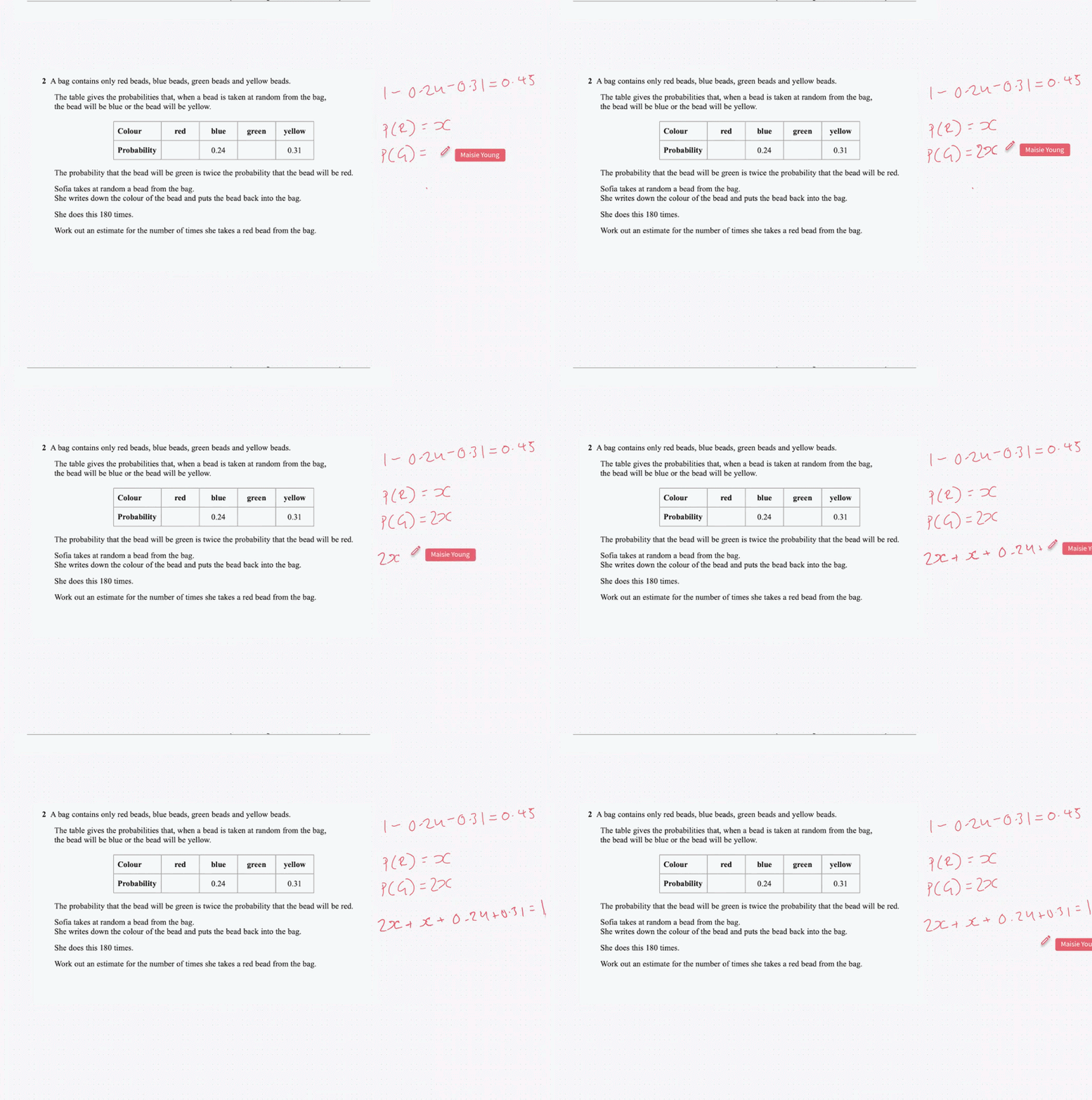
This clip shows a maths lesson recorded in Pencil Spaces, the online classroom used by Greenhill Academics.
Questions parents ask about quotes in essays
My child’s quotes feel clunky. Is that a real problem?
An awkward join is worth checking, but a quotation in a separate sentence is not automatically wrong. Read the sentence for grammar, then check how the evidence supports the point.
Does every quote have to go inside the sentence?
No. A quotation can sit in its own sentence, as long as it is clearly introduced and linked to the point. The thing to avoid is a quote left with no connection to the words around it.
Is a neatly fitted quote the same as good analysis?
No. A quotation may fit the grammar without explaining much about the passage. Developed analysis discusses the wording and supports an interpretation in context.
How can I help at home without marking essays?
Use the short task above. Check the quoted words against the source, read the sentence for grammar and ask how it supports the point. No marked essay is needed.
Do you tutor GCSE English online?
Yes, we tutor GCSE English online for families in the UK and abroad. Tell us where your child’s writing stalls, and we can talk about the right support.
Read these next
How to get a 9 in GCSE English Literature
What separates a 9 from a 7, from thesis to quotation handling.
The three skills behind a 9 in GCSE English Language
A UAE-focused guide to analytical vocabulary, sentence control and writing for different purposes.
Want a tutor to work on GCSE English writing with your child?
Tell us your child’s year and exam board, and we can talk about the right English support.
Ask about a tutor