


In this article
- The three strands of IGCSE Chemistry, and why pupils stall on one
- Moles: the topic that decides the grade
- Edexcel, CIE, and the practical paper: knowing your child’s route
- What to look for in an IGCSE Chemistry tutor in Hong Kong
- Scheduling tutoring from Hong Kong around a Hong Kong school week
- Meet a few of our chemistry tutors who work with Hong Kong families
- The seven things that matter most
- Frequently asked questions
If your child is sitting IGCSE Chemistry at an international school in Hong Kong, the subject can feel like three subjects wearing one name. There is the conceptual side, bonding, structure, the reactivity series. There is the recall side, the tests for gases, the colours of precipitates, the trends down a group. Then there is the arithmetic side, the mole, where a confident pupil can still drop marks they understood perfectly. Most children are strong on one or two of these and quietly weak on the third. That third strand is usually what holds the grade down, and it is where IGCSE Chemistry tutoring in Hong Kong earns its keep.
Good IGCSE Chemistry tutoring in Hong Kong finds that weak strand fast and rebuilds it, rather than re-teaching the parts your child already knows. This guide explains where pupils actually lose marks in IGCSE Chemistry, how the Edexcel and CIE routes differ, and what to look for in a tutor. It also covers the practical side of arranging sessions from Hong Kong, and introduces a few of the chemistry tutors who work with families here.
The short version
IGCSE Chemistry splits into concepts, recall, and mole maths. Find the strand your child is weakest on and rebuild that one. A tutor who knows the Edexcel or CIE paper can spot it in a single session.
Speak to us about IGCSE Chemistry tutoring in Hong Kong
A short, no-pressure consultation. We’ll listen, suggest a few tutors, and let you decide from there.
The three strands of IGCSE Chemistry, and why pupils stall on one
Chemistry is unusual at IGCSE because it draws on three different kinds of thinking, and they rarely develop at the same pace in one child. Understanding why this happens is the first step to fixing a stuck grade.
The conceptual strand covers the ideas. Why do ionic compounds conduct when molten? Why do giant covalent structures have high melting points? How does the reactivity series predict a displacement reaction? A child who grasps these can reason through an unfamiliar question. The recall strand is different work entirely. It is the flame-test colours, the gas tests, the conditions for the Haber process, the general formulae of the homologous series. No reasoning will recover a fact your child never memorised.
The third strand is the maths, and it is where strong pupils most often bleed marks. A child can understand neutralisation completely and still lose every mark on a titration calculation because they cannot convert between moles, mass, and concentration cleanly. Because the three strands feel like one subject on the timetable, a weakness in any one gets blamed on chemistry as a whole. The first job of IGCSE Chemistry tutoring in Hong Kong is to separate them.
Find the weak strand: a test you can run tonight
Pull out your child’s last marked chemistry paper and sort the lost marks into three piles. Did they miss a fact they should have known, such as the test for chlorine gas? That is recall. Did they misunderstand an idea, such as why electrolysis needs a molten or aqueous electrolyte? That is concept. Did they set up a mole calculation and fumble the numbers? That is maths. Whichever pile is tallest tells you, and any future tutor, exactly where the first month should go.
Moles: the topic that decides the grade
If there is one topic that separates a 6 from an 8 in IGCSE Chemistry, it is the mole. It threads through titrations, reacting masses, empirical formulae, percentage yield, and gas volumes. A shaky grasp of it costs marks on question after question rather than in one place.
The trouble is that moles are taught as a formula to memorise rather than an idea to understand. A pupil who has only learned “moles equals mass over Mr” freezes the moment a question asks for concentration in grams per cubic decimetre. The same happens when a question works backwards from a percentage yield. Good IGCSE Chemistry tutoring in Hong Kong teaches the concept: a mole is simply a fixed count of particles. That single idea unlocks the whole family of calculation questions. The difference shows up immediately in their working.
A worked example: the titration that trips pupils
Take a classic Higher question: 25.0 cm³ of sodium hydroxide is neutralised by 20.0 cm³ of 0.100 mol/dm³ hydrochloric acid, and the pupil must find the concentration of the alkali. The chemistry is simple, a one-to-one neutralisation. Yet pupils lose the marks by mishandling the volumes. They forget to convert cubic centimetres to cubic decimetres, or skip the working the mark scheme rewards. A good tutor drills the method until it is automatic: moles of acid first, then the ratio, then back to concentration. Once that sequence is secure, every titration on the paper becomes the same three steps.
Edexcel, CIE, and the practical paper: knowing your child’s route
Most Hong Kong international schools enter pupils for either Pearson Edexcel International GCSE or Cambridge International (CIE) Chemistry. Both are recognised identically by UK universities and sixth forms, so a grade 8 in either carries the same weight. However, they are not interchangeable in the exam room, and a tutor needs to know which one your child sits.
The boards differ in how they assess practical skills and in their paper balance. CIE has historically offered an alternative-to-practical paper that tests experimental technique in writing. Edexcel weaves practical assessment through its theory papers instead. The command words differ in emphasis too. A pupil drilled on one board’s mark scheme can be caught out by the other’s phrasing. This matters most for pupils who changed schools, or whose school switched boards between Year 10 and Year 11.
Separate chemistry, or part of combined science?
Confirm early whether your child takes Chemistry as a separate IGCSE or as one third of a combined or double award. The separate qualification goes deeper. It is the natural foundation for A Level Chemistry, Medicine, or a science-heavy degree. The combined route covers less depth per subject. A tutor pitches the work differently for each, so naming the route in your first conversation saves a wasted session finding it out.
Looking for the right IGCSE Chemistry tutor for your child?
Tell us the school, the exam board, and the target grade. We’ll match your child with a tutor who fits.
What to look for in an IGCSE Chemistry tutor in Hong Kong
The best chemistry tutor for your child is the one who can diagnose which of the three strands is weak and teach all three as one connected subject. A few specific things separate a specialist from a capable generalist.
They teach the mole maths as well as the chemistry
Plenty of tutors can explain bonding well. Fewer can teach a nervous pupil to handle reacting-mass and concentration calculations until the working is automatic. Ask a prospective tutor directly how they teach moles. If the answer is a single formula, keep looking. If they describe building the concept first, then drilling the method across titrations, yields, and gas volumes, you have found the right tutor. They understand where the marks actually go.
They know your child’s exam board cold
Edexcel and CIE reward slightly different things, so recent experience of the right board matters. Ask which board the tutor has taught most recently, and whether they have prepared a pupil for that exact IGCSE Chemistry paper in the past year. A tutor who can name the quirks of your child’s specification, the practical paper format, the command words, will not waste time teaching to the wrong target.
They have taught pupils for whom English is a second language
Hong Kong classrooms are international, and many able chemists read the question more slowly than they solve it. A six-mark question on extracting a metal can be lost on the phrasing rather than the chemistry. An experienced tutor teaches the command words, “describe”, “explain”, “suggest”, so your child knows what each one is asking before they reach for the chemistry.
They have the depth to take a pupil to a 9
The top grades turn on the hardest questions, often a multi-step calculation or an unfamiliar application of a familiar idea. At Greenhill Academics, our chemistry tutors hold degrees from Oxford, Cambridge, and other leading universities, and most studied chemistry to a high level themselves. That depth lets them take a pupil through the stretch questions with genuine fluency rather than reciting a mark scheme.
Scheduling tutoring from Hong Kong around a Hong Kong school week
Hong Kong sits eight hours ahead of London, and that gap works in your favour. A UK tutor’s morning is your child’s late afternoon or early evening. The window between roughly 4pm and 8pm Hong Kong time lines up with a UK tutor starting their day. Sessions rarely collide with the school timetable or with a tutor’s other commitments.
IGCSE Chemistry tutoring in Hong Kong benefits from a steady weekly slot, because the subject builds in layers and recall fades without regular use. A pupil who reviews gas tests or ionic equations once a week keeps them live in a way that occasional cramming never matches. Weekend mornings in Hong Kong, which fall on Friday and Saturday evenings in the UK, also open up if weekday slots are tight around extracurriculars.
Meet a few of our chemistry tutors who work with Hong Kong families
Our chemistry tutors hold Oxford, Cambridge, or top-university degrees, and several have taught chemistry to international pupils across Asia. Below are three who work regularly with families in Hong Kong.

Gonzalo
Gonzalo holds a Master’s in Chemistry (MChem) from the University of Oxford. He has a particular talent for the mole maths that trips so many pupils, breaking titrations and reacting-mass questions into a repeatable method. He works across IGCSE, GCSE, and A Level, and suits a child aiming high in chemistry or building towards A Level and Medicine.

Morgan
Morgan also holds an Oxford Master’s in Chemistry (MChem) and teaches the subject from IGCSE to A Level. He is strong on the conceptual side, bonding, structure, energetics, and explains why a reaction behaves as it does rather than asking pupils to memorise it blind. His calm, logical manner suits a pupil who has decided chemistry is not for them and needs convincing otherwise.
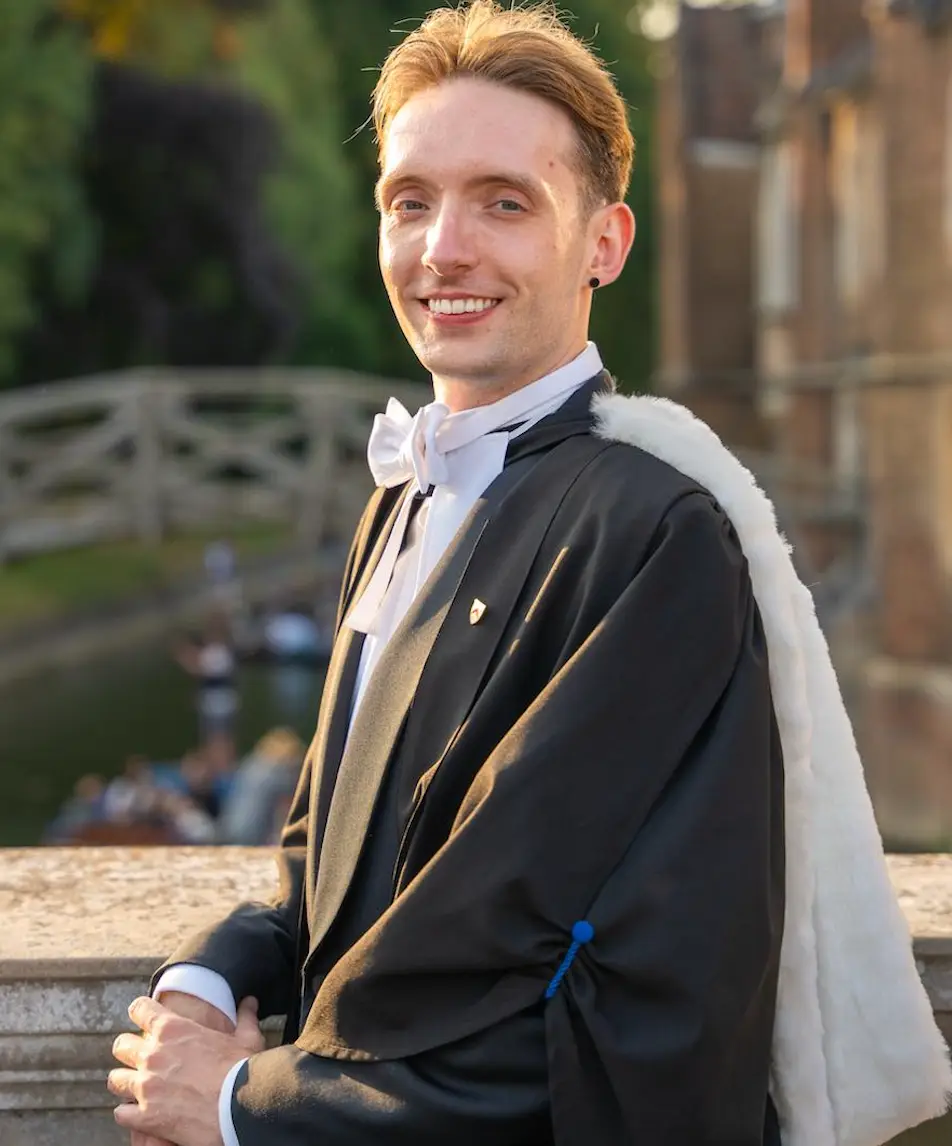
Karol
Karol read Natural Sciences at Cambridge and holds a PGCE, with over 5,000 hours of tutoring behind him. His classroom training shows in how he plans a pupil’s progress week to week. He is especially good at bridging the chemistry and the maths so neither gets left behind. Patient with anxious pupils, he reassures parents managing their child’s chemistry from another time zone.
The seven things that matter most
If you remember nothing else from this guide, remember these.
- Split the subject in three. Concepts, recall, and mole maths each fail differently and need teaching apart.
- Win at moles. One secure method for moles unlocks titrations, yields, and reacting masses at once.
- Sort the marked paper. Three piles, fact, idea, or calculation, show where the first month should go.
- Name the board. Edexcel and CIE assess practicals and phrasing differently, so match the tutor to the paper.
- Confirm the route. Separate Chemistry goes deeper than combined science and suits future scientists.
- Keep recall live. A weekly slot stops gas tests and ionic equations fading between mocks.
- Use the eight-hour gap. UK mornings meet Hong Kong evenings, so weekly sessions slot in easily.
Get those right and the grade tends to follow. Chemistry is more coachable than most pupils believe, because the lost marks usually sit in one identifiable strand rather than across the whole subject. For pupils pushing for the top, our guide to getting a 9 in GCSE Chemistry and our guide to using chemistry past papers go further. If your child studies more than one science, see our companion guides to IGCSE Maths tutoring in Hong Kong and IGCSE Physics tutoring in Hong Kong. Families newer to the UK system may also find our IGCSE guide for families in the UAE useful.
Ready to find an IGCSE Chemistry tutor for your child in Hong Kong?
If your child needs targeted support at IGCSE Chemistry, get in touch. We’ll talk through the school, the exam board, and the strand that is holding the grade back. Then we will match your child with a tutor who fits.
Premium IGCSE Chemistry Tutoring for Hong Kong-Based Families
OXBRIDGE-GRADUATE TUTORS, ONLINE, MATCHED TO YOUR CHILD
Frequently asked questions
Practical questions about chemistry, scheduling, and confidence
Useful external references for parents: the UCAS website sets out how international qualifications feed into UK university applications. The Pearson Edexcel International GCSE pages publish the current IGCSE Chemistry specifications and past papers.
