


In this article
- The IB in Geneva: a programme on home ground
- The predicted grade, and why it decides the offer
- The bilingual pupil and the English-medium exam
- What to look for in an IB tutor in Geneva
- Scheduling tutoring from Geneva around an IB school week
- Meet a few of our IB tutors who work with Geneva families
- The seven things that matter most
- Frequently asked questions
Geneva is where the IB Diploma was invented. The International School of Geneva, Ecolint, wrote the first IB syllabus in 1968 and the programme has shaped the city’s international education ever since. If your child is sitting the IB at Ecolint, Collège du Léman, the International School of Lausanne, or another Geneva-area school, you are inside the most established IB ecosystem in the world. Yet the same parents we speak to in Dubai or Hong Kong ask the same questions: how is the predicted grade really decided, where do the IAs and the Extended Essay fit, and what does a tutor add when the school is already excellent?
IB tutoring in Geneva tends to focus on different problems from IB tutoring elsewhere. The schools are strong, so basic concepts are usually secure. The pressure sits at the top of the grade range: hitting 42, 43, 44 for the Oxbridge, LSE, ETH Zurich, or EPFL offer your child is targeting. This guide explains where Geneva pupils actually leave marks on the table, how the bilingual context affects an English-medium IB, and what to look for in a tutor. It also covers scheduling from Geneva and introduces a few of our tutors who work with families here.
The short version
Geneva IB pupils need top-end support, not catch-up support. The gap from 38 to 43 sits in IA precision, EE structure, and the hardest HL paper questions. Tutor for those three things specifically.
Speak to us about IB tutoring in Geneva
A short, no-pressure consultation. We’ll listen, suggest a few tutors, and let you decide from there.
The IB in Geneva: a programme on home ground
The schools you are choosing between in Geneva all teach the IB to a high standard. Ecolint runs it across three campuses, La Grande Boissière, La Châtaigneraie, and Campus des Nations. Collège du Léman, Institut Le Rosey, and the International School of Lausanne offer the Diploma alongside or instead of national qualifications. Class sizes are small, teachers are experienced IB examiners, and the curriculum is delivered at depth. Parents new to the Geneva system sometimes assume that excellent schools mean tutoring is unnecessary. It does not. It means tutoring needs to be aimed at the top end of the grade range, where the marginal gains live.
The IB has three pieces, and at Geneva-quality schools the weak link is rarely the conceptual teaching. Most pupils understand their HL subjects. The places marks leak are subtler: an IA that loses three marks on methodology because the rubric was misread, an Extended Essay that argues well but does not engage critically with sources, an HL paper-three question that needed a different command-word interpretation. IB tutoring in Geneva that earns its fee is precise work on precise problems.
Where Geneva pupils typically lose the top points
Three patterns recur. The first is IAs written to a high standard of insight but only a medium standard of rubric compliance. The IB pays for criteria, not brilliance, so a pupil who writes thoughtfully but does not show the markers what they need to see drops a band. The second pattern is the EE that picks too broad a question. A 4,000-word essay can sustain a precise sub-question well; a broad one ends as an overview and tops out at a B. The third is paper-three questions, the data-response or unfamiliar-application ones, where pupils write what they know rather than answering what is asked. A tutor who has seen these patterns can usually spot and correct them within two or three sessions.
The predicted grade, and why it decides the offer
UK universities make offers based on the predicted grade your school sends to UCAS, not the final grade. That predicted score is decided by your child’s teachers in the autumn of Year 13, drawing on mock exams, IA drafts, and the teacher’s view of the pupil’s trajectory. ETH Zurich, EPFL, and other Swiss universities use the final grade rather than a prediction, but for the UK and the US, the prediction is the offer-making number.
For pupils targeting Oxford, Cambridge, LSE, or Imperial, the prediction needs to clear 40 with strong specific HL grades, often 776 at HL. Geneva schools tend to predict carefully and on the basis of clear evidence. The work for IB tutoring in Geneva, when the prediction is the issue, is to give teachers more evidence to write a higher prediction: a stronger mock paper, a tighter IA draft, a credible EE proposal. That evidence builds in Year 12 and crystallises in early Year 13. After November of Year 13 the prediction is usually set.
The 40 to 43 jump
Moving from a predicted 40 to a predicted 43 changes the offer set entirely. A 40 is competitive for most Russell Group courses; a 43 reaches into Oxbridge, LSE, Imperial, and the most selective US courses. Three points sounds small but they sit in the hardest places: the top band of two or three HL papers, plus the EE and TOK bonus. A focused tutoring plan from the spring of Year 12 onward can put those three points within reach, because each of them can be worked on directly.
The bilingual pupil and the English-medium exam
Many Geneva IB pupils live their daily lives in French and sit the IB in English, or the reverse. Most of the time this is a strength. Bilingual pupils tend to think more flexibly, particularly in essay-heavy subjects like History or English Literature. But the exam itself rewards precision in the language of the paper, and the marker has no view of the pupil’s other languages.
Two specific issues come up. In English-language papers, bilingual pupils sometimes write sentences that are grammatically clean but stylistically unusual, costing marks for clarity. In French-language papers, English-dominant pupils can structure arguments in the English essay tradition, which differs subtly from the French one. A tutor who has worked with bilingual IB pupils knows how to read for these patterns and coach them out without flattening the pupil’s voice.
English A: Literature vs Language and Literature
Geneva schools usually offer both English A routes. Literature suits pupils who enjoy close reading of novels, poems, and plays. Language and Literature suits pupils interested in non-literary texts: speeches, journalism, film, advertising. The choice affects HL workload and EE options. Make it before the start of Year 12 with the university course in mind. English Literature applicants to Cambridge or Oxford will want HL Literature. Most other courses are happy with either.
Looking for the right IB tutor for your child in Geneva?
Tell us the school, the HL subjects, and the predicted-grade target. We’ll match your child with a tutor who fits.
What to look for in an IB tutor in Geneva
The best IB tutor for a Geneva pupil is the one who can teach at the top of the grade range and understands the IB programme as a whole, not just the subject. A few specific things separate a strong IB tutor from a capable subject tutor.
They can teach to the top of the mark scheme
A tutor who routinely takes pupils from 5 to 6 is a different proposition from one who routinely takes pupils from 6 to 7. For Geneva families targeting Oxbridge and the Russell Group, that second tutor is the one you want. Ask about pupils’ final grades in the last two years. Specific numbers in specific subjects matter more than general claims of experience.
They know the IB rubrics as well as the syllabus
IAs and the EE are graded against rubrics that reward specific things in specific ways. A good tutor can quote the criteria from memory and show your child exactly which sentence in a draft is doing the work and which is filler. This is rubric literacy, and it is the single biggest separator at the top end of IB grades.
They understand the European university landscape
Geneva pupils apply to UK universities, Swiss universities, and increasingly to the Netherlands, Spain, and France. The IB grade requirements differ. A tutor who only knows UCAS misses half the picture. Useful tutors can talk about Maastricht’s Erasmus programme entry requirements as fluently as Oxford’s, and adjust the strategy accordingly.
They have the depth to take a pupil to a 7
The 6-to-7 jump in any HL subject sits in the hardest exam questions, the multi-step ones that reward genuine subject fluency. At Greenhill Academics, our IB tutors hold degrees from Oxford, Cambridge, and other leading universities, and most have taught the IB to the top grade before. That depth lets them push a pupil through the stretch questions with real confidence rather than reciting a mark scheme.
Scheduling tutoring from Geneva around an IB school week
Geneva sits one hour ahead of London for most of the year, which is the easiest possible time-zone fit for online tutoring with UK tutors. Your child’s after-school window between roughly 4pm and 8pm Geneva time maps directly onto a UK tutor’s 3pm to 7pm. Sessions slot in cleanly around a school day at Ecolint, Collège du Léman, or the International School of Lausanne.
IB tutoring in Geneva rewards a steady weekly slot rather than occasional sessions. The programme moves quickly across two years, and the IA and EE deadlines cluster at predictable moments that benefit from continuous support. A weekly hour per HL subject is the most common pattern, with shorter check-ins on IAs and the EE in between. Saturday mornings are popular for families balancing weekday sport, music, or other extracurricular commitments.
Meet a few of our IB tutors who work with Geneva families
Our IB tutors hold Oxford, Cambridge, or top-university degrees, and most have taught the IB to the highest grades. Below are three who work regularly with families in Geneva and the wider Switzerland region.

Hugh
Hugh holds a DPhil in Surgical Sciences from Oxford and a First-Class MSci in Theoretical Physics from Imperial College London. He teaches IB Maths, IB Physics, A Level Maths, Further Maths, and Physics, with over a decade of tutoring experience. His research background lets him explain complex topics from multiple angles, and he is particularly strong on paper-three data-response questions where Geneva pupils often leave marks on the table at the top end.
Karol
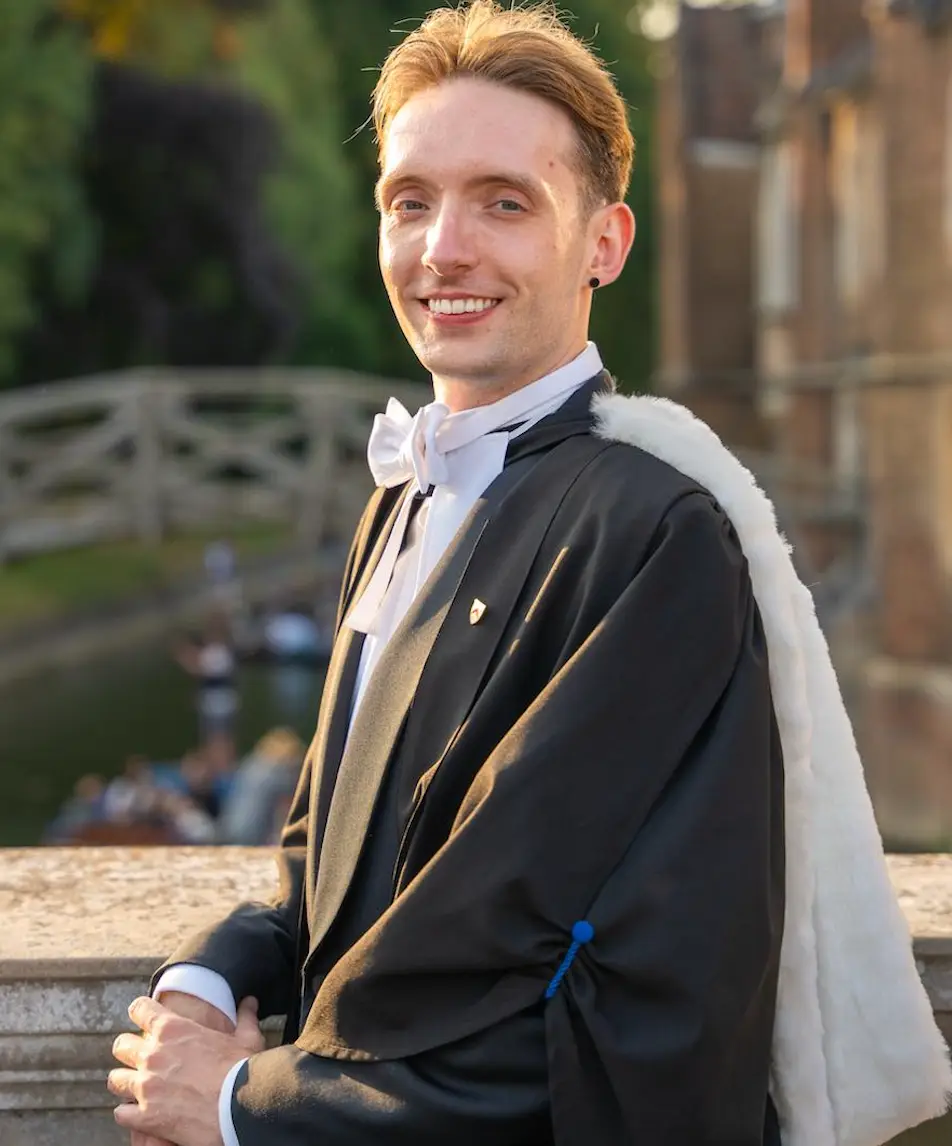
Karol holds a BA (Hons) in Natural Sciences from Cambridge (Wolfson College) and is completing his PGCE in Science (Chemistry), also at Cambridge. With over 5,000 hours of tutoring across more than a decade, he teaches IB Chemistry and Maths at HL and SL, and works particularly well with the high-pressure Year 13 autumn and bilingual pupils refining the precision of their written work.

Laurie
Laurie read English at Oxford and teaches IB English at HL, including both Literature and Language and Literature routes. He has guided pupils into English, History, and Humanities courses at Oxford, Cambridge, and UCL. He is especially good with bilingual pupils, sharpening their written English without losing the texture of their thinking.
The seven things that matter most
If you remember nothing else from this guide, remember these.
- Aim tutoring at the top end. Geneva schools teach the IB well, so the work is precision at 6-to-7, not basics.
- Watch the predicted grade. For UK and US applications, it is the number that wins or loses offers.
- Master the IB rubrics. IAs and the EE are scored on criteria, so write to what markers reward.
- Plan for the 40 to 43 jump. Three points unlock Oxbridge, LSE, and Imperial offers.
- Choose English A carefully. Literature or Language and Literature has knock-on effects on EE and university choice.
- Use the one-hour gap. Geneva afternoons line up perfectly with UK tutor availability.
- Start in Year 12. Spring of Year 12 is when the levers on the predicted grade are still moveable.
Get those right and the predicted grade tends to follow. The IB at a Geneva school is a high-quality programme, so the role of tutoring is to add precision rather than fill gaps. For pupils pushing for a 7, our guides to getting a 7 in IB Maths HL, IB Physics, and getting an A in the IB Extended Essay go further. Families exploring different international markets may also find our IB guide for families in Dubai useful for comparison.
Ready to find an IB tutor for your child in Geneva?
If your child needs targeted support across the IB, get in touch. We’ll talk through the school, the HL subjects, the IA cycle, and the predicted-grade target. Then we will match your child with a tutor who fits.
Premium IB Tutoring for Geneva-Based Families
OXBRIDGE-GRADUATE TUTORS, ONLINE, MATCHED TO YOUR CHILD
Frequently asked questions
Practical questions about IB, scheduling, and confidence
Useful external references for parents: the International Baccalaureate Organisation publishes the current Diploma Programme subject guides and assessment criteria. The UCAS website sets out how IB scores translate into UK university offers.
