


Your child is sitting IB HL Physics at one of the UAE’s IB World Schools. Dubai International Academy, GEMS Modern Academy, Dwight School Dubai, North London Collegiate Dubai, Universal American School. The syllabus is the same regardless of the campus, and the exam is approaching. School has moved on to the next section while old content still feels shaky. There are gaps in the fundamentals, but it is hard to know exactly where they sit. The exam scoring depends on getting those gaps closed in time. This is one of the most stressful positions a Higher Level Physics student can be in, and it is also one of the most common. The good news is that a focused stretch of one-to-one sessions with an IB Physics tutor in the UAE can rebuild a topic block before an exam, even when school cannot. This guide walks through how, told through one real student’s five sessions in the run-up to a Section D exam.
On this page
The short version
In IB HL Physics, the marks often slip on a single misconception buried beneath a topic. A tutor surfaces it and fixes it, before it costs marks on the exam.
Find the Gaps in Your Child’s HL Physics
UK-based Oxbridge tutors for UAE families, teaching the long topics where most marks are lost.
Where IB HL Physics marks really go
In Higher Level Physics, the marks rarely slip in obvious places. They slip on the misconceptions a student does not realise they hold. A student thinks simple harmonic motion applies to every transverse wave, until they hit the question that proves it does not. A student knows the right hand rule for the cross product, but freezes when the magnetic field changes orientation in a moving frame. A student can recite the formula for magnetic induction, but cannot select the right one under exam pressure because two technical terms in the syllabus sound almost identical and they have not separated them properly.
So the question of where marks really go is, more often than not, the question of what foundational misconceptions are buried beneath a topic. A class teacher at a Dubai or Abu Dhabi IB World School cannot dig into these one student at a time. Your child cannot always identify them alone, because the misconception by definition feels like solid ground. A specialist IB Physics tutor in the UAE, working through past papers session by session, catches them. That is the value of one-to-one work.
Surface the Hidden Gaps
A specialist IB HL Physics tutor finds the misconceptions classroom teaching never quite reaches.
Five sessions before an IB HL Physics exam
What follows is real, drawn from our own lesson records of an IB HL Physics student we worked with at Greenhill Academics. His name and a few identifying details have been changed for privacy, so we will call him Lukas. He came to us in the lead-up to a Section D exam that mattered for his final grade, with the honest admission that his teachers had moved through certain topics quickly, leaving gaps he could not always pinpoint. The plan was simple. Work through Section D together, find the gaps, fix them before the exam, and use whatever sessions remained to build forward on the next block. Every topic, struggle, and breakthrough below is real, and the same pattern applies to any UAE family in the same position.
Session 1: electric fields from the fundamentals
The first session was a deep dive into electric fields. Lukas had covered them in school, but the foundations were not as secure as he had thought. His tutor went back to the basics: what a field actually is, how a charged particle interacts with one, the relationship between field strength, force, and potential. The session moved slowly because every conceptual building block mattered. Lukas adapted to material he had not properly understood before, which is the most promising sign a tutor can see in a first session. The honest gap had been named, and now they were closing it.
Sessions 2-3: charges in magnetic fields and the right hand rule
The second session completed electric fields. The exam was approaching in two or three weeks, so the pace had to lift without sacrificing the depth of understanding from session one. Lukas remembered the topics covered the week before very well and progressed through more complex questions. He struggled initially when he had to integrate the new knowledge with the broader Section D material, but by the end of the session was reasoning through very complex topics. This is the pattern a tutor expects from a student whose foundations are now sound. Integration takes practice. The knowledge is in place.
Session three covered charges moving through a magnetic field. Lukas quickly picked up how to calculate directions using the vector cross product and the right hand rule. They covered the whole topic in a single session, which is exactly the pace the tutor wanted at this point in the run-up. The fundamentals from earlier sessions were translating into faster acquisition of new material. This is what an effective topic-block tutoring plan looks like.
Session 4: magnetic induction and the discipline of precision
Session four focused on magnetic induction, the last part of Section D Lukas needed before his exam that week. He did well with all the calculations involved. The honest difficulty his tutor noted was that two technical terms in this area are very similar, and Lukas needed to continue practising selecting the right equation for the situation. This is a precision issue rather than an understanding one. Such issues matter enormously on exam day. A student who has the right concept but reaches for the wrong formula loses marks the same as one who never understood the topic. So precision drills became homework.
Session 5: simple harmonic motion and a fundamental misconception
After the exam, the work moved on to simple harmonic motion. Lukas came in with a misconception that had not surfaced before. He believed simple harmonic motion applied to all transverse waves, including electromagnetic waves, when in fact it describes a more limited class of motion. His tutor worked through calculations, which Lukas did well, but the underlying belief revealed something useful. There were more fundamental gaps in his Physics foundations that needed addressing. The tutor’s plan for the next session was to design the lesson around the topics underneath simple harmonic motion, so that the next block of material could be built on a stronger base.
This is what makes one-to-one work different from classroom teaching. A class teacher would not have time to notice that a misconception about EM waves was actually a symptom of a deeper gap. Lukas’s tutor caught it in a single session and redirected the work. That is the pattern that, sustained across a year, takes an HL Physics student to a 7.
If your child has gaps in IB HL Physics they cannot quite identify, the right tutor will find them. Book a free consultation.
What this case study shows about IB HL Physics tutoring
Three patterns from Lukas’s sessions are worth pulling out, because they recur across many of our HL Physics students. First, the foundations matter more than the new content. A tutor who spends the first session checking foundations rather than racing into harder material does better work in the long run. The deep dive on electric fields paid off across every subsequent topic.
Second, integration is its own skill. Knowing a topic in isolation is not the same as integrating it with adjacent topics under exam pressure. Lukas struggled at integration even when he knew each piece. The fix was time and practice, not more content. Third, misconceptions hide in plain sight. The SHM-applies-to-EM-waves error is the kind of thing a young scientist can carry for years without anyone noticing. A tutor who works through worked examples session by session surfaces these patterns. That is where the 7 actually gets built.
The IB HL Physics paper structure: where to focus
Higher Level Physics is assessed across three written papers plus an Internal Assessment. Paper 1 is multiple choice. Paper 2 is data response and extended response. Paper 3 covers the practical skills and an option topic. The Internal Assessment accounts for 20 percent of the final grade and is an independent scientific investigation written up to a strict criteria-based format.
For tutoring purposes, the focus shifts across the year. The autumn and winter of DP1 is the topic-coverage phase: building genuine understanding of the major content areas. By spring of DP2, the work tilts toward Paper 2 technique, which rewards structured argument and careful data analysis. Paper 1 practice runs alongside. The Internal Assessment runs as a parallel thread, with sessions devoted to research question design, experimental write-up, and uncertainty analysis. The official syllabus and past papers come from the IBO.
IB HL Physics official resources
Head to the official source for the syllabus, past papers, and command terms.
Three IB HL Physics tutors we’d recommend for UAE families

Hugh
Hugh holds a First Class MSci in Theoretical Physics from Imperial College London and is completing a DPhil at the University of Oxford. He teaches A Level and IB Maths, Further Maths, and Physics, with over a decade of one-to-one experience. Hugh is calm and structured under exam pressure, with a particular talent for reframing complex topics from multiple angles until the concept genuinely lands. Twenty of his recent students have exceeded their predicted grades.

Murray
Murray is in his fourth year of Materials Science at Trinity College, University of Oxford, where he is on track for a First. He holds A* A Levels in Mathematics, Chemistry, and Physics, and is a Bronze winner at the British Physics Olympiad. Murray is methodical with the topic-by-topic rebuild work HL Physics students need, particularly in the electromagnetism and thermodynamics blocks where misconceptions hide most often.
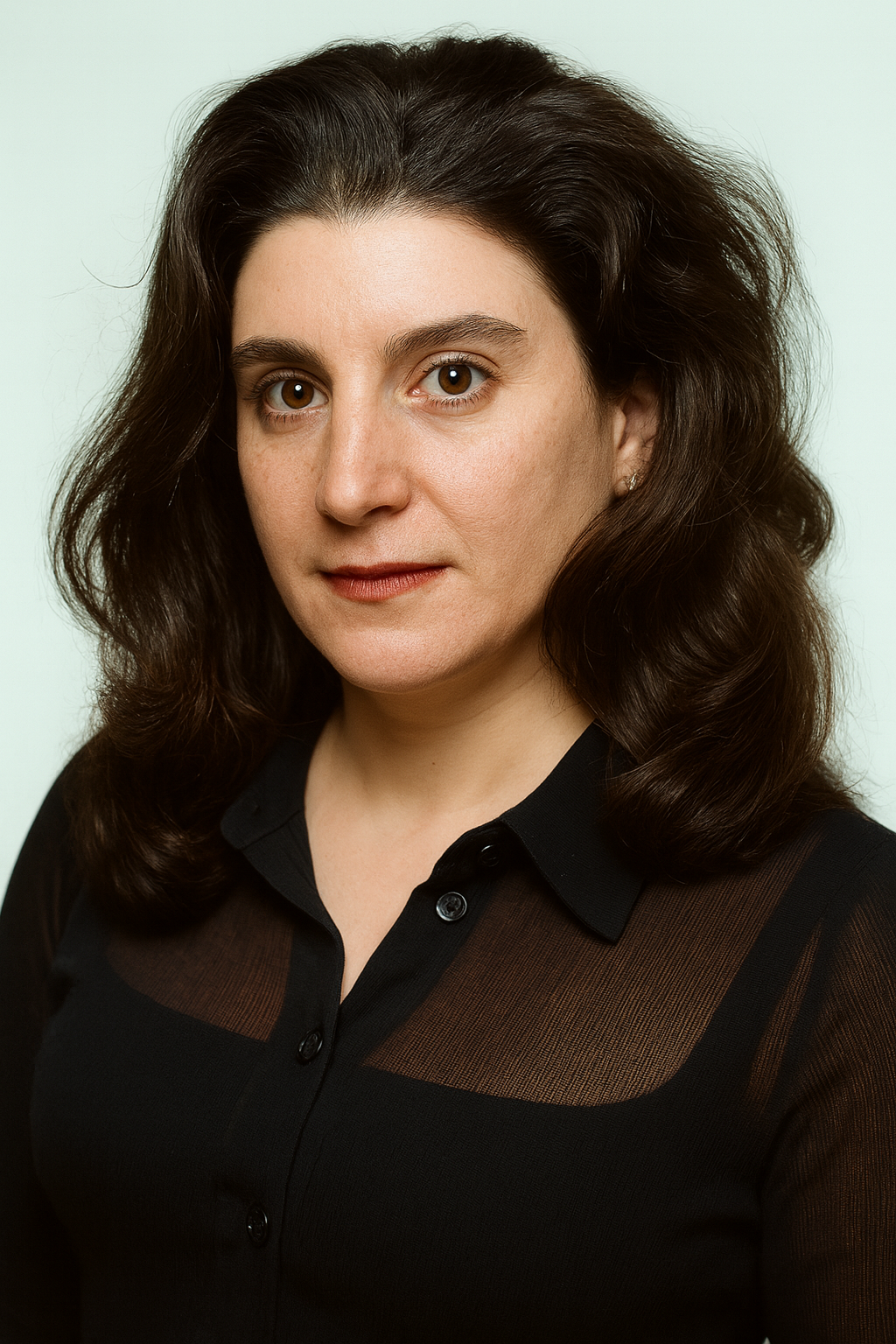
Liza
Liza holds a BA in Mathematics and Philosophy from Yale University and an MSc in Media and Communications from the London School of Economics, where she was a Chevening Scholar. With nearly a decade of tutoring experience across the UK and US, she teaches secondary and university-level Mathematics and Physics. Liza is particularly skilled at working with students who have ADHD and learning differences, and at making complex Physics concepts accessible through clear explanations and adapted strategies.
These are three of our IB HL Physics tutors. Whatever your child’s syllabus stage, current grade, or school in the UAE, we match each family with a tutor who fits the topics and pace they need.
Ready to find the gaps in your child’s Physics?
If your child is sitting IB HL Physics in the UAE and the gaps are starting to bite, the right tutor can find them and close them. Get in touch and we will match your family with a specialist IB HL Physics tutor for a free consultation.
A 7 in HL Physics Needs the Foundations Right
START WITH A DIAGNOSTIC
Our UK-based Oxbridge tutors begin every IB HL Physics relationship with a diagnostic of where the foundations actually are. The kind of careful look a class of thirty at a UAE school cannot give your child.
More IB Physics resources from our blog
Worth reading next
Questions UAE parents ask about IB HL Physics
About content and the 7
About working with a UK-based IB Physics tutor in the UAE
