

Your child reads the passage and knows what is going on. Then the answer comes back with a mark missing, and you cannot see why. This is a frustrating part of 11+ English: the idea is right, but the proof from the text is not there. A useful next step is to show your child where the evidence needs to come from.
What this article covers
- In 11+ English comprehension, a question can ask for an answer and the words from the text that prove it.
- When a question asks for evidence, a child can have the right idea but still leave the response unsupported if they do not point to the passage.
- A useful habit is to say the answer, then go back and find the exact words that show it.
- You can check this at home in about ten minutes with a marked paper.
- A tutor can take the same paper and practise adding textual support when the question asks for it.
When a right idea still needs evidence
A child may read a passage, understand it and write an answer that is broadly right. If the question also asks for evidence, the response still needs words from the text to support the idea. The useful distinction is between the answer itself and the evidence that backs it up.
One place this shows up is a question that asks your child to answer and then back it up. They give the answer, feel they are done, and move on. The proof is still sitting in the passage, unused. When the question asks for that supporting evidence, an otherwise sound answer may still be incomplete without it.
The idea and the evidence are two different things
Some 11+ comprehension questions ask a child to support an answer with words from the passage, so a correct idea can still be incomplete without evidence from the text. It helps to show your child that the answer and the proof are two separate jobs. First you say what you think. Then you point to the words that show it.
Sample question: How can you tell the house is no longer cared for?
From the passage: “The old house stood at the end of the lane, its windows dark and its garden left to grow wild.”
First try (right idea, no proof)
You can tell because the house looks neglected and sad.
Same answer, with the evidence put back in
You can tell because the garden is “left to grow wild” and the windows are “dark”, which shows no one is looking after it.
Right idea both times. The second one adds the words from the passage that support the idea.
The passage and answers above are a made-up example we wrote to show the point, not a real pupil’s work.
This is the whole move. The thinking was fine the first time. When the question asks for evidence, adding a short quotation can complete the response.
How to add evidence to a right idea
The habit takes practice to build. After your child writes an answer, they go back to the passage and underline the exact words that prove it. Then they drop a short quote into the answer. Say it, find it, show it.
It also asks them to pause, return to the passage and check the answer against the text. So the answer is built on what the passage actually says, not just on what they remember from one read. For the bigger picture, see our wider guide to preparing for the 11+.
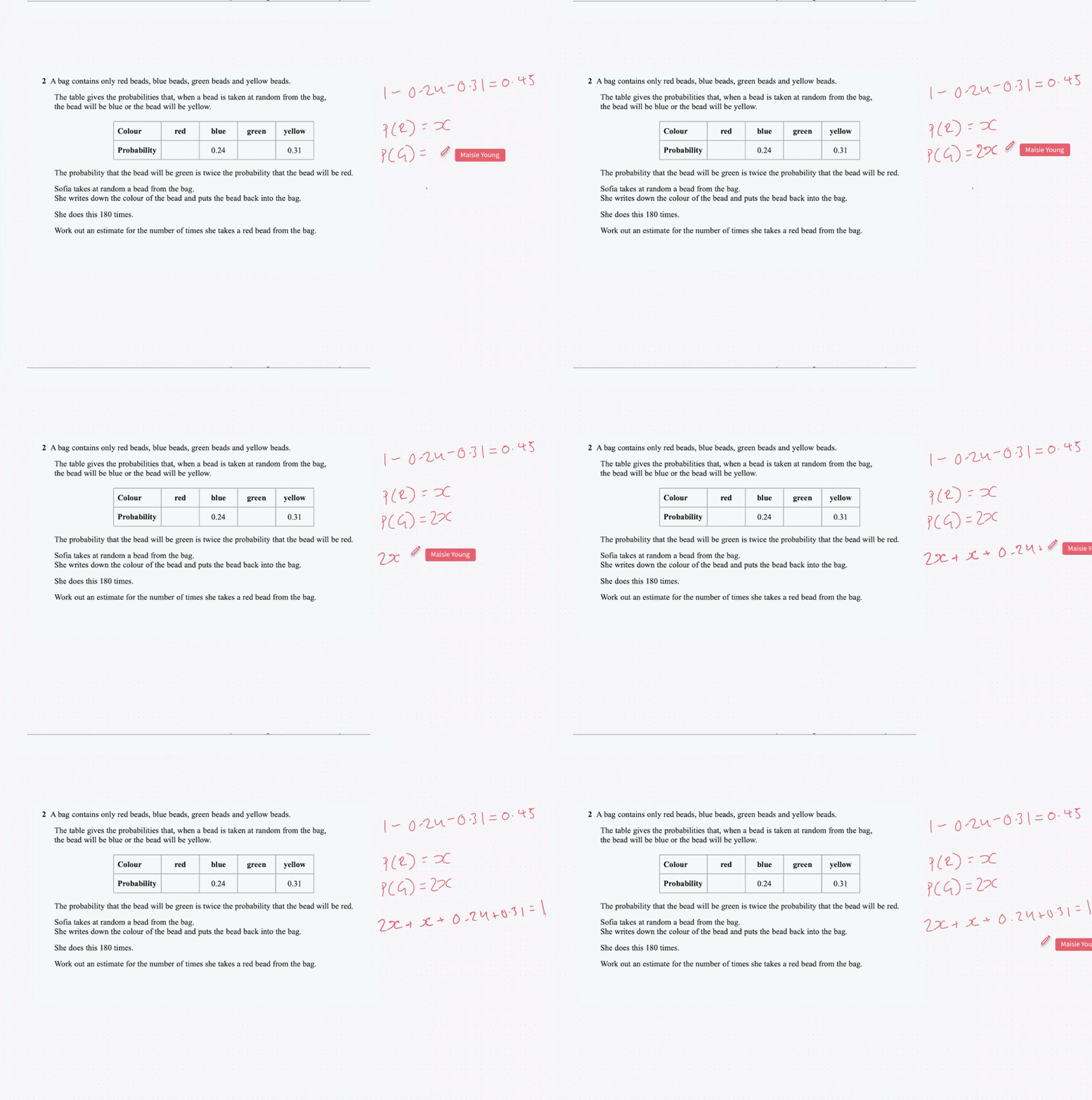
This clip shows a maths lesson recorded in Pencil Spaces, the online classroom used by Greenhill Academics.
Not sure if it is the reading or the evidence?
Tell us how your child’s answers come back. A tutor can look at a marked paper and see where the marks are going.
Ask about a tutorTry this at home: ten minutes with a marked comprehension
This takes about ten minutes. You need one of your child’s already-marked 11+ English comprehension papers. So you are only checking for evidence, not re-marking the whole thing.
- Pick three answers (2 minutes). Choose three where your child had the right idea.
- Find the proof (3 minutes). For each one, ask your child to underline the exact words in the passage that show it.
- Check what happened (3 minutes). See whether they pointed to specific words or just said it was obvious.
- Mark the gaps (2 minutes). Put a dot next to any answer where they could not find the words.
What should you look for?
You are looking for the gap between a right idea and the proof. If your child could not point to the words, that may be a useful thing to practise, and the habit above is where to start. One ten-minute check cannot grade your child, say why it is happening, or cover the writing tasks. It only shows whether the evidence is going in. A tutor can take the same paper and work on it with your child.
Want a tutor to practise this with your child?
Tell us which schools you are aiming for and how the English is going. A tutor can start with a paper your child has already sat.
Send an enquiryHow a tutor works on it
In a lesson, a tutor sits with your child on a real comprehension and watches the moment an answer stops at the idea. They pause there, ask what in the text shows it, and have your child find the words and read them out.
Then they practise adding textual support when the question asks for it, working on real comprehensions with your child. There is no promise of a set grade. The aim is simple: help your child point to the words in the text that back up the answer. It is one of the habits we work on in our 11+ tutoring.
The tutors who can help
These tutors teach 11+ English and know what the comprehension questions are really asking for. They work on the small habits, like pointing to the text, that help a child back up an answer.

Francesca read English at Christ Church, University of Oxford, and has tutored English since 2017. She teaches 11+ and 13+ English through to A Level.

Lucy read Theology, Religion and Philosophy of Religion at Clare College, University of Cambridge. She teaches 11+ English and has prepared children for 11+ and 13+ entrance examinations.
What parents ask us about 11+ English
My child understands the passage, so why do they drop marks?
Understanding the passage and proving the answer are two different steps. A question can ask for the idea and the words from the text that show it. A useful next step is to practise pointing to the proof, not just stating the idea.
What does it mean to back up an answer with evidence?
It means pointing to the exact words in the passage that show the answer is right, with a short quote. The idea tells the examiner what your child thinks. The quote shows where in the text it comes from.
How do I tell if this is my child’s problem?
Take a marked comprehension and look at three answers they got right. If they cannot point to the words that show each one, the evidence habit may be a useful thing to work on.
Can my child learn this at home, or do they need a tutor?
You can start at home with the ten-minute check above. A tutor adds live practice on real papers, catching the moment an answer stops at the idea.
Is this about reading more books?
Reading widely helps, but this is a smaller, sharper habit. It is about going back to the passage in the exam and pointing to the words that prove the answer.
Want a tutor to work on 11+ English with your child?
Tell us the schools you are aiming for and how the English is going, and we can talk about a plan to practise finding the evidence.
Send an enquiry