

In short
- A low practice score often means exam habits, not missing knowledge.
- One timed section tonight can show you which habit may be costing them marks. Say nothing and watch how they work.
- The three habits to watch for: extra working, refusing to skip, and misreading one word in the question.
- Fix the habit before adding more worksheets, because more practice with the same habit rarely helps.
- Do not wait for the next full mock to find out. The check takes ten minutes.
You go through the paper together and they knew every answer
You sit down with the practice paper and go through it together. They knew that one, and that one too. So why is the score still low? Before you book an 11 plus tutor, try something tonight that costs nothing.
The score makes it look like a knowledge problem, and at home you can prove that it is not. In a timed 11 plus paper, marks are often lost to habits under the clock rather than to gaps in what a child knows: extra working, refusing to skip, or misreading one word. You can see all three with your own eyes, tonight, without marking anything.
The ten-minute check to run tonight
Watch the working
Do they keep going after the answer is certain? Extra working is time your child gives away for free.
Watch the skipping
What happens at the first hard question? A child who cannot leave it loses the end of the paper.
Watch the reading
When they get one wrong, ask them to read it aloud. One misread word changes the whole question.
You are watching how they work, not what they score.
They do more work than the question needs and run out of time
We will call her Freya. The name is invented and her story blends a few children we have taught, but the habit is real.
On a word question, Freya worked out that the first letter of the answer had to be M. Only two of the options started with M. She then found the second letter, and at that point the answer was certain. There was nothing left to work out, but she kept solving to the end anyway. She had been doing the same thing throughout the paper: solving every question all the way to the end, even when she already had enough information to choose the answer. By the final questions, she was running out of time.
If your child does the same, knowing more is not necessarily the answer. They need to learn when they have enough information to stop and move on. This matters particularly in verbal reasoning, where eliminating the wrong options can often get your child to the answer more quickly.
They will not leave a hard question, even when it costs them
Somewhere in the section there will be a question your child finds difficult. Watch what they do with it. Some children skip it and come back at the end. Others stay on it for too long, then spend the rest of the paper worrying about the clock.
We will call the second student Oscar. Like Freya, his name is invented and his story blends the experiences of children we have taught. Oscar began keeping to roughly a question a minute after his tutor showed him that it was okay to skip a difficult question and come back to it later. His reasoning did not change that week. His decision about where to spend each minute did.
They answered a different question from the one on the page
When they get one wrong, ask them to read the question out loud. You may be surprised by what you hear.
We will call the third student Leela. Like Freya and Oscar, her name is invented and her story blends the experiences of children we have taught. She kept losing marks on shape questions, and the reason turned out to be one word. She was reading “rotating” when the question said “overlapping”, so she was answering a different question from the one on the page. Her tutor asked her to underline the instruction word before looking at the shapes. That gave her a simple check to slow down and make sure she was answering the question she had actually been asked.
A few lost marks can be the difference between a place and a near miss
The competition is tight at the most selective schools. St Olave’s Grammar School had 1,682 applications for 124 Year 7 places for 2026 entry, more than thirteen applications for every place. The picture is similar at Queen Elizabeth’s School in Barnet, where the school reported 3,294 boys sat its entrance exam in 2024, competing for 192 places.
That is why marks lost through rushing matter. Your child may already know how to answer the question, but unnecessary working, spending too long on one question or misreading one word can still cost them the mark.
The answer is not always more revision. They need to stop giving away marks on questions they can already do, and the three habits above are where those marks go.
From a real 11+ lesson
“Please don’t worry about getting it wrong. Getting it wrong is good.
”
George, 11+ tutor
That line matters because worry can sit behind all three habits. A child who is frightened of getting something wrong may rush, spend too long on a hard question or keep working even when they already have enough information to answer. If the rushing looks more like worry than habit, start with our guide to supporting a child through 11+ stress.
Found the habit costing them marks?
Tell us what you noticed during the timed check and which schools your child is preparing for. We will match them with a tutor who can work on that habit using the papers they are likely to face.
Book a LessonWill an 11+ tutor help if the problem is rushing, not knowledge?
Yes, because the lessons are not about teaching more content. The tutor works on the exact papers your child is sitting and watches how they use the clock: where the extra working happens, which questions they cannot leave, and what they do with the instruction words. Each habit then gets its own fix, practised against the clock.
You receive a written report after every lesson, so you can see what was covered, what still needs work and how your child is progressing. Homework comes with email reminders, and lessons are booked in a WhatsApp group you can see.
Inside a lesson
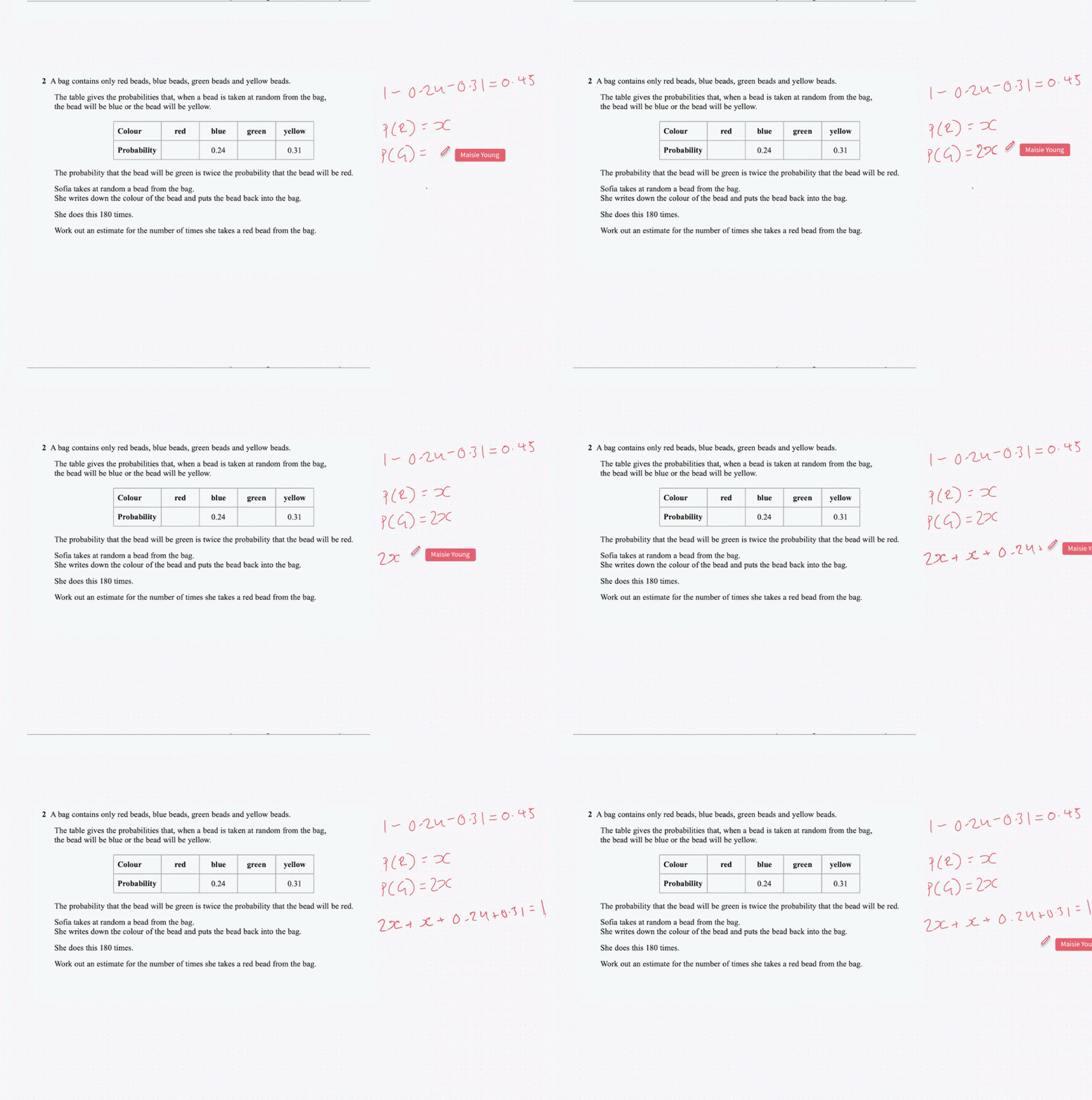
This clip is from a real Greenhill Academics lesson, recorded live. The lesson shown is maths, and an 11+ lesson runs on the same shared board, with the tutor watching how your child works in real time.
Your one move this week
Run the ten-minute check tonight: one timed section, and say nothing while they work. Then pick the one habit you saw most and work on that alone for a week. Fixing one habit at a time works better than worrying about all three at once.
The 11 plus tutors who work on these habits
The 11+ tutors who work on pace, not just content

Clemie · 11+ Maths and English, Cambridge
Clemie teaches both 11+ Maths and English, so she sees the same habits turn up in two very different papers. She is patient, calm and firm about slowing down, and children tend to relax with her quickly.

Martin · Admissions Maths, Cambridge
Martin prepares children for private school admissions maths at 7+, 11+ and 13+, alongside a Cambridge PhD in applied maths and theoretical physics.

Murray · Maths, Chemistry and Physics, Oxford
Murray prepares children for 11+ admissions maths and treats pace as a skill to be coached rather than a personality trait.
Questions parents ask
My child knows the answers at home but not in the exam. Why?
Often it is the clock. At home there is no pressure, so they think. In the exam they hurry, and a hurried child answers the question they expected rather than the one in front of them.
Should my child answer every question?
They should aim to answer as much of the paper as they can, but they do not have to answer every question in order. If one question is taking too long, skipping it and coming back later can protect time for questions they can answer more quickly.
When should we start 11+ preparation?
A year out is comfortable. Six months is workable. Less than that is possible but tighter, and working on speed matters even more when time is short.
My child gets upset about getting things wrong. Can tutoring help?
Yes, and it is often the biggest improvement of all. A child who is not afraid of a wrong answer will slow down and think it through, and a child who thinks will score better.
How soon could we start?
We can often start within a few days. Tell us which schools your child is sitting for, and we will match them with a tutor who knows those papers.
The ability is there. The habits can be taught.
Tell us which schools your child is preparing for and what you noticed in the ten-minute check. We will match them with a tutor who can work on the exact habit costing them marks.
Book a Lesson