

If your child can name the parts but stalls when asked how structure supports function, check how they connect the ideas in one answer. In A-level Biology, structure and function go together. A useful starting point is to link a feature to what it does and why that matters, rather than list terms on their own.
What this comes down to
- In A-level Biology, naming a feature is only the start. The real answer is what it does and why that matters to the body.
- The habit that helps is a short chain: the feature, so that it does its job, so the body gets what it needs.
- Read across each row to turn a feature into an explanation of its function and effect.
- The heart and blood vessels give clear examples for practising the link between a feature, its function and its effect.
- You can try this at home in about ten minutes with one past-paper question.
Naming a part is not explaining it
For example, a student might label a heart diagram correctly but stop at naming the thicker wall when asked why the left ventricle has a thicker muscular wall than the right. Knowing the name of a part is not the same as explaining how its structure supports its function.
This is narrower than general exam technique, which we cover in the A-level Biology exam mistakes guide. Here the question is simple: can your child turn a feature into its job, and then into its effect on the body?
Turn structure and function into a chain
Read each row from left to right: the feature, what it does, and the effect on the body. The first column names the structure. The next two columns build the explanation. Check whether your child can add those links, rather than stop at the label.
The first column on its own names a feature. The full row links that feature to its function and effect. Use the links that answer the particular question, rather than assume every ‘explain’ question needs the same wording.

Meet one of our Biology tutors
Jessica, Biology tutor
Jessica earned A*s at A level in Biology and Chemistry, and now studies Medicine at Cambridge. She has tutored Biology at GCSE and A level, and has coached students preparing for the International Biology Olympiad.
A worked example: why the left ventricle has a thicker wall
Try this illustrative exam-style question: why does the left ventricle have a thicker muscular wall than the right? Saying ‘because it pumps blood to the body’ identifies its destination, but does not explain how the thicker wall helps.
Build the chain: the thicker muscular wall contracts more forcefully, generating the higher pressure needed to drive blood through the greater resistance of the systemic circulation. The right ventricle pumps through the lower-resistance pulmonary circulation to the lungs, so it generates less pressure. This links the structural difference to its function and the need it serves.
Not sure if your child can explain, not just name?
Send us how your child’s A-level Biology answers read. A tutor can look at where the answer stops and practise the next step with them.
Ask about a tutorYour one move this week: build three chains
This takes about ten minutes. You need one labelled diagram your child already has, the heart, an artery wall, or a capillary, and one past-paper question with the word ‘explain’ in it.
- Cover the labels (2 minutes). Point at one feature on the diagram.
- Say the chain out loud (3 minutes). Ask your child to say it as: this feature, so that it does its job, so this happens in the body. Do three features.
- Write each chain on one line (2 minutes).
- Answer one ‘explain’ part (3 minutes). Ask your child to answer it as a chain, not as a list of keywords.
What should you look for?
Watch whether your child can add the job and the effect after naming the feature. This will not tell you whether the gap is across every topic or just this one, and it is not a grade. It shows one habit on one topic. A tutor can take the same question and build the chain with your child, across the topics in their course.
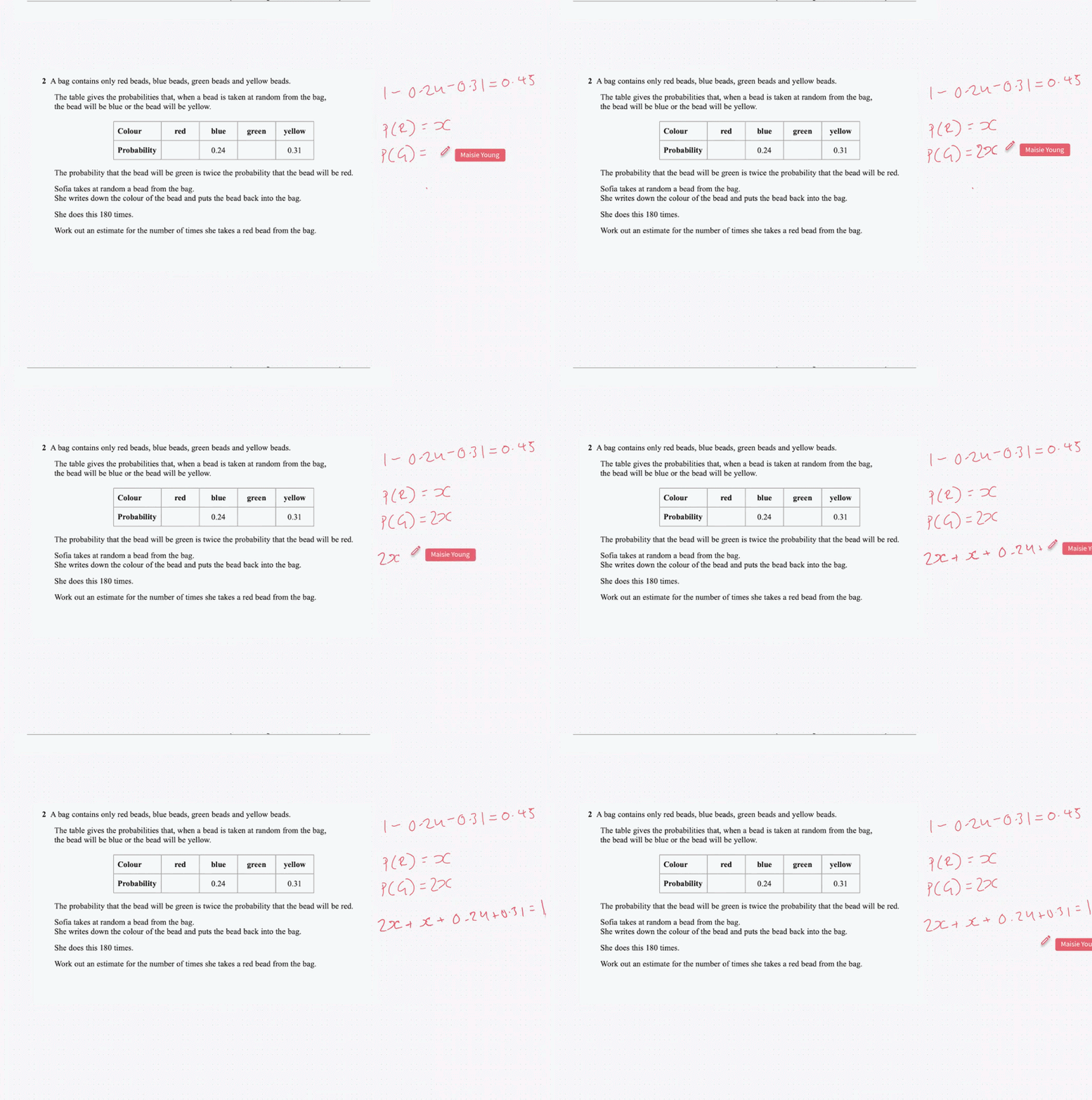
This clip shows a maths lesson recorded in Pencil Spaces, the online classroom used by Greenhill Academics.
Want a tutor to build these chains with your child?
Tell us the topic and the exam board. A tutor can work through one answer and turn each feature into its job and effect.
Send an enquiryHow a tutor works on it
In a lesson, a tutor sits with your child on a real answer. They find a point that stops at a label, then build it out loud into the full chain, feature to job to effect.
They can practise the same reasoning pattern point by point across different topics in your child’s course.
The tutors who can help
These tutors teach A-level Biology. Availability can be confirmed when you enquire.
Jessica is a Cambridge medic who earned A*s at A level in Biology and Chemistry. She tutors Biology at GCSE and A level and has coached students for the International Biology Olympiad.

Kriszta studied Biological Sciences at the University of Oxford and graduated with a First. She tutors Biology and brings research experience from the European Molecular Biology Laboratory and Oxford.
Questions parents ask us about A-level Biology
My child knows all the facts. Why do they still lose marks?
Knowing a fact and explaining it are two different things. One thing to check is whether an answer names a feature without explaining what it does and why that matters. If so, practise building that link on one question.
Is this just exam technique?
It is one clear piece of it. We keep this narrow: turning a structure into its function and effect. The wider picture is in the A-level Biology exam mistakes guide.
How do I tell at home if this is the problem?
Take one labelled diagram and one ‘explain’ question. The ten-minute try above shows whether your child can build the chain, or stops at the label.
Which topics does this work for?
You can use the same reasoning pattern wherever a question links a biological structure to what it does. The heart and blood vessels give clear examples to start with.
Do you tutor A-level Biology for students outside the UK?
Yes. We tutor A-level Biology online for UK and international families. A tutor can work from the topics and exam board your child has been given, and help with how to get an A in A-level Biology.
Want a tutor to work on A-level Biology with your child?
Tell us the topics and the exam board, and we can talk through the support your child needs.
Send an enquiry