

The quick read
- “More analysis” can mean the essay explains what happens in the text without yet showing what the writer is doing and why it matters.
- There is a check you can run at home tonight. Read only the first sentence of each paragraph in the last marked essay.
- Keep that marked essay, because a tutor can use it as the starting point for a first lesson.
- Tutoring cannot promise an A. What it can work on is how clearly the essay argues, which is where feedback like “more analysis” points.
The essay feedback keeps saying more analysis, but your child does not know what to change
The comment is short, and it keeps coming back: more analysis. The difficulty is knowing what to change in the next essay when the feedback itself does not show what a more analysed paragraph looks like on the page.
In the kind of essay this article is about, the comment can mean something specific. The student explains what happens in the text, or names an idea, and stops there. One thing the feedback may be asking for next is: what the writer is doing with language, and how that supports the argument the essay is making. Heard that way, the comment stops being a mystery and becomes a job with clear edges.
Your child understands the text and the essay still retells the story
Knowing what happens in a play, holding a strong view of it, and arguing that view on the page are three different skills. A student can be secure in the first two and still write paragraphs that walk the reader through the story. The essay sounds fluent read aloud, but a marker is looking for a claim about the question, backed by evidence and close analysis, and a retelling does not give them one.
The feedback, translated
“This feels like telling me what happens in the plot.
”
Francesca, A Level English tutor
A paragraph can know the play well and still spend its time retelling it. A tutor names the exact sentence where that happens, so the student can see it too.
The paragraph-opening read
You do not need to know the text to try this. Take the last marked essay and read only the first sentence of each paragraph, in order, and ignore everything else.
The paragraph-opening read
If the sentences retell
They mainly say what a character does, or what happens next. The essay may be spending too much of its time retelling the story, and that can be what “more analysis” is pointing at.
If the sentences argue
Each one makes a claim that answers the essay question. The argument is visible, so the issue may lie elsewhere, for example in how deeply each point is analysed.
One check cannot diagnose a whole essay, and it is not meant to. It is one concrete place to start, for you and for a tutor.
Neither result is a verdict. A paragraph that opens by describing the scene is not automatically wrong, because sometimes the essay needs a step of context. The read simply shows you where the argument is visible and where it is hiding, which is more than a grade on its own can tell you.
The ideas sound strong out loud and the essay grade is not improving
You hear it in the car or at dinner. Your child talks about the characters, the themes and what the writer is up to, with real insight. Then the essay comes back and the grade has not improved. Ideas spoken out loud can stay loose and still sound impressive, but an essay has to fix each idea into a claim, tie it to evidence and push into the language. When that last step stays invisible on the page, the marker cannot give credit for what your child said at dinner.
That mismatch does not necessarily mean your child lacks understanding or effort. One possibility is that the ideas they can explain aloud are not yet coming through clearly enough in the written argument.
Keep the marked essay
Keep the most recent marked essay somewhere you can find it, comments included. If you book a first lesson, have your child bring it. A tutor can start from the feedback already on the page instead of guessing where to begin.
Not sure what your child’s A Level English essays are actually losing marks for?
Tell us the set texts and exam board. An A Level English tutor can work through a recent essay with your child and identify what to focus on first.
Find an A Level English tutorThe mocks are coming and the same essay problems are still there
If mocks are approaching and the same feedback is still appearing, the question changes. It stops being “what does this comment mean” and becomes “what do we do with the time we have”. Tutoring cannot promise a result by a fixed date.
What a tutor can do is choose the work deliberately: interpreting the question, opening each paragraph with a claim, analysing language closely, using evidence well, and turning the feedback on past essays into the plan for the next one. That focus also gives you something to watch. The next marked essay either shows clearer arguments or it does not, and either way the family knows more than it did.
Can an A Level English tutor help when the ideas are stronger than the essays?
Yes, because that gap is exactly what lessons can work on. A tutor can use a recent essay as a starting point, see how your child builds a paragraph, and teach the missing step directly, on your child’s own set texts and exam board rather than a generic course. Whether your child studies at The British School Muscat or another school following A Levels, the work still needs to match their exact course, exam board and set texts.
Lessons are online, on a shared board, at times that fit the school week in Oman. You receive a written report after every lesson, and where homework is set, a reminder goes out before the next lesson.
Inside a lesson
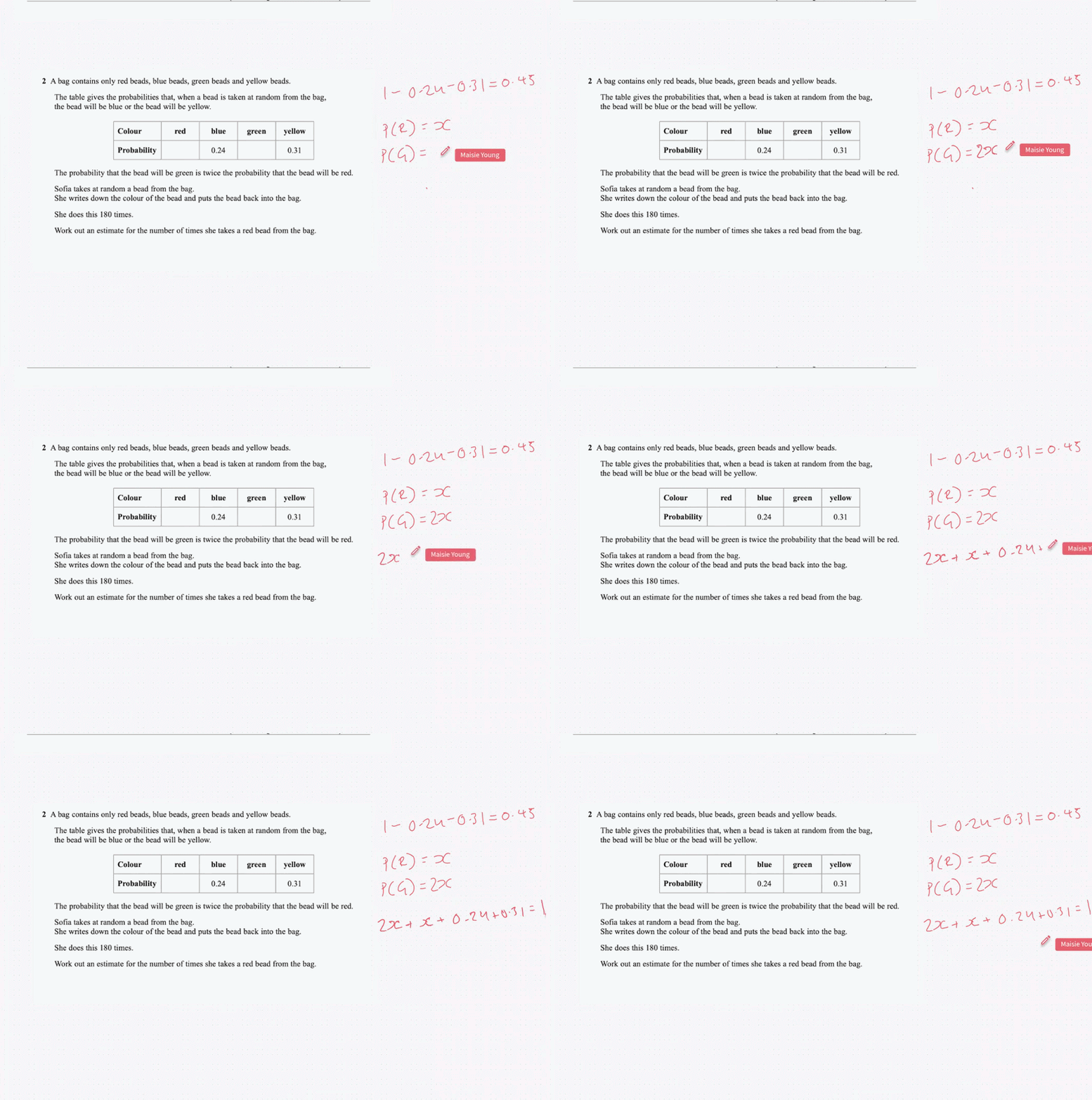
A Greenhill Academics lesson on the shared board. The clip shows a maths lesson, and English lessons use the same format, with the essay, your child’s writing and the tutor’s notes on one screen.
The tutors who work on A Level English essays
The English tutors who read the essay first
Francesca · English, Christ Church, Oxford
Francesca read English at Christ Church, Oxford, earning a 2:1 and a scholarship for academic excellence, and has taught English since 2017. She teaches A Level English Literature and works as a professional writer and editor.

Laurie · English, The Queen’s College, Oxford
Laurie read English at Oxford, at The Queen’s College, with a Double First, and he has tutored for over a decade. He teaches A Level English with a particular focus on Shakespeare, and he gives clear, constructive feedback on essays and past papers.

Mimi · Modern Languages, Oxford
Mimi studied Modern Languages at Oxford with a high 2:1 and is now reading for a Behavioural Science MSc at the LSE. She teaches A Level English Literature, and she is particularly good at helping students structure an argument and analyse a writer’s choices with confidence.
What parents in Oman want to know about A Level English tutoring
What does “more analysis” mean in an A Level English essay?
It can mean different things from different teachers, so the marked essay is the best guide. In the essays this article describes, the comment points at paragraphs that explain what happens in the text without showing what the writer is doing with language and why it matters. A tutor can translate the comment into one concrete change in the next essay.
My child understands the texts. Can a tutor still help?
Yes, because understanding a text and arguing about it on paper are different skills. A tutor works on the second one, using your child’s own essays, with the aim of making the ideas your child already has clearer in the written argument.
Which A Level English exam boards and set texts can your tutors support?
The first step is to confirm the exact exam board, specification and set texts your child follows, so essay practice matches the course they will sit. Tell us the board and texts when you enquire, and we will match your child with an A Level English tutor who fits them.
Are your English tutors based in Oman?
They are not. Our tutors are based in the UK and teach online, and lesson times are arranged around the school week in Oman, so your child learns from home.
My child’s mocks are approaching. Is it too late to get help?
There is no honest way to promise what will change by a fixed date, so we will not. What a tutor can do before mocks is narrow the work to what the feedback keeps naming, using their own past essays. Whether the time is enough depends on your child and the calendar, and we are happy to talk that through plainly before you commit.
Are your child’s A Level English essay grades still not improving?
Tell us which board they follow and what they are finding difficult. We will match them with an A Level English tutor, and you receive a written report after every lesson.
Book a first lesson