
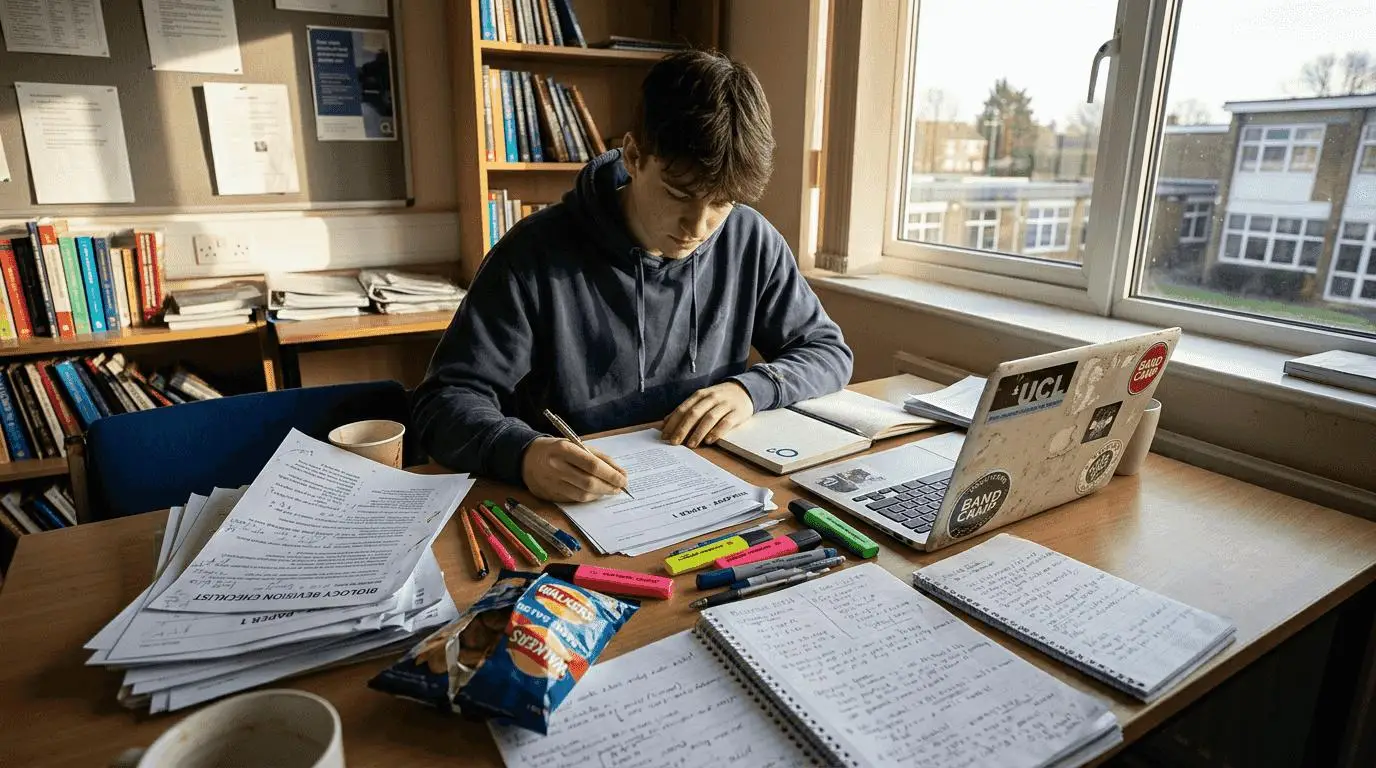

Your child sits down to revise and twenty minutes later the page is blank. They tell you the reading is boring, the essays never go anywhere, and they cannot see the point. Marks have stalled. The frustration in the house is real, and so is the worry that a subject they once liked is slipping away. A good A Level history tutor solves this, because the problem is rarely the history itself. It is concentration, and the way that lost focus quietly drains a teenager’s confidence.
On this page
The Real Problem
When a teenager cannot focus on history, it is usually because the work feels shapeless. Once a session has a clear structure and one thing to fix at a time, attention returns and the marks follow.
Match With an A Level History Tutor
Oxbridge-educated tutors who turn stalled revision into rising grades.
Why concentration slips in A Level history
History at this level asks a teenager to hold a lot in their head at once. Dates, causes, competing arguments, and a mark scheme that rewards none of the things school revision tends to drill. Because the task feels shapeless, the mind wanders. A student opens a textbook, reads the same paragraph three times, and gives up. That is not laziness. It is what happens when the brain cannot find a handle to grip.
The fix is structure. When a session has one clear focus and a visible method, attention has somewhere to go. In practice, we see this constantly. A pupil who cannot sit with a Cold War chapter for ten minutes will happily spend forty building a single essay plan, because the plan gives the work a shape. As a result, the content stops feeling like an ocean and starts feeling like a route they can follow.
What a good A Level history tutor actually does
Trust in a tutor should come from method and results, not a list of degrees. Here is how our tutors work, and why it holds a teenager’s focus. Every session targets the exact specification and exam board your child sits, so nothing is wasted on material that will not come up. Practice is set on a shared board between lessons, and short written feedback follows each session. Crucially, your child takes the technique back into school the following week, which is where you start to see the difference.
The first lesson is a diagnosis. The tutor reads a recent essay, finds the weak topics, and agrees with your child what to prioritise. From there, every session does one thing well rather than five things in a blur. That single change, more than anything, is what brings a wandering mind back to the desk.
Is Your Child Switching Off During Revision?
A specialist tutor gives history a structure your child can focus on, then turns that focus into marks.
How focus turns into better history grades
The clearest way to show what an A Level history tutor changes is to walk you through three pupils. Names and details are altered to protect their privacy, but the teaching is real, drawn from our own lesson records.
From drifting to a plan: Maya
Maya could not settle into revision. She knew her Cold War content well, yet whenever she tried to write she drifted, deleted, and stalled. Her tutor stopped asking her to write full essays. Instead, they spent each session on a single essay plan: a clear judgement first, then evidence chosen to both support and challenge it. Because the task now had a visible shape, Maya’s attention held. Within a few weeks she was planning a twenty-mark “how far” question in eight minutes and could explain why each paragraph earned its place. The focus came back first, and the marks followed.
From narrating to arguing: Daniel
Daniel wrote pages and still hovered in the middle bands. The reason was specific. He recounted events in order and hoped the argument would speak for itself, so the examiner saw description where they wanted analysis. His tutor introduced a simple PEEL structure and worked through one “account” question together, turning each paragraph from a story into a point that answered the question directly. The first time Daniel separated his content into distinct, argued points rather than a single narrative, the difference was obvious on the page. He took the same structure into a school mock the following week and used it without prompting.
From chronology to themes: Priya
Priya had strong knowledge but organised every essay as a timeline, which left her answers flat. Her tutor showed her how to group an essay thematically instead. A question on superpower relations became three clear strands rather than a list of events in date order. They practised categorising the same material under headings such as nuclear relations, ideology, and the wider world. Once Priya could see those threads, she stopped reciting and started weighing them against each other. That is exactly the analytical move the top mark bands reward, and it gave her something engaging to think about rather than a list to memorise.
If your child knows the content but the essays keep coming back with the same grade, a tutor can read their work and tell them precisely what to change. Book a free consultation.
What the first lesson looks like
The first session is straightforward and sets the tone for everything after. The tutor assesses your child’s current level by reading a recent essay or working through a past paper question together. They identify the weak topics, whether that is essay structure, engaging with interpretations, or managing time in the exam. As a result, they can agree with your child what to prioritise first. By the end, your child knows exactly what they are working on and why. That is often the moment focus returns, because the work finally has a clear direction.
When school revision is not enough
School covers the content well, but a class of thirty cannot give one teenager feedback on why their essays keep landing in the same band. That is the gap a tutor fills. An A Level history tutor reads your child’s work one to one and identifies the precise thing holding it back. It might be how they introduce an argument, how they handle counterevidence, or whether they engage with historiography at the level the mark scheme requires. The feedback is targeted and personal, and because it is one to one, your child stays focused throughout.
Meet some of our A Level history tutors

Laurie
Laurie read English at the University of Oxford (The Queen’s College) with a Double First, and achieved A* in History at A Level. With a decade of tutoring experience, Laurie teaches A Level and GCSE History alongside English, and specialises in essay-writing. She is especially good at helping students move from describing events to building an argument from evidence, which is precisely what the examiner rewards in every history essay.
George
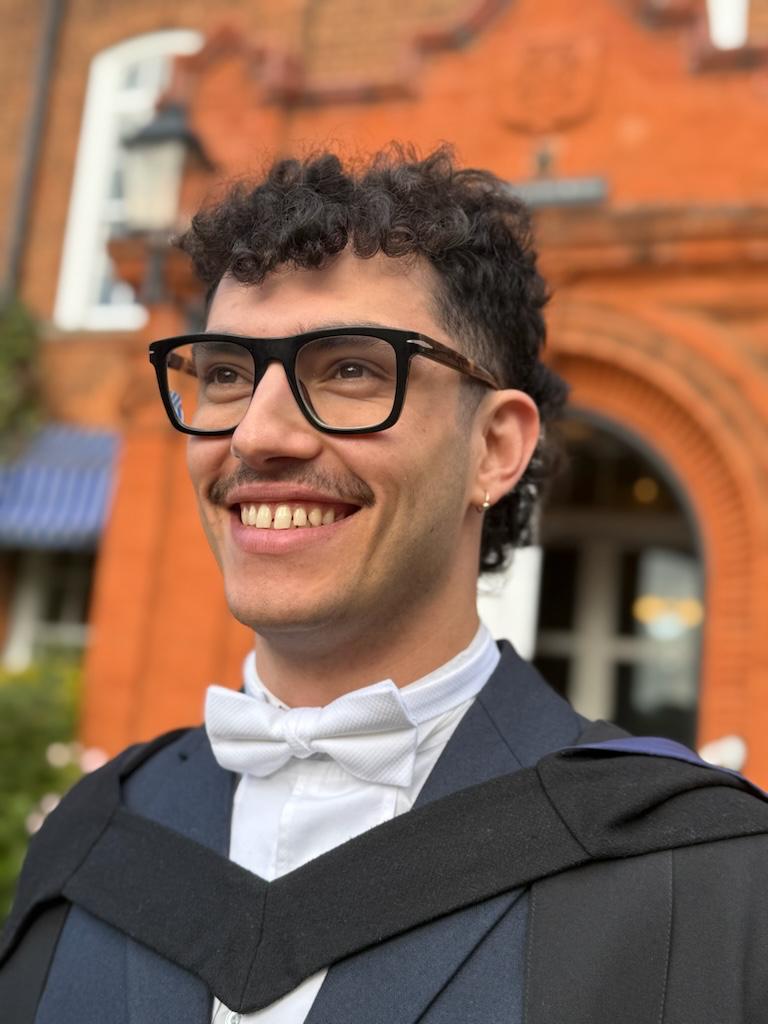
George holds an MPhil in Linguistics from the University of Cambridge (High Distinction) and a First in English Literature. He has over 500 hours of tutoring across A Level and GCSE History, English, and the humanities. His background in linguistics gives him a sharp eye for the structure of arguments. As a result, he is exceptional at helping students make the move from description to analysis. That single transition is what separates a competent history essay from an outstanding one.
Kian, who read Classics at the University of Oxford and achieved A* in History at A Level, also tutors A Level history and Oxbridge admissions. We match each family with the tutor whose subject specialism fits your child’s exam board and the topics they find toughest.
Want your child engaged with history again?
If your child has switched off and the grades are not reflecting what they know, the right tutor can diagnose the issue and fix it. Get in touch and we will match them with a specialist A Level history tutor.
Help Your Child Focus and Achieve in History
TURN STALLED REVISION INTO RISING GRADES
Our Oxbridge-educated history tutors give each session a clear structure your child can focus on, then turn that focus into analytical essays that land in the top bands. Personalised feedback that school revision cannot provide.
Helpful A Level history resources
More from our A Level series
Frequently asked questions
