

If your child has GCSE English mocks coming up, you may be wondering what they should practise and how a tutor could help. A GCSE English tutor can help with the practice, but the first step is finding out what the school has put in the mock.
Four things before the mock
- Find out from the school which English subject the mock covers, which papers or sections are included and whether any text will be provided on the day.
- Choose practice from the school’s instructions, your child’s recent work and the teacher’s comments, rather than from a general revision list.
- A tutor can work through that practice with your child in an online lesson and talk about what to change in the next answer.
- Once the mock is marked, the papers and the comments are a good guide to what to practise next. Francesca and Naomi’s profiles appear below.
What is in your child’s English mock?
GCSE English is two subjects, English Language and English Literature. A mock might be for one of them or for both, and it might be a whole paper, part of a paper or something the school has put together itself. Until you know which, it is hard to say what your child should be practising, so the questions below come first.
If your child’s school calls the course IGCSE or International GCSE, our page IGCSE English tutor in Doha: what to do after a disappointing English report is the better fit.
Three things to ask the school before the mock
- Which English subject is the mock for, Language or Literature, and which paper or papers does it cover?
- Which texts, sections or question types are included, and will any text or extract be printed on the paper?
- When is each paper, and how long is it?
The answers describe your child’s school mock, not next summer’s exam. If the school has not decided yet, ask again nearer the time. Whatever the answers are, the practice should follow the school’s instructions, and this check does not ask you to judge any of your child’s work.
Not sure which papers your child’s mock will include?
Ask the school, then tell us what they say. A tutor can plan practice around the papers and texts the mock covers.
Ask about a tutorWhat should your child practise before the mock?
Three things decide the practice: what the school has said is in the mock, your child’s recent work, and the teacher’s comments on it. A general revision list sees none of those. Rereading the set texts or the class notes is not wasted, but on its own it does not show your child what a question will ask of them.
Once your child knows what the mock includes, they can choose a practice question from the work the teacher has provided. Before writing, they can read the question and plan what their answer needs to cover. Afterwards, they can compare their attempt with relevant feedback on an earlier piece and note one point to discuss with their teacher or tutor. This is a suggested way to begin, not a test of readiness.
Which question to choose depends on the mock. For a Literature mock on a set text, pick a question on that text. For a Language mock, pick the kind of reading or writing task the school has described. One attempt is enough to begin with.
Whether to practise against the clock is a separate question. Early on, an untimed attempt gives your child time to think and to look back over the answer. Nearer the mock, a timed attempt can show how well the plan holds up when the minutes matter.
Our page GCSE English Language: The Most Common Exam Mistakes lists the mistakes that lose students marks in the Language papers.
Does your child know what to practise but not how to start?
A tutor can sit with your child on the shared whiteboard, work through one question of the kind the mock will include, and talk about what to change next time.
Send an enquiryWhat a GCSE English tutor in Doha can do before the mock
In an online lesson, your child and the tutor share a whiteboard. The tutor can look at the school’s instructions with your child and choose one question of the kind the mock will include. They work through it together, and the tutor can ask what your child was trying to do at each step, so the conversation is about the plan as well as the finished answer.
A tutor can also read recent marked work and the teacher’s comments with your child, and put the two side by side: what the comment asked for, and what the next answer did about it. If the school has not yet said what the mock includes, that marked work is where the lessons can start.
A tutor can use the school’s instructions to keep the practice focused on what the mock includes. In a later lesson, your child can bring another piece of work and discuss how they used the earlier feedback.
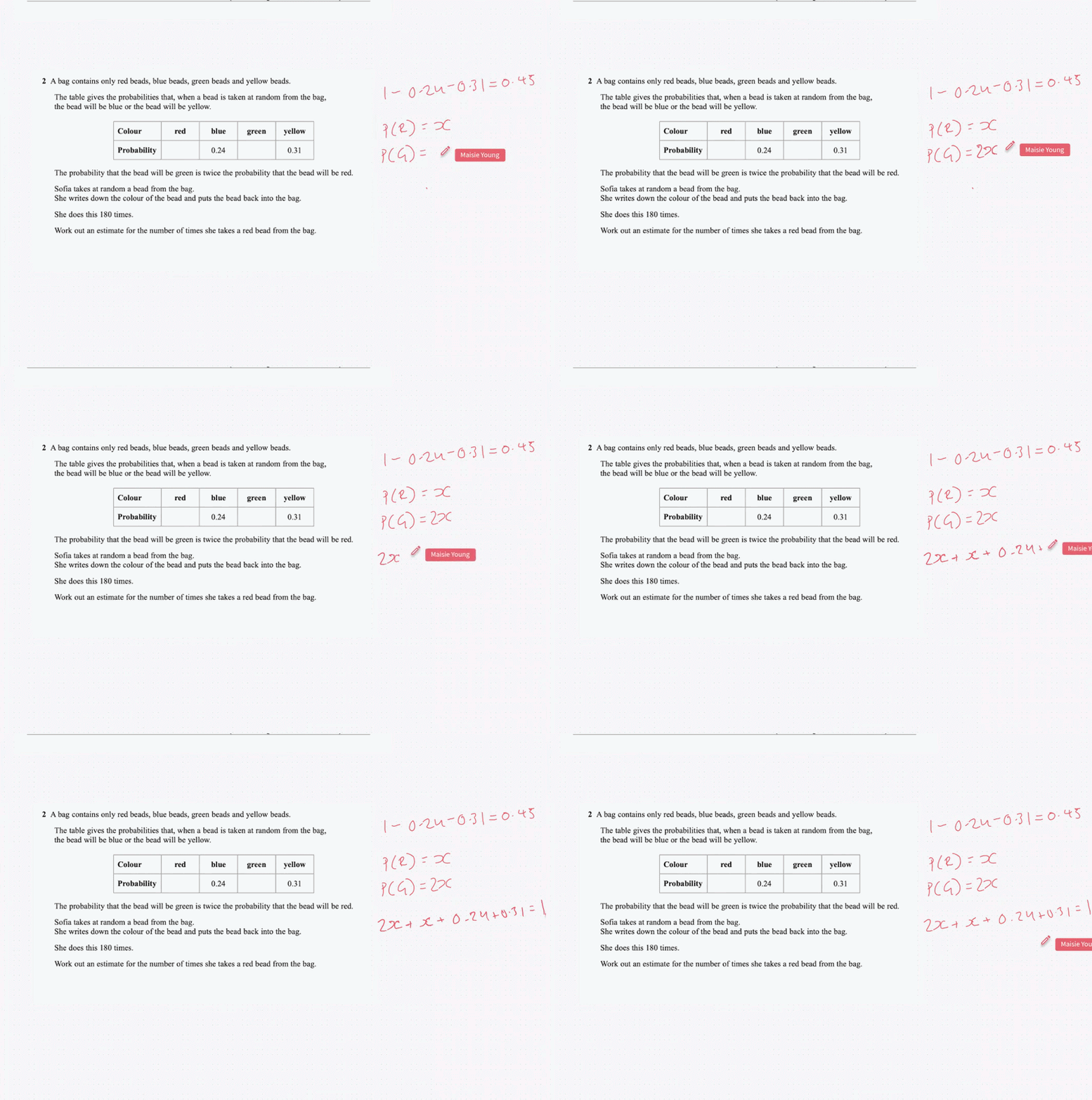
This clip shows a maths lesson recorded in Pencil Spaces, the online classroom used by Greenhill Academics.
Once the mock is marked, use it to choose the next practice
Read the marked mock with your child, looking at the grade alongside the teacher’s comments. Note which paper or section each comment refers to. If a comment is unclear, your child can ask the teacher to point to an example in their answer and explain what to try differently.
A tutor can work through that feedback with your child and help them choose a related practice task. Keep the marked mock alongside the next attempt so they can discuss how they have used the feedback. The next task should follow what the comments identify, rather than a fixed list of changes for every child.
Francesca and Naomi, two of our English tutors

Francesca studied English at Christ Church, University of Oxford, where she was awarded a scholarship for academic excellence. She has tutored English since 2017 and teaches GCSE and IGCSE English Language and Literature, and A Level English Literature. Alongside tutoring, she has been a professional writer and editor since 2017.

Naomi studied Politics, Philosophy and Economics at the University of Oxford, where she was awarded the Sir Arthur Benson Memorial Prize. She tutors English, Mathematics, History, Geography and French, including English at GCSE.
Would you like your child to work with Francesca or Naomi?
Both teach English at GCSE. Read their profiles and mention either tutor in your enquiry if you would like to ask about lessons with them.
Ask about Francesca or NaomiQuestions parents ask before an English mock
The school has not told us what is in the mock. What should my child do until then?
Ask the school, because the answer decides the practice. Until then, your child can carry on with the work the teacher has set and keep the latest marked pieces to hand.
Is a mock the same as the real GCSE English exam?
Not necessarily. A school can set a whole paper, part of one or something of its own. Ask what the mock includes and treat it as practice for that rather than a copy of the exam.
Does my child need to learn quotations for a Literature mock?
It depends on what the school has set. If the mock is closed book, some quotations from memory will help. If an extract is printed on the paper, your child can work from that.
Should my child practise to a time limit before the mock?
Some timed practice is useful once your child knows what the questions ask. Untimed practice still has a place, because it leaves room to plan and check. Ask the teacher which the class needs.
What happens once the mock is marked?
Read the comments with your child and note what the teacher wants the next answer to do. A tutor can look at the marked papers with your child and talk about what to practise next.
Has the mock come back marked and left you unsure what comes next?
Tell us the English subject, what the mock covered and what the teacher said. A tutor can look at the marked papers with your child and talk about what to practise before the next one.
Make an enquiryWorth reading next
How a GCSE English tutor in Abu Dhabi helps your child write better English essays
This article looks at what a tutor does with an essay that has the ideas but does not make them clear.
My Child Is Behind for GCSEs. Is It Too Late?
For a parent whose child is behind in more than one GCSE subject, this page looks at what can be done in the time left.