


On this page
Why a strong reader can still miss the top grade
The gap between feeling a text and proving it
What a GCSE English tutor changes
Meet some of our GCSE English tutors
Next steps for your child
Worth reading next
Frequently asked questions
Why a strong reader can still miss the top grade
A good GCSE English tutor in Dubai often meets a particular kind of student. She reads beautifully and instinctively, and she gets to the heart of a poem in a sentence. Yet she keeps landing a grade or two below where that talent should take her. The flair is real. What is missing is the technical layer that turns a sharp observation into a mark on the page. Across British curriculum schools in Dubai, from Kings’ School Al Barsha to Jumeirah College, this is one of the most common situations we see. It is also one of the most fixable.
The short version
A natural feel for reading is the hard part to teach, and your child may already have it. Turning that instinct into close technical analysis is what lifts a strong reader to a grade 9.
Is your child a strong reader stuck below a 9?
A tutor can show them how to turn instinct into the analysis examiners reward.
The gap between feeling a text and proving it
To show what this work looks like in practice, here is a composite drawn from real sessions, anonymised and combined. Picture a Year 11 student we will call Jihu. She is bright and widely read, and she is working towards the top grades at a British curriculum school. Her reading was excellent from the first lesson. She had a natural gift for getting to the heart of a text and describing the feeling it creates. The challenge, therefore, was teaching her to prove in technical terms what she could already sense.
From sharp instinct to close analysis
In one early session Jihu wrote an excellent paragraph on an unseen poem, Sylvia Plath’s “Poppies in October”. She got straight to the heart of it, talking vividly about its style. Equally, her reading of a William Carlos Williams poem was sharp. She had a real feeling for its balance and its restless tension. The next step was clear, and it is the step most talented readers need. She had to back those observations with close technical analysis. That is, she had to name the devices, scan the metre, and explain how free verse shapes an effect rather than simply noticing that it does.
Building an argument around style
Much of our work together focused on literary style and on setting up strong arguments for analytical essays. The method we used was simple and repeatable. First, pin down the overall character of a piece of writing, the thing that makes its style distinctive. Once that is clear, it becomes far easier to look closely at the techniques behind it. A weaker essay lists features one by one. A stronger essay structures itself around an argument about style, and that is what gives a response shape and pushes it into the higher bands. Working with unseen prose helped here too. A passage from Robert Louis Stevenson’s “The Strange Case of Dr Jekyll and Mr Hyde” gave Jihu the practice she needed.
Selecting and unpicking the richest quotes
One of the most useful habits we built was quote selection. Specifically, Jihu learned to choose the richest quotes and unpick them in forensic detail, rather than quoting broadly and explaining little. As a result, a grade 9 response does more with less. It takes a short, well chosen phrase and draws out its effect through several layers of analysis. We practised this alongside scanning metrical verse. We also worked on condensing and signposting ideas for the reader, and on building paragraphs around the more demanding literary techniques.
Writing in her own voice
One principle ran through every session. Jihu needed to write her work unaided by online tools or help sheets, because the examiner wants to hear her voice rather than a borrowed one. That mattered all the more given how good her instincts were. The aim was never to replace her natural reading with a formula. Instead, the goal was to give her the technical vocabulary and essay structure that let her original thinking score the marks it deserved.
Want your child’s essays to reach the top band?
Our tutors teach the technical analysis that turns strong reading into a grade 9.
What a GCSE English tutor changes
The most valuable thing a tutor brings to English is a reader who responds to your child’s actual writing. A mark scheme can tell a student that top answers show “perceptive, detailed analysis”. Yet those words rarely explain what to do differently on Monday morning. A tutor, by contrast, reads the essay your child wrote. From there, the tutor points to the exact sentence where a strong observation went unproven, and shows how to develop it. That feedback is specific enough to act on, which is what makes it work.
The second change is structure. Many capable students lose marks here, although their ideas are perfectly strong. The essay simply does not signpost those ideas clearly or build towards an argument. A tutor, therefore, teaches the shape of a high band response. That means the thesis in the opening, the paragraphs that develop a single line of thought, and the close reading that earns the analytical marks. Over a few weeks these habits become second nature.
The third change is creative writing, which sits alongside analysis on the GCSE English Language paper. Here the work runs the other way. The tutor helps a student say what is happening clearly, while keeping the figurative language under control. A good piece moves the reader and stays in command of its effects. Because of that balance, a tutor can show your child exactly where a powerful idea needs a firmer hand.
Meet some of our GCSE English tutors

Laurie
Laurie read English at the University of Oxford (The Queen’s College) with a Double First and won the J.A. Scott Prize for the highest finals mark in English or History at her college. She has over 500 hours of tutoring experience across a decade, teaching GCSE and IGCSE English Language and Literature. A working foreign correspondent, Laurie has a sharp instinct for how writing creates an effect, and she is excellent at helping a strong reader turn instinct into precise, technical analysis.

Louis
Louis holds a First Class degree in Philosophy and French from the University of Oxford (Keble College) and achieved top marks in the International Baccalaureate, with three 7s at Higher Level. He teaches GCSE and IGCSE English Language and Literature. Louis brings a philosopher’s care for clear argument to English, and he is particularly good at helping students structure an essay so that each paragraph develops a single, well supported idea.
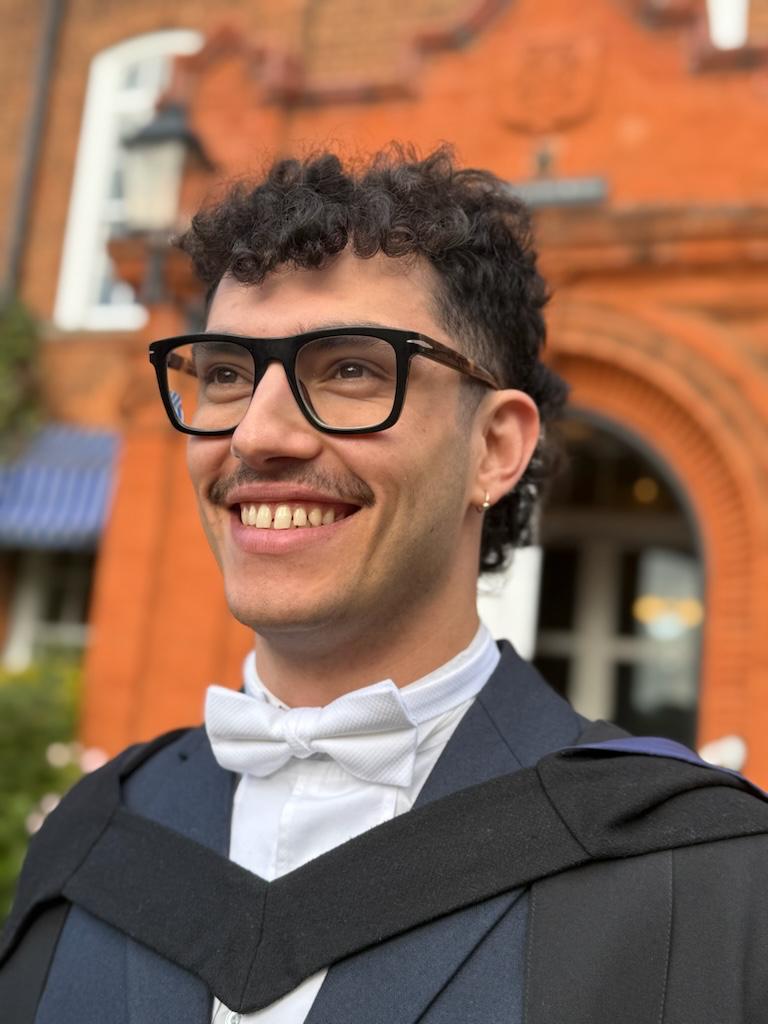
George
George holds an MPhil in Linguistics from the University of Cambridge (High Distinction) and a First in English Literature from Manchester, with over 500 hours of tutoring across GCSE, A Level, and Oxbridge admissions. His background in linguistics gives him a precise eye for how language works on the page, and he is known for helping students develop the close technical reading that the top GCSE grades reward.
Next steps for your child
If your child reads well, yet the grades are not matching that ability, the right tutor can build the bridge. Therefore, we will match them with a specialist GCSE English tutor. That tutor teaches the British curriculum and knows what the top band requires. Sessions are online, which suits families across Dubai and fits neatly around the school week.
Help Your Strong Reader Reach a Grade 9
EXPERT GCSE ENGLISH TUTORING FOR DUBAI FAMILIES
Our Oxbridge-educated tutors turn instinctive reading into close technical analysis, with personalised feedback on your child’s own essays that a mark scheme alone cannot give.
Worth reading next
If this was useful, these guides go deeper into the skills behind a top grade. One focuses on reaching a 9 in literature. Another sets out the core skills behind a 9 in language. The third then looks at the language paper in more detail.
- How to get a 9 in GCSE English Literature
- The three skills behind a 9 in GCSE English Language
- How to get a 9 in GCSE English Language
Frequently asked questions
