

Summary of this blog
- IB Biology is graded 1 to 7. A 4 usually means marks are being lost in more than one part of the exam, not that a topic is missing.
- Understanding the content is not the same as answering the question. That one gap is what keeps a capable student on a 4.
- The difference between a 4 and a 6 or 7 is usually exam technique, not intelligence. You’ll see how the marks are lost in one real answer, even without knowing biology.
- The good news: this is a skill that can be taught. Once students answer IB questions properly, grades can improve in weeks, not months.
So why is your child stuck at a 4 in IB Biology?
Start with what a 4 actually means. IB Biology is graded from 1 to 7, and a 4 sits in the middle. It is often where capable students land when they understand the topics but have not yet learned how to turn that knowledge into marks.
The final grade comes from Paper 1, Paper 2 and the Internal Assessment. A 4 usually means marks are being lost across more than one of them, often for the same reasons. Knowing the Biology is not the problem. Knowing exactly what each question requires is.
The marks that turn a 4 into a 6 or 7 sit in the harder parts of the papers, and the Paper 2 essays are the clearest place to see them. Each essay is marked in parts. Here is one way a 16-mark essay breaks down.
One 16-mark Paper 2 essay, by the marks
Part A · 4 marks
Describe or label. A definition, a short description, or a labelled diagram.
Part B · 5 marks
Explain a process. Set out how a biological process or structure works.
Part C · 6 marks
Evaluate or explain in depth. The hardest marks, and where strong students drop the most.
Plus one mark for clear writing, for 16 in total. The six-mark question is where the marks hide.
A real answer that scored 2 out of 6
That final six-mark question is often where a 4 turns into a 6 or 7. Rather than just telling you what went wrong, I’ll show you a real student answer. You don’t need to know any Biology to spot the mistake, just read the question.
Here is one of those questions: “Evaluate the use of stem cells in treating human disease.” A strong student answered it like this, and it scored two out of six.
- Says what stem cells are, and the two types
- Gives a real use: they already treat leukaemia
- Names what is being researched: Parkinson’s, spinal injury
Mariam is a made-up name, and this answer combines parts of several real scripts we’ve marked. An answer like this really does score two out of six. Everything she writes is correct, but she never does what the question asks. She describes instead of evaluating. Now look at the very first word of the question: Evaluate.
She writes everything she knows and still loses marks
One word at the start of the question decides everything. IB calls this the command word. Here, the command word is evaluate. That doesn’t mean “write everything you know.” It means weigh up both sides, then reach a judgement. Mariam wrote what she knew, so she missed the marks for discussing the downsides and the marks for a clear conclusion, even though everything she wrote was correct.
Here is where those six marks come from.
Where the six marks come from
Benefits
The upside, with an example. Mariam had this, so she scored two.
Limitations
The ethical and practical problems. Missing, so nothing.
A judgement
Which side wins, and why. Missing, so nothing. The marks most students drop.
Same topic, same student. The marks live in the shape of the answer, not the facts.
This is common, and it shows in the results. Whether your child sits IB Biology at Sevenoaks, at King’s College School Wimbledon, or at an international school overseas, the papers are marked to the same command terms. The global average IB score is just over 30 points, and fewer than 5% of students worldwide score 40 or more. Much of the gap between a 4 and a 7 in IB Biology comes down to this one habit: writing about the topic instead of answering the question.
From an IB Biology session
“I used to rush a lot in exams. What helps me is going word by word, visualising what the question is actually asking. Look at the verb, the action word.
”
Kriszta, IB Biology tutor, Oxford
That verb, the action word, is the command term. Reading it properly is what turns a 4 into a 6 or 7.
The answer that scored 6 out of 6 simply answered the question
- One clear benefit, with an example (leukaemia)
- The downsides, including ethical concerns and risks such as rejection
- A clear judgement at the end, explaining which side is stronger and why
Answer B never even explains what a stem cell is. It has fewer facts than the answer that scored two out of six, yet it earns full marks because it answers the question. It covers the good, the downsides and reaches a clear judgement, backed up with a reason.
That is the skill. It’s not about knowing more Biology. It’s about answering the question the way the examiner expects, and that’s a skill most students can improve far more quickly than learning a whole new topic.
Find the marks that turn a 4 into a 6
See exactly which marks your child is losing on Paper 2 and why. A tutor will work through a real answer, showing you exactly what examiners are looking for.
Get a Paper 2 diagnosisInside a session
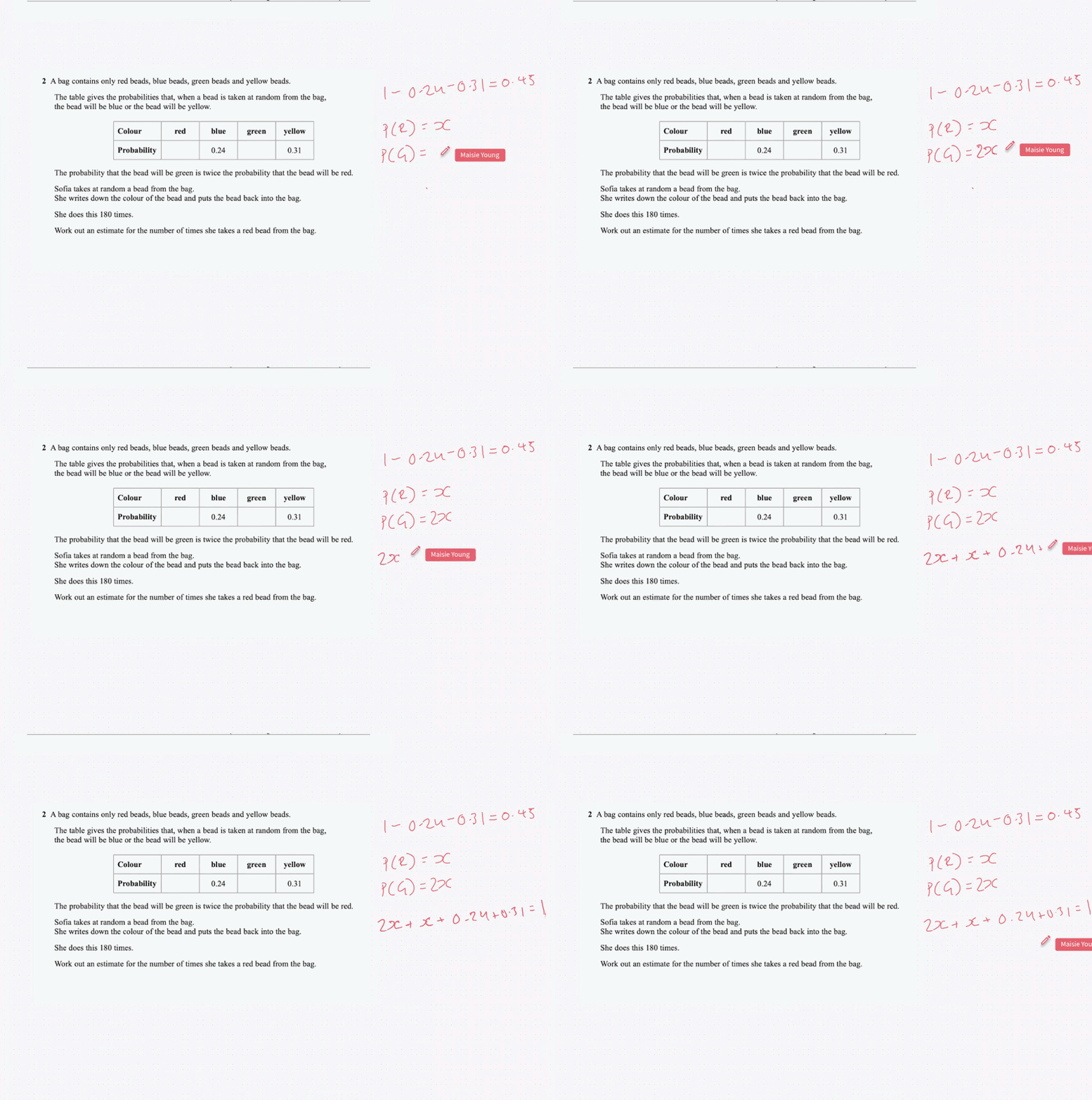
A real Greenhill Academics session, recorded live on the shared online board. Every IB Biology session runs the same way.
Could your child find their own lost marks tonight?
Find one of these six-mark answers that disappointed you both. Read the first word of the question, then ask your child to score their own answer against it, out loud, point by point.
Most students find two or three gaps, go quiet, then say something like “oh”. That “oh” is worth more than a term of revision, because for the first time they can see the difference between what they wrote and what was being marked.
One command term drill to run at home
Print the official IB command terms list and stick it above your child’s desk. Take a marked answer from any paper. Before they read anything else, ask them to circle the first word of the question: evaluate, explain or describe. Half the lost marks come from treating that word as “just write what you know”. Breaking that habit can improve a student’s marks.
It’s not what she knows, it’s how she answers
Read the first word of the question every time. Describe, explain, outline, evaluate and discuss all ask for different things. Read the command word first, then shape your answer around it. That’s how students turn their knowledge into marks.
On data questions, answer the data. Paper 1 and parts of Paper 2 reward what the graph or table actually shows, not the topic it comes from. A strong student often writes what they know instead of what the data says.
Mark answers against the official IB mark scheme, not just the teacher’s ticks. It feels strange at first, but it quickly becomes one of the most effective ways to improve. The same skill is needed for the Internal Assessment too, so it helps raise the overall grade, not just one paper.
Who your child would work with
Who sits with your child on Paper 2

Charlotte · Biology, Oxford (First Class, Balliol)
An Oxford tutor with a First in Biology, who teaches IB Biology and Chemistry, shaped by four years in the Oxbridge tutorial system. Her sessions run on discussion, which is exactly what an evaluate question tests.
Kriszta · Biology, Oxford (First Class)
An Oxford tutor with a First in Biology, top 10 in her cohort, now doing a PhD in cancer biology. She is sharp about what a sentence actually claims, which is what an answer is graded on.

Mirsab · Medicine, Cambridge
A Cambridge medic who builds simple tools for the abstract parts of the course. He is used to showing a student the exact difference between knowing a topic and answering the question set on it.
What IB parents want to know
Everything she wrote was correct. How did it still score low?
Correct and relevant are not the same in IB. The mark scheme rewards the points the command term asks for, not everything true about the topic. Writing more does not earn more, and sometimes it earns nothing.
Is it only the essays, or the whole exam?
The whole exam. The same habit, answering the topic instead of the question, costs marks on the Paper 1 data questions and the internal assessment too. The essays are just where it is easiest to see, so that is where we start.
Isn’t this just teaching to the test?
It is teaching her to answer the question in front of her, which IB rewards everywhere, including the coursework. She still has to know the biology. She just has to aim it.
How long before we would see a difference?
Faster than for a content gap. This is a technique, and techniques get better with practice. Most students improve their marks within a few weeks of learning to read the command term and answer against the real mark scheme.
What should we bring to a first session?
A marked Paper 2, ideally one of the six-mark questions that upset her. We take one answer and go through it with the real mark scheme. That single conversation usually explains the whole grade.
The biology is not the problem. The technique is.
Tell us what happened in the last exam, and we will match a tutor who can show your child exactly where the marks are going, and how to turn a 4 into a 6 or 7.
Book your first lesson