

Your child has worked hard for this, and then the email arrives: an Oxford interview, online, this December. It is a nervous moment, and Oxford interviews online can feel like a mystery. The first question parents ask is simple. What is it really like, and how do we help? This guide walks through what to expect and the calm, practical things your child can do before December. It does not promise a place. It helps your family feel ready for the day, so your child can show how they think.
What to expect
- Only shortlisted applicants are interviewed. For 2027 entry, the interviews are held online in December.
- They run on Microsoft Teams as a subject conversation, normally with two tutors, more like a short tutorial than a test.
- Tutors want to see how your child thinks and works with new ideas, not polished answers or a smart background.
- The technology setup depends on the course. Oxford says families are not expected to buy a touchscreen device. Test the required setup beforehand.
- No one can promise a place, and no tutor can hand your child winning answers. The real preparation is thinking aloud about the subject.
What Oxford interviews online in December are really like
An Oxford interview is not a quiz with right answers. Oxford calls it a subject conversation, more like a short tutorial with a tutor who knows the subject well. Your child is likely to have more than one, and may be interviewed by more than one college. The tutors want to see how your child thinks, not how much they have memorised.
What it is, and what it is not
What it is
- A conversation about your child’s subject
- A chance to think out loud and work through new ideas
- Normally with two tutors, on Microsoft Teams
What it is not
- A test of memory or a list of facts to recite
- A judgement on accent, clothes or background
- Something your child can cram the night before
Tutors may hand your child a text, a graph or an object and ask them to talk it through. There is no single right answer. What they are looking for is a mind that engages, asks questions and has a go, even when the material is new.
When it happens and how the online part works
The timing is set by Oxford, and it moves quickly. Here are the three dates to hold in mind for 2027 entry.
The interviews run online on Microsoft Teams. Your child should not expect to move the time to suit their own schedule. If there is a technical problem during the interview, Oxford will offer another time, so a frozen screen is not a disaster. The setup depends on the course. Oxford groups the technology into three tiers. The simplest needs only a computer with Microsoft Teams, and it covers a large share of courses. A few subjects need a bit more, like a shared whiteboard, but no family is expected to buy a touchscreen. Check Oxford’s technology guidance for your child’s subject, and test the camera, microphone and connection well before the day.
A quiet room, a tested setup and a pen and paper to hand take away a lot of the worry. Then your child can focus on the conversation, not the laptop.
How to help your child get ready
The best preparation is not a script. It is getting used to thinking out loud. Ask your child to talk you through a problem or an idea from their subject, step by step, even the parts they are unsure of. The goal is a running commentary on their thinking, not a neat final answer. Oxford also puts out its own interview checklist, short videos and sample questions, which are worth going through together, alongside our guide to how to prepare for Oxford interview questions.
Then practise with something new. Hand your child a passage, a graph or a question they have not seen, and let them work it out aloud. It is fine to pause, change their mind and start again. That is exactly what tutors want to see. Keep it calm and short. Ten focused minutes beats an hour of worry, and it builds the habit that matters on the day.
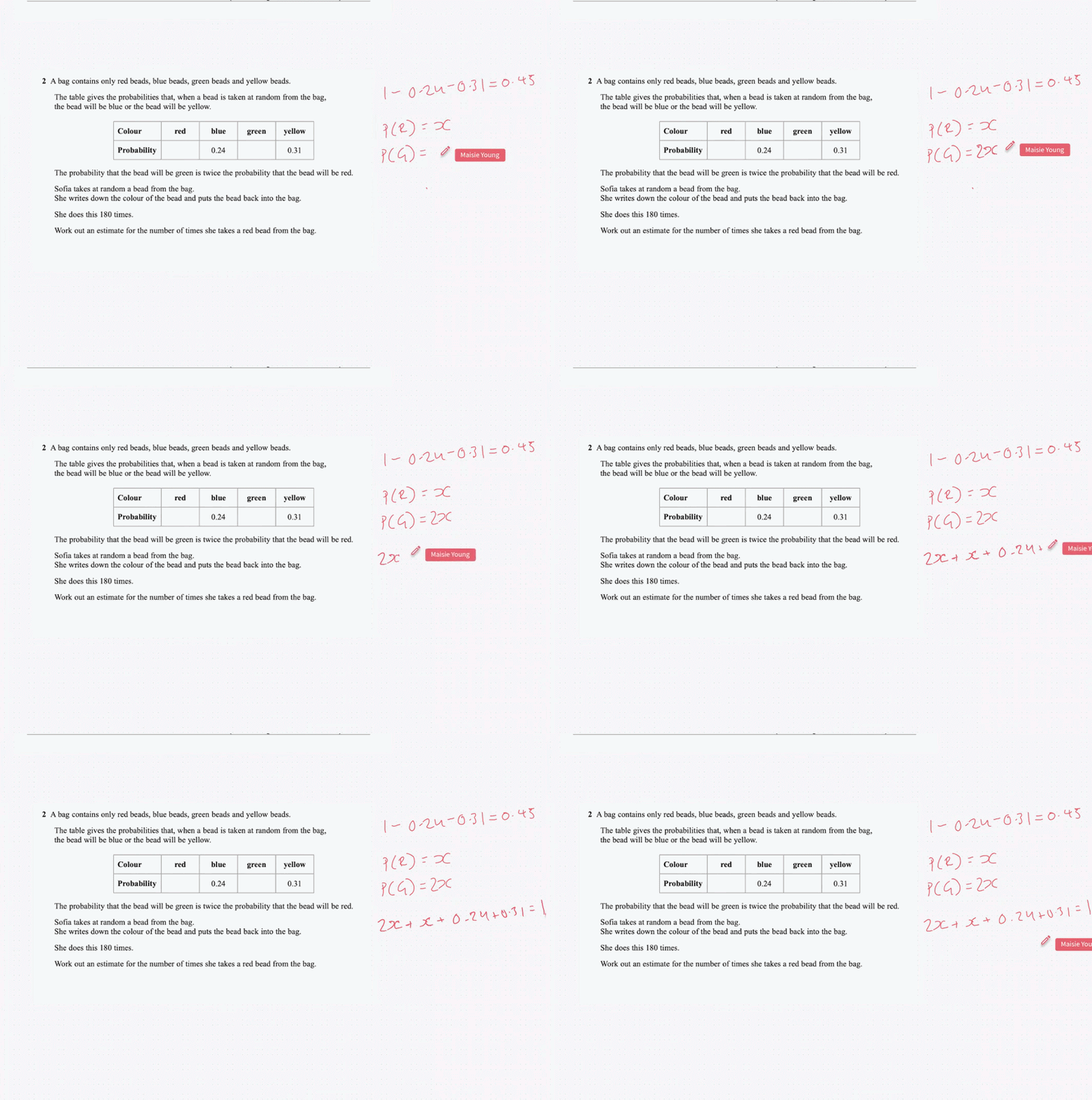
This clip shows a maths lesson recorded in Pencil Spaces, the online classroom used by Greenhill Academics.
Not sure how to practise for the interview?
Tell us your child’s subject and we can help them get ready for the questions and the online format.
Ask about a tutorTry this at home: a ten-minute online mock
You can do this in about ten minutes. It is our own exercise, not an official Oxford task. You need a computer with the video app your family already uses, and one subject question or an Oxford sample question.
- Minutes 0 to 2: Set up a quiet room and open the video app. Turn the camera on, check the microphone, and sit where the light is on your child’s face.
- Minutes 2 to 3: Choose one question in your child’s subject, or an Oxford sample question, with a pen and paper to hand.
- Minutes 3 to 8: Ask your child to think it through out loud, as if explaining to someone, keeping up a running commentary even on the parts they are working out.
- Minutes 8 to 10: Notice where the talking stopped, and check the camera, microphone and connection held up.
What should you look for?
Look at whether your child kept thinking out loud, or went quiet when the question got harder. Going quiet is the thing to practise. Also check the setup worked, so the technology is one less worry on the day.
What this cannot tell you
This cannot tell you whether your child will be shortlisted, get an offer or a place, or how the tutors will judge the interview. It only builds familiarity with thinking aloud and with the online setup.
Bring what you noticed to a first lesson. A tutor who has been through Oxford interviews can help your child practise thinking aloud, work with unfamiliar material, and get comfortable with the online format.
Want a practice run with an Oxbridge tutor?
Tell us where your child is applying and we can help them prepare for the interview and the online format.
Send an enquiryHow a tutor can help with interview practice
A tutor cannot promise a place, and no one can coach a winning answer. What a tutor can do is give your child practice at the thing the interview actually tests: thinking out loud about their subject, with someone asking follow-up questions.
That means mock interviews that feel like the real thing, time spent working through unfamiliar material, and a calm run at the online format so it holds no surprises. A tutor who has sat Oxford interviews themselves can also help your child settle their nerves, which is a big part of the day.
The tutors who can help
These three Oxford tutors support interview practice across different subjects. Tell us your child’s subject and we can help. You can also see our wider admissions consulting.

Hugh has a doctorate from the University of Oxford and a First-Class physics degree from Imperial. He teaches maths and physics, and prepares students for admissions tests and Oxbridge interviews.

Charlotte read Biological Sciences at the University of Oxford (Balliol), with a First. She supports interview preparation for Oxford Biology and Natural Sciences, drawing on four years in the Oxbridge tutorial system.

Kian read Classics at the University of Oxford (Brasenose). He teaches English, Latin, History and Politics, and supports Oxbridge applications, including personal statements, entrance tests and interviews.
What parents ask us about interviews
When are the Oxford interviews, and are they online?
For 2027 entry, shortlisted applicants are interviewed online in December, with interviews expected in early to mid-December. They run on Microsoft Teams, and decisions are released through UCAS on 12 January 2027.
Does every applicant get an interview?
No. Only shortlisted applicants are interviewed. If your child is not shortlisted, it means the application has not gone further this year. Shortlisting happens before the interview and is decided by Oxford.
What equipment does my child need?
It depends on the course. The simplest setup is a computer with Microsoft Teams, which covers a large share of courses. A few subjects need a bit more, like a shared whiteboard, but no family is expected to buy a touchscreen. Check Oxford’s technology guidance for the subject and test it beforehand.
Can my child rearrange the interview?
Not to suit their own schedule. The logistics mean the time is fixed. But if there is a technical problem during the interview, Oxford will offer another time, so a frozen screen is not the end of the world.
Can a tutor guarantee a good result?
No. No one can promise a place or guarantee a strong interview. What a tutor can do is help your child practise thinking aloud, work with new material, and get used to the online format. Be wary of anyone who claims to coach the answers.
Getting ready for an Oxford interview this December?
Tell us your child’s subject and we can help them practise for the questions and the online format.
Send an enquiry