

TL;DR
- A September retake can change predicted grades, because most schools set them from the autumn results, not the summer ones.
- The ten week summer is really about six working weeks once holidays come out, so the plan matters more than the effort.
- Get the failed paper back before anyone revises anything. One paper usually fails for one or two reasons, not twenty.
- Research shows only 16% of predicted grades are accurate anyway, which means teachers respond to fresh evidence.
- Week one is diagnosis, weeks two to four close the gaps, week five is timed papers, week six is polish and rest.
Bad predicted grades after one bad summer mock exam
Your child worked all year, then one summer exam went wrong, and now their predicted grades are at risk. It feels out of proportion, because it is. Most schools set predicted grades from the last full exam before the UCAS deadline, which means the September retake often counts for more than the whole year that came before it.
So the retake is not a punishment. It is a second chance to put a better number in front of the teacher who writes the prediction. One family at Winchester College is weighing predicted grades an LSE application rests on. Another opened an E on results morning. The question never changes: how do we make the most of this time?
One more thing worth knowing, because it takes some pressure off. Research by Dr Gill Wyness at the UCL Institute of Education found that only 16% of predicted grades are accurate, and 75% of students are predicted higher than they go on to achieve. Predictions move. Teachers change them when the evidence changes. Your child’s job this summer is to hand them better evidence.
Do you have enough time to improve before retakes?
Ten weeks sounds like plenty. But take out the family holiday, a week of work experience and the first days back at school, and the real number is closer to six. The maths changes how you plan.
The summer, actually counted
10 weeks. What the calendar says between results day and the retake.
Minus 4 weeks. Holiday, work experience and settling back into school.
6 working weeks. At one lesson a week, that is six lessons to change the result.
Six lessons is enough, but only if none of them is spent guessing.
They revised hard and still failed the paper
Most families start with more revision. We start with the failed paper, because one bad result almost always has one or two causes, not twenty. Until you know which, every hour of revision is a guess.
You have probably already run through the possibilities in your head. Maybe they never really changed how they revise since GCSE, still reading notes and hoping it sticks, when A Level questions test whether they can use the material, not just recall it. If that is it, the fix is a method change, not more hours.
Or maybe the knowledge is all there and the marks vanish to small, avoidable slips: a misread question, working left off the page, an answer that was right in their head and wrong on paper. That one feels the most unfair, and it is the most trainable. Checking routines, showing working, reading the question twice: they sound small, but together they are worth a grade.
The third possibility is a genuine gap, often a topic taught in a week your child was ill or away, that never got filled in. Each of these has a different fix, which is exactly why the first lesson of the summer is a diagnosis, not a lecture. Our guide to moving from a predicted B to an A covers what that first session looks like in detail.
The six-week plan that turns a retake around
Here is the shape we use with retake students every summer. It bends around holidays, but the order never changes, because each step feeds the next.
The six week retake plan
Week 1
Get the paper, find the cause. Go through the failed paper question by question with the tutor.
Weeks 2 to 4
Close the two or three gaps. Teach the missing topics properly, with homework between lessons.
Week 5
Timed past papers. Full papers under exam conditions, marked against the mark scheme.
Week 6
Polish, then rest. Fix what the timed papers exposed, then ease off before the exam.
Two notes on the plan. First, rest is part of it, because a burnt out student underperforms in September no matter how much they covered in July. Second, the timed papers in week five matter more than any other single step, and our advice on revising for A Levels in the final month explains how to mark them the way an examiner would.
Want the diagnosis done this week?
Russell talks to every family himself before anything is booked. One lesson with the failed paper on the table finds the cause and the plan, and you decide from there.
Book a LessonFrom an E to a B: the summer plan to get back on track
Theo finished Year 12 with Bs all year and an E on the summer maths paper, and nobody in the house could say what had happened. Theo is three students stitched into one, with names and details changed, but the timeline and the result below are real.
In the first lesson, his tutor went through the failed paper with him. The cause was not the year of maths. It was one statistics topic taught while Theo was off school, plus a run of small slips in the algebra he actually knew. So the plan wrote itself: three weeks on the missing topic, a checking routine drilled into every homework, then two timed papers in week five.
Theo took two weeks of holiday in the middle and lost nothing, because the plan was built around it. He walked into the September retake having seen the exam format four times that summer. The result was a B, his teacher moved the prediction back to a B with an A in reach, and his university shortlist survived.
Well, B is not right, but let’s talk through why.
”
Hugh, Physics tutor, Oxford
Said mid-lesson in July, as a student picked the wrong answer on a past paper question.
One line from a June call sums up the goal of the whole plan. A parent rang about her son’s September history resit, and Russell told her: “We don’t want him thinking about too many things. He needs to go in there confident, plan it out, do it.”
Will online lessons actually work for my child?
Every lesson happens live on a shared online board, so your child and the tutor work on the same paper at the same time. You get a report after each session, homework reminders by email, and a WhatsApp group where lessons are booked and work is shared. Nothing depends on your child remembering to pass a message on.
Inside a lesson
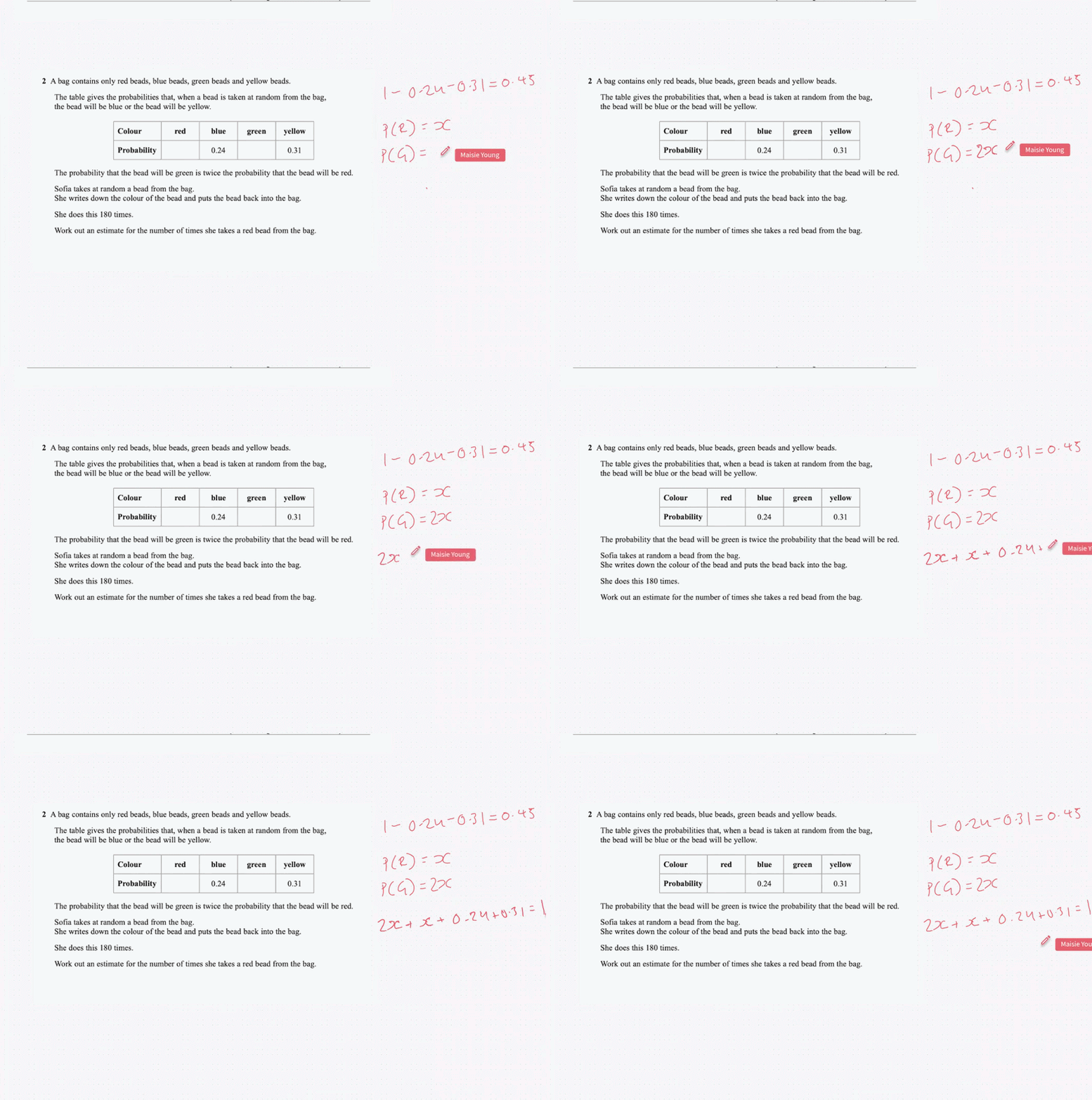
A real Greenhill Academics lesson, recorded live: the tutor works through an A Level probability question on the shared board, thinking on the page as they go.
Your 30 minutes of homework this week, as parents
Email the school and ask for the failed paper back, or at least the mark breakdown by question. Then sit with your child for half an hour and sort the lost marks into three piles: didn’t know it, knew it but slipped, ran out of time. That one exercise is the diagnosis, and it is exactly how our tutors open the first retake lesson.
Tutors who have fixed this exact problem before
Who runs the September plan
Hugh · Maths and Physics, Oxford
More than 20 of his recent students exceeded their predicted grades or secured places at leading universities.

Karol · Chemistry and Maths, Cambridge
Starts every student with a diagnostic assessment, so summer lessons target the real gaps rather than the whole year.

Charlotte · Biology, Chemistry and Physics, Oxford
Builds student confidence in exam technique through discussion-based learning, drawing on four years in the Oxbridge tutorial system.
The questions going through your head right now
Do September retakes really change predicted grades?
At most schools, yes. Predicted grades are usually set from the most recent full exam before the UCAS deadline, so a stronger September result gives the teacher direct evidence to raise the prediction. Ask your child’s school when predictions are finalised, because the date varies.
How many lessons does my child need before a September retake?
One lesson a week across the working weeks of summer is usually six lessons, and that is enough when the first one is spent diagnosing the failed paper. A student starting from an E, or covering a large gap, may need two a week.
Should my child rest over the summer or work through it?
Both, and in that order of importance. Do not burn your child out over the summer, because a tired student underperforms in September. Plan the holiday first, then fit the six lessons around it. The packages don’t expire, so a two week break costs nothing.
What if we don’t know why the exam went badly?
That is normal, and it is fine. You are not supposed to know the cause yet. The first lesson exists to find it, using the failed paper and the mark breakdown, so don’t wait until you have an explanation before starting.
Can we try one lesson before committing to a package?
Yes, and most families do. The first session is a single trial lesson, and you get a report on what it found before you decide anything. If the fit isn’t right, we change the tutor. For pricing and packages, book a consultation and we’ll talk you through what fits your child.
The retake is one exam. The plan is six weeks.
Tell us the subject, the exam board and the retake date, and we’ll match a tutor who can start this week.
Book a Lesson