

Your child is keen. They have a question they would love to dig into, and the time to do it. Then the school says no, the EPQ counts as a fifth A-level and they cannot take it on. If you want your child to do an EPQ and the school has blocked it, here is what your options actually are.
Where this leaves you
- The EPQ is a standalone qualification, worth half an A-level. It is not an extra full A-level, even if the school talks about it that way.
- If the school raises workload or timetable, the first step is to find out whether it does not offer the EPQ at all, or is advising against adding it.
- There are three things to check: what the school actually means, whether another authorised route exists, and whether an independent research project would do instead.
- Any external route has to be checked with the awarding body and an exam centre first. It is not automatic.
- A research mentor can help shape the question and plan the work, whichever route you take.
What it means to do an EPQ
The EPQ is the Extended Project Qualification. The EPQ is a standalone Level 3 qualification, which means your child researches and writes up one project of their own choosing. It is not a sixth-form class with a set syllabus.
It is worth half an A-level. For AQA, an A* is worth 28 UCAS points and an A is worth 24. AQA sets this out in its specification. You can check how points add up on the UCAS Tariff.
When a school calls the EPQ a fifth A-level
If the school describes the EPQ as a fifth qualification or raises workload or timetable concerns, first establish whether it does not offer the EPQ at all or is advising your child not to take it.
Those are two different situations, and they point to different next steps. The three routes below start from whichever one you are in.
Three routes to check when the school blocks the EPQ
If your child still wants to do an EPQ, start here. Three routes, and the honest limit on each.
The school says the EPQ is a fifth A-level and will not let your child take it.
Ask whether the EPQ is genuinely not offered, or offered but discouraged.
These lead to different next steps, so get a straight answer first.
Ask the relevant awarding body what entry, supervision and assessment arrangements are permitted, and whether an approved centre can provide them.
This depends on the awarding body and centre. For AQA 7993, the specification says the qualification is not available to private candidates.
Your child researches and writes a full project with a mentor guiding them.
This gives real research experience, but it is not an EPQ qualification unless it is formally entered and completed under the supervision and assessment arrangements required by an awarding body.
Route one tells you how hard the block really is. Routes two and three are what to do about it.

Meet one of our research mentors
Charlotte, Research mentor
Charlotte completed an MBiol in Biological Sciences at the University of Oxford and offers tailored guidance on EPQ projects and university applications.
What an EPQ is actually worth
An EPQ is a real piece of independent work. Your child picks a question, plans the research, weighs up sources and writes an extended piece. Those skills can be useful preparation for independent study at university.
Where it is relevant to the course, the project may also give your child useful material to discuss in a personal statement, an application or interview.
Not sure which route fits your child?
Tell us what the school has said and what your child wants to research. A mentor can talk through the options with you.
Ask about a mentorYour one move this week
This is a ten-minute conversation to have this week. You need a notepad and ten quiet minutes with your child.
- Write down, in one line, exactly what the school said (3 minutes). Not offered at all, allowed but discouraged, or capped as a fifth A-level.
- Ask your child one thing (3 minutes). In one sentence, the one research question they would choose to answer.
- Note which route that points to (2 minutes). Clarify with the school, check an authorised route, or an independent project.
What should you look for?
Listen for whether the school’s block is a hard one, like no centre runs it here, or a softer one, like we would rather they did not. This will not tell you the school’s final position, and it does not confirm that any outside route is open. That has to be checked with the awarding body and a centre. It is the start of the conversation, not the decision. A research mentor can take the question your child wrote and help shape it into a project.
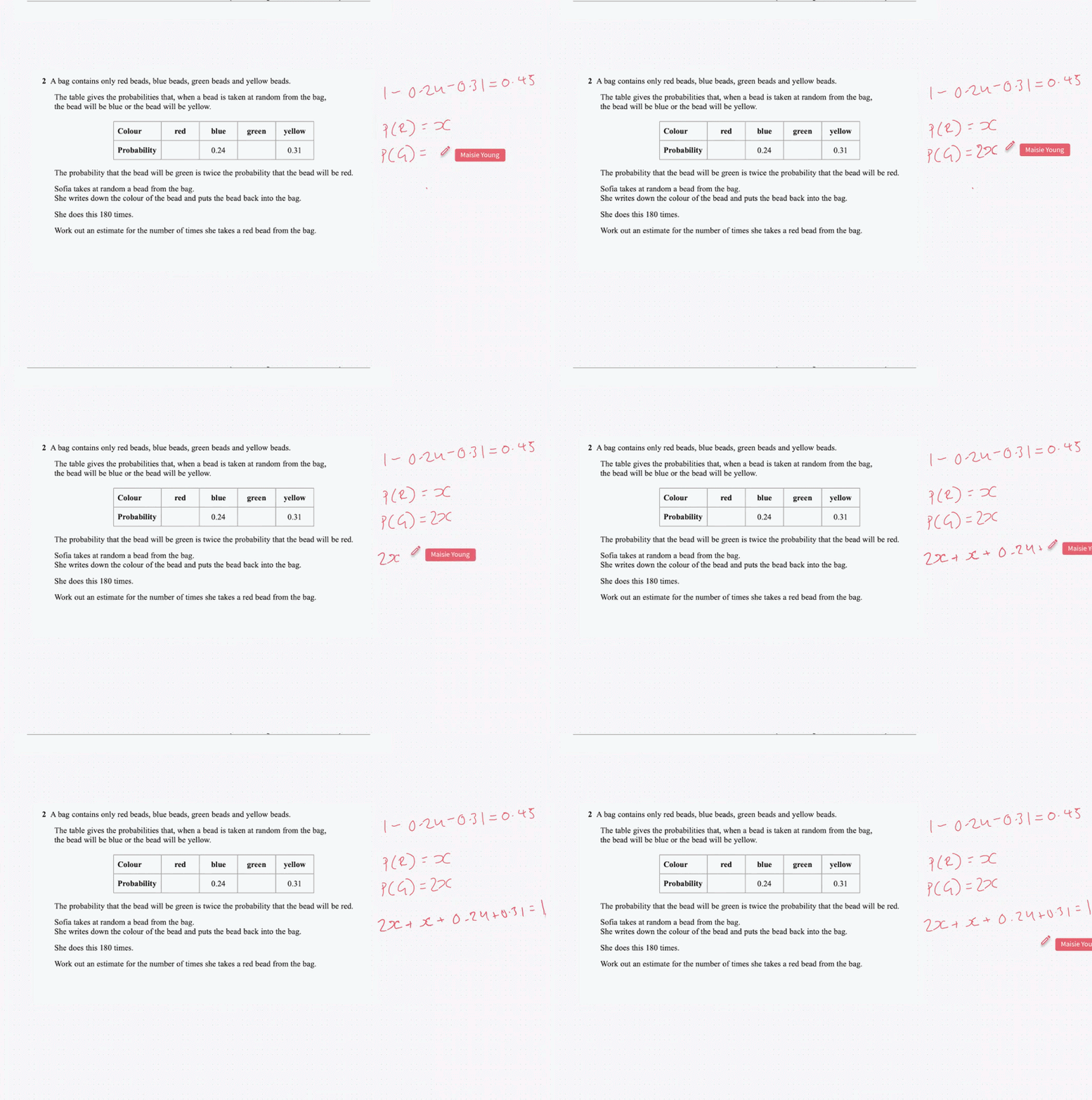
This clip shows a maths lesson recorded in Pencil Spaces, the online classroom used by Greenhill Academics.
Want help planning the project itself?
Tell us your child’s subject and the question they want to explore. A mentor can help them plan the research.
Send an enquiryHow a tutor helps
A research mentor works with your child on the project itself. They help turn a vague idea into a clear research question, plan the stages of the work, and sort out which sources are worth using.
They can also help your child prepare the questions to put to the school or an exam centre. We mentor the research and the writing. We do not arrange formal EPQ supervision, assessment, registration or entry at an outside centre.
The tutors who can help
Charlotte supports EPQ projects and university applications. Maisie supports university applications, including personal statements and interview preparation. Availability can be confirmed when you enquire.
Charlotte completed an MBiol at the University of Oxford and gives tailored guidance on EPQ projects and university applications. Her own research looks at climate and biodiversity policy.

Maisie is studying for an MSci at the University of Oxford. She supports students applying to Oxford and Cambridge, with personal statements and interview preparation.
Questions parents ask us about the EPQ
The school calls the EPQ a fifth A-level. Is that right?
The EPQ is a standalone qualification worth half an A-level, not a full additional A-level. If the school uses ‘fifth A-level’ as shorthand, ask whether it means the EPQ is unavailable or whether it is advising against adding another qualification.
Can my child just sit the EPQ privately?
For AQA 7993, no: its specification says the qualification is not available to private candidates. For any other formal route, check the relevant awarding body’s entry, supervision and assessment requirements with an approved centre before relying on it.
Is the EPQ actually worth doing?
It builds real skills: independent research, planning a long project, weighing up sources and extended writing. The research can also give your child something to talk about in a university application, where it fits the course.
What if the school simply will not budge?
Then look at an independent, mentored research project. Your child gets the research experience, as long as everyone is clear it is not the EPQ qualification unless it is formally entered and assessed.
Can Greenhill arrange the EPQ for us?
We mentor the research and the writing, and help your child plan the project and the questions to ask the school or a centre. We do not arrange formal EPQ supervision, assessment or registration. You can also read our guide to the UCAS personal statement.
Want a mentor for your child’s EPQ or research project?
Tell us the subject and the question your child wants to explore, and we can talk through how a mentor would help.
Send an enquiry