
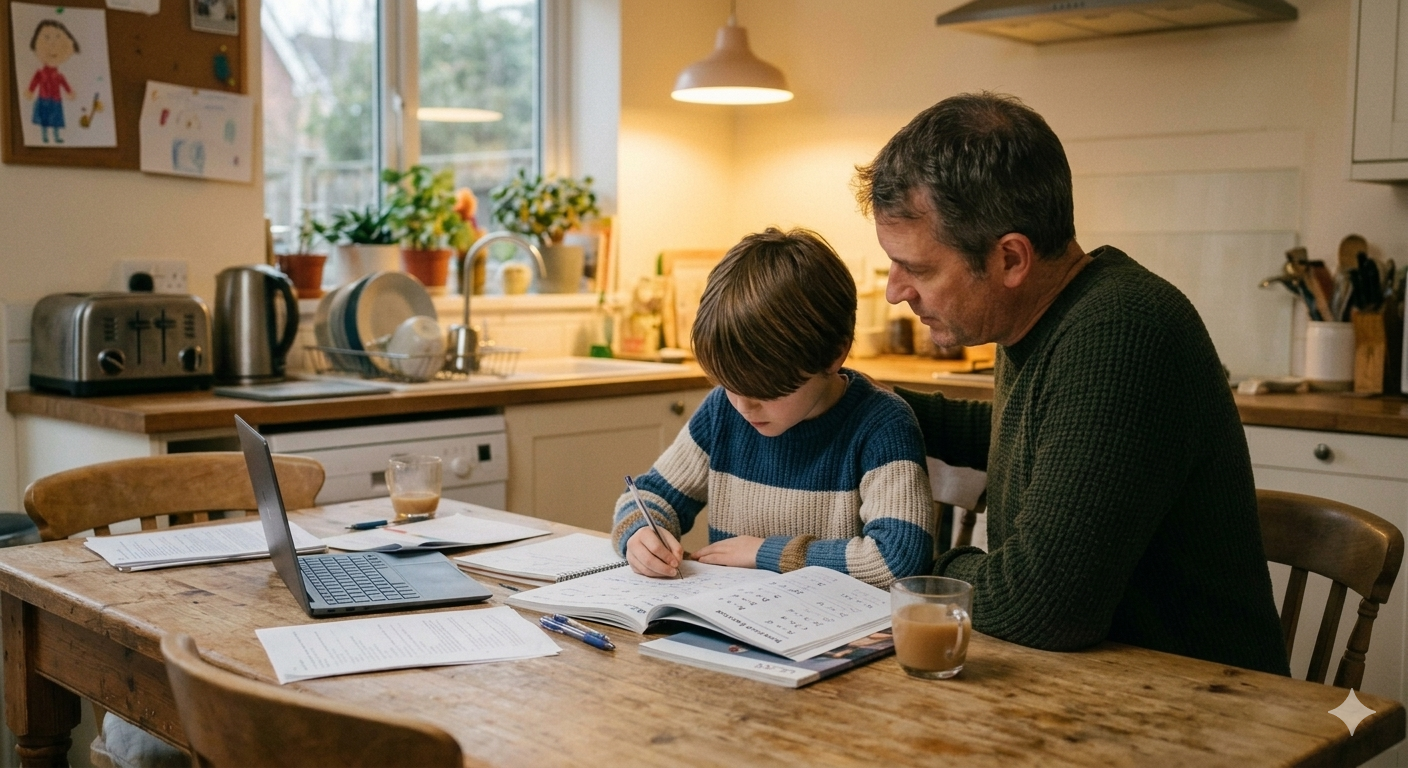

The 11 plus is sat in September of Year 6, the results arrive in October, and the school allocation follows in March. Most families who succeed start preparing seriously in Year 5. Most families who are disappointed started later than they needed to.
This guide covers what the 11 plus tests, when to start, what effective preparation looks like, and how to approach the process without putting your child under unnecessary pressure.
What most parents miss
The 11 plus does not test what a child has been taught at school. It tests how they think under time pressure. A strong student who has never practised the question formats will be at a disadvantage. Familiarity with the exam is a separate skill from academic ability.
Preparing Your Child for the 11 Plus?
Our 11 plus tutors have helped children secure places at top grammar and independent schools including Wellington College, Francis Holland, and Queen’s College.
What does the 11 plus exam actually test?
The content varies by school and by the exam board used. Most grammar schools in England use tests from GL Assessment. Independent schools often use ISEB or set their own papers. The specific subjects tested depend on the school or consortium your child is applying to, always confirm this before beginning preparation.
The four main areas tested are Maths, English, Verbal Reasoning, and Non-Verbal Reasoning. Not every school tests all four. Some grammar school consortia test only Maths and English. Others test all four components.
Maths
11 plus Maths goes beyond the primary school curriculum. Questions cover number operations, fractions, decimals, percentages, ratio and proportion, algebra, geometry, data handling, and problem-solving. The problems are designed to be done quickly, in a timed exam, a child who slows down on any one question risks running out of time on the rest. Both accuracy and speed matter.
English
English papers test reading comprehension, vocabulary, grammar and punctuation, and sometimes creative writing. Comprehension questions require reading a passage and answering at different levels of inference, some straightforward, some requiring the child to read between the lines. The vocabulary element can include synonym and antonym questions that go beyond everyday primary-level language.
Verbal and non-verbal reasoning
Verbal reasoning tests the ability to understand and manipulate language, finding patterns, completing analogies, identifying words within words, and solving coded messages. Non-verbal reasoning tests spatial and pattern recognition using shapes and diagrams. Neither subject is taught in primary schools, which means children who have not specifically practised them will find the question styles unfamiliar under exam conditions. Both can be prepared for effectively with structured practice. We have written detailed guides to both: 11 Plus Verbal Reasoning Made Simple and 11 Plus Non-Verbal Reasoning: Pattern Recognition Guide.
When should you start 11 plus preparation?
The beginning of Year 5 is the most common starting point and gives 12 to 18 months before the September exam, enough time to build familiarity with question styles, address knowledge gaps, and develop the speed and accuracy the exam requires.
For schools with very high competition, selective London independents, the most oversubscribed grammar schools in Buckinghamshire, Kent, or Essex, some families start in the second half of Year 4. This is not essential for every child, but gives more flexibility for a child who needs extra time to build confidence or whose Maths needs work.
Starting in Year 6 is late. It can still be effective for a well-prepared child who only needs to familiarise themselves with question formats, but it leaves no room to address content gaps or build exam stamina.
How much preparation is reasonable
Two to three sessions of practice per week, each lasting 30 to 45 minutes, is sensible for most Year 5 children. This is enough to make progress without turning every evening into revision. The aim is to make practice a normal part of the week rather than a source of anxiety. Children who dread their preparation sessions retain less of what they practise.
What does effective 11 plus preparation actually look like?
Build content knowledge first
Start by identifying any gaps in Maths or English that need to be filled before your child can tackle 11 plus-level questions confidently. Fractions, percentages, and word problems are common weak spots in Maths. Vocabulary breadth and inference in comprehension are common weak spots in English. A tutor can diagnose these gaps quickly and build a plan around them.
Introduce verbal and non-verbal reasoning gradually
Most children have never seen verbal or non-verbal reasoning questions before they begin 11 plus preparation. The first time they encounter them, the question types feel alien and the child often assumes they are bad at reasoning. This is rarely true, it is simply unfamiliarity. Introduce one question type at a time, work through the method together, and build from there. Within a few weeks, most children find these sections significantly less daunting.
Use timed practice to build speed
Once your child can answer questions accurately, the next step is speed. Many children who know the material still run out of time in the real exam because they have never practised under timed conditions. Introduce timed practice several months before the exam, not in the final weeks. Start with generous time limits and reduce them gradually until your child is comfortable working at the pace the exam requires.
Use mock papers in the final stretch
In the six to eight weeks before the exam, introduce full mock papers under realistic conditions, timed, quiet, with no help during the paper. Review the mock together afterwards, identifying which question types cost the most time and which areas still need work. Two or three mocks in this final period is enough to build confidence without burning your child out before the real exam. If your child is also preparing for a school interview, we have a separate guide to how to prepare for 11 plus private school interviews.
Not sure where your child currently stands?
A first session with one of our 11 plus tutors can quickly identify which areas need most attention and what a realistic preparation plan looks like.
Book a LessonHow do you support your child through 11 plus preparation without adding pressure?
The 11 plus can become a source of significant anxiety for children, not because the exam itself is unreasonable, but because children absorb parental anxiety very effectively. A child who hears repeated conversations about how important this exam is will often perform below their ability on the day.
Treat preparation as normal, matter-of-fact activity. Consistent short sessions matter more than long anxious ones. Acknowledge that a question was hard rather than expressing concern that your child couldn’t answer it. And make clear, genuinely, that the outcome of one exam does not determine the value of your child. That knowledge removes the psychological weight that most undermines performance.
Which 11 plus tutors can help your child prepare?

Murray
Murray is reading Materials Science at Oxford (MEng, expected First), having achieved A* in Maths, Chemistry, and Physics at A Level. With over 150 hours of tutoring experience, Murray tutors 11 plus Maths alongside GCSE and A Level subjects. He works online using an interactive whiteboard, which is particularly effective for younger students working through the visual and spatial problems that appear in 11 plus Maths and Non-Verbal Reasoning papers.

Clemmie
Clemmie read Psychological and Behavioural Sciences at Trinity College Cambridge (First Class), having attended the City of London School for Girls. She tutors 11+ Maths and English alongside GCSE and A Level subjects. Her Cambridge research background gives her a precise, analytical approach to identifying where a child is struggling and what needs to change. She is patient, structured, and effective at working with younger students building confidence.

Martin
Martin holds an MSc in Mathematical Sciences from Oxford (Distinction) and is completing a PhD in Applied Maths at Cambridge. He tutors Private School Admissions Maths across 7+, 11+, and 13+ levels and brings the same precision to entrance exam preparation that produced a 54-percentage-point improvement in pass rates during his teaching placement. Martin is particularly effective at building the problem-solving speed and accuracy that 11 plus Maths demands under timed conditions.
Ready to build a structured preparation plan?
If your child is in Year 4 or Year 5 and you are beginning to think about the 11 plus, the right time to start is now. Get in touch and we will match your child with a specialist 11 plus tutor who can assess where they are and build a plan around their target schools.
Expert 11 Plus Tutoring with Greenhill Academics
HAND-MATCHED TUTORS FOR GRAMMAR AND INDEPENDENT SCHOOL ENTRY
Our tutors have helped children secure places at selective grammar schools and top independent schools. One-to-one preparation across Maths, English, Verbal Reasoning, and Non-Verbal Reasoning, tailored to your child’s target schools.
Book a LessonFrequently asked questions
