

Maybe your child does the whole calculation right and still drops the final mark in GCSE Maths. The working is correct, the method is sound, and the answer is rounded wrong, or not rounded at all. The real question is simple: how many significant figures should the answer have? But there is a clear way to decide, and it starts with the question itself.
Quick answer
- Right working can still throw away the last mark if the rounding is wrong.
- The first rule is simple: do what the question asks. If it says a number of significant figures, give exactly that.
- Significant figures are not the same as decimal places, and a question that asks for one is not asking for the other.
- Keep full accuracy in your working and round only the final answer.
- If no instruction is given, do not invent a number. Follow the convention taught for that paper or subject, and check the mark scheme.
Where significant figures trip students up
The slip comes at the very end. Your child has the right answer on the calculator, say 4.3718, and then has to decide what to write down. Two significant figures? Three? Two decimal places? The method earned the marks, and the rounding can still cost the last one.
Another slip is rounding too early. Your child rounds a number in the middle of the working, carries the rounded value forward, and the final answer drifts off, so even a correct method lands outside the accepted range.
What a significant figure actually is
Significant figures are the digits that carry real information in a number, counting from the first non-zero digit. In 4.3718, the first significant figure is 4, the second is 3, the third is 7, and so on. So rounding to three significant figures gives 4.37.
Decimal places are different. They count the digits after the decimal point, however many significant figures that turns out to be. 4.37 is three significant figures and two decimal places at the same time. They answer two different questions, and a question that asks for one is not asking for the other.
How many significant figures should you give?
There is no single number that is always right. So work down this short list in order.
1. Do what the question says
If the question asks for a set number of significant figures, or a number of decimal places, give exactly that. The instruction in the question comes first, every single time, and it settles the matter on its own.
2. Check: significant figures or decimal places?
Read the instruction carefully. “Two significant figures” and “two decimal places” are different requests and can give different answers. Make sure your child gives the one that was actually asked for.
3. Keep full accuracy until the end
Do not round in the middle of the working. Instead, carry the full number through every step and round only the final answer, or a correct method can still land outside the accepted range.
4. No instruction given?
If the question gives no rounding instruction, do not invent a number. Follow the convention taught for that paper or subject, and check the mark scheme to see what was accepted. Do not assume a blanket three significant figures. There is no rule that fits every question.
Do what the question asks, keep significant figures and decimal places straight, and keep full accuracy until the last line. That order is the safe way through.
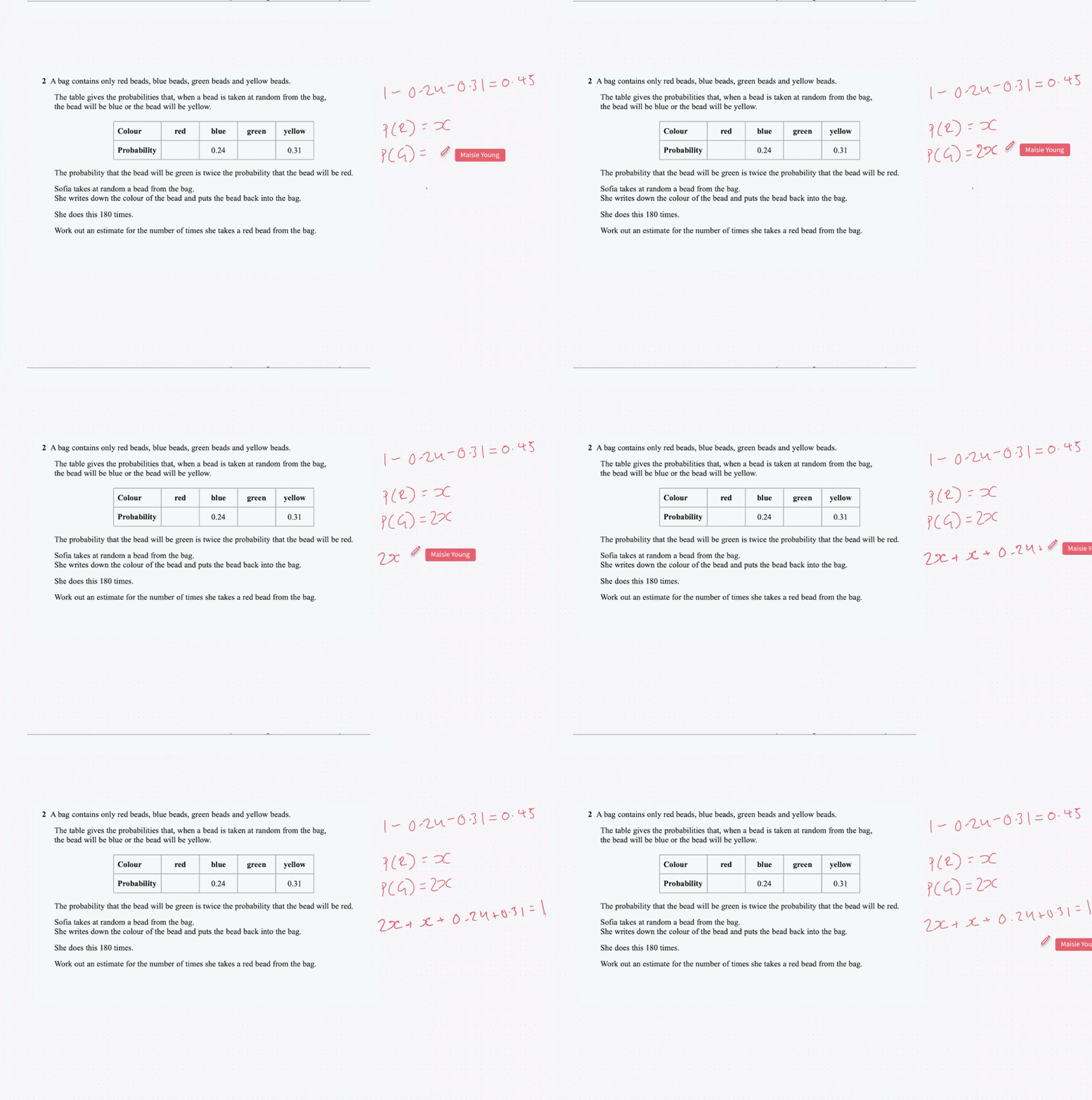
This clip shows a maths lesson recorded in Pencil Spaces, the online classroom used by Greenhill Academics.
Not sure if it is the maths or the rounding?
Tell us how your child’s answers fall short. A tutor can look at the paper and work out where the difficulty appears.
Ask about a tutorTry this at home: re-mark your rounding
This takes about ten minutes. You need one of your child’s marked GCSE Maths papers, and the question instructions or mark scheme if you have them. So you are only checking the rounding, not re-marking the whole paper.
- Find the calculated answers (2 minutes). Go through the paper and mark every question with a final answer your child had to round.
- Read what the question asked (3 minutes). For each one, note whether it asked for a number of significant figures, a number of decimal places, or said nothing.
- Compare with the instruction or mark scheme (3 minutes). Check the answer against what the question asked for, or against the mark scheme where the question gave no instruction.
- Mark the rounding slips (2 minutes). Put a dot next to any answer that was rounded wrong, rounded too early, or given to the wrong kind of figure.
What should you look for?
If the working is right but the rounding is wrong, that may suggest an accuracy-mark habit, and the list above is what to practise. If your child is unsure what a significant figure even is, that may point to the idea to work on first. One ten-minute check cannot establish why the errors are happening, and it cannot set the overall grade or cover the rest of the paper. It only gives you a clue about where the marks are going. A tutor can take the same paper and work on the rounding habit with your child.
Want a tutor to work on this with your child?
Tell us the level and exam board. A tutor can start with a paper your child has already sat.
Send an enquiryHow a tutor works on rounding
In a lesson, a tutor watches your child finish a question and sees the exact moment the rounding goes wrong: too early, the wrong kind of figure, or none at all. They stop there, ask “what did the question ask for?”, and have your child round it properly on the spot.
Then they practise it on the questions where it matters, so full accuracy is kept through the working and the final answer matches what the question wanted. There is no promise of a set grade. The aim is simple: help your child round in the way each question asks for.
The tutors who can help
These tutors studied at Oxford and Cambridge and teach maths across GCSE, A level and IB. They work on the small habits, like rounding, that keep the marks your child’s method has earned.

Martin is reading for a PhD in Applied Maths and Theoretical Physics at the University of Cambridge, after a Master’s with distinction at the University of Oxford and a First at the University of Bath. He teaches Maths and Further Maths from GCSE to A level.

Clemie read Psychological and Behavioural Sciences at Trinity College, University of Cambridge, with A* in Maths, Chemistry and Biology at A Level. She teaches 11+ and GCSE maths and sciences, and A level Maths.

Morgan is reading for an MChem at Jesus College, University of Oxford, with A* in Chemistry, Biology and Maths at A Level and nine Grade 9s at GCSE. He teaches Chemistry, Biology and Maths from KS3 to A level.
Questions parents ask us about rounding and significant figures
My child gets the right answer but still drops the mark. Why?
That last mark is the accuracy mark, for rounding to the right degree. Correct working with the wrong rounding can still miss it. Your child can practise it once they know what to check.
What is the difference between significant figures and decimal places?
Significant figures count the digits that carry information, from the first non-zero digit. Decimal places count the digits after the decimal point. They answer different questions, so your child gives the one the question asked for.
Is there a set number of significant figures my child should always use?
No. If the question asks for a set number, give exactly that. If it gives no instruction, do not invent one. Follow the convention for that paper and check the mark scheme.
Why do they throw away marks even when the method is correct?
One cause is rounding too early. If your child rounds partway through and carries that value forward, the final answer can drift outside the accepted range. Keeping full accuracy until the final answer reduces that risk.
What can a tutor do that we cannot do at home?
A tutor can watch your child finish a question, notice when the rounding goes wrong, and work on the habit with them. They can also use the mark scheme to show what accuracy was accepted.
Want a tutor to work on rounding with your child?
Tell us the level and how maths is going, and we can talk about a plan to practise the rounding habit.
Send an enquiry