

If your child can simplify ratios but stalls when asked to show shapes are similar, check how they match the sides and compare the ratios. For the rectangles in this article, both pairs of corresponding sides must have the same scale factor. The worked examples and home task let you check that method without assuming why your child is stuck.
The quick picture
- At 13+, “show that two shapes are similar” is a method, not a lucky guess.
- For rectangles, check both pairs of corresponding sides using the same direction of comparison.
- Write each pair as a fraction, simplify, then compare. For these rectangles, the same ratio on both pairs means they are similar.
- There is a short task at the end you can try at home this week.
Where it goes wrong
One thing to check is whether your child compares both pairs of corresponding sides in the same direction. For these rectangles, all the angles are right angles, so equal ratios for the long sides and short sides establish similarity. A single matching pair is not enough. This two-ratio check is specific to rectangles; other shapes need their appropriate similarity conditions. Keep the ratios as fractions to make the comparison clear. A mixed number is not mathematically wrong, but it can make this comparison less direct.
The two-ratio check
Here is the check we teach for these rectangles. Two ratios, one comparison.
Divide the second rectangle’s long side by the first rectangle’s long side. Simplify the fraction.
Divide the second rectangle’s short side by the first rectangle’s short side. Keep the same order and simplify.
Put the two fractions side by side.
Same fraction? For these rectangles, that shows they are similar. Write it down.
Not the same? Write the two fractions with a crossed equals sign between them, then “so they are not similar”.
How we teach you to show shapes are similar
We get the child to say the check out loud before they write. Divide the second rectangle’s long side by the first rectangle’s long side and simplify. Then do the short sides in that same order. Then compare. If the two fractions are the same, the two rectangles are similar, and they write that sentence. If the fractions are different, they show it with a crossed equals sign and say they are not similar. Once that is steady, we move on: using the scale factor to find a missing length, then similar triangles, which use their own similarity conditions that can involve angles as well as side ratios.
Greenhill tutor
Ramsay, Maths tutor
Ramsay tutors 13+ and Common Entrance Maths with Greenhill.
Not sure if your child checks both sides or guesses?
Tell us the school and the exam your child is sitting. We can look at where the method breaks down and work on it.
Ask about a tutorA worked example
The shapes below are ones we made up to show the method, not a real pupil’s work.
Two rectangles that are similar
Rectangle A is 20 by 8. Rectangle B is 25 by 10. Long sides: 25 over 20, which simplifies to 5 over 4. Short sides: 10 over 8, which also simplifies to 5 over 4. Both fractions are 5 over 4, so the rectangles are similar.
Two rectangles that are not
Rectangle C is 20 by 8. Rectangle D is 30 by 10. Long sides: 30 over 20, which is 3 over 2. Short sides: 10 over 8, which is 5 over 4. 3 over 2 is not 5 over 4, so you write the crossed equals sign and say the rectangles are not similar.
Try this at home this week
This takes about eight minutes. Try both pairs below to observe how your child matches sides and compares the ratios on these two examples.
What you need. Paper and a pen. The two pairs of rectangles are written out below, so there is nothing to draw.
Pair A. Rectangle 1 is 12 cm by 8 cm. Rectangle 2 is 18 cm by 12 cm.
Pair B. Rectangle 1 is 12 cm by 8 cm. Rectangle 2 is 18 cm by 10 cm.
- For each pair, divide Rectangle 2’s long side by Rectangle 1’s long side.
- Divide Rectangle 2’s short side by Rectangle 1’s short side, keeping the same order.
- Simplify both fractions.
- Compare them.
- Same ratio means the rectangles are similar. A different ratio means they are not.
What to watch. Watch whether your child checks both pairs of sides and uses the same direction for both ratios. If they use mixed numbers, ask them to explain the comparison; mixed numbers are not wrong.
What it cannot tell you. This checks the method on two pairs of rectangles only. It does not establish performance on other questions, similar triangles with a missing side, or area and volume scale factors.
Where a tutor takes it next. That is where a tutor picks it up: finding a missing length from the scale factor, then similar triangles, then the area and volume rules.
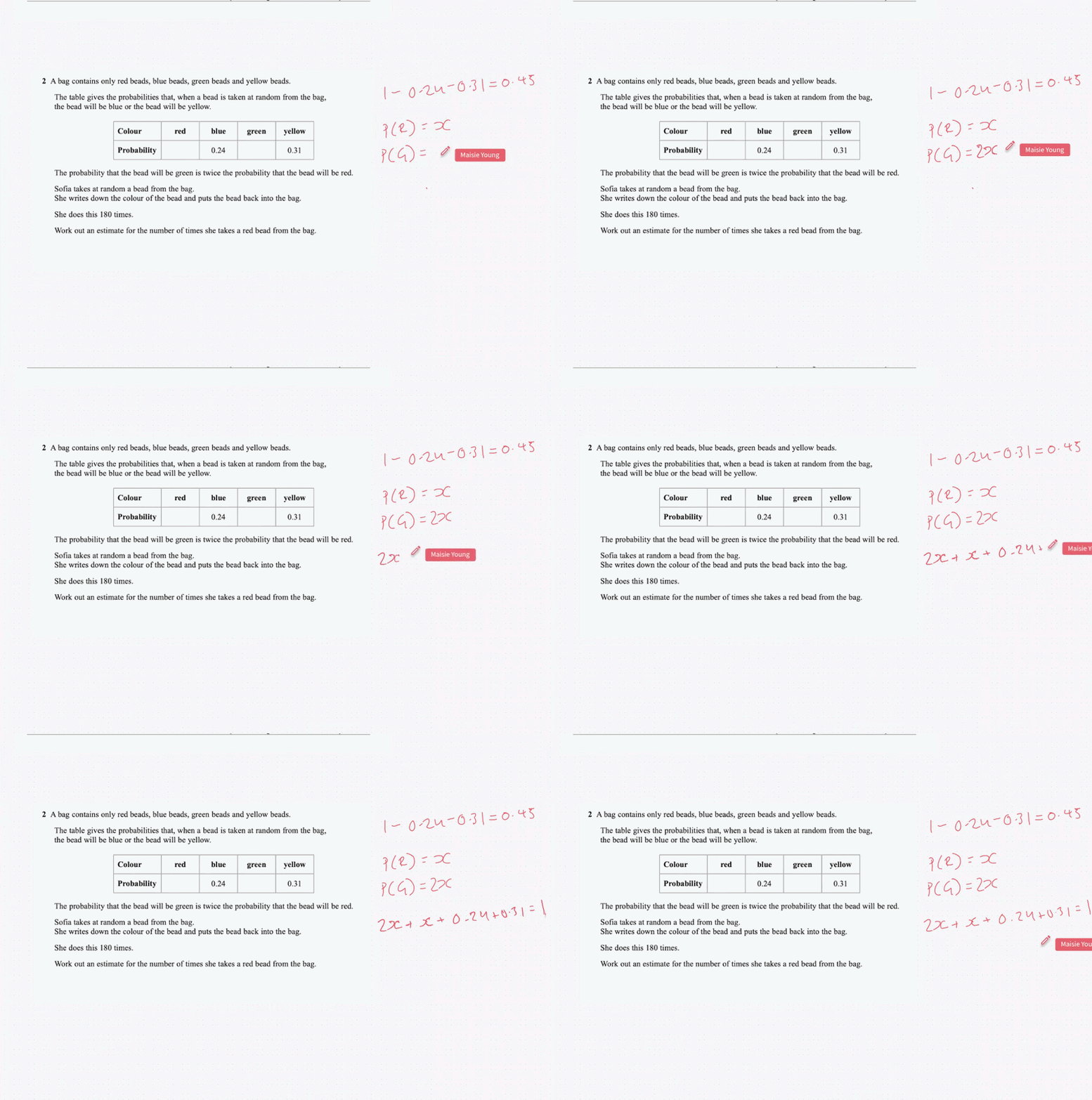
This clip shows a maths lesson recorded in Pencil Spaces, the online classroom used by Greenhill Academics.
Our 13+ Maths tutors
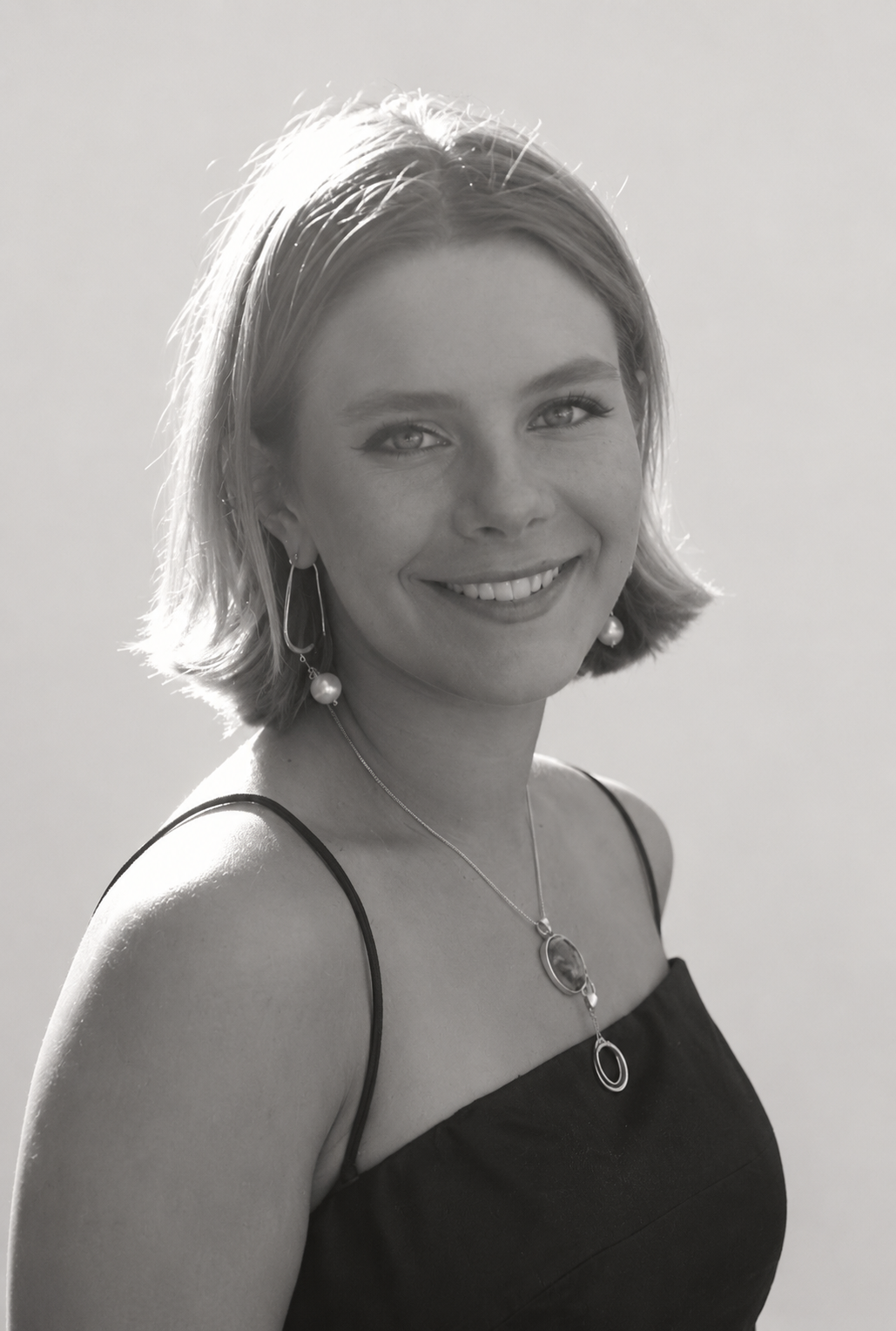
Maisie tutors GCSE and A Level Maths, alongside the sciences. She is a Molecular Biochemistry MSci student at the University of Oxford and has tutored students from KS3 through to A Level.
Questions parents ask us
My child can do the calculation but freezes on “show that” questions. Why?
They may know how to do the calculation but not know what the instruction “show that” requires them to write. For these rectangle questions, the useful habit is to compare both pairs of corresponding sides and then state the conclusion.
What is the quickest way to check if two shapes are similar?
For these rectangles, divide the second rectangle’s long side by the first rectangle’s long side. Do the same for the short sides, keeping that order. Simplify and compare: equal ratios show the rectangles are similar; unequal ratios show they are not. Other shapes need their own similarity conditions.
Is this 13+ and Common Entrance only, or GCSE too?
Similarity appears in both 13+/Common Entrance Maths and GCSE Maths. GCSE work also includes similarity in triangles and relationships between length, area and volume scale factors.
Do you tutor 13+ Maths online, and for which schools?
Yes. We tutor 13+ and Common Entrance Maths online for UK and international families. Tell us the school and exam your child is preparing for, and we can discuss the support they need.
How soon can a tutor start before an entrance exam?
Timing depends on tutor availability and the exam your child is preparing for. Tell us the date and we can discuss the next step.

Want a tutor to work on 13+ Maths with your child?
Tell us the school and the exam your child is sitting, and we can talk through the help they need.
Send an enquiry