

Your child has sat through every lesson and learned each one, yet the reaction mechanisms all blur together, so they cannot tell which one applies to which reaction. They look at two and say the same thing every time: they look the same. Sometimes the problem is not learning a mechanism for the first time, but telling apart mechanisms your child has already met.
Where this goes wrong
- A-level organic mechanisms look alike on the page. They share curly arrows, a nucleophile or electrophile, and similar middle steps.
- Because they look alike, a child who has learned them all can still swap one for another.
- The fix is to tell each pair apart by the feature that actually separates them, which can be the reagent and the conditions.
- Different pairs split on different features, so there is no single trick. The habit is to look for what makes this pair different.
- You can try this at home in about ten minutes with two answers your child mixed up.
Why the reaction mechanisms blur together
By the second year of A-level Chemistry your child has met a lot of organic mechanisms. On the page they look alike. There are curly arrows, a nucleophile or an electrophile attacking, and a middle step that can look much the same from one reaction to the next.
If a mechanism was never securely taught or understood, that is a different problem, which we cover in a separate article. This article is about mechanisms your child has already met that still run together.
One pair, side by side
Here is one useful pair to compare side by side. The same haloalkane, the same reagent, potassium hydroxide. On the page they look almost identical. What changes the reaction is the conditions, and that changes what the hydroxide does.
This pair splits on more than one thing: the solvent, what the hydroxide does, and the product. Other look-alike pairs split on something else, like which bond breaks or which part of the molecule reacts. So the habit is not ‘find the one arrow that differs’. It is ‘find the feature that tells this pair apart’, because it is not always the same feature.
Read the reagent and conditions first
Before your child draws a single arrow, the reagent and the conditions already point to the answer. Water or ethanol. Warm or hot. An acid or a base. With the haloalkane pair above, water pushes it towards substitution and ethanol pushes it towards elimination. Reading that first stops the two from blurring.
This is a habit your child can build on any pair, not just this one. The same close reading of conditions is what we show students when we go through past papers the right way: look at what the question gives you before you commit to a mechanism.
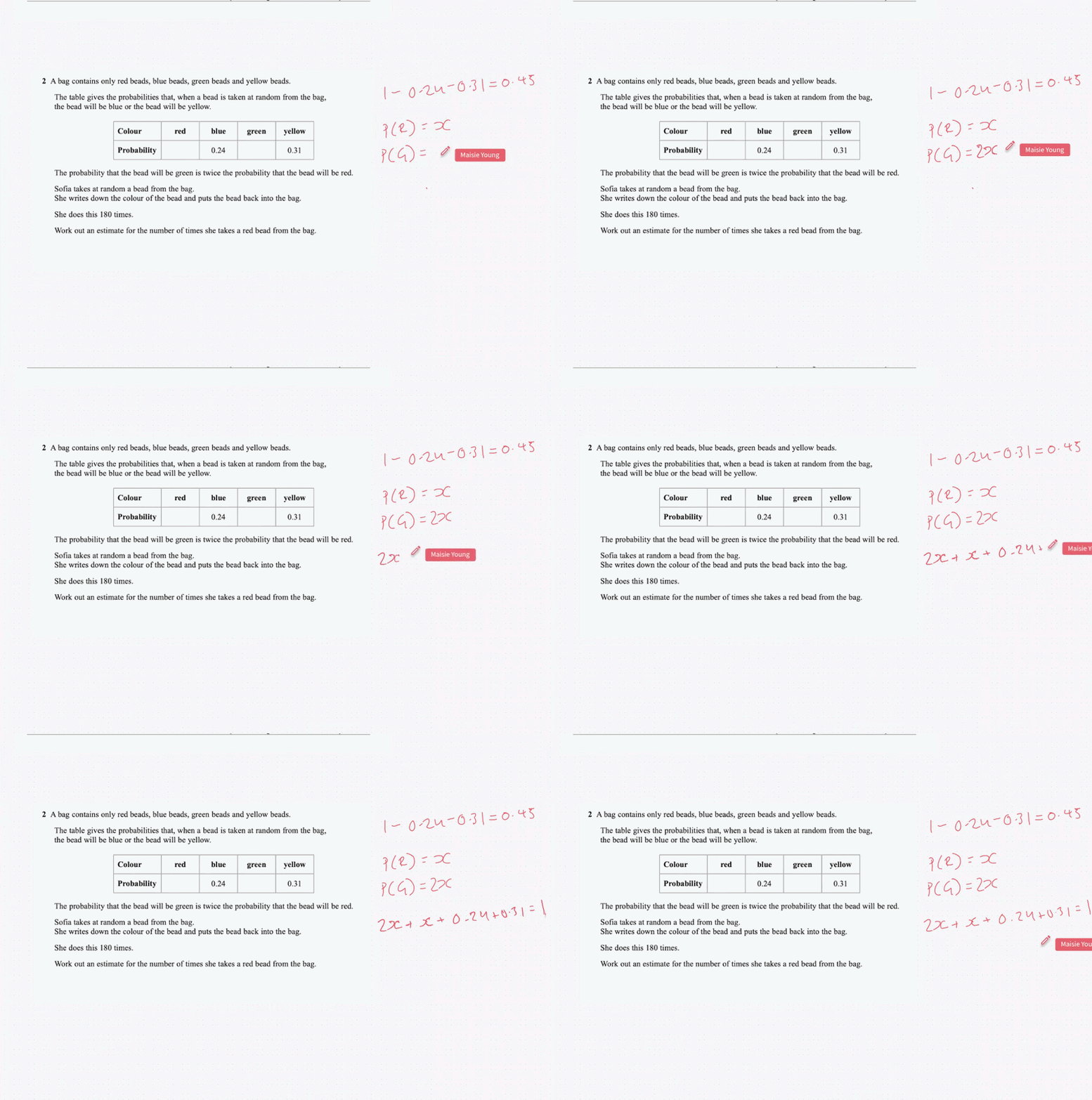
This clip shows a maths lesson recorded in Pencil Spaces, the online classroom used by Greenhill Academics.
Not sure which mechanisms your child swaps?
Send us the two or three mechanisms your child keeps mixing up. A tutor can look and tell you where the confusion sits.
Ask about a tutorTry this at home: ten minutes with two look-alikes
This takes about ten minutes. You need two of your child’s already-marked A-level Chemistry mechanism questions that they mixed up, and two blank cards or sheets.
- Put them side by side (2 minutes). Pick two mechanisms your child keeps swapping. Put one on each card.
- Write the trigger at the top (3 minutes). On each card, write only the reagent and the conditions that start that reaction. Nothing else yet.
- Circle the step or feature that tells them apart (3 minutes). On each card, mark the one thing that is different. It might be the conditions, the bond that breaks, or the part of the molecule that reacts. It is not always the same kind of difference.
- Cover and sort (2 minutes). Cover the names. Ask your child to tell the two apart using only the trigger and the feature they circled.
What should you look for?
You are looking for whether your child can name the feature that separates the pair, or still says they look the same. It does not grade your child, and it does not cover mechanisms they have not met yet. It only shows whether the look-alikes can be told apart. A tutor can take the pairs your child still mixes up and practise identifying the distinguishing feature with them, one pair at a time.
Want a tutor to sort these with your child?
Tell us the exam board and how the Chemistry is going. A tutor can work through the look-alike pairs one at a time.
Send an enquiryHow a tutor works on it
In a lesson, a tutor sits with your child and takes two mechanisms they keep swapping. They put them side by side, read the reagent and conditions out loud, and name the feature that separates them. Then they do it again on the next pair.
The tutor can repeat the same comparison on other pairs your child confuses, using the reagent, conditions and distinguishing feature each time.
The tutors who can help
These tutors teach A-level Chemistry and can work through organic mechanisms with students. Availability can be confirmed when you enquire.

Mirsab studied Natural Sciences at the University of Cambridge, holds an A* in A-level Chemistry, and tutors Chemistry at GCSE and A level.
Questions parents ask us about A-level Chemistry
My child has been taught all of these. Why do they still mix them up?
Learning a mechanism and telling it apart from a similar one are two different things. Once several are in your child’s head, they blur because they share the same look. If the underlying content is secure, practising the differences between similar mechanisms can be a useful next step.
Is this the same as my child not understanding the topic?
No. If a mechanism was never securely taught or understood, that is a knowledge gap, and we cover that in a separate article on topics that were never taught properly. This article is about mechanisms your child has already met that run together.
How do I tell at home if this is the problem?
Take two marked mechanism questions your child swapped. The ten-minute try above shows whether they can name the feature that separates the pair, or still says the two look the same.
Does the same method work for every mechanism?
No. Different pairs are separated by different features. For one pair it may be the solvent and conditions. For another it may be the bond that breaks or the part of the molecule that reacts. The useful habit is to find what tells apart the pair in front of you.
Can a tutor sort this out quickly?
A tutor works through the pairs your child still confuses, one at a time, building the habit of reading the conditions first. How fast it settles depends on the child, so we would not promise a timescale.

Want a tutor to work on A-level Chemistry with your child?
Tell us the exam board and which mechanisms are getting mixed up, and we can talk about a tutor who fits.
Send an enquiry