

Summary of this blog
- It is almost never about ability. GCSE rewards spotting a familiar method. A Level rewards using it fluently, several steps in a row, with no signposts.
- The problem concentrates. It is usually one of two things, the algebra underneath or the exam on top, and very rarely the whole subject.
- A ten minute check settles it. One page of pure algebra, no calculator. Slow and slippy points to the maths. Quick and clean points to the exam.
- Fix it in order: the algebra first, then exam technique, then timing. Grinding past papers before the algebra is solid wastes weeks.
- Do not wait for the next mock. Year 12 piles on week by week, and a focused six to eight weeks is usually enough to turn it around.
They did nothing at GCSE and still got a 9
Your child sailed through GCSE. They barely revised, walked out smiling, and the Grade 9 came anyway. Now it is October of Year 12, the marks have fallen off a cliff, and for the first time they are coming home saying they do not understand maths. Nobody in the house saw it coming, and that is the part that frightens you most.
Here is the first thing to hold on to. Your child has not become worse at maths over one summer. GCSE and A Level are two different exams that reward two different things, and nobody tells families that in September. One child at Winchester College coasted to a 9 and hit a wall in the first term. Another walked in expecting the same easy ride and got the first low mark of their life. The subject did not change. The bar did.
This is one of the most common ways the A Level jump catches a strong student out, and the pattern almost never varies. So before anyone panics, or books a pile of extra lessons, it helps to know exactly what shifted between the two exams.
Is it the maths, or the exam? One check tells you
GCSE maths rewards spotting the method. Questions point you at the tool, the algebra is short, and a strong student scores well by knowing which one to reach for and using it cleanly. A Level maths rewards fluency. The questions run several steps, the signposts disappear, and the algebra inside each step is heavier than anything GCSE asked for. So a Grade 9 student has gone from an exam that hands them the method to one that expects them to choose it, chain it, and run three or four steps without a slip.
That means the drop almost always comes from one of two places: the algebra underneath, or the exam on top. Do not guess which. Check it.
Same subject, two different games
GCSE maths
Rewards spotting the method. Questions point the way, the algebra is short, single steps, marks for using a familiar tool cleanly.
A Level maths
Rewards fluency. No signposts. Long problems that chain heavy algebra, where one slip in step two costs the marks in step four.
The gap between the two is what actually caused the grade drop.
The ten minute check to run at home
Running it takes ten minutes. Sit your child down with one page of pure algebra and no calculator: indices, surds, algebraic fractions, rearranging formulae, expanding and factorising. Nothing from the A Level course itself, just the machinery underneath it. Then watch how they work rather than marking the score.
The ten minute check
✓ Slow or slippy
The maths is the gap. Rebuild the algebra first. A Level content cannot stick to foundations that are not automatic.
Quick and clean
The exam is the gap. The maths is there. Train method choice, structure, and how the marks are actually won.
One check settles it, and tells you exactly where to step in.
They understand it but make silly mistakes
Start here if the ten minute check came back slow or scrappy. This is the most common cause of the Grade 9 shock, and the most fixable one. Your child follows every new topic in class, then loses marks because the algebra inside each step costs them time and accuracy. The teacher says “understands the concepts, makes silly mistakes”, and you nod, because you have heard it before. That sentence is not a personality flaw. It is exactly what the maths gap looks like from the front of a classroom.
The fix is short, daily, and dull. Fifteen to twenty minutes of pure algebra practice most days for four to six weeks, aimed at the exact weak spots the check found. Not more A Level homework, and not past papers yet. The goal is to make the algebra second nature, so the new content has something solid to land on.
One thing to expect, because it trips families up. While the algebra is being rebuilt, the topic marks often stay flat for a couple of weeks, then jump. Families who give up in week three miss the jump. Our guide to the step up from GCSE to A Level maths shows what that first stretch looks like.
They get it in class but not in the exam
When the check came back quick and clean, the maths is not the problem. Your child knows it and still loses marks, which is the version parents find most maddening, because they can see the ability sitting right there. This is a real, teachable skill of its own, separate from the maths.
The usual causes are all fixable: diving into a question without choosing a method, showing too little working to bank the method marks, ignoring what the marks on offer are telling them about how much to write, and running out of time on the back half of the paper because the front half took too long. One parent put it exactly right about her son’s history exam: he “came out of the exam saying I really didn’t understand what they’re asking of me.” The knowledge was there. Reading the question was the gap.
The fix is focused exam practice, not more content. Work through past paper questions with the mark scheme open, and make the question “where do the marks come from?” not “what is the answer?”. Write the one line plan before touching the algebra. Time single questions before whole papers. Our advice on revising A Level maths past papers explains how to mark them the way an examiner would.
One low grade and their confidence is gone
Sometimes the honest finding is not the maths or the exam. It is confidence. A child who has only ever been top of the class can find the first low grade of their life genuinely shaking, and from there it tends to snowball: avoid the subject, slip a little further behind, prove the fear right, avoid it more. We had one parent describe her son after a run of top grades and one dip as “a little bit broken.” That is not drama. That is a bright child whose self image just took its first real knock.
The fix is not a pep talk, and it is not more pressure. It is making progress visible on paper and building in early wins, starting with problems just inside reach, so your child feels themselves getting better instead of being told they are. Push a little, but never so hard it stresses them. That balance is the whole job, and it is exactly what we match a tutor for.
If you mean business about doing well in your A Levels, you just have to spend the month before doing timed questions. That speed, it takes ages to develop.
”
Naomi, A Level tutor, Oxford
How to make the most of your time before the next exam
The best use of the time is not more waiting. Waiting has a price, and it builds up. Year 12 does not pause while you decide. Each week of new content lands on the same weak spot, the gap between your child and the class widens, and the fix takes longer the later you leave it. A problem worth six weeks in October is worth a whole term by February.
One move pays for itself straight away. After every practice paper, sort the lost marks into three piles: did not know it, knew it but slipped, ran out of time. Almost every student who gets it in class but not in the exam finds the first pile is tiny, which changes both the plan and how they feel about themselves in a single sitting. Our piece on what to do between GCSEs and A Levels covers how to get ahead of this before Year 12 even starts.
Want a diagnosis, not a guess?
Russell speaks with every family first. Tell us what happened, and we will pinpoint whether it is the maths, the exam, or confidence, then match an Oxford or Cambridge maths tutor who has fixed it before.
Book a LessonWill online lessons actually work for my child?
Every lesson happens live on a shared online board, so your child and the tutor work on the same page at the same time. The first lesson is a diagnosis, not a quick recap. The tutor runs the algebra check properly, watches how your child attacks a real exam question, and separates what they do not know from what they know but keep dropping. By the end you have a specific answer: this is the gap, this is the order we fix it in, this is what the next few weeks look like.
You do not have to referee any of it. You get a full written report after every session, homework reminders by email, and a WhatsApp group where lessons are booked and work is shared. Nothing depends on your child remembering to pass a message on.
Inside a lesson
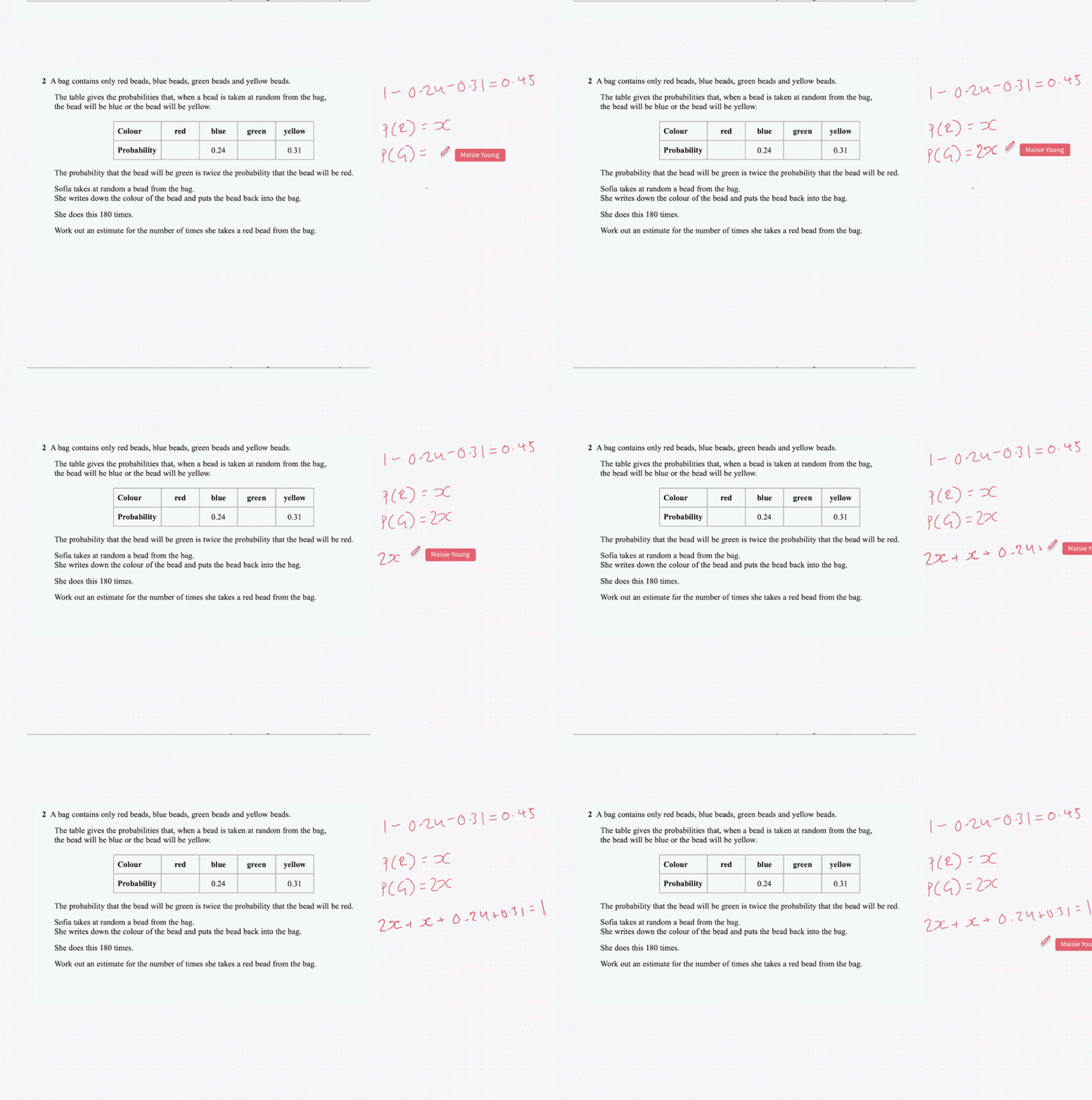
A real Greenhill Academics lesson, recorded live: the tutor works through an A Level maths question on the shared board, thinking on the page as they go.
The ten minute check to run at the kitchen table this week
Print one page of pure algebra with no calculator: indices, surds, algebraic fractions, rearranging and factorising. Give your child ten minutes and watch how they work, not just the score. Slow and slippy means the maths needs rebuilding first. Quick and clean means the gap is exam technique. That one exercise tells you where to start, and it is exactly how our tutors open the first lesson.
Who your child would work with
The maths tutors who find the gap

Hugh · Maths and Physics, Oxford
Reframes hard topics from several angles until they land. More than 20 of his recent students exceeded their predicted grades or won places at leading universities.

Holly · Mathematics, Oxford
Maps out exactly what a course covers so students can track progress and revisit weak spots, with a steady focus on building confidence alongside skill.

Murray · Maths, Chemistry and Physics, Oxford
A*A*A* at A Level in Maths, Chemistry and Physics, and clear about the exact habits that separate a top GCSE from a strong A Level result.
Answers to your questions
My child got a 9, surely they do not need a tutor?
A Grade 9 tells you the GCSE went well. It says very little about whether the algebra is automatic enough for A Level, which is a different and higher bar. The ten minute check is the fastest way to know, and it costs nothing to run at home first.
How quickly will we see the grade improve?
If the gap is the algebra, expect a few flat weeks then a jump, usually within four to six weeks. If it is exam technique, the change is often faster because the maths is already there. Either way, the improvement is visible well before the next set of mocks.
Is this a course or one to one?
One to one, online, and built entirely around the gap the first lesson finds. Nothing is pre-recorded, and you get a full report after every session, so you always know what was covered and why.
What if the problem is confidence rather than the maths?
That is common, and the first lesson is built to spot it. The tutor watches how your child works, not just what they score, and if confidence is the block we build in early wins and make progress visible on paper. We match on personality for exactly this reason.
Can we try one lesson before committing to a package?
Yes, and most families do. The first session is a single trial lesson, and you get a report on what it found before you decide anything. If the fit is not right, we change the tutor. For pricing and packages, book a consultation and we will talk you through what fits your child.
The maths has not gone. The right method has.
Tell us the exam board and what happened in the last mock, and we will match a maths tutor who can start this week.
Book a Lesson