


Your child is at one of Cyprus’s international schools, sitting IGCSE Maths in Year 10 or Year 11. The school reports are positive. The class average is comfortable. Yet the grade your child is on track for is not a 9. It is probably a 7, possibly an 8. The gap between a strong IGCSE Maths grade and the top one is real, and a busy class teacher rarely has time to close it. That gap is also closable. This guide walks through how an IGCSE Maths tutor in Cyprus works alongside a school year to bridge it, told through one pupil’s real journey across his Year 10 with us at Greenhill Academics.
On this page
- One pupil’s IGCSE Maths year in Cyprus, told straight
- What separates a 9 from an 8 in IGCSE Maths
- How an IGCSE Maths tutor in Cyprus actually works
- Starting tutoring in Year 10 versus Year 11
- IGCSE Maths past papers: Cambridge International and Edexcel
- Three IGCSE Maths tutors we’d recommend
- Questions parents in Cyprus ask
The short version
Moving from a 7 or 8 to a 9 in IGCSE Maths is not about more practice on what your child already knows. It is about finding the specific gaps and rebuilding the topics where confidence quietly slips.
Working Toward a 9 in IGCSE Maths
UK-based Oxbridge tutors who diagnose where the marks are leaking.
One pupil’s IGCSE Maths year in Cyprus, told straight
What follows is the genuine year-long arc of an IGCSE Maths pupil we worked with at Greenhill Academics, drawn from our own lesson records. His name and a few identifying details have been changed for privacy, so we will call him Adam. He was sitting Cambridge IGCSE Extended Maths at an international school in Cyprus. The aim, set out from the first session, was a strong grade, and a 9 if the work transferred. Every topic, struggle, and breakthrough below is real.
The diagnostic, and where the gaps actually were
Adam came to us in Year 10. His school reports were solid and his classroom maths was confident. The first session was a diagnostic. His tutor worked through questions spanning algebra, geometry, functions, and applied trigonometry. The findings were instructive. Adam was strong on word problems involving area and trigonometry once he saw the method. The trouble was identifying the method when the question did not signpost it. Completing the square and the domains and ranges of functions came back fine, but with a beat of hesitation that suggested fluency rather than mastery. So the early lessons focused on systematic problem-solving, with topic teaching woven in.
The Functions test, and the confidence that followed
A few weeks into the term, Adam had an upcoming Functions test at school. His tutor used three sessions to prepare him. They covered composite functions, sketching quadratics from equations, identifying roots, and completing the square to find turning points. Adam moved from hesitation to fluency. The report after the third prep session noted he felt confident going in. Importantly, what changed was not just the topic knowledge. The way Adam approached the next topics shifted. He arrived expecting to learn what was needed, rather than hoping it would land. For a 9-target pupil, that mindset shift is half the journey.
Five sessions on trigonometry, then test prep
The harder block came in the second half of the year. Trigonometry needed a proper rebuild. Five sessions went into it. They began with bearings and the sine and cosine rules. The early difficulty was discerning which formula applied when, because the questions rarely tell you. Then came test preparation with harder applied trigonometry, mixing bearings with the sine and cosine rules. Adam started reaching for the right method without prompting. Then the trig functions themselves: sine, cosine, and tangent graphs, unit circles, transformations, and the standard identities. By the fifth session, Adam was answering test-prep questions on “show that” trig identities mostly unaided.
Multi-solution trig: the topic that almost wasn’t fixable
Going into his trig functions test, one topic remained genuinely difficult. The questions asking him to find every solution to a trig equation within a given range. The technique requires reading the sine, cosine, or tangent graph to identify all valid solutions, because the calculator gives only the first. Adam found this challenging in a way he had not found the earlier topics. His tutor spent a full lesson walking through the graph method with worked examples and practice questions, then more practice the following week. By the end of the second lesson, Adam was getting the method right unaided. The technique had locked in. This is the kind of single-topic fix that separates an 8 from a 9.
The home stretch
The final block of lessons revisited rational functions, asymptotes, and inverse trig. The tutor consolidated rather than introduced. Adam worked through timed practice questions and the harder problem-solving items that distinguish 9-grade work from 8-grade. The report from the penultimate session noted significant improvement from the start of the year. The IGCSE Maths grade at the end is between Adam and the exam board. The work that earned it, however, is what an IGCSE Maths tutor in Cyprus actually does, week after week, across the year.
If your child is on track for a 7 or 8 but you suspect there is more, an IGCSE Maths tutor can find where the gaps are and close them. Book a free consultation.
What separates a 9 from an 8 in IGCSE Maths
An 8 in IGCSE Maths means your child has mastered most of the syllabus and applies it confidently in familiar contexts. A 9 means something more specific. It means the harder problem-solving questions, the multi-step questions where the method is not obvious, and the topics most pupils never feel fully secure on, all land cleanly under exam conditions. Cambridge International grade boundaries shift each year, but the principle is constant. A 9 typically sits at roughly the top of the cohort.
So if your child is currently at 7 or 8, the path to a 9 is rarely about more practice on what they already know. It is about identifying specific gaps and building the kind of fluency that turns harder questions from frightening into manageable. For example, multi-solution trig equations using sine, cosine, or tangent graphs are a classic 9-grade differentiator. Functions questions that mix domains, ranges, and inverses in one problem are another. A tutor who has seen these patterns across many pupils knows where to focus.
From a 7 or 8 to a 9
An IGCSE Maths tutor in Cyprus reads the gaps and rebuilds them, one topic at a time.
How an IGCSE Maths tutor in Cyprus actually works
A weekly IGCSE Maths lesson at Greenhill Academics runs one-to-one over video, with a shared whiteboard your child can work on alongside the tutor. The session starts with a quick check on the previous week’s homework, then moves to the topic your child needs most. Past paper work is woven in across the year, rather than stockpiled for the term before the exam. Between sessions, your child gets focused practice tasks calibrated to the specific weaknesses spotted in their work. Importantly, a short written report after each session lets you see exactly what was covered and what comes next.
The time difference helps. Cyprus sits two hours ahead of the UK, so an after-school slot at 5pm Cyprus time is 3pm in London. That fits a UK-based tutor’s working day comfortably. Sessions run smoothly across the time zones, and your child works with the same tutor each week through the year.
Starting tutoring in Year 10 versus Year 11
Year 10 is the most common starting point, because it gives a tutor 18 months to diagnose properly, build the algebra fluency that hard IGCSE topics depend on, and weave past paper work in steadily. For a pupil targeting a 9 specifically, a Year 10 start is the most reliable timeline.
However, useful work happens at any stage. A Year 11 pupil with mocks coming up can recover a grade boundary with focused work on the specific topics costing them marks. A Year 9 pupil can start building the foundations early. The earlier the start, the more the work compounds. Crucially, a tutor only works once they know what to fix, so the diagnostic in the first session is where the value begins, no matter when in the year you start.
IGCSE Maths past papers: Cambridge International and Edexcel
Most international schools in Cyprus offer IGCSE Maths through either Cambridge International or Edexcel International (Pearson). Cambridge IGCSE Maths runs as Core or Extended, with most pupils targeting top grades on the Extended paper. Edexcel International GCSE Maths runs as Higher or Foundation tier. The two specifications cover broadly similar content, with differences in question styling and emphasis. So make sure your child practises past papers from the correct board.
Where to download IGCSE Maths past papers
Free past papers and mark schemes from the two main IGCSE boards.
Three IGCSE Maths tutors we’d recommend

Murray
Murray is in his fourth year of Materials Science at Trinity College, University of Oxford, where he is on track for a First. He holds A* A Levels in Mathematics, Chemistry, and Physics. Murray is calm and methodical, the right fit for the systematic problem-solving work IGCSE pupils need to build the kind of fluency a 9 actually requires.

Ramsay
Ramsay reads Mathematics at Exeter College, University of Oxford, with a Distinction in his Prelims and two British Mathematical Olympiad distinctions placing him in the top 40 nationally. He teaches GCSE and A Level Maths, including Further Maths. Ramsay is exceptional at the harder IGCSE problem-solving questions where most pupils plateau, and the kind of tutor who can take a strong 8 across the line to a 9.
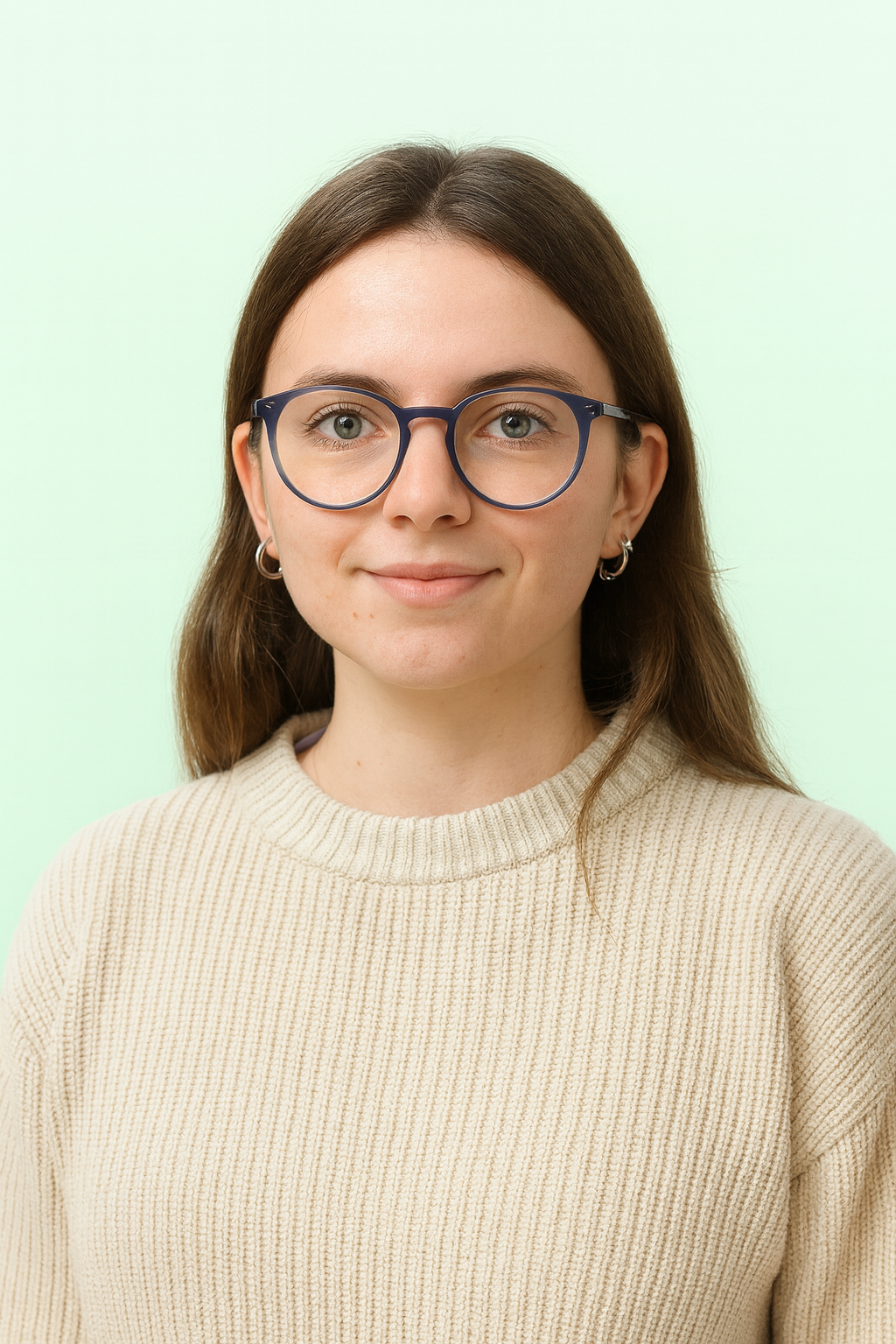
Jenna
Jenna reads Molecular Bioengineering at Imperial College London, with First Class results, the Dean’s List in her first two years, and the Kingsbury Scholarship. She holds A*A*A*A at A Level in Mathematics, Further Mathematics, Chemistry, and Biology. Jenna is patient with the building blocks: the algebra fluency and core methods that secure the foundation before harder IGCSE topics layer on.
These are three of our IGCSE Maths tutors. We match each family with a tutor based on the specific topics, exam board, and personality fit that will work best for your child.
Ready to start working toward a 9?
If your child is putting in the practice but the marks are not following, the right tutor can find what is missing and close the gap. Get in touch and we will match them with a specialist IGCSE Maths tutor for a free consultation.
From 7 or 8 to a 9 in IGCSE Maths
START YOUR CHILD’S PATH TO A 9
UK-based Oxbridge tutors who diagnose the specific topic gaps and rebuild them, one session at a time. The kind of focused work a Cyprus international school class of thirty cannot deliver.
More IGCSE Maths resources from our blog
Worth reading next
Questions parents in Cyprus ask
About IGCSE Maths and the 9
Working with a UK-based tutor in Cyprus
