

On this page
Where the marks actually go
The topics that catch students out
What a good GCSE maths tutor changes
Meet some of our GCSE maths tutors
Next steps for your child
Worth reading next
Frequently asked questions
Where the marks actually go
A good GCSE maths tutor in Bahrain rarely starts with new content. Most students who come to us already know more than their grades suggest. Instead, the marks slip away in small, repeated places. It might be a sign error halfway through a rearrangement. It might be a quadratic that needed factorising a different way, or a method that works but takes twice as long as the examiner expected. Across British curriculum schools in Bahrain, from St Christopher’s School to the British School of Bahrain, the pattern is consistent. The knowledge is there. The accuracy and the method choice are what cost the grade.
The short version
If your child knows the content but keeps dropping marks, the problem is usually accuracy and method choice, not knowledge. That is what targeted tutoring fixes fastest.
Is your child losing marks they should be keeping?
A tutor can read their working and show them exactly where the easy marks are going.
The topics that catch students out
Certain topics come up again and again in our lessons with Bahrain students. They are nearly always the same ones. What follows is drawn from real sessions, anonymised and combined, so you can see where the work actually happens. Take a composite student, we will call him Idris. He is a Year 11 pupil at a British curriculum school working towards the top grades. His story is typical of how a strong GCSE maths tutor closes the gaps that matter.
Quadratics when the coefficient is not one
Idris was confident factorising quadratics where a equals one. The moment the leading coefficient changed, the confidence dropped. This is one of the most common splits we see. A student handles every type where a equals one, yet needs a clear approach for when a does not. The cases where b or c is zero need attention too. Because of that, we worked through every type of factorisation that might appear at GCSE, until the method stopped depending on luck. We also covered completing the square. Idris had been avoiding it because the steps felt arbitrary, until he saw why each one was there.
Surds, the difference of two squares, and harder algebra
One session that made a real difference applied the difference of two squares to surds. In fact, many students never quite make that connection on their own. Idris had treated surds and quadratics as separate topics. Once he saw that the same algebraic structure ran through both, harder questions stopped looking unfamiliar. Specifically, we moved through simultaneous quadratic equations and a few of the tougher exam questions. The pattern recognition that top grades reward started to appear.
Trigonometry beyond the basics
Three dimensional trigonometry, the sine and cosine rules, and exact trigonometric values are a reliable source of dropped marks. Idris could apply each rule in isolation. The difficulty came in choosing which rule a question needed, and in handling the exact values without a calculator. Therefore we practised until the choice became automatic. We then looked at the next step up, the harder applications that distinguish a grade 8 from a grade 9.
Histograms, frequency density, and probability
Some topics are not hard conceptually but still need careful attention, because the GCSE exam tests them in particular ways. For example, histograms with frequency density, cumulative frequency diagrams, conditional probability, and set notation all fall into this group. Idris learned these fully and had no real trouble once the format was familiar. The marks here are available to any student who has practised the specific question style. That is precisely why leaving them to chance is so costly.
Want these topics covered properly?
Our tutors work through the exact areas where your child loses marks, one session at a time.
What a good GCSE maths tutor changes
The single most common note in our lesson records is about care. A student knows all the rules, and the main thing to focus on is accuracy, minus signs especially. That sounds minor until you count the marks. A sign error in the second line of a long algebra question can cost every mark that follows it. The method can be completely correct and the marks still vanish. A tutor who watches your child work, rather than only marking the final answer, catches these habits and corrects them before the exam does.
The second change is method choice. In practice, there is often more than one valid way to answer a GCSE question, and the difference between them is time. A tutor shows your child the most efficient route, which matters enormously in a paper where the clock is tight. The third change is confidence under pressure. As a result of working through harder questions until they feel routine, the exam stops feeling threatening.
This is the part past papers alone cannot deliver. A past paper tells your child whether an answer was right or wrong. However, it does not explain why a particular method was slow. It does not show where a habit is quietly costing marks, or what the jump to the next grade actually requires. A GCSE maths tutor reads the working and gives feedback precise enough to act on.
Meet some of our GCSE maths tutors

Murray
Murray is in the fourth year of a Materials Science degree at the University of Oxford (Trinity College), on track for a First, with A grades at A Level in Maths, Chemistry, and Physics. He has over 150 hours of tutoring experience across GCSE and A Level Maths. Murray is methodical with the things that cost marks, sign errors, slow methods, and shaky algebra, and he is patient enough to rebuild a topic from the foundation up when that is what a student needs.
Jessica
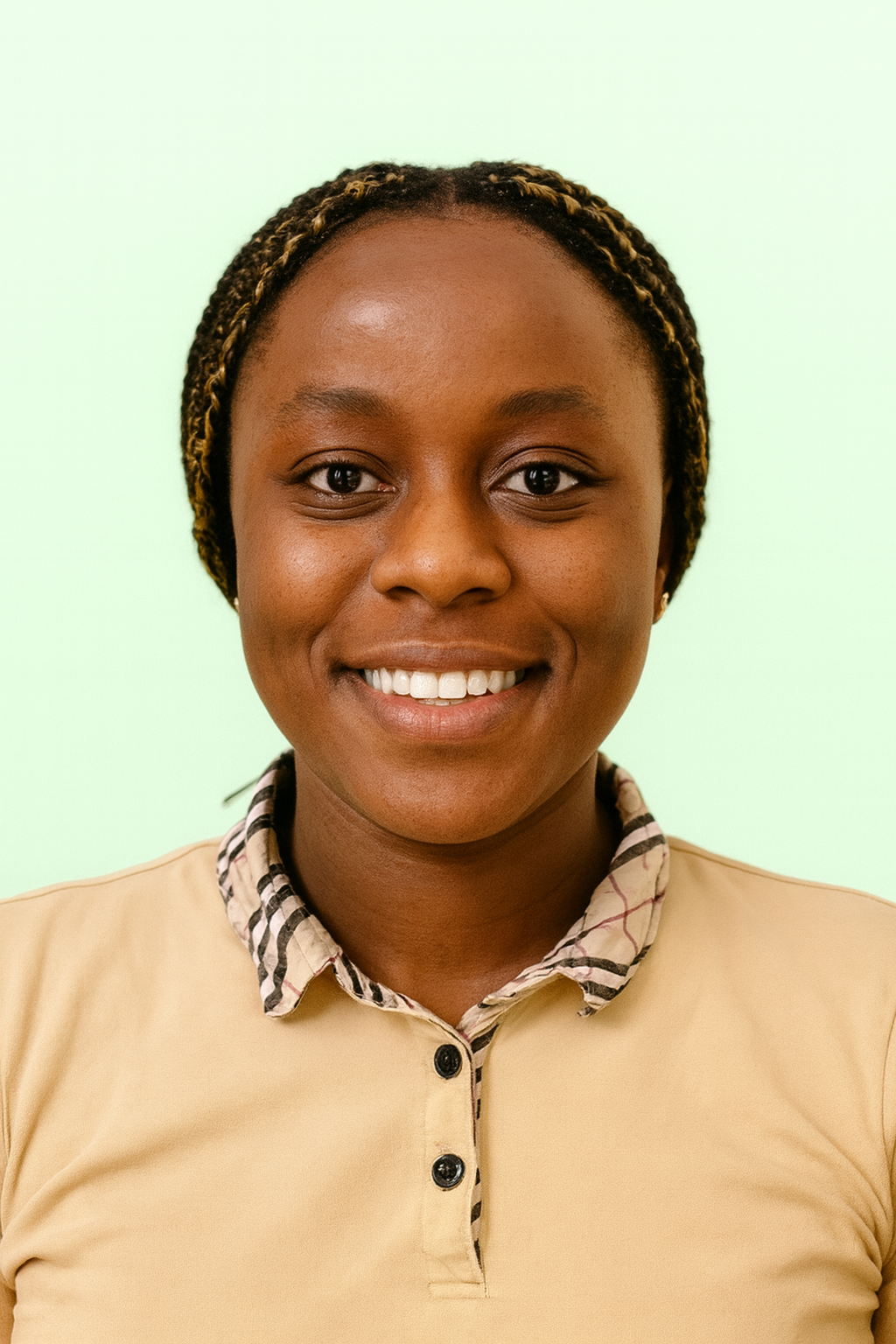
Jessica is a fourth year Medicine student at the University of Cambridge, with four top grades at A Level in Maths, Further Maths, Chemistry, and Biology, and twelve A* grades at GCSE. She is one of the most experienced tutors at Greenhill Academics by hours taught. Jessica is calm and precise, and she is particularly good at showing students the quickest reliable method for a question rather than the first one that comes to mind.

Gonzalo
Gonzalo holds a First Class MChem in Chemistry from the University of Oxford (Jesus College) and begins a PhD at Cambridge shortly. He achieved A grades at A Level in Maths, Further Maths, Chemistry, and Biology, alongside nine grade 9s at GCSE. Gonzalo teaches GCSE Maths with a clear, structured style, and he is good at helping students see the connections between topics that make harder questions feel familiar.
Next steps for your child
If your child knows the content but the grades are not showing it, the right tutor can find the gap and close it. Specifically, we will match them with a specialist GCSE maths tutor who teaches the British curriculum. They understand exactly what the top grades require. Sessions are online, which suits families across Bahrain and fits around school timetables.
Help Your Child Keep the Marks They Earn
EXPERT GCSE MATHS TUTORING FOR BAHRAIN FAMILIES
Our Oxbridge-educated tutors find the small, repeated errors that cost marks and fix them with targeted, personalised feedback that past papers alone cannot give.
Worth reading next
If you found this useful, these guides go further into the specific skills your child needs. One walks through factorisation step by step. Another focuses on solving quadratic equations, and the last covers our wider maths tutoring for families across the region.
- How to do factorisation in GCSE maths, step by step
- How to solve quadratic equations at GCSE
- GCSE maths tutoring across the UAE
Frequently asked questions
