

Your child has their heart set on Oxford or Cambridge, and then the predicted grades come in a notch below what the course asks for. It is a horrible moment, and the first question is always the same: do we still apply, and what else can we do? This guide walks through what Oxbridge predicted grades really need to show, and the calm, practical options you have from here. It does not promise a place. It helps you make a clear decision before the 15 October deadline.
The short version
- The grade a course asks for is set per course. Some Oxford courses ask for AAA or A*AA, not A*A*A, so check the exact one first.
- Oxford says strong applications generally have predicted grades that meet the course requirement, and it asks families to be realistic.
- A prediction below the requirement does not block an application, but your child can apply to only one of Oxford or Cambridge.
- Focus on what is still in your child’s hands: the admissions test, the personal statement and the interview.
- No one can promise a place, and no tutor or school can simply raise a predicted grade. Be wary of anyone who says otherwise.
First, check the real requirement for the course
Before anything else, find the exact grades your child’s course asks for. It is easy to assume every Oxbridge course wants A*A*A, but the requirement is set course by course, and plenty ask for less than that. So the gap may be smaller than it feels.
What each one asks for
Open the official course page for the exact subject at each university and read the grades it lists. That is the number that matters, not a general idea of what Oxbridge wants. Our guide to getting into Oxford or Cambridge gives the wider picture.
What Oxbridge predicted grades need to show
Here is the honest part. Oxford says predicted grades are an important part of an application, and that strong applications generally have predicted A-level grades that meet the entrance requirements. It also asks families to be realistic about their chances, because the competition is high. Cambridge frames its grades as a minimum offer level, the minimum your child will normally need to achieve to receive an offer.
So a prediction below the requirement is not the end of the road, but it is worth being clear eyed. Oxford looks at the whole application, not the prediction alone, and it uses information about your child’s school and circumstances as well. The point is to make a calm, informed choice, which is what the rest of this guide helps you do.
Your options if the prediction is below
You have more than one move here. These four are worth working through in order, and your child can start on them this week.
None of these can promise an offer. What they do is help your child make an informed application, with a sensible plan around it.
What your child can still improve now
The predicted grade is largely set, but other parts of the application are still ahead. The admissions test, where the course has one, rewards focused practice over the next few weeks. The personal statement can still be sharpened so it shows real thinking about the subject, not just enthusiasm.
Then there is the interview, for those who are shortlisted. It is an academic conversation, and it can be prepared for. Putting the effort into these three now is a far better use of energy than worrying about a number that is largely fixed. It is also the area where a tutor can help.
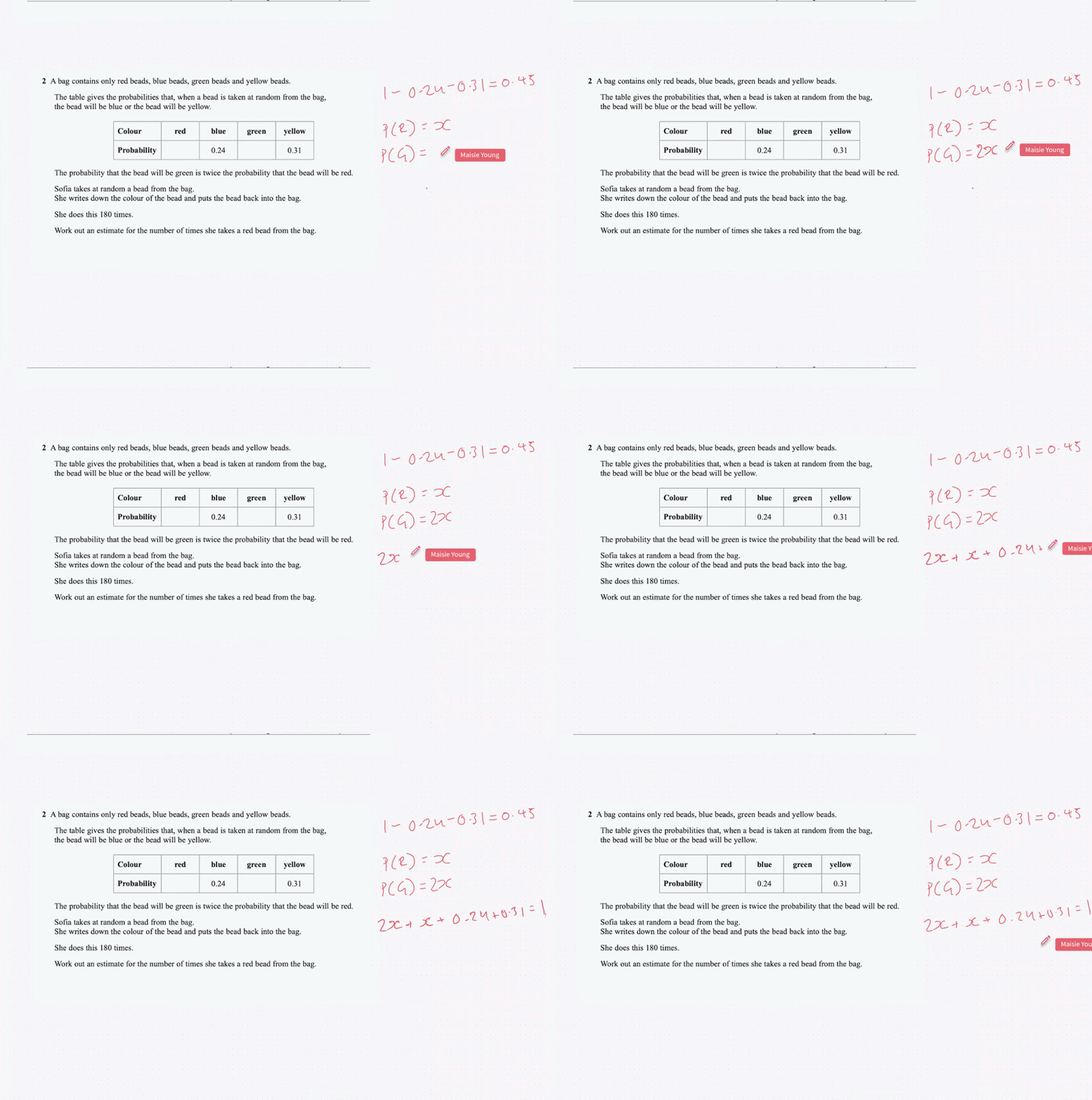
This clip shows a maths lesson recorded in Pencil Spaces, the online classroom used by Greenhill Academics.
Not sure how big the gap really is?
Send us your child’s course and predicted grades, and we can help you read it.
Ask about a tutorTry this at home: map the gap in ten minutes
You can do this in about ten minutes. It is our own exercise, not an official task. You need your child’s predicted grades and a phone or laptop.
- Minutes 0 to 3: Open the official course page and write down the exact grades it asks for, and the admissions test, if there is one.
- Minutes 3 to 6: Write your child’s current predicted grades next to them, and mark the exact gap: which subject, and by how much.
- Minutes 6 to 8: List the parts of the application still to come: the test, the personal statement and the interview.
- Minutes 8 to 10: Note any genuine circumstance that affected the predictions, and any questions your child needs to ask the school about how it should be recorded.
What should you look for?
Look at how big the gap really is. One grade in one subject, with other parts of the application still ahead, is a different picture from a wider gap across several subjects. Name the gap clearly so you can plan around it.
What this cannot tell you
This cannot tell you whether your child will get an offer or a place, or how the tutors will weigh the application. It only shows you where things stand and what is still in your child’s hands.
Bring your notes to a first lesson. A tutor with Oxbridge admissions experience can help your child plan the test, the personal statement and the interview around the gap you have mapped.
Want help planning the next step?
Tell us where your child stands, and we can help them make the strongest use of what is still ahead.
Send an enquiryHow a tutor can help you weigh it up
A tutor cannot change a predicted grade, and no one can promise a place. What a tutor can do is help your child weigh the options calmly and then work on the parts that are still open.
That means focused practice for the admissions test, honest feedback on the personal statement, and mock interviews that build real confidence. A tutor who has been through Oxbridge admissions can also help your family judge how the pieces fit together, so the final decision is a clear one.
The tutors who can help
These three tutors support Oxbridge applicants across different subjects. Tell us your child’s course and we can help. You can also see our wider admissions consulting.

Francesca read English at the University of Oxford (Christ Church). She prepares students for the ELAT and offers personal statement support across all subjects, and is experienced with Oxbridge English applications.

Maisie studies Molecular Biochemistry at the University of Oxford. She supports Oxbridge science admissions with interview coaching and admissions test and personal statement support, and has run mock Oxford-style interviews.

Mirsab studies Medicine at the University of Cambridge (St Catharine’s College). He mentors Oxbridge and Russell Group applicants, coaches Medicine and Dentistry interviews, and supports UCAT preparation.
Questions parents ask us
Should my child still apply if they are predicted below the requirement?
They can. A prediction below the requirement does not block an application, and Oxford looks at the whole picture, not the prediction alone. But Oxford asks families to be realistic, so it helps to have strong other UCAS choices as well.
Can a tutor or the school raise my child’s predicted grade?
No. A tutor cannot change a predicted grade, and no one can promise a place. What you can do is ask the school how the prediction was reached and raise any genuine circumstances so the school can advise how they should be recorded. Be wary of anyone who says they can simply raise it.
How far below is too far?
There is no fixed cut-off, and it depends on the course and the rest of the application. First check the exact requirement, since some courses ask for AAA or A*AA rather than A*A*A, so the gap may be smaller than it looks.
Where should we focus if the prediction is low?
The parts your child still controls: the admissions test where the course has one, the personal statement and the interview. Oxford also uses information about your child’s school and circumstances. Strengthening those is the best use of the time before the deadline.
Is it better to apply now or after results?
Both are possible. Some families apply this year and keep strong other choices, and some apply after results with grades in hand. The right call depends on how big the gap is and how ready your child feels, which is worth talking through with someone who knows the process.
Weighing up an Oxbridge application with a gap to close?
Tell us your child’s course and predicted grades, and we can help you plan the test, the personal statement and the interview around it.
Send an enquiry