Three Things a GCSE English Language 9 Demands in the UAE

Russell Greenhill
By Russell Greenhill
Founder & CEO @ Greenhill Academics
Oxford Master’s Graduate • 8+ Years Tutoring Experience

Your child is sitting GCSE English Language at one of the UAE’s British curriculum schools. Dubai College, GEMS Wellington, Brighton College Dubai, Cranleigh Abu Dhabi, Repton Dubai. The exam looks deceptively simple. Two papers, no set texts to memorise, just unseen extracts and creative writing. Yet a 9 in GCSE English Language is rarer than a 9 in many other subjects, because it rewards a specific kind of writing your child has to actively learn rather than absorb from set texts. School covers the technique. The exam is approaching. The marks come back at a 6 or 7 and it is hard to know what specifically is missing. This guide does something different. It walks through one real pupil’s full year of GCSE English Language with a tutor at Greenhill Academics, drawn from our own lesson records, to show the three specific skills that lift a 7 toward a 9.

On this page

The short version

A 9 in GCSE English Language rewards sentence-level control, precise analytical verbs, and a confident grasp of tone-matched transactional writing. School rarely has time to teach all three to top-band depth.

From a 7 toward a 9 in English Language

UK-based Oxbridge tutors for UAE families, teaching Paper 1 and Paper 2 to the depth a 9 demands.

A real GCSE English Language year, paper by paper

What follows is the genuine arc of a GCSE English Language student we worked with at Greenhill Academics across her exam year. Her name and a few identifying details have been changed for privacy, so we will call her Yasmin. The target was a 9. Every focus area, struggle, and breakthrough below is real, drawn straight from our lesson records across fifteen sessions. We worked through Paper 1 creative writing, Paper 1 reading analysis, and Paper 2 comparative and transactional writing in that order. The skills that emerged as the difference between a competent answer and a top-band one are what this guide is built around, and the same year applies to any UAE family targeting a 9.

The Paper 1 creative writing block

Yasmin’s first sessions focused on Question 5 of Paper 1, the 40-mark creative writing task that opens the second half of the paper. Her tutor began by walking through a real past paper, the Tuesday 7 November 2023 paper, exploring the prompt about a mysterious event and discussing two different narrative approaches. The session built foundational confidence. By the second session, the focus moved to transactional writing exemplars and structure. Yasmin engaged well with persuasive techniques, identifying emotive language and rhetorical questions in the exemplar text.

Subsequent sessions deepened the creative writing technique. Her tutor introduced narrative planning frameworks, focused on embedding ambitious vocabulary without forcing it, and worked on strengthening sentence-level variety. Yasmin developed a personal toolkit: opening lines that create immediate atmosphere, controlled use of dialogue, and structural shifts that mirror emotional change. The note from one session captured the breakthrough simply. She was now consolidating narrative planning, embedding newly acquired vocabulary, and producing creative writing of genuine quality. This took five sessions of focused work, and it shows that the 40-mark creative task is rarely the casual exercise it appears.

Paper 1 reading: Questions 3 and 4

By spring, the focus shifted to Paper 1 reading analysis. Yasmin had been writing about Little Women by Louisa May Alcott, responding to an evaluative question about how the writer creates atmosphere. The challenge her tutor identified was specific. Yasmin could identify language techniques accurately, but her analytical vocabulary was thin. She used the same handful of verbs (“shows,” “suggests,” “highlights”) across every essay, which capped her marks at a competent rather than perceptive level.

So the next several sessions concentrated on building Yasmin’s stock of high-level analytical verbs. Words like “illuminates,” “encapsulates,” “evokes,” and “underscores.” Her tutor also pushed her to write more developed explanations of how structural techniques shape meaning, not just identify them. By the end of this block, Yasmin was responding to Question 3 and Question 4 with the precision the top band demands. She could now zoom in on a single word and analyse its connotations across two sentences of detailed unpacking. That is what a 9 requires, and it is rare in school responses because there is rarely time to drill the analytical vocabulary that hard.

Paper 2: comparison and tone-matched writing

Yasmin’s final block focused on Paper 2. The reading section of Paper 2 requires comparative analysis between two non-fiction texts of different time periods, which is a different skill from the single-text close reading of Paper 1. Her tutor opened with Question 7(b), the comparative analysis question, walking Yasmin through how to identify shared themes and divergent methods between two extracts. Yasmin grasped the structural approach quickly. The harder work was the precision of comparison. Vague phrases like “both writers use” capped her marks.

The writing section of Paper 2 needed its own focus. Letters, reviews, speeches, articles. Each form has a different register, structure, and audience expectation. Yasmin had been writing the same way regardless of the brief. Her tutor’s note from the next session showed the shift. Yasmin now clearly understood the structure and purpose of each form and was adapting her tone to suit different audiences. By the final review session before the exam, she was writing a speech that sounded like a speech, an article that sounded like an article, and a formal letter that sat correctly between authority and politeness. The grade at the end of it is between Yasmin and the exam board. The journey is what a GCSE English Language tutor makes possible for any UAE family willing to commit to the weekly writing work.

If your child is sitting GCSE English Language in the UAE and the marks are not lifting the way they should, the right tutor can find the gap and close it. Book a free consultation.

The three skills behind a 9

Across the year of work above, three distinct skills emerged as the difference between a competent 6 or 7 and a top-band 9. They recur across most of the GCSE English Language students we have tutored, and they are worth naming clearly because school teaching rarely has time to develop all three to depth.

First, sentence-level control in creative writing. The 40-mark Question 5 on Paper 1 rewards varied sentence structure, controlled use of punctuation, and ambitious vocabulary integrated naturally rather than thrown in. Most pupils know to vary sentence length. Few practise it deliberately enough for it to read as natural. A 9-grade creative piece sounds composed rather than performed.

Second, precise analytical verbs in reading analysis. Question 3 and Question 4 on Paper 1 reward precision of language. The 9-grade response does not write that the writer “shows” or “suggests” something. It uses verbs that pin the writer’s intention down: illuminates, encapsulates, evokes, undermines, destabilises, complicates. This is a learnable skill. It just requires deliberate practice across many short responses, which a tutor builds in.

Third, tone-matched transactional writing. Paper 2 includes a transactional writing task, which can be a letter, review, speech, or article. Each form has a distinct register. The 9-grade response writes a speech that sounds like a speech and a letter that reads as a letter, with the appropriate level of formality, rhetorical structure, and audience awareness. Most pupils write everything in the same default register and lose marks on AO5.

Build the Skills That Reach a 9

A specialist GCSE English Language tutor drills each of the three skills in turn, until they become instinctive.

Paper 1 versus Paper 2: what each rewards

Paper 1 of GCSE English Language is built around fiction. The reading section asks your child to analyse a single twentieth or twenty-first century literary fiction extract across four questions. The writing section is the 40-mark creative writing task. The skills rewarded are close reading of literary fiction and original creative composition.

Paper 2 is built around non-fiction. The reading section presents two non-fiction extracts from different time periods, usually one nineteenth century and one twenty-first century. The questions test comprehension, summary, language analysis, and comparison of writer’s viewpoints. The writing section is a transactional task: letter, review, speech, or article on a topic. The skills rewarded are comparative analysis of non-fiction and audience-aware transactional writing. Many pupils prepare hard for Paper 1 because fiction and creative writing feel familiar, then underprepare for Paper 2 where the marks often run thinner. A tutor balances the preparation so both papers go in strong.

When to bring in a GCSE English Language tutor

Year 10 is the most common starting point. It gives a tutor a full year to develop the analytical vocabulary, build the creative writing technique, and drill the comparative skills across multiple practice papers. For a pupil targeting a 9 specifically, this is the timeline that compounds. The high-level analytical verbs need months of repeated use before they become instinctive.

However, useful work happens at any stage. A Year 11 pupil sitting mocks can rebuild Paper 2 technique in a focused block of six to eight sessions. A Year 9 pupil moving into Year 10 can start ahead, working on reading analysis and sentence-level control in their summer before formal preparation begins at school. The earlier the start, the more the skills compound. The later the start, the more focused the work needs to be.

Past papers and exam board resources

The official sources for GCSE English Language past papers and specifications are the exam boards themselves. Most British curriculum schools in the UAE use AQA or Edexcel. AQA’s GCSE English Language specification 8700 is the most common across UK schools. Edexcel’s specification 1EN0 is also widely sat, particularly internationally. Check which board your child’s school uses before purchasing revision materials.

We have also pulled together full past paper libraries for the three main boards, with every paper and mark scheme in one place. Browse the set that matches your child’s school: our AQA GCSE English Language past papers, the Edexcel GCSE English Language past papers, and the OCR GCSE English Language past papers.

GCSE English Language past papers by board

Every paper and mark scheme, sorted by exam board.

Three GCSE English Language tutors we’d recommend for UAE families
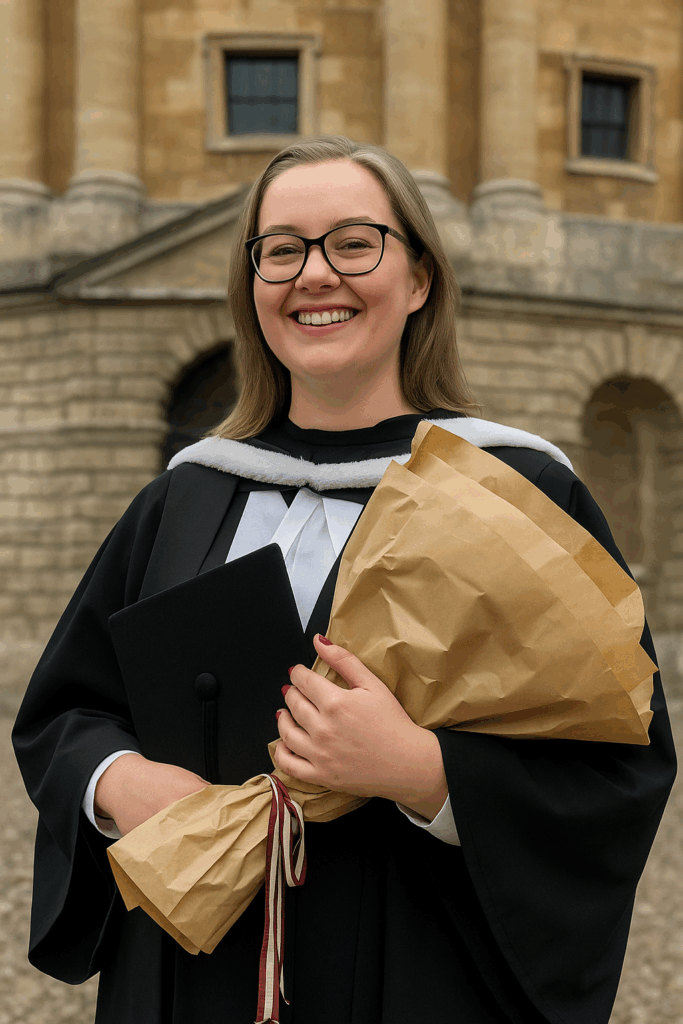
Mimi, a GCSE English Language tutor for UAE families

Mimi

Mimi read Modern Languages (French and Spanish) at the University of Oxford and is now completing an MSc in Behavioural Science at the London School of Economics. She was awarded the Ramón J. Silva Prize for the highest mark in Spanish speaking across the university, alongside a Distinction in Speaking. Mimi teaches GCSE English Language and Literature, and her cross-language background sharpens her work on the sentence-level control and tone-matched writing that lift a GCSE English Language response into the top band.

George, a Cambridge Linguistics tutor for GCSE English Language in the UAE

George

George holds an MPhil in Theoretical and Applied Linguistics from the University of Cambridge (High Distinction) and a First Class BA in English Literature from the University of Manchester. He begins a PhD in Psycholinguistics in October 2026. With over 500 hours of tutoring experience, George brings a linguist’s precision to the analytical vocabulary and structural analysis that Paper 1 Questions 3 and 4 reward.

Laurie, an Oxford English Language and Literature tutor for UAE GCSE families

Laurie

Laurie read English Language and Literature at The Queen’s College, University of Oxford, where she earned a Double First Class degree. She holds A*AAA at A Level in English, French, History, and Latin. With over 500 hours of tutoring across a decade, Laurie’s previous pupils have gone on to Oxford, Cambridge, Johns Hopkins, and Stanford. She specialises in essay-writing skills, which is precisely the area where most GCSE English Language pupils plateau before reaching a 9.

These are three of our GCSE English Language tutors. We match each family with a tutor based on the specific exam board, current grade, and skill gaps your child needs to close to reach a 9, whether they are sitting AQA, Edexcel, or another board at their UAE school.

Ready to work toward a 9?

If your child is putting in the work but the marks are stuck at a 6 or 7, the right tutor can identify which of the three skills is missing and drill it. Get in touch and we will match your UAE family with a specialist GCSE English Language tutor for a free consultation.

A 9 in GCSE English Language Is Closer Than It Feels

START YOUR CHILD’S PATH TO A 9

Our UK-based Oxbridge tutors drill the three skills that separate a competent answer from a top-band one. The kind of focused writing coaching a class of thirty cannot give your child.

More English Language resources from our blog

Worth reading next

Questions UAE parents ask about GCSE English Language

About content and the 9

My child is on track for a 7. Is a 9 realistic?

For most strong pupils, yes, with the right focused work. The gap between a 7 and a 9 in GCSE English Language usually comes down to the three skills above: sentence-level control, precise analytical verbs, and tone-matched transactional writing. As a result, a pupil at a 7 can often reach a 9 with focused tutoring that drills each skill. The first lesson is a diagnostic, and what follows depends on what it shows.

How is GCSE English Language different from GCSE English Literature?

English Literature tests close reading of set texts including a Shakespeare play, a nineteenth-century novel, a modern text, and a poetry anthology. English Language tests unseen extract analysis and original writing. There are no set texts to memorise. The skills overlap but are not the same. Many pupils strong on Literature underperform on Language because the writing demands are different. A specialist Language tutor closes that gap.

Does it matter which exam board my child sits?

Yes. AQA, Edexcel, OCR, and WJEC each have slightly different paper structures and mark schemes. Most British curriculum schools in the UAE use AQA or Edexcel. The skills tested are broadly aligned, but a tutor familiar with your child’s specific exam board, question types, and assessment objectives will calibrate the work accordingly. Tell us which board at the first consultation and we will match accordingly.

About working with a UK-based tutor in the UAE

Can a UK-based tutor really help my child in Dubai or Abu Dhabi?

Yes. The GCSE English Language specifications are written and examined in the UK, so a UK-based tutor with deep experience of both papers can support a pupil at Dubai College, GEMS Wellington, Brighton College Dubai, Cranleigh Abu Dhabi, Repton Dubai, or any other UAE British curriculum school. Sessions run one to one over video with a shared whiteboard. Writing extracts, model answers, and analytical exercises all transfer cleanly to the screen.

What about the time difference between the UAE and the UK?

The UAE sits four hours ahead of the UK in winter and three hours ahead in summer. So an after-school slot at 5pm UAE time falls comfortably in the UK afternoon, which fits a UK-based tutor’s working day well. Sessions run smoothly across the time zones.

When should we start GCSE English Language tutoring?

Year 10 is the most common starting point because it gives a tutor a full year to drill the analytical vocabulary, creative writing technique, and comparative skills across multiple practice papers. However, useful work happens at any stage. A Year 11 pupil with mocks coming up can recover real ground with focused work on the specific skills costing them marks. The earlier the start, the more the work compounds.

GCSE English Literature in the UAE and the Real Path to a 9

Russell Greenhill
By Russell Greenhill
Founder & CEO @ Greenhill Academics
Oxford Master’s Graduate • 8+ Years Tutoring Experience

Your child is sitting GCSE English Literature at one of the UAE’s British curriculum schools. Dubai College, GEMS Wellington, Brighton College Dubai, Cranleigh Abu Dhabi, Repton Dubai. The set texts are the same familiar names A Midsummer Night’s Dream or Macbeth, Of Mice and Men or An Inspector Calls, the AQA or Edexcel poetry anthology. The school is covering the content. Yet the marks come back at a 7, sometimes an 8. A 9 in English Literature is harder to reach than parents in the UAE often realise, because it requires a specific kind of analytical thinking that classroom teaching rarely has time to build. This guide walks through one real student’s full year of GCSE English Literature with a tutor, drawn from our own lesson records, showing how the marks actually move from a 7 toward a 9.

On this page

The short version

A 9 in GCSE English Literature is not about reading more. It is about building the kind of analytical thinking that turns a clear point into a layered, persuasive argument backed by precise evidence.

From a 7 or 8 to a 9 in English Literature

UK-based Oxbridge tutors for UAE families, teaching the texts and the technique together.

What separates a 9 from an 8 in GCSE English Literature

An 8 in GCSE English Literature means your child has solid knowledge of the set texts, can identify themes accurately, and writes clear PEE or PEEL paragraphs. A 9 means something more specific. It means the analysis goes beyond the obvious, the arguments connect to wider context with precision, and the writing has a sense of independent literary thought. The examiners reward what the AQA mark scheme calls “perceptive” and “original” responses. So a 9-grade essay reads differently from an 8-grade essay even when both are written competently.

In practice, this means three things. First, a 9-grade essay picks evidence with care, choosing quotations that genuinely support the specific argument being made rather than the safest ones a student remembers. Second, it builds layered argument: not just stating that Steinbeck shows isolation in Of Mice and Men, but arguing how that isolation connects to the historical context of the Great Depression and the structural choices Steinbeck makes. Third, it engages with the writer’s purpose. Why does Priestley want the audience to feel uncomfortable in An Inspector Calls? What does Shakespeare want us to make of Macbeth’s culpability? The 9 lives in the answer to those questions.

A real GCSE English Literature year, text by text

What follows is the genuine year-long arc of a GCSE English Literature student we worked with at Greenhill Academics. Her name and a few identifying details have been changed for privacy, so we will call her Imogen. The aim, set out from the start, was a strong grade, and a 9 if the work transferred. Every text, struggle, and breakthrough below is real, drawn from our lesson records. We covered four major set texts across the year alongside the poetry anthology and unseen analysis. This is what reaching toward a 9 looks like, text by text, and it is the same year a UAE family would walk with us.

A Midsummer Night’s Dream: getting Shakespeare to land

Imogen’s first sessions started with the nature of poetry, analysing Sonnet 130 as a way in. She engaged well with the imagery and recalled what she already knew about sonnet form. The next session introduced the Elizabethan period and the conditions Shakespeare wrote for, before they began A Midsummer Night’s Dream. Her tutor took the play scene by scene, focusing on character analysis across the Athenian lovers and the rustics. The themes landed quickly. The challenge came when it was time to write.

When her tutor asked her to formulate a PEE paragraph from the analysis they had discussed, the structure was harder to produce than the ideas themselves. She could identify a clear Point, Evidence, and Explanation when prompted, but stringing them together without prompting took practice. Her tutor used watching adaptations of the play to compare interpretive choices, then asked her to write an “Agony Aunt” letter as Helena. The creative homework was a deliberate trick: it forced Imogen to use the text closely without the pressure of essay format. Her writing loosened up.

Of Mice and Men: from context to confident PEE paragraphs

Of Mice and Men came next. Her tutor spent the early sessions on context: the Great Depression, the Dust Bowl, the American Dream, the absence of a social security net in 1930s America. Imogen grasped the central ideas quickly and engaged with the exercise about her own dreams and what they depended on. Then the writing block began. They built PEEL paragraphs together, with Imogen leading and her tutor pushing back on weak topic sentences and superficial explanations.

The next sessions deepened the context as the characters demanded it. Racism and the Jim Crow laws as background for Crooks. Sexism and women’s position in the 1930s as background for Curley’s wife. Imogen showed a sensitive understanding of how context shapes character treatment, but expanding her explanations of key quotations in a PEEL paragraph took several sessions of focused work. By the end of the Of Mice and Men block, she could write coherent analysis on themes as difficult as loneliness, prejudice, and the failure of the American Dream. The shift was significant.

An Inspector Calls: bringing political theme to the page

An Inspector Calls posed a different challenge. The play is short, but its political message is dense. Her tutor opened with the context of the Beveridge Report of 1942, which Imogen researched for homework. Understanding the British political climate behind Priestley’s writing transformed how she read the play. She engaged thoughtfully with how each Birling responds to the Inspector’s inquiry and how each is responsible for Eva Smith’s death. Her annotations of the text became more thorough.

One area that needed sustained work was identifying individual quotes to use as evidence. She had strong opinions about the play. Finding the specific lines to back them up took practice. Her tutor pushed her to mark relevant quotes as they read together, building her own evidence bank. By the end of the An Inspector Calls block, Imogen could write a paragraph that connected a specific Birling line to Priestley’s wider social critique. That is what a 9-grade essay does.

Macbeth: comparison, challenge, and deeper analysis

Macbeth was the final major text. School was moving fast, so her tutor used the sessions to slow down on key scenes. They analysed Act 1 Scene 3 with reference to a stage production. They argued the question of whether Macbeth planned to kill Duncan or was driven by Lady Macbeth, with Imogen building a case using the text she could refer to. She brought contextual information about the Great Chain of Being naturally into her arguments.

One memorable session compared Macbeth’s character with King Henry in Henry V. Imogen rose to the comparative analysis really well, and her arguments showed the kind of independent reading that 9-grade essays develop. By the time they finished Macbeth, her writing had a different quality. The points were more original, the evidence more precise, the explanations connected to context and writer’s purpose with a fluency that had not been there at the start of the year. The grade at the end of it is between Imogen and the exam board. The work that earned it is what a GCSE English Literature tutor actually does, week after week, for any UAE family willing to commit to the writing work.

If your child is sitting GCSE English Literature in the UAE and the essays are not landing the way they should, the right tutor can find the gap between knowing the texts and writing about them. Book a free consultation.

Where GCSE English Literature marks really go

In our experience across many GCSE English Literature students, marks slip away in three predictable places. First, weak topic sentences. A topic sentence that simply restates the question, or names a theme without staking a position, locks the paragraph into safe analysis. The paragraphs that follow rarely break through to high marks. Second, generic quotations. Students memorise a handful of safe quotes and use them across every essay. The 9-grade essay picks the specific quote that supports the specific argument, even if it is less well-known.

Third, and most commonly, weak engagement with the writer’s purpose. Many essays describe what happens in a text and link it loosely to a theme. The top-band essays argue what the writer wants the reader to think and feel, and why. Priestley wants the audience to feel uncomfortable. Steinbeck wants the reader to mourn what cannot survive. Shakespeare wants us to see Macbeth’s tragedy as inevitable from the moment of the prophecy. The 9 lives in that argument. So that is where the tutoring focuses.

Build the Kind of Analysis a 9 Requires

A specialist GCSE English Literature tutor reads the writing with your child and shows where the marks go missing.

What a one-to-one tutor does that a class of thirty cannot

A class of thirty students with one English teacher cannot read every essay in detail, identify the specific phrase that signals a weak argument, and rebuild it line by line. There is not the time. A one-to-one tutor can. Sessions at Greenhill Academics involve reading your child’s writing closely, identifying the specific moves that hold the argument back, and rewriting them together. Topic sentences get sharpened. Evidence gets reviewed for fit. Explanations get pushed deeper.

The other thing a tutor can do that a class cannot is bring the context to life. Discussing Jim Crow America with a single student, exploring the Beveridge Report and what it meant for postwar Britain, comparing Macbeth’s culpability to Lady Macbeth’s in a sustained argument: these are the conversations that shape independent literary thought. They take time. A class of thirty rarely has it. A weekly hour with a specialist tutor is exactly where they happen, and the UAE-to-UK time difference makes the timing easy to find.

Preparing for the unseen poetry question

The unseen poetry question is one of the most marker-rewarding sections of GCSE English Literature, because it tests skill rather than memorised content. Students who have rehearsed the technique of close reading a new poem under time pressure walk in with an advantage. A useful framework, often taught with the acronym FLIRT (form, language, imagery, rhythm, tone), gives a starting structure. The harder skill is choosing what to focus on, since a strong unseen poetry answer is selective rather than exhaustive.

A tutor works on unseen poetry the way a coach works on technique. Multiple short poems, multiple practice analyses, with the tutor pushing for sharper observations each time. The link to the wider poetry anthology matters too. A student who has analysed the poems in the anthology in real depth has a bank of comparison points to draw on when the unseen poem arrives. The 9 in unseen poetry rewards exactly this kind of preparation.

Three GCSE English Literature tutors we’d recommend for UAE families

Louis, a GCSE English Literature tutor for UAE families

Louis

Louis read Philosophy and French at Keble College, University of Oxford, where he achieved a First Class degree. He scored 40 out of 45 in the International Baccalaureate, including 7s at Higher Level in Philosophy, French, and Physics. Louis teaches 13+, I/GCSE, and A Level English Literature, French, and Philosophy. He has a particular talent for building confidence in essay writing and critical thinking, which is what most GCSE English Literature students need to push from a 7 toward a 9.

Laurie, an Oxford English tutor for GCSE Literature in the UAE

Laurie

Laurie read English Language and Literature at The Queen’s College, University of Oxford, where she earned a Double First Class degree. She holds A*AAA at A Level in English, French, History, and Latin. With over 500 hours of tutoring across a decade, Laurie’s previous students have gone on to Oxford, Cambridge, Johns Hopkins, and Stanford. She specialises in essay-writing skills, which is the precise area where most GCSE English Literature students plateau.

George, a Cambridge English Literature tutor for UAE families

George

George holds an MPhil in Theoretical and Applied Linguistics from the University of Cambridge (High Distinction) and a First Class BA in English Literature from the University of Manchester. He will begin a PhD in Psycholinguistics in October 2026. With over 500 hours of tutoring experience, George is known for working effectively with first and second generation immigrant communities. His teaching is text-led and rigorous, ideal for young readers ready to push past the safe interpretations into the kind of independent argument the top GCSE marks reward.

These are three of our GCSE English Literature tutors. We match each family with a tutor based on the specific texts, exam board, and writing style your child needs to develop, whether they are sitting AQA, Edexcel, or another board at their UAE school.

Ready to work toward a 9 in English Literature?

If your child is putting in the work but the analytical writing has not clicked into top gear, the right tutor can build that skill, week by week. Get in touch and we will match your UAE family with a specialist GCSE English Literature tutor for a free consultation.

Move the English Lit Grade Past a Plateau

START YOUR CHILD’S PATH TO A 9

Our UK-based Oxbridge tutors teach the set texts in genuine depth and rebuild the analytical writing UAE pupils need for the top grades. The kind of essay coaching a busy class teacher cannot give them.

More English Literature resources from our blog

Worth reading next

Questions UAE parents ask about GCSE English Literature

About set texts and the 9

My child is on track for a 7. Is a 9 realistic?

For most strong students, yes, with the right approach. A 9 in GCSE English Literature is not about reading more or memorising more quotes. It is about building the analytical thinking that produces precise, layered, original argument. As a result, a student at a 7 can often reach a 9 with focused tutoring that targets writing technique, evidence selection, and engagement with the writer’s purpose. The first lesson is a diagnostic, and what follows depends on what it shows.

Does it matter which exam board my child sits?

Yes, because the set texts differ. AQA, Edexcel, OCR, and WJEC each have their own combinations of Shakespeare play, nineteenth-century novel, modern text, and poetry anthology. Most British curriculum schools in the UAE use AQA or Edexcel. The assessment objectives are broadly aligned, but the texts your child writes about depend entirely on the board. A tutor familiar with your child’s specific exam board, set texts, and assessment objectives will calibrate the work accordingly. Tell us which board at the first consultation and we will match accordingly.

How important is context for top marks?

Critically important. The assessment objective AO3 specifically rewards understanding the relationship between a text and its context. For example, knowing about the Jim Crow laws shapes a deeper reading of Crooks in Of Mice and Men. Understanding the Beveridge Report transforms the politics of An Inspector Calls. So a 9-grade essay does not just describe context as background; it uses context to deepen the analysis of specific moments in the text.

About working with a UK-based tutor in the UAE

Can a UK-based tutor really help my child in Dubai or Abu Dhabi?

Yes. The GCSE English Literature specifications are written and examined in the UK, so a UK-based tutor with deep set-text experience can support a student at Dubai College, GEMS Wellington, Brighton College Dubai, Cranleigh Abu Dhabi, Repton Dubai, or any other UAE British curriculum school. Sessions run one to one over video with a shared whiteboard. The texts, the essay technique, and the AO3 contextual work all transfer cleanly to the screen.

What about the time difference between the UAE and the UK?

The UAE sits four hours ahead of the UK in winter and three hours ahead in summer. So an after-school slot at 5pm UAE time falls comfortably in the UK afternoon, which fits a UK-based tutor’s working day well. Sessions run smoothly across the time zones.

When should we start GCSE English Literature tutoring?

Year 10 is the most common starting point, because it gives a tutor a full year to cover the set texts properly alongside the school’s pace. However, useful work happens at any stage. A Year 11 student with mocks coming up can recover real ground with focused work on writing technique and the texts where marks are slipping. The earlier the start, the more the analytical thinking has time to deepen.

An IB HL Physics Tutor in the UAE: Where Marks Really Go

Russell Greenhill
By Russell Greenhill
Founder & CEO @ Greenhill Academics
Oxford Master’s Graduate • 8+ Years Tutoring Experience

Your child is sitting IB HL Physics at one of the UAE’s IB World Schools. Dubai International Academy, GEMS Modern Academy, Dwight School Dubai, North London Collegiate Dubai, Universal American School. The syllabus is the same regardless of the campus, and the exam is approaching. School has moved on to the next section while old content still feels shaky. There are gaps in the fundamentals, but it is hard to know exactly where they sit. The exam scoring depends on getting those gaps closed in time. This is one of the most stressful positions a Higher Level Physics student can be in, and it is also one of the most common. The good news is that a focused stretch of one-to-one sessions with an IB Physics tutor in the UAE can rebuild a topic block before an exam, even when school cannot. This guide walks through how, told through one real student’s five sessions in the run-up to a Section D exam.

On this page

The short version

In IB HL Physics, the marks often slip on a single misconception buried beneath a topic. A tutor surfaces it and fixes it, before it costs marks on the exam.

Find the Gaps in Your Child’s HL Physics

UK-based Oxbridge tutors for UAE families, teaching the long topics where most marks are lost.

Where IB HL Physics marks really go

In Higher Level Physics, the marks rarely slip in obvious places. They slip on the misconceptions a student does not realise they hold. A student thinks simple harmonic motion applies to every transverse wave, until they hit the question that proves it does not. A student knows the right hand rule for the cross product, but freezes when the magnetic field changes orientation in a moving frame. A student can recite the formula for magnetic induction, but cannot select the right one under exam pressure because two technical terms in the syllabus sound almost identical and they have not separated them properly.

So the question of where marks really go is, more often than not, the question of what foundational misconceptions are buried beneath a topic. A class teacher at a Dubai or Abu Dhabi IB World School cannot dig into these one student at a time. Your child cannot always identify them alone, because the misconception by definition feels like solid ground. A specialist IB Physics tutor in the UAE, working through past papers session by session, catches them. That is the value of one-to-one work.

Surface the Hidden Gaps

A specialist IB HL Physics tutor finds the misconceptions classroom teaching never quite reaches.

Five sessions before an IB HL Physics exam

What follows is real, drawn from our own lesson records of an IB HL Physics student we worked with at Greenhill Academics. His name and a few identifying details have been changed for privacy, so we will call him Lukas. He came to us in the lead-up to a Section D exam that mattered for his final grade, with the honest admission that his teachers had moved through certain topics quickly, leaving gaps he could not always pinpoint. The plan was simple. Work through Section D together, find the gaps, fix them before the exam, and use whatever sessions remained to build forward on the next block. Every topic, struggle, and breakthrough below is real, and the same pattern applies to any UAE family in the same position.

Session 1: electric fields from the fundamentals

The first session was a deep dive into electric fields. Lukas had covered them in school, but the foundations were not as secure as he had thought. His tutor went back to the basics: what a field actually is, how a charged particle interacts with one, the relationship between field strength, force, and potential. The session moved slowly because every conceptual building block mattered. Lukas adapted to material he had not properly understood before, which is the most promising sign a tutor can see in a first session. The honest gap had been named, and now they were closing it.

Sessions 2-3: charges in magnetic fields and the right hand rule

The second session completed electric fields. The exam was approaching in two or three weeks, so the pace had to lift without sacrificing the depth of understanding from session one. Lukas remembered the topics covered the week before very well and progressed through more complex questions. He struggled initially when he had to integrate the new knowledge with the broader Section D material, but by the end of the session was reasoning through very complex topics. This is the pattern a tutor expects from a student whose foundations are now sound. Integration takes practice. The knowledge is in place.

Session three covered charges moving through a magnetic field. Lukas quickly picked up how to calculate directions using the vector cross product and the right hand rule. They covered the whole topic in a single session, which is exactly the pace the tutor wanted at this point in the run-up. The fundamentals from earlier sessions were translating into faster acquisition of new material. This is what an effective topic-block tutoring plan looks like.

Session 4: magnetic induction and the discipline of precision

Session four focused on magnetic induction, the last part of Section D Lukas needed before his exam that week. He did well with all the calculations involved. The honest difficulty his tutor noted was that two technical terms in this area are very similar, and Lukas needed to continue practising selecting the right equation for the situation. This is a precision issue rather than an understanding one. Such issues matter enormously on exam day. A student who has the right concept but reaches for the wrong formula loses marks the same as one who never understood the topic. So precision drills became homework.

Session 5: simple harmonic motion and a fundamental misconception

After the exam, the work moved on to simple harmonic motion. Lukas came in with a misconception that had not surfaced before. He believed simple harmonic motion applied to all transverse waves, including electromagnetic waves, when in fact it describes a more limited class of motion. His tutor worked through calculations, which Lukas did well, but the underlying belief revealed something useful. There were more fundamental gaps in his Physics foundations that needed addressing. The tutor’s plan for the next session was to design the lesson around the topics underneath simple harmonic motion, so that the next block of material could be built on a stronger base.

This is what makes one-to-one work different from classroom teaching. A class teacher would not have time to notice that a misconception about EM waves was actually a symptom of a deeper gap. Lukas’s tutor caught it in a single session and redirected the work. That is the pattern that, sustained across a year, takes an HL Physics student to a 7.

If your child has gaps in IB HL Physics they cannot quite identify, the right tutor will find them. Book a free consultation.

What this case study shows about IB HL Physics tutoring

Three patterns from Lukas’s sessions are worth pulling out, because they recur across many of our HL Physics students. First, the foundations matter more than the new content. A tutor who spends the first session checking foundations rather than racing into harder material does better work in the long run. The deep dive on electric fields paid off across every subsequent topic.

Second, integration is its own skill. Knowing a topic in isolation is not the same as integrating it with adjacent topics under exam pressure. Lukas struggled at integration even when he knew each piece. The fix was time and practice, not more content. Third, misconceptions hide in plain sight. The SHM-applies-to-EM-waves error is the kind of thing a young scientist can carry for years without anyone noticing. A tutor who works through worked examples session by session surfaces these patterns. That is where the 7 actually gets built.

The IB HL Physics paper structure: where to focus

Higher Level Physics is assessed across three written papers plus an Internal Assessment. Paper 1 is multiple choice. Paper 2 is data response and extended response. Paper 3 covers the practical skills and an option topic. The Internal Assessment accounts for 20 percent of the final grade and is an independent scientific investigation written up to a strict criteria-based format.

For tutoring purposes, the focus shifts across the year. The autumn and winter of DP1 is the topic-coverage phase: building genuine understanding of the major content areas. By spring of DP2, the work tilts toward Paper 2 technique, which rewards structured argument and careful data analysis. Paper 1 practice runs alongside. The Internal Assessment runs as a parallel thread, with sessions devoted to research question design, experimental write-up, and uncertainty analysis. The official syllabus and past papers come from the IBO.

IB HL Physics official resources

Head to the official source for the syllabus, past papers, and command terms.

Three IB HL Physics tutors we’d recommend for UAE families

Hugh, an IB HL Physics tutor for UAE families

Hugh

Hugh holds a First Class MSci in Theoretical Physics from Imperial College London and is completing a DPhil at the University of Oxford. He teaches A Level and IB Maths, Further Maths, and Physics, with over a decade of one-to-one experience. Hugh is calm and structured under exam pressure, with a particular talent for reframing complex topics from multiple angles until the concept genuinely lands. Twenty of his recent students have exceeded their predicted grades.

Murray, an Oxford Physics tutor for IB HL students in the UAE

Murray

Murray is in his fourth year of Materials Science at Trinity College, University of Oxford, where he is on track for a First. He holds A* A Levels in Mathematics, Chemistry, and Physics, and is a Bronze winner at the British Physics Olympiad. Murray is methodical with the topic-by-topic rebuild work HL Physics students need, particularly in the electromagnetism and thermodynamics blocks where misconceptions hide most often.

Liza, a Yale and LSE Physics tutor for UAE IB families

Liza

Liza holds a BA in Mathematics and Philosophy from Yale University and an MSc in Media and Communications from the London School of Economics, where she was a Chevening Scholar. With nearly a decade of tutoring experience across the UK and US, she teaches secondary and university-level Mathematics and Physics. Liza is particularly skilled at working with students who have ADHD and learning differences, and at making complex Physics concepts accessible through clear explanations and adapted strategies.

These are three of our IB HL Physics tutors. Whatever your child’s syllabus stage, current grade, or school in the UAE, we match each family with a tutor who fits the topics and pace they need.

Ready to find the gaps in your child’s Physics?

If your child is sitting IB HL Physics in the UAE and the gaps are starting to bite, the right tutor can find them and close them. Get in touch and we will match your family with a specialist IB HL Physics tutor for a free consultation.

A 7 in HL Physics Needs the Foundations Right

START WITH A DIAGNOSTIC

Our UK-based Oxbridge tutors begin every IB HL Physics relationship with a diagnostic of where the foundations actually are. The kind of careful look a class of thirty at a UAE school cannot give your child.

More IB Physics resources from our blog

Worth reading next

Questions UAE parents ask about IB HL Physics

About content and the 7

How does IB HL Physics compare to A Level Physics?

IB HL Physics has slightly more breadth than A Level Physics but a more demanding assessment structure. Three written papers plus an Internal Assessment worth 20 percent of the final grade puts more on the line than two written papers and practical endorsements. As a result, a 7 in HL Physics is genuinely harder than an A* in A Level Physics. Both qualifications are recognised on equal terms by UK and international universities, but the workflow differs significantly.

My child is on track for a 5 or 6. Is a 7 realistic?

For most students with the right work ethic, yes. The honest answer is that the gap between a 6 and a 7 in HL Physics usually comes down to a handful of foundational topics where understanding is genuinely shallow, plus the exam technique on Paper 2 extended response and Paper 3. A tutor’s first job is the diagnostic. The path that follows depends on what it shows, but a year of focused weekly work can move the dial significantly.

What is the Internal Assessment and why does it matter so much?

The Internal Assessment is an independent scientific investigation, designed, conducted, and written up by your child to a strict criteria-based format. It accounts for 20 percent of the final HL Physics grade. As a result, students who treat it as an afterthought lose substantial marks. A tutor who has supported multiple Internal Assessments knows how to choose a strong research question, structure the data analysis, and write the report to the format markers reward.

About working with a UK-based IB Physics tutor in the UAE

Can a UK-based tutor really help my child in Dubai or Abu Dhabi?

Yes. The IB Diploma Physics syllabus is the same worldwide, so a UK-based tutor with deep IB HL Physics experience can support a student sitting the same papers at Dubai International Academy, GEMS Modern Academy, Dwight School Dubai, or any other UAE IB World School. Sessions run one to one over video with a shared whiteboard. Calculations, diagrams, and field problems all transfer cleanly to the screen.

What about the time difference between the UAE and the UK?

The UAE sits four hours ahead of the UK in winter and three hours ahead in summer. So an after-school slot at 5pm UAE time falls comfortably in the UK afternoon, which fits a UK-based tutor’s working day well. Sessions run smoothly across the time zones.

When should we start IB HL Physics tutoring?

The autumn of DP1 is ideal, because it gives a tutor the full two-year arc to build foundations and consolidate them. However, useful work happens at any stage. A DP2 student with mocks coming up can recover real ground with focused work on the topics costing them marks. Even a short stretch of sessions before a specific exam (as in our case study above) can rebuild a topic block effectively.

Inside an IB Biology Year in the UAE: What a 7 Takes

Russell Greenhill
By Russell Greenhill
Founder & CEO @ Greenhill Academics
Oxford Master’s Graduate • 8+ Years Tutoring Experience

Your child is sitting IB Biology at one of the UAE’s IB World Schools. Dubai International Academy, GEMS Modern Academy, Dwight School Dubai, North London Collegiate Dubai, Repton Dubai. The workload is the same regardless of the campus. More content than A Level Biology, more papers to sit, and a higher bar for top marks. The 7 they need for a strong overall score feels far off. School moves at the pace it has to, which means topics get covered once and never fully revisited. The gaps build up quietly. This guide does something different. It walks through one real student’s full year with an IB Biology tutor at Greenhill Academics, drawn from our own lesson records, to show what reaching a 7 actually looks like topic by topic, week by week, for a UAE family.

On this page

The short version

A 7 in IB Biology rarely comes from cramming. It comes from steady topic-by-topic mastery across the year, with one person watching closely enough to catch each gap before the next exam.

Working Toward a 7 in IB Biology

UK-based Oxbridge tutors for UAE families, teaching the content properly, week after week.

A real IB Biology year, from water molecules to mocks

What follows is the real arc of an IB Biology student we worked with at Greenhill Academics. Her name and a few identifying details have been changed for privacy, so we will call her Sophia. The aim, set at the first session, was a 7 in the final exams. Every topic, struggle, and breakthrough below is real, drawn straight from our lesson records across her year. We went from foundational biological molecules through cell biology, genetics, and on to mock paper technique. This is what the path looks like when the work is sustained, and it is the same path a UAE family would walk with us.

The biomolecules block: water, carbohydrates, lipids, proteins

Sophia’s first sessions in October covered Topic A1.1 Water. Her tutor walked through the biochemical basis of water’s polarity and how it gives rise to hydrogen bonding, then cohesion, adhesion, and the solvent properties that make biology possible. Sophia engaged closely, grasping concepts as they were explained. The class then moved through carbohydrates, including cellulose, before lipids: triglycerides, phospholipids, steroids. Each block was taught for understanding, not memorisation. Each was tested in class before they moved on.

Nucleic acids came next: the structure of DNA and RNA, compared and revisited across multiple sessions to settle the differences. Then proteins, up to tertiary structure. The work was steady. By the end of the biomolecules block, Sophia could confidently recall the molecular detail and apply it to standard questions. The foundation was secure. This matters more than it sounds. Every later topic in IB Biology assumes solid foundations on the molecules involved. Without them, the harder content collapses.

Cell biology and genetics: where the long answer questions began

By February the focus shifted. Sophia’s tutor moved into DNA replication, then the differences between replication, transcription, and translation. The early sessions covered the big-picture distinctions. Subsequent sessions went into mechanistic detail. As homework, Sophia built a comparison table covering definition, location, enzymes, and molecular detail for each process. The active recall built confidence. So did the exam-style questions her tutor introduced from this point onwards.

Cell structure and organelle function came in next. The tutor’s note from one session is worth repeating: organelles divide into three groups by membrane structure, which is the kind of clean classification a 7-grade answer needs at instant recall. No membrane: ribosomes, centrioles. Single membrane: lysosomes, endoplasmic reticulum, Golgi apparatus, vacuoles. Double membrane: nucleus, mitochondria, chloroplasts. By the end of this block, Sophia was engaging fluently with the long-answer questions that distinguish a 7 from a 6 in IB Biology.

From topic mastery to paper technique

Spring brought the shift to past paper practice. Cell division (mitosis versus meiosis) followed by exam-style questions that mixed cell biology with the earlier biomolecules content. Sophia’s tutor was direct in the note from one session: she was now strong on content-based questions, and the focus was shifting to Paper 2 data-driven questions. These are the ones that trip up many capable IB Biology students. Reading a graph carefully, extracting the right information, and writing a structured answer is a separate skill from knowing the content.

So in this block, Sophia worked through past papers from 2020 onwards. She practised quantitative questions from Paper 2 and multiple choice from Paper 1. Her tutor noted real progression: she was reasoning through unfamiliar data with growing confidence. The mindset her tutor pressed home was calm and structured. Unfamiliar data feels overwhelming. With practice, it stops feeling overwhelming. That mindset shift is half the path from a 6 to a 7.

The mock paper push

In the run-up to her mocks, Sophia and her tutor focused entirely on past papers. Multiple choice from Paper 1 first, where she demonstrated a strong overall understanding. Then a two-hour session on Paper 2, focused on the data-driven Question 1 that opens the paper. The interpretive skills had become more instinctive. The hardest data questions felt manageable rather than overwhelming. Her tutor’s parting note was simple. With continued practice, these skills become second nature. The grade at the end of it is between Sophia and the IB. The journey, however, is what an IB Biology tutor makes possible for any UAE family willing to commit to the weekly work.

If your child is sitting IB Biology in the UAE and the workload feels relentless, an IB Biology tutor can find the gaps and close them, week after week. Book a free consultation.

Why IB Biology is harder than A Level Biology

IB Biology contains more content than A Level Biology. The pace through the syllabus is faster, and the assessment is more varied. At Higher Level, your child sits three written papers plus an Internal Assessment, with Paper 1 multiple choice, Paper 2 data response, and Paper 3 covering practical skills and an option topic. The Internal Assessment alone accounts for 20 percent of the final grade and requires an independent investigation written up to a strict format.

So what does this mean in practice? Your child has to hold a wider range of content in mind, navigate three different question styles, and produce a piece of independent scientific writing alongside everything else. A 7 in IB Biology is rarer than an A* in A Level Biology for this reason. The skills needed are broader, and the workload spreads thinner. A specialist IB Biology tutor in the UAE can make the difference between the content getting absorbed and the content slipping past.

Make IB Biology Manageable

A specialist IB Biology tutor breaks the year into the topics that need real time, and gives them that time.

How an IB Biology tutor in the UAE structures a year

A weekly IB Biology lesson at Greenhill Academics runs one-to-one over video, with a shared whiteboard your child can write on alongside the tutor. The session starts with a quick check on homework from the previous week, then moves to the topic your child needs next. Content first, exam technique woven in. A short written report after each session lets you see exactly what was covered and what comes next.

The time zone helps. The UAE sits four hours ahead of the UK in winter and three hours ahead in summer, so an after-school slot at 5pm UAE time is comfortably mid-afternoon in the UK. A UK-based tutor’s working day overlaps with the UAE evening, which means your child works with the same specialist tutor each week through the year. The year itself breaks into three blocks. Autumn and early winter is the topic-coverage phase: biological molecules, cell biology, energetics, genetics. By February, the focus broadens to active recall across multiple topics. By spring, past paper practice dominates. The Internal Assessment runs alongside.

When to bring in an IB Biology tutor

The most common start is the autumn of the IB DP1 year. This gives a tutor a full two-year arc to work with, building the foundations across DP1 and consolidating across DP2. For a child targeting a 7 specifically, this is the timeline that compounds. The biological molecules topics from DP1 underpin every later topic, and a tutor who has taught them properly the first time saves dozens of hours of remedial work later.

However, useful work happens at any stage. A DP2 student with a mock that has revealed gaps in DP1 content can rebuild those topics in focused sessions while keeping pace with current schoolwork. A student three months from the final exams can still gain significant ground on Paper 2 data response technique. The earlier the start, the more the work compounds. The later the start, the more focused the work needs to be.

Past papers and the IB Biology subject guide

The official source for IB Biology past papers and the subject guide is the International Baccalaureate Organization. The IBO publishes the syllabus, command terms, mark schemes, and specimen papers. Make sure your child is practising the most recent syllabus, because the IB updated the Biology guide for first assessment in 2025, and older papers may not align with the new content structure.

IB Biology official resources

Head to the official source for the syllabus, past papers, and command terms.

Three IB Biology tutors we’d recommend for UAE families

Finlay, an IB Biology tutor for UAE families

Finlay

Finlay is studying Medicine at the University of Oxford after a First Class BA in Medical Sciences, where he placed 12th in his year. He has 10 A* GCSEs and four As at A Level including Maths, Biology, and Chemistry. Finlay has been tutoring since 2020 and is methodical with the topic-by-topic coverage IB Biology demands, especially in the foundational biological molecules and cellular biology that everything else builds on.

Kriszta, a Cambridge PhD Biology tutor for UAE IB students

Kriszta

Kriszta achieved a First Class MBiol in Biological Sciences from the University of Oxford, placing in the top 10 of her cohort, and is now reading for a PhD in Cancer Biology at Cambridge. She holds the Moore Prize for the best MBiol research dissertation in Advanced Molecular Biology. Kriszta is exceptional with the Paper 2 data response questions where many IB Biology students lose marks, drawing on her deep research training to teach how to read and interpret unfamiliar data.

Charlotte, an Oxford Biology tutor for IB and A Level students in the UAE

Charlotte

Charlotte read MBiol Biological Sciences at Balliol College, University of Oxford, with First Class honours, and is now reading for a PhD in Biological and Environmental Sciences. She has tutored since 2020 and brings four years of experience in the Oxbridge tutorial system to her teaching. Charlotte is particularly effective on the Internal Assessment, helping students choose a strong investigation and write it up to the strict IB format.

These are three of our IB Biology tutors. Whatever your child’s syllabus stage, current grade, or school in the UAE, we match each family with a tutor who fits the topics and pace they need most.

Ready to work toward a 7?

If your child is putting in the work but the topics keep slipping past, the right tutor can rebuild the foundations and keep the pace through the year. Get in touch and we will match your family with a specialist IB Biology tutor for a free consultation.

A 7 in IB Biology Is Closer Than It Feels

START YOUR CHILD’S IB BIOLOGY YEAR PROPERLY

UK-based Oxbridge tutors for UAE families. We walk through the syllabus topic by topic, with the time each one actually needs. The kind of pacing a class of thirty cannot give your child.

More IB Biology resources from our blog

Worth reading next

Questions UAE parents ask about IB Biology

About content and the 7

How does IB Biology compare to A Level Biology?

IB Biology contains more content, has more papers, and includes a substantial Internal Assessment worth 20 percent of the final grade. The pace is faster and the breadth is wider. As a result, a 7 in IB Biology is genuinely harder than an A* in A Level Biology. Both qualifications are recognised on equal terms by UK and international universities, but the work pattern differs significantly.

My child is on track for a 5 or 6. Is a 7 realistic?

For most committed students, yes, with the right approach. The honest answer is that a 7 in IB Biology requires both broad content coverage and the specific paper technique that distinguishes top marks. If your child is currently at 5 or 6, the path to 7 usually involves rebuilding specific topics where understanding is shallow and developing the data-response technique that Paper 2 rewards. A tutor’s first job is the honest diagnostic. The work that follows depends on what it shows.

What is the IB Biology Internal Assessment and why does it matter?

The Internal Assessment is an independent scientific investigation your child designs, runs, and writes up themselves. It accounts for 20 percent of the final IB Biology grade and is marked to a strict criteria-based format. As a result, students who treat it as an afterthought lose substantial marks. A tutor who has supported multiple Internal Assessments knows how to choose a strong research question, structure the experimental design, and write the report to the format markers expect.

About working with a UK-based IB Biology tutor in the UAE

Can a UK-based tutor really help my child in Dubai or Abu Dhabi?

Yes. The IB Biology syllabus is the same worldwide, so a UK-based tutor with deep IB Biology experience can support a student sitting the same papers at Dubai International Academy, GEMS Modern Academy, Dwight School Dubai, or any other UAE IB World School. Sessions run one to one over video with a shared whiteboard. Diagrams, calculations, and past paper questions all transfer cleanly to the screen.

What about the time difference between the UAE and the UK?

The UAE sits four hours ahead of the UK in winter and three hours ahead in summer. So an after-school slot at 5pm UAE time falls comfortably in the UK afternoon, which fits a UK-based tutor’s working day well. Sessions run smoothly across the time zones, and your child works with the same tutor each week through the year.

When should we start IB Biology tutoring?

The autumn of DP1 is ideal. It gives a tutor the full two-year arc to build foundations and consolidate them. However, useful work happens at any stage. A DP2 student with mocks coming up can recover real ground with focused work on the topics and paper styles costing them marks. The earlier the start, the more the work compounds.

How One IGCSE Maths Pupil Worked Toward a 9 in Cyprus

Russell Greenhill
By Russell Greenhill
Founder & CEO @ Greenhill Academics
Oxford Master’s Graduate • 8+ Years Tutoring Experience

Your child is at one of Cyprus’s international schools, sitting IGCSE Maths in Year 10 or Year 11. The school reports are positive. The class average is comfortable. Yet the grade your child is on track for is not a 9. It is probably a 7, possibly an 8. The gap between a strong IGCSE Maths grade and the top one is real, and a busy class teacher rarely has time to close it. That gap is also closable. This guide walks through how an IGCSE Maths tutor in Cyprus works alongside a school year to bridge it, told through one pupil’s real journey across his Year 10 with us at Greenhill Academics.

On this page

The short version

Moving from a 7 or 8 to a 9 in IGCSE Maths is not about more practice on what your child already knows. It is about finding the specific gaps and rebuilding the topics where confidence quietly slips.

Working Toward a 9 in IGCSE Maths

UK-based Oxbridge tutors who diagnose where the marks are leaking.

One pupil’s IGCSE Maths year in Cyprus, told straight

What follows is the genuine year-long arc of an IGCSE Maths pupil we worked with at Greenhill Academics, drawn from our own lesson records. His name and a few identifying details have been changed for privacy, so we will call him Adam. He was sitting Cambridge IGCSE Extended Maths at an international school in Cyprus. The aim, set out from the first session, was a strong grade, and a 9 if the work transferred. Every topic, struggle, and breakthrough below is real.

The diagnostic, and where the gaps actually were

Adam came to us in Year 10. His school reports were solid and his classroom maths was confident. The first session was a diagnostic. His tutor worked through questions spanning algebra, geometry, functions, and applied trigonometry. The findings were instructive. Adam was strong on word problems involving area and trigonometry once he saw the method. The trouble was identifying the method when the question did not signpost it. Completing the square and the domains and ranges of functions came back fine, but with a beat of hesitation that suggested fluency rather than mastery. So the early lessons focused on systematic problem-solving, with topic teaching woven in.

The Functions test, and the confidence that followed

A few weeks into the term, Adam had an upcoming Functions test at school. His tutor used three sessions to prepare him. They covered composite functions, sketching quadratics from equations, identifying roots, and completing the square to find turning points. Adam moved from hesitation to fluency. The report after the third prep session noted he felt confident going in. Importantly, what changed was not just the topic knowledge. The way Adam approached the next topics shifted. He arrived expecting to learn what was needed, rather than hoping it would land. For a 9-target pupil, that mindset shift is half the journey.

Five sessions on trigonometry, then test prep

The harder block came in the second half of the year. Trigonometry needed a proper rebuild. Five sessions went into it. They began with bearings and the sine and cosine rules. The early difficulty was discerning which formula applied when, because the questions rarely tell you. Then came test preparation with harder applied trigonometry, mixing bearings with the sine and cosine rules. Adam started reaching for the right method without prompting. Then the trig functions themselves: sine, cosine, and tangent graphs, unit circles, transformations, and the standard identities. By the fifth session, Adam was answering test-prep questions on “show that” trig identities mostly unaided.

Multi-solution trig: the topic that almost wasn’t fixable

Going into his trig functions test, one topic remained genuinely difficult. The questions asking him to find every solution to a trig equation within a given range. The technique requires reading the sine, cosine, or tangent graph to identify all valid solutions, because the calculator gives only the first. Adam found this challenging in a way he had not found the earlier topics. His tutor spent a full lesson walking through the graph method with worked examples and practice questions, then more practice the following week. By the end of the second lesson, Adam was getting the method right unaided. The technique had locked in. This is the kind of single-topic fix that separates an 8 from a 9.

The home stretch

The final block of lessons revisited rational functions, asymptotes, and inverse trig. The tutor consolidated rather than introduced. Adam worked through timed practice questions and the harder problem-solving items that distinguish 9-grade work from 8-grade. The report from the penultimate session noted significant improvement from the start of the year. The IGCSE Maths grade at the end is between Adam and the exam board. The work that earned it, however, is what an IGCSE Maths tutor in Cyprus actually does, week after week, across the year.

If your child is on track for a 7 or 8 but you suspect there is more, an IGCSE Maths tutor can find where the gaps are and close them. Book a free consultation.

What separates a 9 from an 8 in IGCSE Maths

An 8 in IGCSE Maths means your child has mastered most of the syllabus and applies it confidently in familiar contexts. A 9 means something more specific. It means the harder problem-solving questions, the multi-step questions where the method is not obvious, and the topics most pupils never feel fully secure on, all land cleanly under exam conditions. Cambridge International grade boundaries shift each year, but the principle is constant. A 9 typically sits at roughly the top of the cohort.

So if your child is currently at 7 or 8, the path to a 9 is rarely about more practice on what they already know. It is about identifying specific gaps and building the kind of fluency that turns harder questions from frightening into manageable. For example, multi-solution trig equations using sine, cosine, or tangent graphs are a classic 9-grade differentiator. Functions questions that mix domains, ranges, and inverses in one problem are another. A tutor who has seen these patterns across many pupils knows where to focus.

From a 7 or 8 to a 9

An IGCSE Maths tutor in Cyprus reads the gaps and rebuilds them, one topic at a time.

How an IGCSE Maths tutor in Cyprus actually works

A weekly IGCSE Maths lesson at Greenhill Academics runs one-to-one over video, with a shared whiteboard your child can work on alongside the tutor. The session starts with a quick check on the previous week’s homework, then moves to the topic your child needs most. Past paper work is woven in across the year, rather than stockpiled for the term before the exam. Between sessions, your child gets focused practice tasks calibrated to the specific weaknesses spotted in their work. Importantly, a short written report after each session lets you see exactly what was covered and what comes next.

The time difference helps. Cyprus sits two hours ahead of the UK, so an after-school slot at 5pm Cyprus time is 3pm in London. That fits a UK-based tutor’s working day comfortably. Sessions run smoothly across the time zones, and your child works with the same tutor each week through the year.

Starting tutoring in Year 10 versus Year 11

Year 10 is the most common starting point, because it gives a tutor 18 months to diagnose properly, build the algebra fluency that hard IGCSE topics depend on, and weave past paper work in steadily. For a pupil targeting a 9 specifically, a Year 10 start is the most reliable timeline.

However, useful work happens at any stage. A Year 11 pupil with mocks coming up can recover a grade boundary with focused work on the specific topics costing them marks. A Year 9 pupil can start building the foundations early. The earlier the start, the more the work compounds. Crucially, a tutor only works once they know what to fix, so the diagnostic in the first session is where the value begins, no matter when in the year you start.

IGCSE Maths past papers: Cambridge International and Edexcel

Most international schools in Cyprus offer IGCSE Maths through either Cambridge International or Edexcel International (Pearson). Cambridge IGCSE Maths runs as Core or Extended, with most pupils targeting top grades on the Extended paper. Edexcel International GCSE Maths runs as Higher or Foundation tier. The two specifications cover broadly similar content, with differences in question styling and emphasis. So make sure your child practises past papers from the correct board.

Where to download IGCSE Maths past papers

Free past papers and mark schemes from the two main IGCSE boards.

Three IGCSE Maths tutors we’d recommend

Murray, an IGCSE Maths tutor for Cyprus international school families

Murray

Murray is in his fourth year of Materials Science at Trinity College, University of Oxford, where he is on track for a First. He holds A* A Levels in Mathematics, Chemistry, and Physics. Murray is calm and methodical, the right fit for the systematic problem-solving work IGCSE pupils need to build the kind of fluency a 9 actually requires.

Ramsay, an Oxford Maths tutor for IGCSE pupils in Cyprus

Ramsay

Ramsay reads Mathematics at Exeter College, University of Oxford, with a Distinction in his Prelims and two British Mathematical Olympiad distinctions placing him in the top 40 nationally. He teaches GCSE and A Level Maths, including Further Maths. Ramsay is exceptional at the harder IGCSE problem-solving questions where most pupils plateau, and the kind of tutor who can take a strong 8 across the line to a 9.

Jenna, an IGCSE Maths and Sciences tutor for Cyprus families

Jenna

Jenna reads Molecular Bioengineering at Imperial College London, with First Class results, the Dean’s List in her first two years, and the Kingsbury Scholarship. She holds A*A*A*A at A Level in Mathematics, Further Mathematics, Chemistry, and Biology. Jenna is patient with the building blocks: the algebra fluency and core methods that secure the foundation before harder IGCSE topics layer on.

These are three of our IGCSE Maths tutors. We match each family with a tutor based on the specific topics, exam board, and personality fit that will work best for your child.

Ready to start working toward a 9?

If your child is putting in the practice but the marks are not following, the right tutor can find what is missing and close the gap. Get in touch and we will match them with a specialist IGCSE Maths tutor for a free consultation.

From 7 or 8 to a 9 in IGCSE Maths

START YOUR CHILD’S PATH TO A 9

UK-based Oxbridge tutors who diagnose the specific topic gaps and rebuild them, one session at a time. The kind of focused work a Cyprus international school class of thirty cannot deliver.

More IGCSE Maths resources from our blog

Worth reading next

Questions parents in Cyprus ask

About IGCSE Maths and the 9

My child is on track for a 7 or 8 — is a 9 realistic?

For most strong pupils, yes, with the right work. The honest answer is that a 9 in IGCSE Maths typically requires both a solid base and a specific kind of fluency on the harder, less-obvious questions. If your child is currently at a 7 or 8, the path to a 9 is rarely about doing more of the same. It is about finding the specific topic gaps, the multi-step problem styles where marks slip, and the techniques most pupils never feel fully confident on. A tutor’s first job is the honest diagnostic. The path that follows depends on what it shows.

How does IGCSE Maths in Cyprus compare to GCSE Maths in the UK?

The two qualifications cover broadly similar content and are recognised on equal terms by UK universities. IGCSE Maths (whether Cambridge International or Edexcel International) is structured slightly differently from UK domestic GCSE, with different question styling, and the option of an Extended or Higher paper most strong pupils take. As a result, the underlying maths is the same, but the technique calibrates to the specific paper. A tutor familiar with the IGCSE paper, rather than just GCSE, matters here.

My child does well in school but mock grades are lower. Why?

This is one of the most common patterns we see. The classroom rewards understanding. The exam rewards technique under timed conditions. For example, a pupil who follows everything in lessons can still drop marks for sign errors, careless setup, or rushing the harder problem-solving questions at the end. A tutor sits with your child paper by paper, finds the specific habit losing them marks, and replaces it. As a result, gains can come quickly because the capability is already there.

Working with a UK-based tutor in Cyprus

Can a UK-based tutor really help my child in Cyprus?

Yes. Cyprus sits two hours ahead of the UK, so an after-school slot at 5pm Cyprus time is 3pm in London. That fits the working day of a UK-based tutor easily. Sessions run one to one over video with a shared whiteboard. Algebra, geometry, and trigonometry all transfer cleanly to the screen. The exam board, mark scheme, and onward UK university route are all UK-anchored, so a UK-based IGCSE Maths tutor knows them inside out.

When should we start IGCSE Maths tutoring?

Year 10 is the most common starting point, because it gives the tutor time to diagnose, build algebra fluency, and weave in past paper work steadily. For a 9-target pupil, a Year 10 start is the most reliable timeline. However, focused work in Year 11 can recover a grade boundary in time for exams. The earlier the start, the more the work compounds.

An A Level Further Maths Tutor in the UAE: Why Pupils Lose Marks

Russell Greenhill
By Russell Greenhill
Founder & CEO @ Greenhill Academics
Oxford Master’s Graduate • 8+ Years Tutoring Experience

Your child is sitting A Level Further Maths at an international school in the UAE, and the grade is stuck. It is the same story across most papers. The differentiation looks right, the integration setup is sensible, the proof technique is mostly there. Yet the marks come back below where they should be.

For a parent, this is a frustrating place to be. The capability is clearly there. Yet the marks are not following. The good news is that a Further Maths tutor UAE families can trust knows exactly why your child is losing marks. The mistakes are usually not where you would expect. To show you what that looks like, this guide walks through three real moments from one pupil’s Further Maths year, drawn from our own lesson records.

On this page

The Real Problem

In Further Maths, the marks are rarely lost where the topic is hardest. They are lost on the algebra step after, the rearrangement before, or the formula recall in the middle. A tutor who watches your child work catches what a mock score never will.

Find the Marks Your Child Is Losing

UK-based Oxbridge tutors who teach the exact A Level Further Maths paper your child sits.

Why A Level Further Maths trips up capable UAE pupils

Most A Level Further Maths pupils are putting the time in. They are reading textbooks, attempting past papers, and sitting through the school’s mock cycle. The trouble is that none of this shows them where the marks are slipping away. A mock grade tells your child the total. It does not tell them why. For example, a pupil who drops three marks on a differentiation question and four on integration learns nothing from the headline number. As a result, the same patterns repeat in the next paper.

There is a second pattern too. Across thousands of our Further Maths lessons, the marks lost in the UAE look similar to the marks lost in London. A differentiation question where the calculus is correct but the algebraic simplification slips. An integration setup that needs rearranging before the standard methods will work. A formula for the sum of a series that is half-remembered and half-applied. A proof by induction where the structure of the argument falls apart at the inductive step. These are technique gaps, not knowledge gaps. However, a tutor watching your child work spots them quickly. A scoreboard never will.

How a Further Maths tutor in the UAE finds the mistakes costing marks

Trust in a Further Maths tutor should come from method, rather than a list of degrees. Here is the process our tutors follow, refined across thousands of lessons. It works in Dubai, Abu Dhabi, or Sharjah for the same reason it works in London. Each session feeds the next.

Diagnose the real areas for improvement

Before any heavy past paper work, the tutor needs to know where your child stands. They work through targeted questions across Pure, Mechanics, and Statistics modules to find the real gaps. In practice, the diagnosis often surprises both pupil and parent. For example, a recent Year 13 pupil came to us convinced her problem was differentiation. The diagnostic showed something different. In fact, her calculus was fine. Instead, she was losing marks on the algebraic simplification step afterwards. So the lessons started on algebra fluency, not differentiation.

Teach the exam board your child sits

UAE international schools use a mix of Edexcel International A Level, Cambridge International, AQA, and OCR for Further Maths. Yet the differences matter. Edexcel International splits Further Maths across additional Pure and Applied papers, with options for Mechanics, Statistics, or Decision Maths in different combinations. AQA and OCR structure their options differently again. The mark schemes reward different wording. As a result, our tutors teach to the exact specification your child sits, so the technique transfers when it matters.

Use past papers to surface the block

Your child sits a paper, and then the tutor goes through it question by question. Specifically, this is where the value sits. The tutor identifies the single biggest pattern on that paper and dedicates the next session to it. For example, one of our pupils kept losing marks on integration. The issue was specifically in recognising when and how to rearrange before applying standard methods. So an entire lesson went to rearrangement patterns. The marks on that topic moved permanently afterwards.

Make the underlying algebra fluent

Further Maths reveals algebra weaknesses that A Level Maths often hides. A pupil who is fine through Year 12 can suddenly be losing marks in Year 13 because parametric equations, advanced partial fractions, or implicit differentiation expose underlying gaps in GCSE-level factorising or simplification. So our tutors do not assume the basics are secure. They check, they fix what isn’t, and they make sure the algebra step is automatic before harder Year 13 topics get layered on.

Is Your Child’s Further Maths Grade Stalling?

A specialist Further Maths tutor in the UAE reads the papers with your child and finds the mistakes the score never shows.

A real case study: one pupil’s Further Maths areas for improvement

This is not a hypothetical. What follows is drawn from our own lesson records of an A Level Further Maths pupil at Greenhill Academics. Her name and a few identifying details have been changed to protect her privacy, so we will call her Layla. Three moments from her year stand out, because they show exactly how capable pupils end up losing marks, and how a tutor closes the gap.

Differentiation: the mistakes were in the algebra, not the calculus

Layla came to a session prepared to work on differentiation techniques. She knew the chain rule, the product rule, the quotient rule, and implicit differentiation. Her tutor reviewed the methods with her and ran several worked examples step by step. Then Layla attempted questions independently. The differentiation itself was sound. However, she was losing marks in the next stage.

Time after time, Layla would get the derivative right, then make sign errors or fail to simplify the algebra cleanly in the final answer. This is the kind of pattern a school marker sees as “she just made a few slips.” The source is structural, not careless. Her tutor flagged it explicitly in the report: the main difficulty was not the differentiation, but manipulating and simplifying the algebra afterwards. The following lessons targeted exactly that. This is the kind of diagnostic insight a single-class teacher rarely has time for.

Integration the night before a mock

By contrast, a later session had a different texture. Here, Layla’s mock test was the next day. Integration was on the paper. She found this topic demanding, particularly in recognising when and how to rearrange expressions before applying the standard methods. Her tutor’s call was honest. In one session before a mock, full mastery of integration was not realistic. So the focus shifted to building maximum familiarity with the most common rearrangement patterns.

The note that came back after the lesson is worth highlighting. Integration remained an area requiring further practice. After the mock, the topic would need a proper revisit to strengthen understanding and improve problem-solving confidence. The story is not “we fixed it overnight.” It is what good tutoring actually looks like under time pressure: be honest, do what you can, name what comes next. A parent should run from a tutor who claims otherwise.

Series: a fundamentals fix in a single lesson

A late lesson stands out for the opposite reason. Layla came in unable to apply the basic series formulas confidently. Her tutor went back to first principles. They covered the formulas themselves, how they apply to different question types, and worked examples from the textbook. They then attempted practice exam questions together.

By the end of the lesson, Layla was answering correctly, with only minor rushing errors. As a result, her tutor noted significant improvement from the start of the lesson to the end. She had gone from confused on the fundamentals to able to answer exam-level questions on the topic. One lesson, one topic, full transfer. This is what happens when the diagnosis is right and the teaching meets the gap. It is also the kind of result that does not appear in headlines, because the lesson itself was the result. The marks on Layla’s papers afterwards are between her and the exam board. The work that earned them, however, is what a Further Maths tutor in the UAE makes possible.

If your child’s Further Maths grade has the same kind of leak Layla’s did, the right tutor can find it and fix it. Book a consultation.

What the first lesson looks like

The first session is a diagnosis, and it sets up everything that follows. Your child’s Further Maths tutor works through targeted questions from Pure, Mechanics, or Statistics modules. The goal is to find the real areas for improvement, rather than guessing from the school report. Then they agree which topic to prioritise and which exam board your child sits, since the technique calibrates to the paper. As a result, the very first past paper is chosen to fit, not pulled at random. By the end of the session, your child knows what they are working on and why. Finally, the practice has a direction.

Scheduling tutoring from the UAE around an A Level school week

Pupils in the UAE sit A Levels on a school week that runs Monday to Friday, or Sunday to Thursday. The choice depends on the school. In fact, most international schools finish by mid-afternoon. That lines up neatly with UK-based tutors working in their morning or early afternoon. For example, a Year 12 lesson at 4pm Dubai time is 1pm in London. A Year 13 evening session at 7pm Dubai is 4pm London. As a result, the time difference works in your child’s favour, rather than against it. Most families schedule a weekly slot, with a second lesson added in the run-up to mocks and finals.

Where to find A Level Further Maths past papers

UAE pupils sit Further Maths across a mix of UK boards. Edexcel International is the most common, followed by Cambridge International, AQA, and OCR depending on the school. Every board publishes past papers and mark schemes online for free. However, make sure your child practises the right board, because the question styles differ. For the official sites, here are the four exam boards UAE pupils encounter most.

A Level Further Maths Past Papers by Exam Board

Download past papers and mark schemes straight from your child’s exam board.

Meet some of our A Level Further Maths tutors

Jessica, an A Level Further Maths tutor for UAE families

Jessica

Jessica is in her fourth year of Medicine at the University of Cambridge, where she also completed a BA in Psychology. She holds A*A*A*A* at A Level in Mathematics, Further Mathematics, Chemistry, and Biology, alongside 12 A* GCSEs. Jessica is patient with the algebra-fluency work that turns a stalling Further Maths grade into a moving one. She is also one of our most experienced tutors, with hundreds of hours across GCSE and A Level.

Martin, a Cambridge PhD Further Maths tutor for UAE pupils

Martin

Martin is reading for a PhD in Applied Maths and Theoretical Physics at the University of Cambridge, after a Distinction MSc at Oxford and a First Class BSc at Bath. His six-month teaching placement at The British School of Córdoba produced a 100% A* result in Further Maths. Few tutors can point to that kind of track record specifically. Martin is exceptional with the harder Pure Year 2 topics where most pupils first start losing marks.

Kevin, an Oxford Further Maths and Statistics tutor for UAE families

Kevin

Kevin holds a Distinction MSc in Financial Economics from the University of Oxford (Saïd Business School, Dean’s List). He teaches A Level and IB Further Maths, Statistics, and Mathematics. Kevin is methodical with past papers, particularly in the Statistics modules where marks often hinge on a single misread distribution or a misapplied test.

These are three of our A Level Further Maths tutors. Whatever your child’s exam board, school, or current grade, we match each family with a tutor who fits the topics they find toughest.

Want your child closing the A Level Further Maths gap?

If your child is putting in the practice but the marks are not following, the right tutor can pinpoint the mistakes and close the gap. Get in touch and we will match them with a specialist Further Maths tutor.

Close the Gap Between Effort and Marks

START YOUR CHILD’S FURTHER MATHS PATH

Our UK-based Oxbridge tutors find the specific block on each paper and fix it before the next. The kind of personalised diagnosis a school of thirty cannot deliver.

Helpful A Level Further Maths resources

More from our blog

Frequently asked questions

Common questions parents ask

Is Further Maths really worth taking if my child is already doing A Level Maths?

For pupils targeting top STEM and Economics courses at UK universities, Further Maths often carries significant weight. Cambridge, Imperial, and similar institutions specifically value it for Mathematics, Physics, Engineering, and Economics applications. However, the workload is real. As a result, families should weigh it carefully against the rest of the A Level basket. A good tutor can help your child decide whether the depth genuinely supports their university aim, or whether the energy is better spent reinforcing the core A Levels.

My child is strong in Maths but Further Maths feels much harder. Why?

This is one of the most common patterns we see at Greenhill Academics. Further Maths reveals algebra and technique weaknesses that A Level Maths often hides. A pupil who is fine on Year 12 Maths can suddenly hit a wall on parametric equations, advanced partial fractions, or harder integration because the algebra step beneath those topics is shaky. For example, the differentiation itself can be correct while the simplification afterwards is where the marks slip. As a result, a tutor diagnoses where the block actually sits and fixes the underlying fluency rather than re-teaching the topic.

Can a UK-based tutor really help my child in the UAE?

Yes, and the time difference works in your favour. The UAE sits three to four hours ahead of the UK. For example, an after-school slot in Dubai falls in the UK morning or early afternoon, when tutors are fresh and available. Sessions run one to one over video with a shared whiteboard, so your child works alongside the tutor in real time. Calculus, proofs, and matrix algebra all transfer cleanly to the screen. The exam board, mark scheme, and university route are all UK-anchored, so a UK-based A Level Further Maths tutor knows them inside out.

Starting out and exam boards

When should A Level Further Maths tutoring start for the best results?

Earlier than most families think. The autumn of Year 12 gives a tutor time to diagnose algebra fluency, identify the topics likely to cause trouble later, and build the technique alongside the school’s pace. However, useful work happens at any stage. For example, a Year 13 pupil with mocks coming up can still recover a grade boundary with focused work on the specific topic block costing them marks. The earlier the start, the more the work compounds.

What is the difference between Edexcel International Further Maths and standard Edexcel?

Edexcel International A Level Further Maths is designed for schools outside the UK and uses a different paper structure from the UK domestic version. The core Pure content overlaps heavily, but the option modules and assessment style differ. As a result, your child’s technique needs to be calibrated to the specific paper they sit. A tutor familiar with the international specification matters here, particularly for the option modules where the question style can vary significantly between boards.

A* in Chemistry: One Pupil with an A Level Chemistry Tutor in the UAE

Russell Greenhill
By Russell Greenhill
Founder & CEO @ Greenhill Academics
Oxford Master’s Graduate • 8+ Years Tutoring Experience

Your child is sitting A Levels at an international school in the UAE, and the Chemistry grade is not moving. The mocks have come back, and the marks tell a confusing story. One paper looks solid. The next falls away. Mechanisms come out half-remembered, a mass spec graph gets misread, and a definition that should be automatic arrives vague on the page. As a parent, that is the part that stings. The hours are going in, yet the grade sits still. Here is the encouraging news. An A Level Chemistry tutor in the UAE can change that, and the path is more focused than it looks. To show you what it looks like, this guide follows one real pupil through her whole Year 13, drawn from our own lesson records.

On this page

The Real Problem

Chemistry marks rarely move by working harder on everything. They move when a tutor finds the one topic block, the missing definition, or the misread graph, and fixes it before the next paper.

Turn Effort Into Marks

UK-based Oxbridge tutors who teach the exact A Level Chemistry paper your child sits.

Why the marks stall when the effort doesn’t

Most pupils sitting this subject are already working hard. In fact, they revise the mechanisms, grind through past papers, and sit the half-term mocks. The problem is that none of this tells them where the marks are leaking. A mock score gives a total. However, it does not explain that total. Take a pupil who drops six marks across mass spectrometry and three on bond angles. The number at the top of the page teaches her nothing about either. As a result, the same slip resurfaces in the next paper, and the one after that.

In addition, a second pattern shows up. Across thousands of our Chemistry lessons, the marks lost in Dubai look a lot like the marks lost in London. A definition of relative atomic mass that turns fuzzy under timed conditions. An empirical formula calculation where the method is right but the layout costs marks. A mass spec trace where the molecular ion is read wrong. Intermolecular forces a pupil knows in isolation but cannot pin to a specific molecule. These are habits and small misreadings, not large holes in knowledge. However, an A Level Chemistry tutor in the UAE watching your child work through the question spots them in seconds. A scoreboard never will.

How an A Level Chemistry tutor in the UAE finds the marks

Trust in a tutor should come from method, rather than a list of degrees. Below is the process our tutors follow, sharpened across thousands of sessions. It holds up in Dubai, Abu Dhabi, or Sharjah for the same reason it holds up in London. Each lesson sets up the next.

Start with a diagnosis, not a past paper

Before any serious past paper work, your child’s tutor needs to know where she actually stands. They work through targeted questions across organic, inorganic, and physical chemistry to surface the genuine gaps. That picture then decides what gets taught, so no time drains into drilling topics she already owns. One pupil who joined us early in Year 13 looked assured across most of inorganic chemistry. The diagnostic put organic mechanisms and mass spectrometry in the spotlight instead. So the lessons opened exactly there.

Teach the exact board she sits

UAE international schools run a mix of Edexcel International, Cambridge International, AQA, and OCR. These differences are not cosmetic. Edexcel International assesses Chemistry across three written papers with a strong application focus. AQA also splits its assessment into three papers across physical, organic, and inorganic chemistry, with its own wording in the mark schemes. Calibrate the technique to the wrong board, and your child gives away marks she has earned. Therefore our tutors teach to the exact specification she sits, which is what makes the technique transfer on the day.

Trace the wrong answer back to the topic

A wrong answer in this subject usually points to a topic, rather than a careless slip. The mass spec question your child cannot finish is often a graph-reading problem, not an arithmetic one. The intermolecular forces question she misses is often confusion over which molecule holds which force, not a memory lapse. For example, one pupil kept dropping marks on benzene reactions. The fix was not more questions. It was a single session rebuilding Kekulé’s model and the evidence for the structure, which then fed back into every reaction question on the topic.

Read the mock as a heat map

Chemistry marks rarely sit evenly across the three areas. A mock that lands at a B overall can hide a strong inorganic showing and a weak organic one. A good tutor reads that breakdown, rather than the headline grade alone. So the resit prep, or the next half-term, targets the area genuinely costing the grade. This is the focused work that shifts a grade boundary. The diffuse “revise everything” approach almost never does.

Is the Chemistry Grade Stuck?

A specialist A Level Chemistry tutor in the UAE reads the papers with your child and fixes the topic gaps the score never shows.

One pupil’s Year 13, lesson by lesson

What follows is not a hypothetical. Instead, it is the genuine year-long journey of a pupil we worked with at Greenhill Academics, drawn from our own lesson records across her Year 13. Her name and a few identifying details have been changed to protect her privacy, so we will call her Layla. Every topic, mistake, and breakthrough below is real. The aim is simple. We want to show what the path looks like over a year when a tutor is properly in the picture.

Autumn: the foundations that hadn’t quite set

Layla joined us in Year 13. At first, her sessions sat in organic chemistry, working through alcohols, haloalkanes, and alkene reactions with their mechanisms. Because she had a sound baseline, she picked up the unfamiliar parts quickly. Mass spectrometry came next, covering the process, the analysis of results, and the exam questions on it. These felt tough at first, yet she worked through them and got there with the worked examples. Her tutor flagged organic synthesis as the topic needing the most ongoing practice.

A few sessions later, going back to fundamentals turned up something useful. Layla needed work on basic electron structure and the calculations that go with it. She could not yet answer those questions fully unaided. Her tutor’s note was candid. Continued practice on the fundamentals would catch any lapses in core content. This is exactly the kind of thing topic-by-topic teaching at school can miss. A pupil can be thriving in the current unit while the foundations underneath stay shaky.

Winter: the gaps the past papers exposed

Winter brought past paper diagnostics, and the real pattern surfaced. Specifically, Layla had a definition gap on relative atomic mass, the imprecise recall that quietly leaves marks behind. Empirical formula calculations were a struggle too. Her tutor walked through the method step by step, focusing on laying the working out clearly. On the brighter side, ideal gas equation calculations went well. Ionisation energy was generally understood, though her tutor went deeper into the role of nuclear charge to firm it up.

By the next past paper, the picture had lifted. In particular, Layla’s grasp of equilibrium had become a real strength, and she answered those questions confidently and accurately. Mass spectrometry still needed work. Empirical formula, a struggle one session earlier, was picked up well by the end of the lesson. Then an organic chemistry past paper flagged intermolecular forces as the next area to consolidate.

After the mock: rebuilding organic from scratch

Layla sat her mock, and the result laid bare the defining pattern of her year. Specifically, there was a wide gap between her inorganic and organic chemistry marks. Inorganic was strong. Organic lagged behind. With resits five weeks out, her tutor rebuilt the work entirely around organic chemistry. The next block moved through the syllabus in order.

Alkanes came first, covering naming, properties, combustion, and free radical substitution, with both multiple choice and free response practice. Next came alkenes, looking at structure, reactions, and mechanisms. Alcohols were revisited, with Layla answering correctly and collecting every mark on the longer questions. Haloalkanes followed, alongside consolidation of alcohols and alkenes. The stubborn area was reaction schemes and organic synthesis, the topic that asks a pupil to link everything together. Finally came organic analysis, covering IR spectroscopy, mass spectrometry, and the chemical tests for organic compounds. By the close of the block her theory recall was clearly strong, with the application questions marked as the thing to keep building.

The single lesson that turned intermolecular forces around

One late lesson deserves singling out. In it, Layla arrived saying intermolecular forces had her stuck, and that she got most practice questions on them wrong. Her tutor walked through how the different types arise, which molecules hold each one, and how to answer questions that ask about them. By the end of the hour, Layla could explain how they come about and apply that to questions with confidence. A complete shift inside a single session. The same lesson finished with practice on structure, bonding, and shapes of molecules.

As the resit drew closer, the focus moved to full mock paper practice. Here the multiple choice questions on electron structure went well. By contrast, the theory questions exposed one last area, namely mass spec questions that demanded more application than the standard pattern. Her tutor went back to first principles on how mass spectrometry actually works, rather than the usual method alone. A year that opened with shaky electron structure and vague mass spec answers closed with Layla rebuilding organic chemistry from the ground up and breaking through on intermolecular forces in one lesson. The marks at the end belong to Layla and the exam board. The journey, though, is what an A Level Chemistry tutor in the UAE makes possible.

If your child’s Chemistry grade has the same kind of gap Layla’s did, the right tutor can find the pattern and fix it. Book a consultation.

What the very first session looks like

The first session with an A Level Chemistry tutor in the UAE is a diagnosis, and it shapes everything that follows. Specifically, your child’s tutor works through targeted questions across organic, inorganic, and physical chemistry. The aim is to find the real gaps, rather than guess from the school report. Then they agree which weaknesses to prioritise and which exam board she sits, because wording and emphasis shift from board to board. As a result, the very first past paper is chosen to fit, instead of being pulled at random. By the end of the session, your child knows what she is working on and why. At last, the revision has a direction.

Fitting lessons around a UAE school week

Pupils in the UAE sit A Levels on a school week that runs Monday to Friday, or Sunday to Thursday, depending on the school. In practice, most international schools finish by mid-afternoon. That dovetails neatly with UK-based tutors working in their morning or early afternoon. For example, a Year 12 lesson at 4pm Dubai time is 1pm in London. A Year 13 evening slot at 7pm Dubai is 4pm London. As a result, the time difference works in your child’s favour, rather than against it. In practice, most families book a weekly slot, then add a second lesson in the run-up to mocks and finals.

Where to find the past papers that match her board

UAE pupils sit A Levels across a mix of UK boards. Specifically, Edexcel International is the most common, followed by Cambridge International, AQA, and OCR depending on the school. Every board publishes past papers and mark schemes online for free. However, make sure your child practises the right board, because the question wording differs between them. The official sites are listed below for the four boards UAE pupils meet most often.

A Level Chemistry Past Papers by Exam Board

Download past papers and mark schemes straight from your child’s exam board.

Meet some of our Chemistry tutors

Jessica, an A Level Chemistry tutor for UAE families

Jessica

Jessica is in her fourth year of Medicine at the University of Cambridge, where she also completed a BA in Psychology. She holds A*A*A*A* at A Level in Chemistry, Biology, Mathematics, and Further Mathematics, alongside 12 A* GCSEs. Jessica is one of our most experienced tutors, with hundreds of hours across GCSE and A Level. She is patient with rebuilds: the methodical work that turns a mock-grade gap into a stronger second half of Year 13.

Morgan, an Oxford Chemistry tutor for UAE A Level pupils

Morgan

Morgan reads MChem Chemistry at Jesus College, University of Oxford, where he holds First Class honours from his first year and an academic scholarship. He has A* A Levels in Chemistry, Biology, and Mathematics, and nine Grade 9 GCSEs. Morgan is sharp at single-topic fixes: the empirical formula step that finally clicks, the mass spec graph read correctly, the kind of moment that moves a grade boundary.

Jenna, an A Level Chemistry and Biology tutor for UAE families

Jenna

Jenna reads Molecular Bioengineering at Imperial College London, with First Class results, the Dean’s List in her first two years, and the Kingsbury Scholarship. She holds A*A*A*A at A Level in Chemistry, Biology, Mathematics, and Further Mathematics. Jenna is especially effective on intermolecular forces, bonding, and the topics where understanding and exam wording have to meet on the page.

These are three of our A Level Chemistry tutors. Whatever your child’s exam board, school, or current grade, we match each family with an A Level Chemistry tutor in the UAE who fits the topics she finds toughest.

Want your child closing the gap?

If your child is putting in the practice but the marks are not following, the right tutor can find the pattern and fix it. Get in touch and we will match her with a specialist A Level Chemistry tutor.

Turn the Mock Grade Into the Real One

START YOUR CHILD’S A LEVEL CHEMISTRY PATH

Our UK-based Oxbridge tutors find the specific topic gap on each paper and fix it before the next. The kind of personalised feedback a school of thirty cannot deliver.

Helpful A Level Chemistry resources

More from our blog

Frequently asked questions

Common questions parents ask

How is A Level Chemistry in the UAE different from the UK?

The qualification is the same. UAE international schools sit Edexcel International, Cambridge International, AQA, or OCR, and the papers are marked to identical standards. However, the family context differs. Your child is preparing for a UK university application from outside the UK, often weighing UK offers against US ones, and the exam board taught at school may differ from the UK domestic version. As a result, a good A Level Chemistry tutor in the UAE addresses both: the specific paper and the wider application strategy.

My child is strong in inorganic but losing marks in organic. Is that normal?

It is one of the most common patterns we see at Greenhill Academics. Inorganic and physical chemistry reward different skills from organic. Organic depends on holding several reaction mechanisms in mind and applying them to unseen molecules, which is a different kind of fluency. For example, a pupil can be confident on ionisation energy and equilibrium while still hesitating on alkene mechanisms or organic synthesis chains. As a result, the right tutor identifies the imbalance from a past paper or mock and runs targeted weekly work on the weaker area until the gap closes.

Can a UK-based tutor really help my child in the UAE?

Yes, and the time difference works in your favour. The UAE sits three to four hours ahead of the UK. For example, an after-school slot in Dubai falls in the UK morning or early afternoon, when tutors are fresh and available. Sessions run one to one over video with a shared whiteboard, so your child works alongside the tutor in real time. Mechanisms, mass spec graphs, and equation balancing all transfer cleanly to the screen. The exam board, mark scheme, and university route are all UK-anchored, so a UK-based A Level Chemistry tutor knows them inside out.

Starting out and exam boards

When should A Level Chemistry tutoring start for the best results?

Earlier than most families think. The autumn of Year 12 gives a tutor time to diagnose properly and build technique alongside the school’s pace, rather than racing to fix things in Year 13. However, useful work happens at any stage. For example, a Year 13 pupil whose mock has revealed an organic chemistry weakness can still recover a grade boundary with focused weekly work in the run-up to resits. The earlier the start, the more the work compounds.

What is the difference between Edexcel International A Level Chemistry and standard Edexcel?

Edexcel International A Level Chemistry is designed for schools outside the UK and is examined across three written papers, with content split similarly to the UK version but assessed in a different paper structure. UK domestic Edexcel uses three papers as well, with slight differences in topic emphasis. However, the content overlaps heavily, so your child’s technique needs calibrating to the specific paper she sits. As a result, a tutor familiar with the international specification matters here.

How often should my child have a lesson?

For most pupils, one weekly lesson is the right rhythm through the year. It gives the tutor time to set follow-up practice, review what came back, and move steadily through the gaps. Closer to mocks and final exams, many families add a second weekly session to step up the past paper work. As Layla’s year showed, the breakthroughs tend to come from this steady cadence, where each lesson builds on the last, rather than from a last-minute cram.

An A Level Maths Tutor in the UAE and the Real Path to an A*

Russell Greenhill
By Russell Greenhill
Founder & CEO @ Greenhill Academics
Oxford Master’s Graduate • 8+ Years Tutoring Experience

Your child is sitting A Levels at an international school in the UAE, and the maths grade is not where it needs to be. The effort is there. The hours go in. Yet the marks stall, with the same kinds of mistakes showing up across paper after paper. As a parent, that is the frustrating part. Capability is clear, but it is not turning into results. The good news is that an A Level Maths tutor in the UAE can change this. The path is more straightforward than it looks. To show you what it involves, this guide walks through one real pupil’s journey across a full Year 13, drawn straight from our own lesson records.

On this page

The Real Problem

Hours at the desk do not move A Level Maths marks. What moves them is a tutor finding the specific weakness in each paper and fixing it before the next.

Turn Effort Into Marks

UK-based Oxbridge tutors who teach the exact A Level Maths paper your child sits.

Why A Level Maths trips up capable UAE pupils

Most A Level Maths pupils put plenty of time in. They go to the lessons, they do the homework, and they sit through the half-term mocks. The trouble is that none of this shows them where the marks are actually slipping away. A score on a paper tells your child the total, not the why. For example, a pupil who drops four marks on vectors and three on hypothesis testing learns nothing from the number at the top of the page. As a result, the same gaps surface in the next paper, and the one after.

There is a second pattern too. Across thousands of our A Level Maths lessons, the marks lost in the UAE look similar to the marks lost in London. Sign errors when working with negative numbers. A unit conversion missed in mechanics. A pupil who knows the chain rule but forgets to apply it inside a product. Inverse functions confused with reciprocals. These are habits, not knowledge gaps, and a scoreboard approach never catches them. However, a tutor watching your child work through a question does.

How an A Level Maths tutor in the UAE builds the path to top marks

Trust in an A Level Maths tutor should come from method and results, rather than a list of degrees. Here is the process our tutors follow, refined across thousands of lessons. It works in Dubai, Abu Dhabi, or Sharjah for the same reason it works in London. Each session feeds the next.

Diagnose before drilling

Before any heavy past paper work, the tutor needs to know where your child stands. They work through targeted questions on Pure, Mechanics, and Statistics to find the real gaps. That picture decides what to teach, so no time goes to drilling topics your child already has. For example, a pupil who recently came to us at the start of Year 13 looked confident across most of Pure. The diagnostic showed inverse functions and vectors as the weak points. So the lessons started exactly there.

Teach the exam board your child sits

UAE international schools use a mix of Edexcel International A Level, Cambridge International, AQA, and OCR. Yet the differences matter. Edexcel International examines Pure and Applied Maths across three written papers, with Paper 3 combining Mechanics and Statistics. AQA puts Mechanics and Statistics on the same paper alongside Pure, but in a different structure. The mark schemes reward different things, and your child loses marks if the technique is calibrated to the wrong style. As a result, our tutors teach to the exact specification your child sits. That makes the technique transfer when it matters.

Use past papers as a feedback loop

Your child sits a paper, and then the tutor goes through it question by question. This is where the value sits. The tutor identifies the single biggest weakness on that paper and dedicates the next session to it. For example, one of our pupils kept losing marks on multiple-solutions trig equations. The method requires reading the sin, cos, or tan graph to find every solution in the given range. An entire lesson went to exactly that, with worked examples and practice questions, before the next paper was attempted. As a result, the marks on that topic moved permanently.

Match the difficulty to keep momentum

A paper that is too hard demoralises a pupil. One that is too easy teaches nothing. So a good tutor calibrates this carefully. For example, with one pupil heading into Paper 3 Mechanics and Statistics, a full past paper risked knocking his confidence in the final stretch. The following week mixed harder topic questions with simpler past paper extracts. As a result, the challenge stayed real without tipping over into discouragement.

Is Your Child’s Maths Grade Stalling?

A specialist A Level Maths tutor in the UAE reads the papers with your child and fixes the mistakes the score never shows.

A real case study: one pupil’s A Level Maths year

This is not a hypothetical. What follows is the genuine year-long journey of a pupil we worked with at Greenhill Academics, drawn from our own lesson records across his Year 13. His name and a few identifying details have been changed to protect his privacy, so we will call him Sami. Every topic, mistake, and breakthrough below is real. The point is to show what the path looks like over a full year when an A Level Maths tutor is properly involved.

Autumn: foundations and the suvat refresh

Sami came to us at the start of Year 13. He was sitting Edexcel International A Level Maths and the early sessions focused on mechanics fundamentals. We covered Newton’s laws, equations of motion, balancing forces, and mass on a string problems. His grasp of the basics was generally sound, but he was rusty on suvat and needed a steady habit of drawing detailed diagrams to support his working. The autumn also brought probability. Conditional probability proved a real struggle. Sami could not recall any of the formulas, or even the conditions for mutually exclusive and independent events. So his tutor set practice and pushed the harder topics back until the fundamentals were secure.

Binomial distributions came next and went better in terms of understanding. However, a quiet obstacle surfaced that would return throughout the year. Sami’s calculator skills were causing real disruption in sessions. He needed to learn the probability distribution function and how to use it for cumulative calculations. His tutor flagged it early: without this, normal distributions later in the year would be much harder than they needed to be.

Winter: timed past papers and the gaps they exposed

The first significant shift in approach came when his tutor introduced timed past paper practice at 1 mark per minute. The early results were honest, in the way good early past paper work always is. Sami struggled to even start several questions, which highlighted gaps in basic understanding that topic-by-topic work had not surfaced. The lesson his tutor pressed home was simple. Rules and concepts across all topics needed to be committed to memory as early as possible. That is the only way a pupil can attempt questions in full and independently.

Alongside the timed work, the winter brought implicit differentiation as a new topic. Sami practised until he could answer questions independently. Other past paper sessions covered data interpretation, modulus functions, and sectors. Modulus functions in particular needed time on graph sketching to settle.

Spring: parametric equations and a GCSE factorising gap

Spring brought the harder Year 13 topics in quick succession. Projectile motion took three sessions, building from launches at an angle to the harder variations a pupil might face under exam conditions. Differential equations, introduced through connected rates of change, then exposed real weaknesses with integration. His tutor’s note was firm. Sami needed to remember the integrals of basic functions before harder questions became possible. Then came parametric equations, and a revealing moment.

Halfway through a session on harder parametric questions, Sami’s progress stalled. The block was not the parametric work itself. He was struggling to solve some simple quadratic equations because his factorising from GCSE was rusty. As a result, his tutor set difference of two squares practice and trig identity revision before the next session. The fix was at a level below the topic being taught. Until that gap closed, the harder work could not transfer. This is the kind of thing a tutor sees and a classroom misses.

Late spring: proofs, inclined planes, and growing confidence

After the parametric block, the focus broadened across the syllabus. On Sami’s own request, a session went to proofs: deduction, algebraic notation, and written arguments. The hardest, proof by contradiction, took a second session to settle the structure of the answers. In mechanics, moments and friction problems went well. Sami was confident in setting up clockwise and anticlockwise moment equations. However, mass-on-slope problems were new to him and needed a dedicated session before he was secure. Inclined planes followed, then trickier pulley problems, which he picked up more quickly than the earlier topics.

Statistics also came back round. Sami revisited binomial distributions, hypothesis testing, and normal distributions. His tutor noted he was starting to grasp the more challenging questions that require a solid underlying understanding. Connected rates of change returned too. By the end of one session, Sami was breezing through the last few questions, a real shift from the integration weaknesses earlier in the year.

Final weeks: vectors learned from scratch

In the run-up to the first Pure paper, an honest moment from his tutor’s notes is worth reflecting on. Sami was, at this point, still not really there yet on approaching exam-style questions, and had admitted he was not doing much Maths revision while focusing on his other subjects. Tutoring cannot fix what a pupil will not do. Yet the work that followed was where the year crystallised.

Past paper practice on inverse functions, domain and range, surfaced an unexpected gap. Sami had never properly covered vectors at school. His tutor’s response was to teach vectors from scratch in his penultimate session before the Pure paper. The result was striking. By the end of two sessions, Sami had moved from total unfamiliarity to being able to answer a trickier vectors question from a past paper alongside his tutor. A topic that had been a complete blind spot was now workable.

The penultimate session before Paper 3 went to hypothesis testing for normal distributions, which is one of the hardest topics in the entire syllabus. Critical regions, key formulas, the distribution of the mean. The final session before Paper 3 covered graph transformations and using the standard normal distribution to find parameters from probabilities. A year that began with a rusty suvat and a probability formula he could not recall ended with Sami learning vectors from scratch in time for the exam, and tackling the hardest statistics in the syllabus the night before Paper 3. The marks at the end of it are between Sami and the exam board. The journey, however, is what an A Level Maths tutor in the UAE makes possible.

If your child is putting in the work but the marks are not following the way Sami’s did, an A Level Maths tutor can find the pattern and fix it. Book a lesson.

What the first lesson looks like

The first session is a diagnosis, and it sets up everything that follows. Your child’s A Level Maths tutor works through targeted questions on Pure, Mechanics, and Statistics. The goal is to find the real gaps, rather than guessing from the school report. They agree which weaknesses to prioritise and which exam board your child sits, since the technique calibrates to the paper. As a result, the very first past paper is chosen to fit, not pulled at random. By the end of the session, your child knows what they are working on and why. Finally, the practice has a direction.

Scheduling tutoring from the UAE around an A Level school week

Pupils in the UAE sit A Levels on a school week that runs Monday to Friday, or Sunday to Thursday. The choice depends on the school. In fact, most international schools finish by mid-afternoon. That lines up neatly with UK-based tutors working in their morning or early afternoon. For example, a Year 12 lesson at 4pm Dubai time is 1pm in London. A Year 13 evening session at 7pm Dubai is 4pm London. As a result, the time difference works in your child’s favour, rather than against it. Most families schedule a weekly slot, with a second lesson added in the run-up to mocks and finals.

Where to find A Level Maths past papers

UAE pupils sit A Levels across a mix of UK boards. Edexcel International is the most common, followed by Cambridge International, AQA, and OCR depending on the school. Every board publishes past papers and mark schemes online for free. However, make sure your child practises the right board, because the question styles differ. For the official sites, here are the four exam boards UAE pupils encounter most.

A Level Maths Past Papers by Exam Board

Download past papers and mark schemes straight from your child’s exam board.

Meet some of our A Level Maths tutors

Ramsay, an A Level Maths tutor working with UAE families

Ramsay

Ramsay reads Mathematics at the University of Oxford (Exeter College), with a Distinction in Prelims and two British Mathematical Olympiad distinctions, placing in the top 40 nationally. He teaches GCSE and A Level Maths, including Further Maths. Ramsay is sharp at the kind of fix Sami’s autumn needed: spotting the one habit or topic costing a pupil marks and turning it into a strength.

Hugh, an A Level Maths and Physics tutor for UAE students

Hugh

Hugh holds a First-Class MSci in Theoretical Physics from Imperial College London and is completing a DPhil at the University of Oxford. He teaches A Level Maths, Further Maths, and Physics, with over a decade of one-to-one experience. Hugh is calm and structured under exam pressure, the strongest fit for Paper 3 Applied Maths and the Mechanics-Statistics combination Sami worked through in his final weeks.

Karol, an A Level Maths and Further Maths tutor for UAE families

Karol

Karol read Natural Sciences at the University of Cambridge (Wolfson College) and is completing his PGCE in Science (Chemistry). With over 5,000 hours of tutoring, he teaches A Level Maths and Further Maths. Karol is methodical with past papers, helping pupils slow down on the questions where careless slips creep in and lock down a reliable method for each topic.

These are three of our A Level Maths tutors. Whatever your child’s exam board, school, or current grade, we match each family with a tutor who fits the topics they find toughest.

Want your child closing the A Level Maths gap?

If your child is putting in the practice but the marks are not following, the right tutor can find the pattern and fix it. Get in touch and we will match them with a specialist A Level Maths tutor.

Turn the Mock Grade Into the Real One

START YOUR CHILD’S A LEVEL MATHS PATH

Our UK-based Oxbridge tutors find the specific weakness on each paper and fix it before the next. The kind of personalised feedback a school of thirty cannot deliver.

Helpful A Level Maths resources

More from our blog

Frequently asked questions

Common questions parents ask

How is A Level Maths in the UAE different from the UK?

The qualification itself is the same. UAE international schools sit Edexcel International A Level, Cambridge International, AQA, or OCR, and the papers are marked to identical standards. However, the family context differs. Your child is preparing for a UK university application from outside the UK, often weighing UK against US offers, and the exam board taught at school may be different from the UK domestic version. As a result, a good A Level Maths tutor in the UAE addresses both: the specific paper and the wider application strategy.

My child is doing well in maths at school but mock grades are lower. Why?

This is one of the most common patterns we see. The classroom rewards understanding, but the exam rewards technique under timed conditions. For example, a pupil who follows everything in lessons can still drop marks for sign errors, missed units, or rushing the long Paper 3 questions. A tutor sits with your child paper by paper, finds the specific habit losing them marks, and replaces it. As a result, gains can come quickly because the capability is already there.

Can a UK-based tutor really help my child in the UAE?

Yes, and the time difference works in your favour. The UAE sits three to four hours ahead of the UK. For example, an after-school slot in Dubai falls in the UK morning or early afternoon, when tutors are fresh and available. Sessions run one to one over video with a shared whiteboard, so your child works alongside the tutor in real time. The exam board, mark scheme, and university route are all UK-anchored, so a UK-based A Level Maths tutor knows them inside out.

Starting out and exam boards

When should A Level Maths tutoring start for the best results?

Earlier than most families think. The autumn of Year 12 gives a tutor time to diagnose properly and build technique alongside the school’s pace, rather than racing to fix things in Year 13. However, useful work happens at any stage. For example, a Year 13 pupil with mocks coming up can still gain a grade boundary with focused work on the specific topics costing them marks. The earlier the start, the more the work compounds.

What is the difference between Edexcel International A Level Maths and standard Edexcel?

Edexcel International A Level Maths is designed for schools outside the UK and is examined across three written papers: Pure 1, Pure 2, and Paper 3, which combines Mechanics and Statistics. UK domestic Edexcel A Level Maths splits the assessment differently. However, the content overlaps heavily, so your child’s technique needs to be calibrated to the specific paper they sit. As a result, a tutor familiar with the international specification matters here.

A Level Tutoring in Madrid: A Guide for Parents

Russell Greenhill
By Russell Greenhill
Founder & CEO @ Greenhill Academics
Oxford Master’s Graduate • 8+ Years Tutoring Experience

In this article

If your child is sitting A Levels at a British school in Madrid, the path to a UK university is well established. King’s College, St George’s, Hastings, Runnymede College, and the British Council School have been sending pupils to Oxford, Cambridge, LSE, and the Russell Group for decades. The A Level itself is the same qualification, marked to the same standard as it would be in the UK. What differs is the family context around it: the pupil is preparing for a UK university application from outside the UK, often while also keeping up Spanish at A Level or maintaining bilingual fluency at home.

Good A Level tutoring in Madrid does two things at once. It strengthens the subjects where your child is closest to the next grade boundary, and it sharpens the technique that lifts a B to an A or an A to an A*. This guide explains where Madrid A Level pupils typically lose marks, how the UK university route works from a Spanish school, and what to look for in a tutor. It also covers scheduling from Madrid and introduces a few of our tutors who work with families here.

The short version

A Levels are linear, so all exam marks come from one summer. Subject choice, exam technique, and the predicted-grade conversation matter more than total time at the desk. Tutor for the right things, not for more hours.

Speak to us about A Level tutoring in Madrid

A short, no-pressure consultation. We’ll listen, suggest a few tutors, and let you decide from there.

The three A Level choices that shape the application

The biggest decision at the start of Year 12 is which three A Levels your child sits, and that choice shapes the next two years and the universities they can apply to. Choose well and the workload sits where the pupil is strongest. Choose badly and the predicted grade quietly suffers, because A Levels reward depth in a small number of subjects rather than breadth across many.

For UK university applications, the principle is to take A Levels in the subjects the course will require. Medicine wants Chemistry, plus usually Biology and one of Maths or Physics. Engineering wants Maths and Physics, with Further Maths often expected at the top end. Economics at LSE or Cambridge expects Maths, ideally with Further Maths and an essay subject. Law and English admissions tutors care more about the essay subjects than the precise mix. Spanish A Level is straightforward for a Madrid pupil who is bilingual, but it counts as one of the three, not a bonus on top.

Three A Levels, not four

Most pupils take three A Levels rather than four, and that is usually the right number. UK universities make standard offers on three A Levels. Adding a fourth can dilute grades across all four. The exception is Further Maths, which makes sense alongside Maths for STEM applicants and is rarely a workload problem because the topics overlap. If your child is at King’s College or St George’s and the school is pushing four A Levels, ask whether the fourth is genuinely improving the application or quietly weakening it.

The UK university route from a Madrid school

British schools in Madrid are well practised at sending pupils to UK universities, and the UCAS process from Spain runs the same way it does from London. The predicted grade is sent to UCAS in autumn of Year 13. Universities make conditional offers in winter. Final exams in May and June decide whether those offers convert. The complications come from being outside the UK, but they are administrative rather than academic.

Two specific issues come up. The first is the predicted grade. Schools sometimes predict cautiously for international pupils, leaving room for upside. That caution costs offers when a pupil predicted ABB sits below the AAB requirement for the course they want. The work for A Level tutoring in Madrid, when the predicted grade is the issue, is to give teachers evidence to push the prediction up: stronger mock results, sharper essays, a coherent pattern of improvement across Year 12 into Year 13.

The second is exam technique. A Levels are graded in narrow bands. The difference between an A and an A* is often a single mark per paper, found in the harder synoptic questions. Pupils who know the syllabus well can still lose those marks by missing the command word or running out of time on the last question. Technique is teachable and tutoring is where it usually gets taught.

The mock-to-final gap, and how to close it

A Levels are linear, which means every exam mark comes from one summer of papers at the end of Year 13. There is no coursework cushion. The mock exams in January of Year 13 are the most important data your child generates outside the final exams themselves, because they decide the predicted grade and they expose any weakness with enough time left to fix it.

The mock-to-final gap is the difference between the mock grade and the final result. For a well-prepared pupil it sits at zero or slightly positive: mocks are usually marked tighter than the real exam to give pupils a realistic floor. A pupil whose mock is well below their target needs to identify which paper, which topic, and which question type produced the loss. A Level tutoring in Madrid earns its fee when it makes that diagnosis precise and the fix specific.

A worked example: the chemistry paper that costs the A

A Year 13 pupil takes mocks in Chemistry, Biology, and Maths. Biology and Maths come back at A; Chemistry comes back at B. A panicked family books extra Chemistry tutoring. A useful tutor will not start with content. They will start with the marked paper, identifying whether the loss was in the multiple-choice section (recall), the calculation section (technique), or the long-answer questions (synoptic reasoning). Each of those is a different fix. Teaching all the chemistry from the start of Year 12 again would waste both time and money. Tutoring the specific weakness lifts the grade within weeks.

Looking for the right A Level tutor for your child in Madrid?

Tell us the school, the exam board, and the target grade. We’ll match your child with a tutor who fits.

Book Your Consultation

What to look for in an A Level tutor in Madrid

The best A Level tutor for your child is the one who can teach to the very top of the mark scheme and knows the exam board your child sits. A few specific things separate a strong A Level tutor from a capable subject tutor.

They know your child’s exam board cold

British schools in Madrid sit AQA, Pearson Edexcel, or OCR depending on the subject and the school. The boards reward slightly different things, so recent experience of the right board matters. Ask which board the tutor has taught most recently, and whether they have prepared a pupil for that exact A Level paper in the past year. A tutor who can name the quirks of your child’s specification will not waste time teaching to the wrong target.

They teach exam technique as well as content

At the A and A* level, the difference between grades is usually technique rather than knowledge. A useful tutor can walk through a past paper question by question, showing where the marks live, which command words signal what, and how to allocate time across a three-hour paper. This is judgement work that comes from having marked or tutored hundreds of papers.

They understand the UCAS process

UCAS applications are made on the predicted grade, and a good tutor knows how that prediction is formed. Ask a prospective tutor when they last helped a pupil push for a higher prediction, and what evidence they used. A tutor who treats the predicted grade as out of their hands will be less useful than one who treats it as something to influence through stronger mock results and sharper essays.

They have the depth to take a pupil to an A*

The A-to-A* jump in any A Level subject sits in the hardest exam questions, the synoptic or extended-response ones that reward genuine subject fluency. At Greenhill Academics, our A Level tutors hold degrees from Oxford, Cambridge, and other leading universities, and most have taught the A Level to the top grade. That depth lets them push a pupil through the stretch questions with real confidence rather than reciting a mark scheme.

Scheduling tutoring from Madrid around an A Level school week

Madrid sits one hour ahead of London for most of the year, which is the easiest possible time-zone fit for online tutoring with UK tutors. Your child’s after-school window between roughly 4pm and 8pm Madrid time maps directly onto a UK tutor’s 3pm to 7pm. Sessions slot in cleanly around a school day at King’s College Madrid, St George’s, Hastings, Runnymede College, or the British Council School.

A Level tutoring in Madrid rewards a steady weekly slot rather than occasional sessions. The two-year programme moves at pace, with synoptic content stacking on top of earlier topics. A pupil who has a weekly hour for each weak subject stays on top of the material rather than playing catch-up before exams. Saturday mornings work too for families balancing weekday extracurricular commitments.

Meet a few of our A Level tutors who work with Madrid families

Our A Level tutors hold Oxford, Cambridge, or top-university degrees, and most have taught the A Level to the highest grades. Below are three who work regularly with families in Madrid and across Spain.

A Level Physics and Maths tutor for Madrid families

Murray

Murray studied Physics at Oxford and teaches A Level Physics, Maths, and Further Maths. He has guided pupils into Engineering, Physics, and Maths courses at Oxford, Cambridge, and Imperial. He is particularly strong on the synoptic questions where A and A* grades are won or lost, and pairs analytical depth with patient explanation.

A Level History and Economics tutor for Madrid families

Naomi

Naomi read History at Oxford and teaches A Level History, Geography, Economics, and English Literature. She is particularly strong on essay structure, the place where humanities A Levels are won or lost at the top end. She has guided pupils into History, PPE, and Law courses at Oxford, Cambridge, LSE, and UCL.

A Level Chemistry tutor for Madrid families, fluent in Spanish

Gonzalo

Gonzalo holds a Master’s in Chemistry (MChem) from Oxford and teaches A Level Chemistry and A Level Spanish. He is fluent in Spanish and English, which Madrid families with bilingual pupils often find helpful when chemistry concepts need explaining in both languages. He suits pupils targeting Medicine, Natural Sciences, or any chemistry-heavy degree at a top UK university.

The seven things that matter most

If you remember nothing else from this guide, remember these.

  • Choose three A Levels with the university course in mind. Each one is a quarter of the application.
  • Watch the predicted grade. It is the number on the UCAS offer, not the final result.
  • Mocks are the diagnosis. Year 13 January mocks expose the work to do with enough time to do it.
  • Name the exam board. AQA, Edexcel, and OCR reward different things, so match the tutor to the paper.
  • Teach the technique. The A-to-A* jump is usually exam technique, not new content.
  • Use the one-hour gap. Madrid afternoons line up perfectly with UK tutor availability.
  • Keep the pace steady. A weekly hour beats sporadic intensive blocks across two linear years.

Get those right and the grade tends to follow. A Levels are more coachable than they look, because the lost marks usually sit in one identifiable place rather than across the whole subject. For pupils pushing for the top, our guides to getting an A in A Level History, A Level Economics, and A Level English go further. Families exploring different international markets may also find our A Level guide for families in the UAE useful for comparison.

Ready to find an A Level tutor for your child in Madrid?

If your child needs targeted support at A Level, get in touch. We’ll talk through the school, the exam board, and the grade that is holding the application back. Then we will match your child with a tutor who fits.

Premium A Level Tutoring for Madrid-Based Families

OXBRIDGE-GRADUATE TUTORS, ONLINE, MATCHED TO YOUR CHILD

Book Your Free Consultation

Frequently asked questions

My child is bilingual. Does Spanish A Level make sense?

For most bilingual pupils, yes. Spanish A Level converts language fluency into a near-guaranteed A or A*, freeing up time and mental space for harder subjects. It does count as one of the three A Levels rather than as a bonus, so a Medicine applicant who needs Chemistry, Biology, and one of Maths or Physics will have to drop something else to take Spanish. For applicants where Spanish complements the course or is one of three flexible choices, it is a sensible inclusion.

Does it matter whether my child sits AQA, Edexcel, or OCR?

Universities treat all three boards identically, so the grade carries the same weight. It matters for tutoring, though, because the boards phrase questions slightly differently and weight topics differently in the syllabus. We match your child to a tutor with recent experience of their exact board so no time is spent preparing for the wrong paper.

When should we start A Level tutoring? Year 12 or Year 13?

Earlier is better. Starting in Year 12 builds the foundations of the syllabus securely, which makes the synoptic Year 13 content much easier. Starting in Year 13 still helps with exam technique and topic gaps, but Year 12 content cannot be re-taught from scratch in the final stretch. Spring or summer of Year 12 is the most common sensible start point.

Practical questions about A Levels, scheduling, and confidence

Are A Levels still the best route to UK universities from Madrid?

Yes, for pupils already at a British school in Madrid. A Levels are the qualification UK universities know best, and the predicted-grade system is built around them. The IB and Spanish Bachillerato are also accepted, but if your child is established at a school like King’s College or St George’s, the A Level route is usually the most direct.

How much does A Level tutoring in Madrid cost?

Rates depend on the tutor’s experience and the level of support needed. Most Madrid families take one hour a week per subject during term, stepping up before mocks and final exams. The simplest way to get an accurate figure is a short consultation. For a fuller breakdown, see our guide to UK tutor pricing.

My child has lost confidence after a weak mock. Can a tutor turn that around?

Usually yes, and faster than parents expect. Confidence tends to return once a pupil sees that their problem is one specific paper or one specific topic rather than the whole subject. A good tutor isolates that piece, rebuilds it, and lets a run of small wins rebuild the belief alongside the marks. Our guide to A Level revision strategies sets out an approach families can use straight away.

Useful external references for parents: the UCAS website sets out how A Level grades feed into UK university applications. The AQA, Pearson Edexcel, and OCR exam board sites publish current A Level specifications and past papers.

IB Tutoring in Shanghai: A Guide for Parents

Russell Greenhill
By Russell Greenhill
Founder & CEO @ Greenhill Academics
Oxford Master’s Graduate • 8+ Years Tutoring Experience

In this article

If your child is sitting the IB Diploma at an international school in Shanghai, the qualification opens almost every university door in the world. That breadth is the opportunity and the difficulty. Families weigh the UK against the US, Hong Kong, Canada, and Australia, often all at once, and the IB has to perform in each system at the same time. The predicted grade, the IA cycle, and the Extended Essay all happen in parallel with university applications that may close on different dates and want different things.

Good IB tutoring in Shanghai does two things at once. It strengthens the subjects where your child is closest to the next grade boundary, and it supports the moving parts that schools cannot always cover one-to-one: the IAs, the Extended Essay, and the predicted-grade conversation. This guide explains where Shanghai pupils actually lose IB marks, how to plan for a multi-country application strategy, and what to look for in a tutor. It also covers scheduling from Shanghai and introduces a few of our tutors who work with families here.

The short version

The IB splits into subjects, IAs, and the Core. Shanghai pupils also juggle multi-country university applications on top. Tutor for the IB pieces that move the predicted grade and let the school handle classroom teaching.

Speak to us about IB tutoring in Shanghai

A short, no-pressure consultation. We’ll listen, suggest a few tutors, and let you decide from there.

The three parts of the IB Diploma, and where pupils lose marks

The IB is built on three pieces, and pupils tend to be strong on one or two of them and quietly weak on the third. Spotting which one is holding the predicted grade down is the first job of any sensible tutoring plan.

The first piece is the six subjects, three at Higher Level and three at Standard Level. The second is the Internal Assessment in every subject, marked by the school and moderated externally. A strong IA can lift a final grade by a band; a rushed one drags it down regardless of exam performance. The third piece is the Core: the Extended Essay, Theory of Knowledge, and CAS. EE and TOK together carry up to three bonus points, enough to move a 40-point pupil to 43 and unlock a different tier of university offers.

At Shanghai American School, Dulwich College Shanghai, Concordia International School, YK Pao School, and similar schools, classroom teaching is strong. The places marks usually leak are in the IAs and the Extended Essay, which schools cannot always staff with the one-to-one time those pieces actually need. IB tutoring in Shanghai earns its fee by sitting alongside the school in exactly those spots.

Find the weak piece: a question to ask tonight

Look at your child’s most recent IB reports and ask three questions. First, where are the subject grades sitting against the predicted target? Second, what feedback have the IA drafts received? Third, has the EE supervisor signed off the first 1,500 words yet? Whichever of those three answers is the weakest is where the next month of tutoring should go. The further your child is into the two-year programme, the more urgent the diagnosis.

The multi-country application: UK, US, Hong Kong, and beyond

Most Shanghai IB pupils apply to universities in more than one country, and each system wants something different from the IB. UK universities make conditional offers against the predicted grade. US universities want the predicted grade plus SATs or ACTs, essays, and a much broader extracurricular picture. Hong Kong universities mostly use the final IB grade. Canadian and Australian universities mix the two. The result is a Year 13 autumn that has more application deadlines than feels reasonable for one teenager.

This compresses the time available for the IB itself. Year 13 pupils in Shanghai are writing Common App essays in October at the same time as their Extended Essay is due. Many lose marks not because they cannot do the work but because the work pile is too tall to sequence well. IB tutoring in Shanghai often spends its first session helping the pupil sequence the term: which deadlines are immovable, which can be brought forward, where the IB has to take priority over university applications. A weekly hour spent on that pacing alone has earned its fee.

The predicted-grade gap, and what to do about it

UK universities make offers based on the predicted grade your school sends to UCAS, not the final grade. That predicted grade is decided by your child’s teachers in the autumn of Year 13, drawing on mock exams, IA drafts, and classroom evidence. Schools often predict cautiously, leaving room for upside in the final result. That caution costs offers. A pupil predicted 38 can sit out of range of a course that requires 40, even if they would have hit 40 in the summer. The work for IB tutoring in Shanghai, when the predicted grade is the issue, is to give the teachers evidence to push the prediction up: stronger mock results, tighter IA drafts, a coherent EE proposal.

A real example: the IA that lifts the prediction

A pupil sitting around 5 in HL Biology in their Year 12 mocks is heading for a predicted 5 or 6. A well-planned Biology IA, the 10-hour internal investigation, can earn a 6 or 7 in its own right and lift the teacher’s view of the pupil as a whole. The IA draft cycles through autumn of Year 13, exactly when the prediction is being formed. A tutor who helps the pupil pick a sharp research question, design a clean experiment, and write up to the IB rubric is buying back marks that the final exam alone could not deliver.

The Extended Essay: where the bonus points hide

The 4,000-word Extended Essay is graded A to E, and combined with the TOK grade it earns up to three bonus points on the final score. Three points is the difference between 40 and 43, between a Russell Group offer and a place at Oxbridge, LSE, or a top US college. Yet the EE is often the most neglected part of the IB, written in fits and starts because the school cannot give it enough one-to-one time. Good IB tutoring in Shanghai treats the EE seriously: the right research question, the right argument structure, and a steady writing schedule across Year 12 summer and Year 13 autumn. Our guide to getting an A in the IB Extended Essay sets out the method in detail.

Looking for the right IB tutor for your child in Shanghai?

Tell us the school, the HL subjects, and the predicted-grade target. We’ll match your child with a tutor who fits.

Book Your Consultation

What to look for in an IB tutor in Shanghai

The best IB tutor for your child is the one who can hold the whole programme in mind, not just the subject they teach. A few specific things separate a strong IB tutor from a capable subject tutor.

They know the IB programme cold, not just the subject

An IB tutor needs to understand how the IAs are marked, how the predicted grade is decided, and what the EE timeline looks like. Ask a prospective tutor when their pupil’s last IA draft was due and what feedback the school gave. A tutor who knows that schedule by heart will pace the year. One who treats IB as another exam course will not.

They understand the multi-country application picture

A useful tutor in Shanghai can talk fluently about UCAS deadlines, Common App essays, and Hong Kong JUPAS in the same conversation. They will know which IB grade is needed for Oxford Engineering, which for HKU Medicine, which for NYU. That breadth lets them sequence the Year 13 autumn so the IB does not get squeezed by the application calendar.

They have taught pupils for whom English is a second language

Many Shanghai pupils are bilingual or trilingual. The IB exam rewards precision in the language of the paper, regardless of how many other languages a pupil holds. An experienced tutor can read for the patterns specific to Mandarin-influenced English, the subtle structural shifts that cost marks in essay subjects, and coach them out without flattening the pupil’s voice.

They have the depth to take a pupil to a 7

The 6-to-7 jump in any HL subject sits in the hardest exam questions, the multi-step ones that reward genuine subject fluency. At Greenhill Academics, our IB tutors hold degrees from Oxford, Cambridge, and other leading universities, and most have taught the IB to the top grade before. That depth lets them push a pupil through the stretch questions with real confidence rather than reciting a mark scheme.

Scheduling tutoring from Shanghai around an IB school week

Shanghai sits eight hours ahead of London, and that gap works in your favour. A UK tutor’s morning is your child’s late afternoon or early evening. The window between roughly 4pm and 8pm Shanghai time lines up with a UK tutor starting their day. Sessions rarely collide with the school timetable at Dulwich College Shanghai, Shanghai American School, Concordia, or Wellington College Shanghai, or with a tutor’s other commitments.

IB tutoring in Shanghai benefits from a steady weekly slot, because the programme builds in layers across two years and the IA cycle moves whether your child is ready for it or not. A pupil who has a weekly hour for each HL subject in trouble stays on the pace. Weekend mornings in Shanghai, which fall on Friday and Saturday evenings in the UK, also open up if weekday slots are tight around CAS commitments and university application work.

Meet a few of our IB tutors who work with Shanghai families

Our IB tutors hold Oxford, Cambridge, or top-university degrees, and most have taught the IB to the highest grades. Below are three who work regularly with families in Shanghai and across Asia.

IB Biology tutor for Shanghai families

Charlotte

Charlotte holds a First-Class MBiol in Biological Sciences from Balliol College, University of Oxford, and is starting a PhD in Biological and Environmental Sciences. She teaches IB Biology and IB Chemistry at HL and SL alongside A Level and Oxbridge admissions, and is particularly strong on the Biology IA, the 10-hour investigation that decides how much of the final grade is locked in before the exams.

IB Physics and Maths tutor for Shanghai families

Hugh

Hugh holds a DPhil in Surgical Sciences from Oxford and a First-Class MSci in Theoretical Physics from Imperial College London. He teaches IB Maths, IB Physics, A Level Maths, Further Maths, and Physics, with over a decade of tutoring experience. He is patient with bilingual pupils and particularly strong on paper-three data-response questions where HL marks often go missing at the top end.

IB Economics tutor for Shanghai families

Kevin

Kevin holds an MSc in Financial Economics from Oxford Saïd Business School (Distinction, Dean’s List) and a BSc Economics from Erasmus University Rotterdam (Top 1% of his cohort). He teaches IB Economics at HL and SL alongside Maths and Statistics, and is particularly strong on the IB Economics IA. He suits pupils targeting LSE, Cambridge, Oxford, NYU Stern, or HKU Business School.

The seven things that matter most

If you remember nothing else from this guide, remember these.

  • Treat the IB as three parts. Subjects, IAs, and the Core fail differently and need separate attention.
  • Sequence Year 13 autumn. University deadlines and IB deadlines collide; plan the term before it starts.
  • Watch the predicted grade. For UK and US offers, it is the number that wins or loses places.
  • Take IAs seriously early. A strong IA in Year 12 spring lifts the predicted grade in Year 13 autumn.
  • Plan the Extended Essay. Three bonus points hide here, and most pupils leave them on the table.
  • Use the eight-hour gap. UK mornings meet Shanghai evenings, so weekly sessions slot in easily.
  • Keep the pace steady. A weekly hour beats sporadic intensive blocks across a two-year programme.

Get those right and the predicted grade tends to follow. The IB is more coachable than it looks, because the lost marks usually sit in one identifiable part rather than across the whole programme. For pupils pushing for a 7, our guides to getting a 7 in IB Maths HL and IB Biology go further. Families newer to international tutoring may also find our IB guide for families in Hong Kong useful for comparison.

Ready to find an IB tutor for your child in Shanghai?

If your child needs targeted support across the IB, get in touch. We’ll talk through the school, the HL subjects, the IA cycle, and the predicted-grade target. Then we will match your child with a tutor who fits.

Premium IB Tutoring for Shanghai-Based Families

OXBRIDGE-GRADUATE TUTORS, ONLINE, MATCHED TO YOUR CHILD

Book Your Free Consultation

Frequently asked questions

How is the predicted grade decided, and can a tutor really change it?

The predicted grade is set by your child’s teachers in the autumn of Year 13, drawing on mock exams, IA drafts, and classroom evidence. A tutor cannot change the school’s decision directly, but they can change the evidence the decision rests on. Stronger mock performance, a tighter IA, and a credible EE plan all give teachers reasons to predict higher. That is the leverage point.

Can a tutor help with both the IB and US college applications at the same time?

An IB subject tutor focuses on the IB, but a good one understands the application calendar enough to sequence work sensibly across the autumn. For families wanting dedicated support on the US side, we recommend pairing IB subject tutoring with a separate admissions consultant rather than asking one tutor to cover both well.

Should my child take HL Maths AA or AI?

It depends on the university course. HL Maths Analysis and Approaches is the pure-maths route and is what competitive Maths, Physics, Engineering, and Economics courses at Oxford, Cambridge, LSE, and HKU expect. HL Maths Applications and Interpretation suits future Medicine applicants, social-science courses, and pupils for whom maths is a support subject. Choosing the wrong one is reversible at SL, but not easily at HL.

Practical questions about IB, scheduling, and confidence

Is the IB recognised by UK universities?

Yes, fully. UK universities have published IB equivalents for their A Level offers, and the IB Diploma is often viewed as broader preparation than three A Levels alone. A predicted 38 to 40 sits in the range for most Russell Group offers, with 40-plus and the bonus points required for Oxford, Cambridge, LSE, and Imperial.

How much does IB tutoring in Shanghai cost?

Rates depend on the tutor’s experience and the level of support needed. Most Shanghai families take one hour a week per subject during term, stepping up around IA deadlines and before mocks. The simplest way to get an accurate figure is a short consultation. For a fuller breakdown, see our guide to UK tutor pricing.

My child is overwhelmed by the IB workload. Can a tutor help with that, not just the subjects?

Yes. The IB workload feels heavy because so much of it is unstructured, the IAs, the EE, the TOK essay, the CAS reflections. A good tutor helps a pupil break that work into weekly targets and stops the deadlines from arriving as shocks. Confidence usually returns once the schedule becomes visible and a few small wins land. Our guide to revising for the IB sets out an approach families can use straight away.

Useful external references for parents: the International Baccalaureate Organisation publishes the current Diploma Programme subject guides and assessment criteria. The UCAS website sets out how IB scores translate into UK university offers.