Oxford interviews online in December: how should your child prepare?

Home › Blog › University Admissions

Oxford interviews online in December: how should your child prepare?

Published9 October 2026 · 8 min read
AuthorRussell GreenhillBy Russell Greenhill, Founder & CEO @ Greenhill Academics, Oxford Master’s Graduate, 8+ Years Tutoring Experience

Your child has worked hard for this, and then the email arrives: an Oxford interview, online, this December. It is a nervous moment, and Oxford interviews online can feel like a mystery. The first question parents ask is simple. What is it really like, and how do we help? This guide walks through what to expect and the calm, practical things your child can do before December. It does not promise a place. It helps your family feel ready for the day, so your child can show how they think.

What to expect

  • Only shortlisted applicants are interviewed. For 2027 entry, the interviews are held online in December.
  • They run on Microsoft Teams as a subject conversation, normally with two tutors, more like a short tutorial than a test.
  • Tutors want to see how your child thinks and works with new ideas, not polished answers or a smart background.
  • The technology setup depends on the course. Oxford says families are not expected to buy a touchscreen device. Test the required setup beforehand.
  • No one can promise a place, and no tutor can hand your child winning answers. The real preparation is thinking aloud about the subject.

What Oxford interviews online in December are really like

An Oxford interview is not a quiz with right answers. Oxford calls it a subject conversation, more like a short tutorial with a tutor who knows the subject well. Your child is likely to have more than one, and may be interviewed by more than one college. The tutors want to see how your child thinks, not how much they have memorised.

What it is, and what it is not

What it is

  • A conversation about your child’s subject
  • A chance to think out loud and work through new ideas
  • Normally with two tutors, on Microsoft Teams

What it is not

  • A test of memory or a list of facts to recite
  • A judgement on accent, clothes or background
  • Something your child can cram the night before

Tutors may hand your child a text, a graph or an object and ask them to talk it through. There is no single right answer. What they are looking for is a mind that engages, asks questions and has a go, even when the material is new.

When it happens and how the online part works

The timing is set by Oxford, and it moves quickly. Here are the three dates to hold in mind for 2027 entry.

Mid-November to early December
Shortlisted applicants hear whether they have an interview.
Early to mid-December
The online interviews take place.
12 January 2027
Decisions are released through UCAS.

The interviews run online on Microsoft Teams. Your child should not expect to move the time to suit their own schedule. If there is a technical problem during the interview, Oxford will offer another time, so a frozen screen is not a disaster. The setup depends on the course. Oxford groups the technology into three tiers. The simplest needs only a computer with Microsoft Teams, and it covers a large share of courses. A few subjects need a bit more, like a shared whiteboard, but no family is expected to buy a touchscreen. Check Oxford’s technology guidance for your child’s subject, and test the camera, microphone and connection well before the day.

A quiet room, a tested setup and a pen and paper to hand take away a lot of the worry. Then your child can focus on the conversation, not the laptop.

How to help your child get ready

The best preparation is not a script. It is getting used to thinking out loud. Ask your child to talk you through a problem or an idea from their subject, step by step, even the parts they are unsure of. The goal is a running commentary on their thinking, not a neat final answer. Oxford also puts out its own interview checklist, short videos and sample questions, which are worth going through together, alongside our guide to how to prepare for Oxford interview questions.

Then practise with something new. Hand your child a passage, a graph or a question they have not seen, and let them work it out aloud. It is fine to pause, change their mind and start again. That is exactly what tutors want to see. Keep it calm and short. Ten focused minutes beats an hour of worry, and it builds the habit that matters on the day.
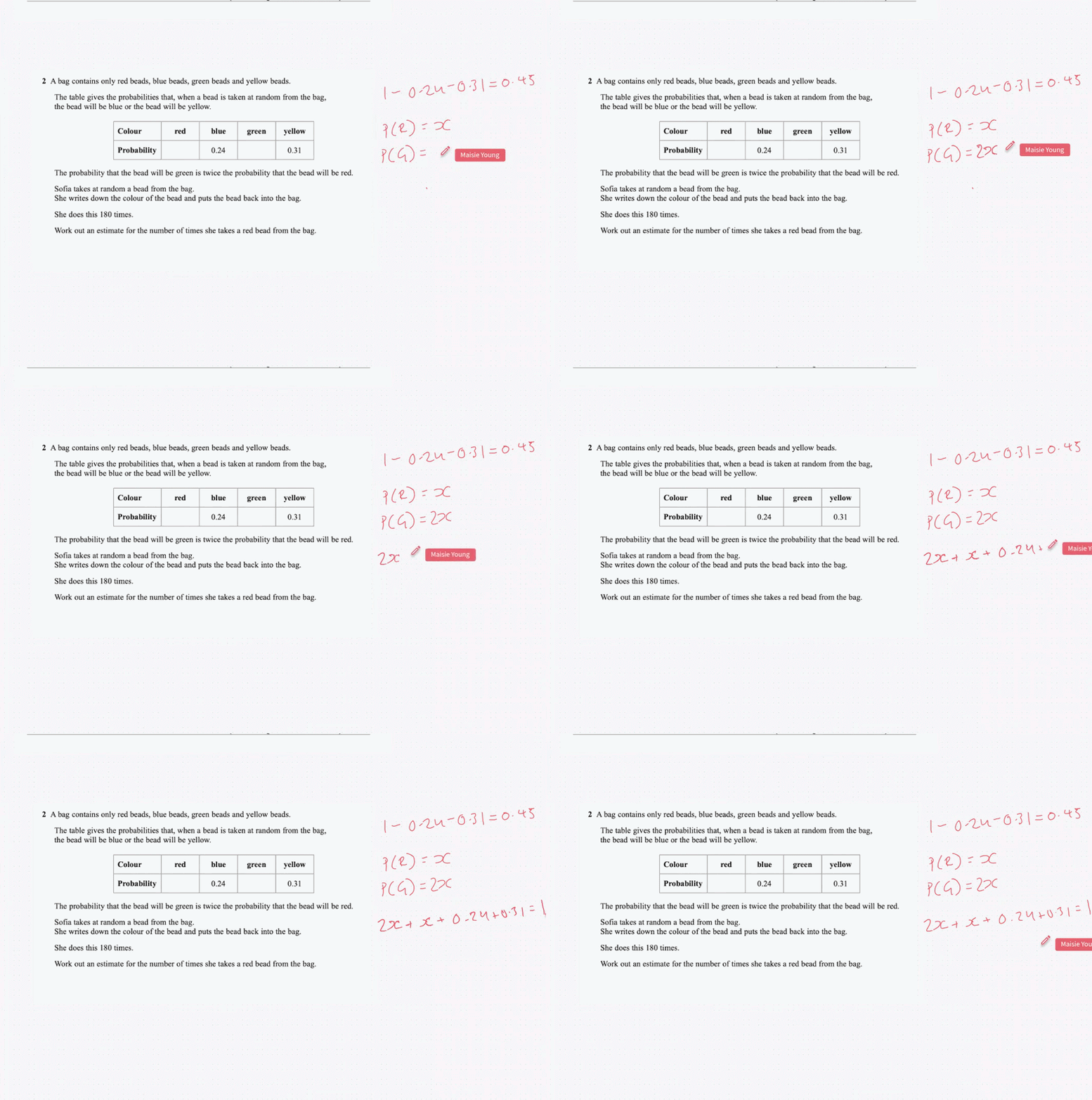
A maths lesson in Pencil Spaces.

This clip shows a maths lesson recorded in Pencil Spaces, the online classroom used by Greenhill Academics.

Not sure how to practise for the interview?

Tell us your child’s subject and we can help them get ready for the questions and the online format.

Ask about a tutor

Try this at home: a ten-minute online mock

You can do this in about ten minutes. It is our own exercise, not an official Oxford task. You need a computer with the video app your family already uses, and one subject question or an Oxford sample question.

  1. Minutes 0 to 2: Set up a quiet room and open the video app. Turn the camera on, check the microphone, and sit where the light is on your child’s face.
  2. Minutes 2 to 3: Choose one question in your child’s subject, or an Oxford sample question, with a pen and paper to hand.
  3. Minutes 3 to 8: Ask your child to think it through out loud, as if explaining to someone, keeping up a running commentary even on the parts they are working out.
  4. Minutes 8 to 10: Notice where the talking stopped, and check the camera, microphone and connection held up.

What should you look for?

Look at whether your child kept thinking out loud, or went quiet when the question got harder. Going quiet is the thing to practise. Also check the setup worked, so the technology is one less worry on the day.

What this cannot tell you

This cannot tell you whether your child will be shortlisted, get an offer or a place, or how the tutors will judge the interview. It only builds familiarity with thinking aloud and with the online setup.

Bring what you noticed to a first lesson. A tutor who has been through Oxford interviews can help your child practise thinking aloud, work with unfamiliar material, and get comfortable with the online format.

Want a practice run with an Oxbridge tutor?

Tell us where your child is applying and we can help them prepare for the interview and the online format.

Send an enquiry

How a tutor can help with interview practice

A tutor cannot promise a place, and no one can coach a winning answer. What a tutor can do is give your child practice at the thing the interview actually tests: thinking out loud about their subject, with someone asking follow-up questions.

That means mock interviews that feel like the real thing, time spent working through unfamiliar material, and a calm run at the online format so it holds no surprises. A tutor who has sat Oxford interviews themselves can also help your child settle their nerves, which is a big part of the day.

The tutors who can help

These three Oxford tutors support interview practice across different subjects. Tell us your child’s subject and we can help. You can also see our wider admissions consulting.

Hugh, Oxford graduate and maths and physics tutor at Greenhill Academics

Hugh

Hugh has a doctorate from the University of Oxford and a First-Class physics degree from Imperial. He teaches maths and physics, and prepares students for admissions tests and Oxbridge interviews.

Charlotte, Oxford Biological Sciences graduate and tutor at Greenhill Academics

Charlotte

Charlotte read Biological Sciences at the University of Oxford (Balliol), with a First. She supports interview preparation for Oxford Biology and Natural Sciences, drawing on four years in the Oxbridge tutorial system.

Kian, Oxford Classics graduate and admissions tutor at Greenhill Academics

Kian

Kian read Classics at the University of Oxford (Brasenose). He teaches English, Latin, History and Politics, and supports Oxbridge applications, including personal statements, entrance tests and interviews.

What parents ask us about interviews

When are the Oxford interviews, and are they online?

For 2027 entry, shortlisted applicants are interviewed online in December, with interviews expected in early to mid-December. They run on Microsoft Teams, and decisions are released through UCAS on 12 January 2027.

Does every applicant get an interview?

No. Only shortlisted applicants are interviewed. If your child is not shortlisted, it means the application has not gone further this year. Shortlisting happens before the interview and is decided by Oxford.

What equipment does my child need?

It depends on the course. The simplest setup is a computer with Microsoft Teams, which covers a large share of courses. A few subjects need a bit more, like a shared whiteboard, but no family is expected to buy a touchscreen. Check Oxford’s technology guidance for the subject and test it beforehand.

Can my child rearrange the interview?

Not to suit their own schedule. The logistics mean the time is fixed. But if there is a technical problem during the interview, Oxford will offer another time, so a frozen screen is not the end of the world.

Can a tutor guarantee a good result?

No. No one can promise a place or guarantee a strong interview. What a tutor can do is help your child practise thinking aloud, work with new material, and get used to the online format. Be wary of anyone who claims to coach the answers.

Hugh, Oxford graduate and maths and physics tutor at Greenhill AcademicsCharlotte, Oxford Biological Sciences graduate and tutor at Greenhill AcademicsKian, Oxford Classics graduate and admissions tutor at Greenhill Academics

Getting ready for an Oxford interview this December?

Tell us your child’s subject and we can help them practise for the questions and the online format.

Send an enquiry

Oxford interview this December? Ask about a tutor

Predicted grades below the Oxbridge course requirements: what should your child do next?

Home › Blog › University Admissions

Predicted grades below the Oxbridge course requirements: what should your child do next?

Published8 October 2026 · 8 min read
AuthorRussell GreenhillBy Russell Greenhill, Founder & CEO @ Greenhill Academics, Oxford Master’s Graduate, 8+ Years Tutoring Experience

Your child has their heart set on Oxford or Cambridge, and then the predicted grades come in a notch below what the course asks for. It is a horrible moment, and the first question is always the same: do we still apply, and what else can we do? This guide walks through what Oxbridge predicted grades really need to show, and the calm, practical options you have from here. It does not promise a place. It helps you make a clear decision before the 15 October deadline.

The short version

  • The grade a course asks for is set per course. Some Oxford courses ask for AAA or A*AA, not A*A*A, so check the exact one first.
  • Oxford says strong applications generally have predicted grades that meet the course requirement, and it asks families to be realistic.
  • A prediction below the requirement does not block an application, but your child can apply to only one of Oxford or Cambridge.
  • Focus on what is still in your child’s hands: the admissions test, the personal statement and the interview.
  • No one can promise a place, and no tutor or school can simply raise a predicted grade. Be wary of anyone who says otherwise.

First, check the real requirement for the course

Before anything else, find the exact grades your child’s course asks for. It is easy to assume every Oxbridge course wants A*A*A, but the requirement is set course by course, and plenty ask for less than that. So the gap may be smaller than it feels.

What each one asks for

Oxford: the standard A-level offer is A*A*A, A*AA or AAA depending on the course. A*A*A is for courses like Maths and Chemistry. Several sciences ask for A*AA. A lot of arts and humanities courses ask for AAA.
Cambridge: each course lists a minimum offer level, which is the minimum your child will normally need to achieve to receive an offer. Science courses are typically A*A*A and arts courses A*AA.

Open the official course page for the exact subject at each university and read the grades it lists. That is the number that matters, not a general idea of what Oxbridge wants. Our guide to getting into Oxford or Cambridge gives the wider picture.

What Oxbridge predicted grades need to show

Here is the honest part. Oxford says predicted grades are an important part of an application, and that strong applications generally have predicted A-level grades that meet the entrance requirements. It also asks families to be realistic about their chances, because the competition is high. Cambridge frames its grades as a minimum offer level, the minimum your child will normally need to achieve to receive an offer.

So a prediction below the requirement is not the end of the road, but it is worth being clear eyed. Oxford looks at the whole application, not the prediction alone, and it uses information about your child’s school and circumstances as well. The point is to make a calm, informed choice, which is what the rest of this guide helps you do.

Your options if the prediction is below

You have more than one move here. These four are worth working through in order, and your child can start on them this week.

1. Check the exact figure

Confirm the real requirement for the exact course. If it is AAA or A*AA, the gap may be one grade, not three.

2. Understand the prediction

Ask the school how the prediction was reached, and raise any genuine circumstance that affected your child’s grades so the school can advise how it should be recorded. This is about an accurate picture, not pushing for a higher number.

3. Strengthen what you control

The admissions test, the personal statement and the interview are all still ahead. These are parts of the application your child can still prepare for.

4. Plan the wider choices

Your child applies to only one of Oxford or Cambridge, and has five UCAS choices in total. Strong other choices matter, and applying after results is also an option.

None of these can promise an offer. What they do is help your child make an informed application, with a sensible plan around it.

What your child can still improve now

The predicted grade is largely set, but other parts of the application are still ahead. The admissions test, where the course has one, rewards focused practice over the next few weeks. The personal statement can still be sharpened so it shows real thinking about the subject, not just enthusiasm.

Then there is the interview, for those who are shortlisted. It is an academic conversation, and it can be prepared for. Putting the effort into these three now is a far better use of energy than worrying about a number that is largely fixed. It is also the area where a tutor can help.

A maths lesson in Pencil Spaces.

This clip shows a maths lesson recorded in Pencil Spaces, the online classroom used by Greenhill Academics.

Not sure how big the gap really is?

Send us your child’s course and predicted grades, and we can help you read it.

Ask about a tutor

Try this at home: map the gap in ten minutes

You can do this in about ten minutes. It is our own exercise, not an official task. You need your child’s predicted grades and a phone or laptop.

  1. Minutes 0 to 3: Open the official course page and write down the exact grades it asks for, and the admissions test, if there is one.
  2. Minutes 3 to 6: Write your child’s current predicted grades next to them, and mark the exact gap: which subject, and by how much.
  3. Minutes 6 to 8: List the parts of the application still to come: the test, the personal statement and the interview.
  4. Minutes 8 to 10: Note any genuine circumstance that affected the predictions, and any questions your child needs to ask the school about how it should be recorded.

What should you look for?

Look at how big the gap really is. One grade in one subject, with other parts of the application still ahead, is a different picture from a wider gap across several subjects. Name the gap clearly so you can plan around it.

What this cannot tell you

This cannot tell you whether your child will get an offer or a place, or how the tutors will weigh the application. It only shows you where things stand and what is still in your child’s hands.

Bring your notes to a first lesson. A tutor with Oxbridge admissions experience can help your child plan the test, the personal statement and the interview around the gap you have mapped.

Want help planning the next step?

Tell us where your child stands, and we can help them make the strongest use of what is still ahead.

Send an enquiry

How a tutor can help you weigh it up

A tutor cannot change a predicted grade, and no one can promise a place. What a tutor can do is help your child weigh the options calmly and then work on the parts that are still open.

That means focused practice for the admissions test, honest feedback on the personal statement, and mock interviews that build real confidence. A tutor who has been through Oxbridge admissions can also help your family judge how the pieces fit together, so the final decision is a clear one.

The tutors who can help

These three tutors support Oxbridge applicants across different subjects. Tell us your child’s course and we can help. You can also see our wider admissions consulting.

Francesca, Oxford English graduate and tutor at Greenhill Academics

Francesca

Francesca read English at the University of Oxford (Christ Church). She prepares students for the ELAT and offers personal statement support across all subjects, and is experienced with Oxbridge English applications.

Maisie, Oxford science student and admissions tutor at Greenhill Academics

Maisie

Maisie studies Molecular Biochemistry at the University of Oxford. She supports Oxbridge science admissions with interview coaching and admissions test and personal statement support, and has run mock Oxford-style interviews.

Mirsab, Cambridge medicine student and admissions mentor at Greenhill Academics

Mirsab

Mirsab studies Medicine at the University of Cambridge (St Catharine’s College). He mentors Oxbridge and Russell Group applicants, coaches Medicine and Dentistry interviews, and supports UCAT preparation.

Questions parents ask us

Should my child still apply if they are predicted below the requirement?

They can. A prediction below the requirement does not block an application, and Oxford looks at the whole picture, not the prediction alone. But Oxford asks families to be realistic, so it helps to have strong other UCAS choices as well.

Can a tutor or the school raise my child’s predicted grade?

No. A tutor cannot change a predicted grade, and no one can promise a place. What you can do is ask the school how the prediction was reached and raise any genuine circumstances so the school can advise how they should be recorded. Be wary of anyone who says they can simply raise it.

How far below is too far?

There is no fixed cut-off, and it depends on the course and the rest of the application. First check the exact requirement, since some courses ask for AAA or A*AA rather than A*A*A, so the gap may be smaller than it looks.

Where should we focus if the prediction is low?

The parts your child still controls: the admissions test where the course has one, the personal statement and the interview. Oxford also uses information about your child’s school and circumstances. Strengthening those is the best use of the time before the deadline.

Is it better to apply now or after results?

Both are possible. Some families apply this year and keep strong other choices, and some apply after results with grades in hand. The right call depends on how big the gap is and how ready your child feels, which is worth talking through with someone who knows the process.

Francesca, Oxford English graduate and tutor at Greenhill AcademicsMaisie, Oxford science student and admissions tutor at Greenhill AcademicsMirsab, Cambridge medicine student and admissions mentor at Greenhill Academics

Weighing up an Oxbridge application with a gap to close?

Tell us your child’s course and predicted grades, and we can help you plan the test, the personal statement and the interview around it.

Send an enquiry
Predicted below the Oxbridge requirement? Ask about a tutor

Does your Oxford course need written work by 10 November?

Home › Blog › University Admissions

Does your Oxford course need written work by 10 November?

Published7 October 2026 · 8 min read
AuthorRussell GreenhillBy Russell Greenhill, Founder & CEO @ Greenhill Academics, Oxford Master’s Graduate, 8+ Years Tutoring Experience

You have helped your child get the UCAS form in, and then you read that Oxford wants written work by 10 November. Maybe you are not even sure your child’s course needs it, or what Oxford written work is meant to be. This guide walks you through it in plain steps, so you know whether it applies to your child, what to send, and how to get it in on time.

The quick answer

  • Not every Oxford course needs written work. Only some do, so the first job is to check your child’s course.
  • If it is needed, it is a piece of your child’s own school work, ideally marked by a teacher, in English, and no more than 2,000 words.
  • It is not a new essay written for Oxford, and it must not be rewritten or corrected for the application.
  • It must arrive at the college by 10 November 2026. The UCAS application comes first, by 15 October 2026.
  • Fine Art is different. It sends a portfolio, with its own earlier deadline.

First, does your course even need written work?

Not every Oxford course asks for written work. Only some do. So the first job is simple: check whether your child’s course is one of them. Here is the full list for 2027 entry, so you can find your child’s course in one place.

Courses that need written work by 10 November

Archaeology and Anthropology, Asian and Middle Eastern Studies, Classical Archaeology and Ancient History, Classics, Classics and Asian and Middle Eastern Studies, Classics and English, Classics and Modern Languages, English and Modern Languages, English Language and Literature, History, History (Ancient and Modern), History and Economics, History and English, History and Modern Languages, History and Politics, History of Art, Music, Philosophy and Theology, Religion and Asian and Middle Eastern Studies, Theology and Religion

Fine Art is different

Fine Art needs a portfolio, not an essay, and it has its own earlier deadline. If your child is applying for Fine Art, check the Fine Art course page for what to send and when.

Some courses you might expect are not on the list. Modern Languages on its own, Philosophy, Politics and Economics, Law, Economics and Management, and the sciences do not ask for written work. If your child’s course is not on the list, open its course page to be sure.

What counts as Oxford written work

Here is the part worth getting right, and it is good news. Oxford written work is not a new essay your child writes for the application. It is a piece of work they already did for school or college. It should be in English and show the skills Oxford lists for the course: analytical, reasoning, language and writing skills.

A few plain rules. The work should be your child’s own, ideally marked by a teacher, and not rewritten or tidied up for Oxford. It can be typed or handwritten, as long as it is clear. No single piece can be longer than 2,000 words. Each piece needs a cover sheet that says how it was produced. You can read the full details on the official Oxford written work page.

The 10 November deadline and how to send it

The written-work deadline is separate from the UCAS deadline. Written work must arrive at the college by 10 November. That is the college your child applies to, or the one they are given if they make an open application. Oxford does not give a clock time for this one.

15 October 2026: the UCAS application is in.
By 10 November: written work arrives at the college.
December: online interviews, where the work may come up.

Your child does not send it straight away. After the UCAS application goes in, the college gets in touch to tell your child how to send the work online. Keep a copy, because if your child is shortlisted the work may come up at interview. Our guide to getting into Oxford or Cambridge covers the wider picture.

A maths lesson in Pencil Spaces.

This clip shows a maths lesson recorded in Pencil Spaces, the online classroom used by Greenhill Academics.

Want help working out what your child’s course needs?

Send us the course and we can walk you through what to check.

Ask about a tutor

Try this at home: a five-minute requirement check

You can do this in about five minutes. It is our own exercise, not an official task. You need a phone or laptop and your child’s folder of marked school work.

  1. Minutes 0 to 1: Write down the exact name of your child’s Oxford course.
  2. Minutes 1 to 3: Open that course’s page on the Oxford site. Note whether it asks for written work, the number of pieces, and what kind.
  3. Minutes 3 to 4: Look through your child’s school work for pieces that already fit: their own work, ideally marked, not rewritten, and under 2,000 words.
  4. Minutes 4 to 5: Pick the one or two that best show the skills the course lists, and note anything you are unsure about.

What should you look for?

Check that a piece is your child’s own and has not been changed for the application, and ideally that a teacher has already marked it. A piece that already fits is worth far more than one that has been tidied up.

What this cannot tell you

This check cannot tell you whether the tutors will think a piece is strong, whether your child will be shortlisted, or whether the college will accept an unusual piece. Where you are unsure, Oxford says to ask the college.

If you cannot find a piece that fits, or you want a second opinion, a tutor can talk it through with your child. They help your child choose, they do not rewrite the work.

Want a humanities tutor to go through it with your child?

Tell us the subject and we can help them get ready.

Send an enquiry

How a tutor helps with the written work

A tutor cannot rewrite your child’s work, and they should not. Oxford wants your child’s own work, ideally marked by their school and not changed for the application. That is a line we do not cross.

What a tutor can do is help your child understand what the course asks for, look at which of their existing pieces best shows those skills, and get ready to talk about that piece at interview. They can also help your child grow as a writer in their normal school work, over time.

Our humanities tutors who can help

These three tutors studied humanities and support Oxbridge applications. Tell us your child’s course and we can help. You can also see our wider admissions consulting.

Laurie, Oxford English graduate and tutor at Greenhill Academics

Laurie

Laurie read English at the University of Oxford (The Queen’s College) and earned a Double First. He helps Oxbridge applicants with personal statements and interviews, gives close feedback on essays, and teaches English and History.

Louis, Oxford graduate and tutor at Greenhill Academics

Louis

Louis read Philosophy and French at the University of Oxford (Keble College) and earned a First. He helps Oxbridge applicants with personal statements and interviews, and helps students develop their essay writing.

George, English and Linguistics tutor at Greenhill Academics

George

George studied English Literature at the University of Manchester and Linguistics at the University of Cambridge. He teaches English and supports Oxbridge humanities applicants, with a strong track record across GCSE, A Level and admissions.

Questions parents ask us about written work

How do I know if my child’s course needs written work?

Check the list on Oxford’s written work page, then open your child’s own course page to be sure. Not every course asks for it. If the course is not on the list, it does not need written work.

Does my child write something new for Oxford?

No. It should be work your child already did for school or college, in English, that shows their analytical, reasoning, language and writing skills. Oxford wants it ideally marked by a teacher, and not rewritten for the application.

How long should each piece be?

No single piece can be more than 2,000 words. If a school essay is longer, your child can send a part of it that fits, with a cover sheet that explains how it was produced.

When and how do we send it?

It must arrive at the college by 10 November. After the UCAS application goes in, the college gets in touch to tell you how to send it, which is done online. Keep a copy, because it may come up at interview.

What if we are not sure a piece is suitable, or we do not have one?

Oxford says to contact the college considering the application, and they will talk through the options. A tutor can also help your child work out which of their existing pieces best fits what the course asks for.

Laurie, Oxford English graduate and tutor at Greenhill AcademicsLouis, Oxford graduate and tutor at Greenhill AcademicsGeorge, English and Linguistics tutor at Greenhill Academics

Still working out your child’s written work?

Tell us the course your child is applying for, and we can help you understand what Oxford asks for and how to get ready.

Send an enquiry
Does your course need written work? Ask about a tutor

Oxford or Cambridge? You can only choose one. How should your child decide?

Home › Blog › University Admissions

Does your Oxford course need written work by 10 November?

Published7 October 2026 · 8 min read
AuthorRussell GreenhillBy Russell Greenhill, Founder & CEO @ Greenhill Academics, Oxford Master’s Graduate, 8+ Years Tutoring Experience

You have helped your child get the UCAS form in, and then you read that Oxford wants written work by 10 November. Maybe you are not even sure your child’s course needs it, or what Oxford written work is meant to be. This guide walks you through it in plain steps, so you know whether it applies to your child, what to send, and how to get it in on time.

The quick answer

  • Not every Oxford course needs written work. Only some do, so the first job is to check your child’s course.
  • If it is needed, it is a piece of your child’s own school work, ideally marked by a teacher, in English, and no more than 2,000 words.
  • It is not a new essay written for Oxford, and it must not be rewritten or corrected for the application.
  • It must arrive at the college by 10 November 2026. The UCAS application comes first, by 15 October 2026.
  • Fine Art is different. It sends a portfolio, with its own earlier deadline.

First, does your course even need written work?

Not every Oxford course asks for written work. Only some do. So the first job is simple: check whether your child’s course is one of them. Here is the full list for 2027 entry, so you can find your child’s course in one place.

Courses that need written work by 10 November

Archaeology and Anthropology, Asian and Middle Eastern Studies, Classical Archaeology and Ancient History, Classics, Classics and Asian and Middle Eastern Studies, Classics and English, Classics and Modern Languages, English and Modern Languages, English Language and Literature, History, History (Ancient and Modern), History and Economics, History and English, History and Modern Languages, History and Politics, History of Art, Music, Philosophy and Theology, Religion and Asian and Middle Eastern Studies, Theology and Religion

Fine Art is different

Fine Art needs a portfolio, not an essay, and it has its own earlier deadline. If your child is applying for Fine Art, check the Fine Art course page for what to send and when.

Some courses you might expect are not on the list. Modern Languages on its own, Philosophy, Politics and Economics, Law, Economics and Management, and the sciences do not ask for written work. If your child’s course is not on the list, open its course page to be sure.

What counts as Oxford written work

Here is the part worth getting right, and it is good news. Oxford written work is not a new essay your child writes for the application. It is a piece of work they already did for school or college. It should be in English and show the skills Oxford lists for the course: analytical, reasoning, language and writing skills.

A few plain rules. The work should be your child’s own, ideally marked by a teacher, and not rewritten or tidied up for Oxford. It can be typed or handwritten, as long as it is clear. No single piece can be longer than 2,000 words. Each piece needs a cover sheet that says how it was produced. You can read the full details on the official Oxford written work page.

The 10 November deadline and how to send it

The written-work deadline is separate from the UCAS deadline. Written work must arrive at the college by 10 November. That is the college your child applies to, or the one they are given if they make an open application. Oxford does not give a clock time for this one.

15 October 2026: the UCAS application is in.
By 10 November: written work arrives at the college.
December: online interviews, where the work may come up.

Your child does not send it straight away. After the UCAS application goes in, the college gets in touch to tell your child how to send the work online. Keep a copy, because if your child is shortlisted the work may come up at interview. Our guide to getting into Oxford or Cambridge covers the wider picture.

A maths lesson in Pencil Spaces.

This clip shows a maths lesson recorded in Pencil Spaces, the online classroom used by Greenhill Academics.

Want help working out what your child’s course needs?

Send us the course and we can walk you through what to check.

Ask about a tutor

Try this at home: a five-minute requirement check

You can do this in about five minutes. It is our own exercise, not an official task. You need a phone or laptop and your child’s folder of marked school work.

  1. Minutes 0 to 1: Write down the exact name of your child’s Oxford course.
  2. Minutes 1 to 3: Open that course’s page on the Oxford site. Note whether it asks for written work, the number of pieces, and what kind.
  3. Minutes 3 to 4: Look through your child’s school work for pieces that already fit: their own work, ideally marked, not rewritten, and under 2,000 words.
  4. Minutes 4 to 5: Pick the one or two that best show the skills the course lists, and note anything you are unsure about.

What should you look for?

Check that a piece is your child’s own and has not been changed for the application, and ideally that a teacher has already marked it. A piece that already fits is worth far more than one that has been tidied up.

What this cannot tell you

This check cannot tell you whether the tutors will think a piece is strong, whether your child will be shortlisted, or whether the college will accept an unusual piece. Where you are unsure, Oxford says to ask the college.

If you cannot find a piece that fits, or you want a second opinion, a tutor can talk it through with your child. They help your child choose, they do not rewrite the work.

Want a humanities tutor to go through it with your child?

Tell us the subject and we can help them get ready.

Send an enquiry

How a tutor helps with the written work

A tutor cannot rewrite your child’s work, and they should not. Oxford wants your child’s own work, ideally marked by their school and not changed for the application. That is a line we do not cross.

What a tutor can do is help your child understand what the course asks for, look at which of their existing pieces best shows those skills, and get ready to talk about that piece at interview. They can also help your child grow as a writer in their normal school work, over time.

Our humanities tutors who can help

These three tutors studied humanities and support Oxbridge applications. Tell us your child’s course and we can help. You can also see our wider admissions consulting.

Laurie, Oxford English graduate and tutor at Greenhill Academics

Laurie

Laurie read English at the University of Oxford (The Queen’s College) and earned a Double First. He helps Oxbridge applicants with personal statements and interviews, gives close feedback on essays, and teaches English and History.

Louis, Oxford graduate and tutor at Greenhill Academics

Louis

Louis read Philosophy and French at the University of Oxford (Keble College) and earned a First. He helps Oxbridge applicants with personal statements and interviews, and helps students develop their essay writing.

George, English and Linguistics tutor at Greenhill Academics

George

George studied English Literature at the University of Manchester and Linguistics at the University of Cambridge. He teaches English and supports Oxbridge humanities applicants, with a strong track record across GCSE, A Level and admissions.

Questions parents ask us about written work

How do I know if my child’s course needs written work?

Check the list on Oxford’s written work page, then open your child’s own course page to be sure. Not every course asks for it. If the course is not on the list, it does not need written work.

Does my child write something new for Oxford?

No. It should be work your child already did for school or college, in English, that shows their analytical, reasoning, language and writing skills. Oxford wants it ideally marked by a teacher, and not rewritten for the application.

How long should each piece be?

No single piece can be more than 2,000 words. If a school essay is longer, your child can send a part of it that fits, with a cover sheet that explains how it was produced.

When and how do we send it?

It must arrive at the college by 10 November. After the UCAS application goes in, the college gets in touch to tell you how to send it, which is done online. Keep a copy, because it may come up at interview.

What if we are not sure a piece is suitable, or we do not have one?

Oxford says to contact the college considering the application, and they will talk through the options. A tutor can also help your child work out which of their existing pieces best fits what the course asks for.

Laurie, Oxford English graduate and tutor at Greenhill AcademicsLouis, Oxford graduate and tutor at Greenhill AcademicsGeorge, English and Linguistics tutor at Greenhill Academics

Still working out your child’s written work?

Tell us the course your child is applying for, and we can help you understand what Oxford asks for and how to get ready.

Send an enquiry
Does your course need written work? Ask about a tutor

Applying to Oxford or Cambridge Medicine? What your child needs to know about UCAT

Home › Blog › University Admissions

Applying to Oxford or Cambridge Medicine? What your child needs to know about UCAT

Published5 October 2026 · 10 min read
AuthorRussell GreenhillBy Russell Greenhill, Founder & CEO @ Greenhill Academics, Oxford Master’s Graduate, 8+ Years Tutoring Experience

Maybe your child has just sat the UCAT, and you are holding a score and wondering what it means for a Medicine application. This guide explains the UCAT for Oxford or Cambridge Medicine in plain terms: what the test now involves, how each university uses the score, and what the 2026 figures do and do not tell you. It is written for 2027 entry, with the test already taken.

The key points

  • Both Oxford and Cambridge require the UCAT for their standard Medicine course. It is the same test for both.
  • The UCAT changed in 2025. It now has four sections, and Abstract Reasoning has gone.
  • Both universities use the overall score from the three thinking sections. Oxford does not use Situational Judgement when shortlisting for interview, while Cambridge says it will not use it in its assessment for 2027 entry.
  • They use it differently. Oxford ranks GCSEs and the UCAT together with a set weighting. Cambridge uses it in a wider mix with no minimum score.
  • Neither publishes a cut-off, so there is no single good Oxbridge score. The 2026 figures only help you place a result.

Your child has sat the UCAT. What happens now?

Maybe your child has already sat the UCAT and you are looking at a score. By the time you read this, the 2026 test window has closed. The last test day was 24 September 2026, so this is no longer about booking a slot. It is about what the result means and what to do next.

Your child does not send the UCAT score anywhere. The UCAT sends results straight to the universities your child applied to, in early November. Oxford goes one step further and asks applicants not to put the score on the UCAS form at all, because the tutors who interview do not see UCAT scores.

The date to keep in view is the UCAS deadline. For 2027 entry, applications to Oxford, Cambridge and Medicine courses are due by 15 October 2026, at 6pm UK time. So the job now is to finish a strong application, with the test already done. If your child is still choosing subjects, our guide to what A levels you need for medicine is a good place to start.

What the UCAT for Oxford or Cambridge Medicine involves

The UCAT is the same test for both universities. It changed in 2025, when Abstract Reasoning was taken out. So if you read an older guide that still lists it, that part is gone.

The test now has four sections, sat on screen in just under two hours. Three are thinking sections: Verbal Reasoning, Decision Making and Quantitative Reasoning. The fourth is Situational Judgement, which looks at how your child responds to work situations. There is no negative marking, so a wrong answer costs nothing and it is worth answering every question.

The four sections

  • Verbal Reasoning: 44 questions in 22 minutes.
  • Decision Making: 35 questions in 37 minutes.
  • Quantitative Reasoning: 36 questions in 26 minutes.
  • Situational Judgement: 69 questions in 26 minutes.

Each of the three thinking sections is scored from 300 to 900, and they add up to a total from 900 to 2700. Situational Judgement is reported in four bands instead, with Band 1 the highest. You can see the full format on the official UCAT test format page.

How Oxford uses your child’s score

Oxford and Cambridge both require the UCAT, but they do not use it in the same way, so it helps to take them one at a time. Here is Oxford. You can also see our Oxford admissions consulting page.

For shortlisting, Oxford looks at the overall score from the three thinking sections. It does not use the Situational Judgement score at that stage. It puts GCSE results and the UCAT score together into a numerical ranking to decide who to invite to interview.

For a child with a full set of GCSEs, Oxford gives GCSEs and the UCAT equal weight at that first stage. For a child with five or fewer GCSEs, or GCSEs taken in summer 2020 or summer 2021, it gives the UCAT double weight. Oxford is clear that there is no fixed cut-off, because the score needed shifts with the strength of each year’s applicants. You can read this on the Oxford shortlisting page.

How Cambridge uses it differently

Cambridge also requires the UCAT for its standard Medicine course, and it too looks at the overall score from the three thinking sections, not the Situational Judgement score, for 2027 entry.

The difference is in how it fits the rest. Cambridge says there is no minimum score. It uses the UCAT as part of choosing who to invite to interview, and it may use it again when it makes offers. Cambridge describes its choice as a mix of academic record, the UCAT and the interview. You can read this on the Cambridge Medicine page, and our Cambridge admissions consulting page sets out how we support applicants.

So the same score can sit differently at the two universities. At Oxford it goes into a GCSE-and-UCAT ranking with a known weighting. At Cambridge there is no set weighting published, and the score sits alongside the academic record and the interview. It is worth not assuming one number means the same thing in both places.

What a 2026 score tells you, and what it does not

If you have a number in front of you, the 2026 figures help you see roughly where it sits. Across 42,359 tests in 2026, the average total for the three thinking sections was 1918 out of 2700. The top tenth of candidates scored about 2250 or above, the next tenth about 2140, and the one after that about 2050.

Use those figures only to place a score within the 2026 group. Do not turn them into an Oxford or Cambridge target. Neither university publishes a cut-off, and both say the score is read alongside the rest of the application. There is no single good Oxbridge score, and we will not invent one. The honest answer to “is this good enough?” is that it depends on the year and the whole application. Source: the official UCAT test statistics.

A maths lesson in Pencil Spaces.

This clip shows a maths lesson recorded in Pencil Spaces, the online classroom used by Greenhill Academics.

Not sure how your child’s score sits for Oxford or Cambridge?

Send us the number and the course, and we can put it in context.

Ask about a tutor

How a tutor can help with the part your child finds hard

The UCAT runs its own free practice materials, and Oxford says there is no need to pay for a preparation course. So it is fair to ask what a tutor adds. A tutor does not have secret questions and cannot promise a score. What a good tutor can do is look closely at where your child loses time or picks the wrong answer.

The useful work is diagnosis. Is the problem the thinking itself, the timing, or the way a decision is made under pressure? Each one needs a different fix. A tutor can set timed practice in the current four-section format, watch which section drags, and plan around that one weakness instead of going over everything again.

Try this timed number check at home this week

You can do this in about eight minutes. It is our own short exercise, not a real UCAT question. You need a small table of numbers your child can read in a few seconds, like a train timetable, a shopping receipt or a page of prices. You also need a timer and a pen.

  1. Minutes 0 to 1: Pick the table and write three quick questions from it. For example, the difference between two prices, the total of three items, or which option is cheaper per unit.
  2. Minutes 1 to 4: Start the timer. Your child answers all three by hand, with no calculator. Give them three minutes and no longer.
  3. Minutes 4 to 6: Mark the answers together. For each one, ask where the time went: reading the table, deciding which sum to do, or doing the sum.
  4. Minutes 6 to 8: Write down the slowest step for them, and keep the page for a first lesson.

What should you look for?

Watch whether the hold-up is reading the table, choosing the method, or the arithmetic. Quantitative Reasoning gives about 43 seconds a question, so speed at this everyday level matters. The step that slows your child is the step worth practising.

What this cannot tell you

This is a warm-up, not a mock. Three home-made questions cannot give a UCAT score, show whether your child is ready, or compare them with other applicants. It uses everyday numbers, not real test questions.

Bring the page to a first lesson. A tutor can take a larger set of timed questions, see the same pattern, and set practice on the exact step that needs it.

Want a tutor to work on the section that slows your child down?

Tell us which part feels hardest, and we can start there.

Send an enquiry

Which tutors have medicine-admissions experience?

The profiles below show each tutor’s background and what they support. Tell us your child’s situation and we can talk it through. You can also see our wider admissions consulting.

Mirsab, medicine admissions and UCAT tutor at Greenhill Academics

Mirsab

Mirsab is studying Medicine at the University of Cambridge (St Catharine’s College). He supports students with the UCAT and with Medicine and Dentistry admissions, including interview preparation.

Jessica, Cambridge medicine student and tutor at Greenhill Academics

Jessica

Jessica is in her fourth year of Medicine at the University of Cambridge, having completed a BA in Psychology. She supports students applying to Medicine, including interview preparation.

Questions about the UCAT for medicine

Does my child still send their UCAT score to Oxford or Cambridge?

No. The UCAT sends results straight to the universities your child applied to, in early November. Your child does not add the score to the UCAS form. Oxford also asks applicants not to include it, because its interviewers do not see UCAT scores.

What is a good UCAT score for Oxford or Cambridge?

There is no published cut-off at either. Oxford says the score needed changes with each year’s applicants, and Cambridge says there is no minimum. The 2026 average for the three thinking sections was 1918 out of 2700, which helps you place a score, but it is not a target.

What is actually in the UCAT now?

Four sections in just under two hours: Verbal Reasoning, Decision Making, Quantitative Reasoning, and Situational Judgement. Abstract Reasoning was removed in 2025. There is no negative marking, so a wrong answer costs nothing.

Do Oxford and Cambridge use the UCAT the same way?

No. Both use the overall score from the three thinking sections. Oxford does not use Situational Judgement at the interview-shortlisting stage, while Cambridge says it will not use it in its assessment for 2027 entry. Oxford puts GCSEs and the UCAT into a ranking with a set weighting, while Cambridge uses the score in a wider mix with no minimum.

Does my child need a paid UCAT course?

Not necessarily. The UCAT offers free official practice materials, and Oxford says there is no need for a formal preparation course. A tutor is there to find the one section that costs time and work on that, rather than going over everything.

Mirsab, medicine admissions and UCAT tutor at Greenhill AcademicsJessica, Cambridge medicine student and tutor at Greenhill Academics

Not sure what your child’s UCAT result means for Oxford or Cambridge?

Tell us the score and the course, and we can talk through what it means and what to focus on next.

Send an enquiry
Preparing for Oxford or Cambridge Medicine? Ask about a tutor

What should your child write in each of the three UCAS personal statement questions?

Home › Blog › University Admissions

What should your child write in each of the three UCAS personal statement questions?

Published1 October 2026 · 7 min read
AuthorRussell GreenhillBy Russell Greenhill, Founder & CEO @ Greenhill Academics, Oxford Master’s Graduate, 8+ Years Tutoring Experience

If your child is starting their UCAS personal statement, the one long essay is gone. It is now three questions, and it is not always clear what to put in each box. This guide explains the three UCAS personal statement questions, what to write in each one, and how to use the 4,000 characters. It covers 2027 entry.

The short version

  • The personal statement is now three questions, not one long essay. This is the format for 2026 entry onwards, so it applies for 2027.
  • Question 1 asks why your child wants to study the course. Question 2 asks how their studies have prepared them. Question 3 asks what else they have done, outside school, and why it is useful.
  • There is one limit of 4,000 characters, including spaces, across all three answers.
  • Each answer needs at least 350 characters. Your child can split the rest between the three questions however they like.
  • Universities read the three answers together as one personal statement.

How the three UCAS personal statement questions work together

For years, the personal statement was one long piece of writing. UCAS has changed it. For 2026 entry onwards, which includes 2027, your child answers three set questions instead. You can read the full guidance on the official UCAS page.

The three answers are not three separate essays. Universities and colleges read them together as one personal statement, inside a single 4,000-character limit. So the three parts should still join up and sound like one piece about your child. For the background on why UCAS made this change, see our guide to the new UCAS personal statement.

Question 1: why this course or subject

The first question is, “Why do you want to study this course or subject?” This is where your child shows a real reason for choosing the subject, backed by something specific.

We help students name a concrete thing here: a topic that gripped them, a book, a problem they could not put down. Then they say what it made them want to understand next. A clear reason with a specific example gives the reader more to go on than a general statement of interest.

Question 2: how your studies prepared you

The second question is, “How have your qualifications and studies helped you to prepare for this course or subject?” This is about what your child has learned, in school or college, that sets them up for the course.

Your child can choose a few relevant things they have studied, explain the skill or understanding each one built, and connect that back to the course. They do not need to list every topic they have covered.

Question 3: what you did outside school

The third question is, “What else have you done to prepare outside of education, and why are these experiences useful?” This covers anything relevant beyond lessons: reading, work, clubs, volunteering, caring responsibilities, projects.

Because Question 3 asks why the experiences are useful, your child should say, for each thing, what they did and what it taught them for the course. It is about what they took from it, not the activity on its own. UCAS also has advice for parents on supporting this.

Not sure what to put in each answer?

Tell us the course your child is applying for and where they are up to, and we can talk it through.

Ask about a tutor

How to use the 4,000 characters

There is one limit of 4,000 characters, including spaces, across all three answers. Each answer needs at least 350 characters. After that, your child can split the 4,000 between the three questions in any way they choose.

There is no set length for each question, so an even split is not required. Your child can give more space to an answer where they have more relevant material, as long as every answer clears the 350-character minimum and the total stays within 4,000 characters.

What to check before your child submits each answer

These are useful checks when your child reviews the three answers.

  • Starting with a line like “I am passionate about” or “I have always loved”. It tells rather than shows, so we help students open with a specific example instead.
  • Listing activities with no reason. Each thing needs a “so what”: what it taught them for the course.
  • Writing three answers that do not join up. They are read as one statement, so the parts should connect.
  • Letting the character count decide the content. Plan what each answer needs to say first, then fit it inside the 4,000.

Try this eight-minute personal statement warm-up at home

You can do this in about eight minutes. This is a Greenhill Academics warm-up using UCAS Question 1. It is not an official UCAS exercise or assessment. You need a pen, paper and a timer. No research or internet needed.

  1. Minutes 0 to 2: Ask your child to write one sentence saying why they want to study the course. If it starts with “I am passionate about” or “I have always loved”, that is the sentence we would help them improve.
  2. Minutes 2 to 4: Under it, write one real thing they did that shows that interest: a book, a problem they tried, a project, a moment in a lesson. Just the fact, in one line.
  3. Minutes 4 to 6: Write one more line about what that thing made them want to understand or do next.
  4. Minutes 6 to 8: Join the three lines into a short answer to UCAS Question 1, “Why do you want to study this course or subject?” Count the characters and keep the page for a tutor.

What should you look for?

Look for a clear reason for choosing the subject, supported by a specific example or experience, and a last line that shows thinking and curiosity.

What this cannot tell you

This is a warm-up for Question 1 only. It cannot write the whole statement, judge Questions 2 and 3, or tell you how an admissions reader will rate it. The character count here is just for the exercise, not a target.

Bring the three lines to a first lesson. A tutor can check whether the example is specific enough, help plan the 4,000 characters across all three answers, and carry the same evidence-first habit into Questions 2 and 3.

A maths lesson in Pencil Spaces.

This clip shows a maths lesson recorded in Pencil Spaces, the online classroom used by Greenhill Academics.

Tutors who help with personal statements

The profiles below show each tutor’s background and what they teach. Tell us your child’s course and where they are up to, and we can talk it through. You can also see our UCAS admissions consulting and our wider admissions consulting.

Francesca, English and personal statement tutor at Greenhill Academics

Francesca

Francesca studied English at Christ Church, University of Oxford, where she was awarded a scholarship for academic excellence. She tutors English and offers personal statement support across all subjects.

Laurie, English and admissions tutor at Greenhill Academics

Laurie

Laurie read English at The Queen’s College, University of Oxford, with a Double First. She supports university admissions, including personal statements, the ELAT and interview preparation.

Ashruf, maths and admissions tutor at Greenhill Academics

Ashruf

Ashruf read Information and Computer Engineering at the University of Cambridge (Clare College). He teaches Maths and Physics, and supports Oxbridge admissions, including personal statements and mock interviews.

Questions about the personal statement

How long can the personal statement be?

There is one limit of 4,000 characters, including spaces, across all three answers. Each answer needs at least 350 characters. Your child can split the rest between the three questions however they like.

Does each question have its own limit?

There is no separate maximum for each question. The only rules are the 4,000-character total and the 350-character minimum per answer, so your child chooses how much each answer gets.

Do universities see three separate answers or one statement?

Universities and colleges read the three answers together as one personal statement. So the three parts should still connect and read as one piece about your child.

What should go in question 3?

Question 3 asks what your child has done to prepare outside of education, and why it is useful. That can be reading, work, clubs, volunteering or caring responsibilities, as long as they say what it taught them for the course.

When does the personal statement need to be finished?

It depends on the course. For undergraduate courses not subject to the 15 October deadline, the UCAS equal-consideration deadline is 13 January 2027 at 18:00 UK time. Oxford and Cambridge, and most medicine, dentistry and veterinary medicine/science courses, have the earlier 15 October 2026 deadline. Check your child’s courses on UCAS.

Francesca, English and personal statement tutor at Greenhill Academics Laurie, English and admissions tutor at Greenhill Academics Ashruf, maths and admissions tutor at Greenhill Academics

Want a second pair of eyes on the personal statement?

Send us your child’s course and where they are up to, and we can talk through how we would help.

Send an enquiry
Stuck on the personal statement? Ask about a tutor

What does TARA ask of Oxford PPE applicants?

Home › Blog › University Admissions

What does TARA ask of Oxford PPE applicants?

Published29 September 2026 · 8 min read
AuthorRussell GreenhillBy Russell Greenhill, Founder & CEO @ Greenhill Academics, Oxford Master’s Graduate, 8+ Years Tutoring Experience

If your child is applying for Oxford PPE, you may be looking at a new test name and wondering what it actually involves. This guide explains what the TARA for Oxford PPE asks for: the three timed parts, the writing task, and a short exercise to try at home. It covers 2027 entry, with the test taken in autumn 2026.

What to know first

  • Every Oxford PPE applicant sits the TARA. It is a new test from UAT-UK, used by Oxford and UCL.
  • The TARA has three parts of 40 minutes each: Critical Thinking, Problem Solving, and a Writing Task.
  • The first two parts are multiple choice, 22 questions each. You do not lose marks for a wrong answer.
  • The Writing Task is one essay of up to 750 words. UAT-UK does not score it. A copy goes to the universities your child applied to.
  • It is not built on a school course, but the Problem Solving part does expect some basic maths.

What the TARA for Oxford PPE actually tests

PPE stands for Philosophy, Politics and Economics. For 2027 entry, every Oxford PPE applicant takes the TARA, the Test of Academic Reasoning for Admissions. Oxford lists it as the test for PPE on its official admissions tests page.

The TARA is a reasoning test, not a subject test. UAT-UK, the group that runs it, says it looks at generic thinking skills and how clearly your child can write. It is a new UAT-UK test for 2027 entry. The same TARA is used for a few other Oxford courses, and by UCL, but this guide keeps to PPE.

If you are not yet sure which test your child’s course needs, our guide to the 2027 Oxbridge admissions tests maps each course to its test.

The three parts your child sits

The TARA comes in three parts, taken one after the other. Each part has its own 40-minute limit, and your child cannot go back to a part once it is done. That is 120 minutes of testing in total.

Critical Thinking (40 minutes)

22 multiple-choice questions. This part looks at how your child weighs up an argument: finding the main conclusion, the reasons behind it, any hidden assumption, and any slip in the reasoning.

Problem Solving (40 minutes)

22 multiple-choice questions. This part is about working through new problems: picking out the information that matters, finding a method, and spotting patterns in figures or data.

Writing Task (40 minutes)

One essay, chosen from three set questions. We look at this part on its own below, because it works very differently from the two multiple-choice parts.

What the writing task asks for

The Writing Task is the part that works differently from the rest, so it is worth being clear. In the Writing Task, your child picks one question from a choice of three. They then write one answer of up to 750 words, in 40 minutes.

The official TARA question guide sets out what each question asks. Your child has to explain what a statement means, give a reasoned argument against it, and then say how far they agree, and why. So it is not a free essay. It is a clear, three-step piece of reasoning on the page.

One more thing worth knowing. UAT-UK does not score the Writing Task. Instead, a copy of your child’s response is sent to the universities they applied to.

Worried about the TARA writing task?

Tell us your child’s course and where they are up to, and we can talk through how we would help them prepare.

Ask about a tutor

Does your child need to revise a subject for it?

The TARA is not tied to a PPE or school course, so there is no set list of facts to learn. The official guide says detailed knowledge of the subject of a question is not expected or required. Your child cannot revise facts for it the way they would for a GCSE.

But there is one part where a little maths helps. The guide says the Problem Solving part expects some basic maths, and it lists what that means at the back: working with numbers and percentages, the four rules, time and money and measures, simple area and volume, and reading tables and graphs. None of it is advanced. Still, it is worth your child being quick and sure with everyday maths, so the numbers do not slow them down.

How the test is scored and run

The shape of the test is easy to picture. Critical Thinking and Problem Solving are on screen and multiple choice, with 22 questions each. There is no calculator and no dictionary. Your child does not lose marks for a wrong answer, so it is worth having a go at every question.

Each of those two parts is scored on a scale from 1 to 9, reported to one decimal place. There is no single pass mark. The Writing Task is not given a score, as we said above. You can see the format on the official TARA page.

The dates for the October 2026 sitting

Booking for the October sitting was handled through the official UAT-UK system, not through Greenhill Academics or Oxford. A few dates are worth writing down.

  • Test booking closed on 28 September 2026, at 6pm UK time.
  • Test window: 12 to 16 October 2026.
  • Results: 16 November 2026.

Candidates sitting in China, Hong Kong or Macau take the TARA on 14 October. For a standard Oxford PPE application there is no January sitting to fall back on, so the October window is the one that counts. You can check the timetable on the UAT-UK deadlines page.

Try this eight-minute reasoning warm-up at home

You can do this in about eight minutes. It is our own short exercise, not a real TARA question. You need a pen, paper and a timer. Find a short opinion paragraph, three or four sentences, from a newspaper or letters page.

  1. Minutes 0 to 2: Read the paragraph once. In one sentence, write down what the writer wants you to accept. That one sentence is the main conclusion.
  2. Minutes 2 to 4: Underline each reason the writer gives for it. Number the reasons in order.
  3. Minutes 4 to 6: Write one thing the writer has taken for granted but not said, something that would need to be true for the reasons to hold up. That is the assumption.
  4. Minutes 6 to 8: In two sentences, give one fair point against the conclusion. Then write whether you still agree, and why. Keep the page for a tutor.

What should you look for?

Watch whether your child can tell the conclusion apart from the reasons, and whether they can name an assumption the writer never states. The counter-point and final judgement echo two parts of the TARA Writing Task: giving a reasoned argument against a statement and weighing how far they agree with it.

What this cannot tell you

This is a warm-up, not a mock test. It cannot give a TARA score, show whether your child is ready, or compare them with others. It uses an everyday paragraph, not a real TARA question, and its two-minute steps are not real exam pace.

Bring the page to a first lesson. A tutor can look at how your child split the conclusion from the reasons, whether the assumption holds up, and how sharp their counter-point was, then choose what to practise next.

A maths lesson in Pencil Spaces.

This clip shows a maths lesson recorded in Pencil Spaces, the online classroom used by Greenhill Academics.

Which tutor backgrounds are relevant to Oxford PPE?

The profiles below give each tutor’s background and what they teach. Tell us your child’s course and where they are up to, and we can talk it through. You can also see our Oxford admissions consulting and our wider admissions consulting.

Naomi, Oxford PPE graduate and tutor at Greenhill Academics

Naomi

Naomi read Philosophy, Politics and Economics at the University of Oxford (Exeter College), where she was awarded the Sir Arthur Benson Memorial Prize. She teaches History, Economics and Politics.

Kian, humanities and politics tutor at Greenhill Academics

Kian

Kian read Classics at Brasenose College, University of Oxford. He teaches English, Latin, History and Politics, and supports Oxbridge applicants with personal statements, entrance tests and interviews.

Louis, philosophy tutor at Greenhill Academics

Louis

Louis holds a First-Class degree in Philosophy and French from the University of Oxford (Keble College). He teaches Philosophy, and helps Oxbridge applicants with essay writing and building a clear argument.

Questions about the TARA and Oxford PPE

Does my child need to revise a subject for the TARA?

Not in the usual sense. The TARA is a reasoning test, and the official guide says detailed subject knowledge is not expected. The one exception is the Problem Solving part, which expects some basic, everyday maths.

How long is the TARA and what is in it?

It is three parts of 40 minutes each, so 120 minutes in total. Two parts are multiple choice, Critical Thinking and Problem Solving, and the third is a Writing Task of up to 750 words.

Is the Writing Task scored by UAT-UK?

No, not by UAT-UK. Your child writes one essay of up to 750 words, and a copy of the response is sent to the universities they applied to.

Can my child use a calculator?

No. The TARA is sat on screen with no calculator and no dictionary. There are no marks taken off for a wrong answer, so it is worth attempting every question.

When is the TARA and how does my child book it?

The test window is 12 to 16 October 2026, with results on 16 November 2026. Booking closed on 28 September 2026 at 6pm UK time, through the official UAT-UK system. Candidates in China, Hong Kong or Macau sit it on 14 October.

Naomi, Oxford PPE graduate and tutor at Greenhill Academics Kian, humanities and politics tutor at Greenhill Academics Louis, philosophy tutor at Greenhill Academics

Not sure what the TARA means for your child?

Send us the course and where they are up to, and we can talk through how we would help.

Send an enquiry
Not sure where to start with the TARA? Ask about a tutor

What does the ESAT cover for Oxford Physics applicants?

Home › Blog › University Admissions

What does the ESAT cover for Oxford Physics applicants?

Published28 September 2026 · 6 min read
AuthorRussell GreenhillBy Russell Greenhill, Founder & CEO @ Greenhill Academics, Oxford Master’s Graduate, 8+ Years Tutoring Experience

If your child is applying for Oxford Physics, you may be unsure what to prepare now that the admissions test has changed. This guide explains what the ESAT for Oxford Physics covers, the three required modules and an exercise to try at home. It covers 2027 entry, with the test taken in autumn 2026.

The essentials

  • Every Oxford Physics applicant now sits the ESAT. It is the test that follows the PAT.
  • Physics applicants take three set modules: Mathematics 1, Mathematics 2 and Physics. There is no choice to make.
  • Each module is 27 multiple-choice questions in 40 minutes, on screen, with no calculator. You do not lose marks for a wrong answer.
  • The test is sat from 12 to 16 October 2026, and the booking deadline is 28 September 2026 at 6pm UK time.
  • Much of it builds on maths and physics your child has already studied. We show what each module covers below.

Your child now sits the ESAT, not the PAT

For years, Oxford Physics used the Physics Aptitude Test, the PAT. That is the previous test. Oxford Physics now states that everyone who applies for Physics or Physics and Philosophy, without exception, must take the Engineering and Science Admissions Test, the ESAT.

Oxford points applicants towards PAT resources for interview preparation. For the ESAT itself, use the current specification and official specimen materials.

The three modules Oxford Physics asks for

The ESAT is built from short modules, and Oxford Physics sets three of them. They are the same for every applicant, so your child does not pick and choose. Oxford’s Physics course page lists all three by name.

  • Mathematics 1. The core maths module that every ESAT candidate takes.
  • Mathematics 2. Additional mathematical topics, with Mathematics 1 knowledge also assumed.
  • Physics. The physics module, which assumes the Mathematics 1 content.

Physics and Philosophy applicants sit the same three modules, so this guide applies to them too.

What the ESAT for Oxford Physics covers

Here is the useful part, which is what sits inside each module. The topics come from the official ESAT specification, and much of it builds on maths and physics your child has already studied. Mathematics 1 is assumed knowledge for both the Physics and the Mathematics 2 modules.

Mathematics 1

Units and conversions, working with numbers, ratios, algebra, geometry, and some statistics and probability. For example, your child might change one unit into another before they compare two values.

Mathematics 2

More algebra and functions, sequences and series, coordinate geometry, trigonometry, exponentials and logarithms, differentiation and integration, and reading graphs of functions. For example, your child might differentiate a function to find the slope of its graph.

Physics

Electricity, magnetic effects, mechanics, thermal physics, matter, waves, and radioactive processes. For example, your child might work out the current in a simple circuit.

These are the main areas, not a promise that every topic shows up in every sitting. The full list is in the official ESAT specification, which is worth reading with your child alongside the module guides. For a plain overview of the test itself, our guide to what the ESAT is and how to prepare is a good next read.

How the test is set out

The shape of the test is easy to picture. Each of the three modules has 27 multiple-choice questions and its own 40-minute limit, and time does not carry over from one module to the next. You can see the format on the official ESAT page.

That is 120 minutes of standard test time in total. Every module is on screen, with no calculator. Your child gets a separate score for each module, reported from 1 to 9, and there are no marks lost for a wrong answer and no single pass mark.

A maths lesson in Pencil Spaces.

This clip shows a maths lesson recorded in Pencil Spaces, the online classroom used by Greenhill Academics.

Want help getting ready for the ESAT?

Send us your child’s course and the modules they need, and we can talk through where to start.

Send an enquiry

The dates that matter

A few dates are worth writing down. Your child books the test through the official UAT-UK system, not through us and not through Oxford.

  • October 2026 booking deadline: 28 September 2026, 6pm UK time.
  • Test window: 12 to 16 October 2026.
  • Results: 16 November 2026.

Candidates sitting the test in China, Hong Kong or Macau take the ESAT on 12 or 13 October. January is not a backup sitting for a standard Oxford Physics application. You can check the timetable on the UAT-UK deadlines page.

Try this at home in eight minutes

You can do this in about eight minutes. It is our own short exercise, not a real ESAT question. You need paper, a pen and a timer, and no calculator. An object travels these total distances:

Elapsed timeTotal distance travelled
0 seconds0 metres
4 seconds8 metres
8 seconds24 metres
  1. Minutes 0 to 2: Find the distance travelled in each four-second interval.
  2. Minutes 2 to 4: Work out the average speed in each interval and across all eight seconds, with units.
  3. Minutes 4 to 6: Change the overall average into kilometres per hour, and explain the steps.
  4. Minutes 6 to 8: Check against the answers below, fix a step if needed, and save the working and one question for a tutor.

Answer check: the interval distances are 8 m and 16 m; the interval averages are 2 m/s and 4 m/s; the overall average is 3 m/s, which is 10.8 km/h.

What should you look for?

See whether your child uses the difference between readings, divides total distance by total time, and uses consistent units within calculations before converting correctly between m/s and km/h.

What this cannot tell you

This cannot show ESAT readiness, cover all three modules, explain why a topic is hard, or predict a score or an offer. The timings are for this exercise, not exam pacing, and two different interval averages do not mean the speed rose steadily.

A tutor can check the units, the ratios and the motion working, then choose what to practise next. This touches specification points M1.1, M1.2 and P3.1.

Physics and maths tutors who can help

The profiles below describe each tutor’s background and teaching scope. Tell us your child’s course and what they would like help with. You can also see our A-level physics tutors and our admissions consulting.

Lucas, maths and physics tutor at Greenhill Academics

Lucas

Lucas is completing a PhD in Aeronautical Engineering at the University of Oxford. He teaches Maths and Physics, and offers dedicated ESAT preparation across the maths and physics modules.

Murray, science and maths tutor at Greenhill Academics

Murray

Murray is studying Materials Science at the University of Oxford (Trinity College). He teaches Maths, Chemistry and Physics, and supports students with Oxbridge admissions.

Hugh, physics and maths tutor at Greenhill Academics

Hugh

Hugh holds a DPhil in Surgical Sciences from the University of Oxford and a First-Class MSci in Theoretical Physics from Imperial College London. He teaches Maths, Further Maths and Physics up to university entrance.

Questions about Oxford Physics and the ESAT

Has my child wasted the time they spent on the PAT?

That depends on what they practised. Oxford points to PAT resources for interview preparation. For this test, use the current ESAT specification and official specimen materials.

Which ESAT modules does Oxford Physics need?

Three: Mathematics 1, Mathematics 2 and Physics. They are set for every Physics applicant, so there is no choice to make.

Is a calculator allowed in the ESAT?

No. The ESAT is sat on screen with no calculator. There are no marks lost for a wrong answer, so it is worth attempting every question.

When is the ESAT and how does my child book it?

The test is sat from 12 to 16 October 2026, and the booking deadline is 28 September 2026 at 6pm UK time. Booking is through the official UAT-UK system, not through us or Oxford. Candidates sitting in China, Hong Kong or Macau take the ESAT on 12 or 13 October.

Are there official materials to prepare with?

Yes. UAT-UK provides free preparation materials, including the specification, module guides and specimen tests. Use the specification to identify topics and the specimen tests to practise the test format.

Lucas, maths and physics tutor at Greenhill AcademicsMurray, science and maths tutor at Greenhill AcademicsHugh, physics and maths tutor at Greenhill Academics

Still unsure what the ESAT means for your child?

Tell us the course and where they are up to, and we can talk through how we would help them prepare.

Send an enquiry
Not sure where to start with the ESAT? Ask about a tutor

Applying to Oxford or Cambridge in 2027? Does your course require TMUA, ESAT or TARA?

Home › Blog › University Admissions

Applying to Oxford or Cambridge in 2027? Does your course require TMUA, ESAT or TARA?

Published25 September 2026 · 9 min read
AuthorRussell GreenhillBy Russell Greenhill, Founder & CEO @ Greenhill Academics, Oxford Master’s Graduate, 8+ Years Tutoring Experience

Maybe your child has settled on a course at Oxford or Cambridge, and you are trying to work out which admissions test they need. This guide shows which courses need the TMUA, ESAT or TARA for 2027 entry, which need a different test, and the dates you cannot miss. For the main round, your child applies and sits these tests in autumn 2026, for a place starting in 2027.

Start here

  • The test your child sits depends on their exact course and university, not just the subject. Oxford and Cambridge each list it course by course.
  • For 2027 entry, these tests are booked and sat in autumn 2026 for the main round. Booking closes at 6pm UK time on 28 September 2026, and the tests run from 12 to 16 October 2026.
  • Some courses need none of these three. Medicine uses the UCAT, Law uses the LNAT, and some Cambridge courses set their own assessment after they invite a student to interview.
  • Booking a test and applying through UCAS are two separate deadlines. Book the test through the official system, and send the UCAS form by its own date.
  • Check your child’s exact course page before you book, because the test and any modules are set there.

Start with your child’s exact course, not the subject

The test is tied to the exact course at the exact university, not to the subject on its own. So the same subject can need a different test in different places.

Economics is the clearest example. At Oxford, Economics and Management sits the TARA. At Cambridge, Economics sits the TMUA, which is a maths test.

History and Politics is another. Oxford lists it for the TARA. At Cambridge, History and Politics can have a college-set assessment at some colleges instead, so it depends on the college. The safe move is always the same: open your child’s course page on the Oxford or Cambridge website and read the admissions test line there. If you want a second pair of eyes, you can also read about our admissions consulting.

The rest of this guide sets out the lists for each university, so you can find your child’s course fast.

Which Oxford courses need TMUA, ESAT or TARA?

Oxford lists three main admissions tests through UAT-UK, plus a couple of others for specific subjects. Here is how they map for 2027 entry. You can see them on the Oxford admissions tests page, and you should still check your child’s exact course page to confirm.

Oxford courses that sit the TMUA

Computer Science; Computer Science and Philosophy; Mathematics, and Mathematics and Statistics; Mathematics and Computer Science; Mathematics and Philosophy.

Oxford courses that sit the ESAT

Biomedical Sciences; Engineering Science; Physics; Physics and Philosophy. Biomedical Sciences sits the ESAT, so it is worth checking the Biomedical Sciences page directly.

Oxford courses that sit the TARA

Economics and Management; History and Economics; History and Politics; Human Sciences; Philosophy, Politics and Economics; Psychology (Experimental); Psychology, Philosophy and Linguistics.

Two big Oxford subjects sit outside these three. Medicine uses the UCAT, and Law uses the LNAT. Some courses also ask for written work, and its requirements and submission dates must be checked on the course page too.

Which Cambridge courses need which test?

Cambridge uses the same UAT-UK tests for its science, maths and economics courses, then handles a lot of its other subjects a different way. You can see the list on the Cambridge admissions tests page, and you should still check your child’s exact course page to confirm.

Cambridge courses that sit the ESAT

Chemical Engineering and Biotechnology; Engineering; Natural Sciences; Veterinary Medicine.

Cambridge courses that sit the TMUA

Computer Science; Economics; Mathematics.

Cambridge does not use the TARA for any course. For a lot of arts and social science subjects, such as English, History and HSPS, the college sets a written assessment. Your child takes that after they are shortlisted and invited to interview, and there is no separate booking. The exact task can vary by college, so read the college assessments page.

Computer Science applicants to Peterhouse or Trinity also sit a college test called the CSAT. A handful of courses, such as History of Art and Theology, need no admissions test at all. Medicine uses the UCAT and Law uses the LNAT here too.

What if your child’s course needs none of these three?

Plenty of courses need none of the TMUA, ESAT or TARA. That does not mean there is nothing to prepare. It means the test is a different one, or the check happens at a different point.

  • Medicine at both universities uses the UCAT.
  • Law at both universities uses the LNAT.
  • At Cambridge, a lot of arts and social science courses use a college-set assessment after a student is shortlisted and invited to interview, and it can vary by college.
  • Some Oxford courses ask for written work your child has already done at school, sent in by a set date.
  • A few courses ask for no admissions test at all.

So the honest answer to the title is that it depends on the course. Find the course page first, then you know which of these paths you are on.

What will your child do in each test?

You do not need to teach these to your child, but it helps to know what they are. All three are sat on screen, with no calculator.

TMUA

Two papers, 75 minutes each, with 20 multiple-choice questions per paper. One paper is about using maths in new situations, the other about reasoning and simple logic. It is built on higher GCSE and AS-level maths. See the official TMUA page.

ESAT

Built from short modules of 27 multiple-choice questions in 40 minutes each. Everyone sits Mathematics 1. The other modules depend on the course. Engineering and the Oxford physics courses need Mathematics 2 and Physics on top. Biomedical Sciences and the Cambridge science courses let your child pick two from Biology, Chemistry, Physics and Mathematics 2. Check the course page, then the official ESAT page.

TARA

Three parts of 40 minutes: critical thinking, problem solving, and a writing task of up to 750 words. UAT-UK does not mark the writing task. It sends your child’s answer to the universities they applied to. See the official TARA page.

For Cambridge Maths, the TMUA is the test your child books now. STEP is separate and comes into the conditional offer later, so the TMUA does not replace it. Check the Cambridge STEP page.

A maths lesson in Pencil Spaces.

This clip shows a maths lesson recorded in Pencil Spaces, the online classroom used by Greenhill Academics.

Not sure which modules or paper your child needs?

Send us the exact course and the part you are unsure about, and we can talk through the next step.

Send an enquiry

When must your child book and apply?

These are separate deadlines, not one long list to do in order. Two of them fall very close together, so it is worth writing all of them down now. All times are UK time, and the full timetable is on the UAT-UK deadlines page.

  • Create a UAT-UK account. This opened on 1 June 2026. Your child needs an account before they can book.
  • Book the test slot. Booking closes at 6pm on 28 September 2026. This is done through the official UAT-UK booking system, not through us and not through the university.
  • Sit the test. The tests run from 12 to 16 October 2026 at an authorised test centre.
  • Send the UCAS application. The UCAS deadline for Oxford, Cambridge and medicine is 6pm on 15 October 2026.

Watch the overlap. The UCAS form is due on 15 October, but the test window runs to 16 October, so your child may sit the test after the UCAS form has gone in. They are two different deadlines with two different systems. If your child is also writing the new UCAS statement, our guide on the new UCAS personal statement walks through it.

For standard applicants, October is the sitting. There is a January sitting, but it is only for defined routes, such as the Oxford Astrophoria Foundation Year and eligible Cambridge mature applicants. It is not a general backup, so do not count on it.

Try one official question at home this week

Use paper, a pen, a timer and a desktop with one official specimen question open. First check the required test and ESAT modules. Choose a question with an explained answer. For TARA, use Critical Thinking or Problem Solving.

  1. Minutes 0 to 1: Read the question and identify what it asks.
  2. Minutes 1 to 5: Attempt it without a calculator. Note your steps and mark where you pause or change approach.
  3. Minutes 5 to 7: Read the explained answer. Compare the reasoning with your own, including if your answer was correct.
  4. Minutes 7 to 9: Note one step you could not explain or one alternative approach to discuss. Keep the question reference and your working.

What should you look for?

Look for whether your child can explain the first step, connect each step to the question and identify what remains unclear.

What this cannot tell you

This exercise cannot establish overall readiness, explain the cause of a difficulty or predict a score or offer. It does not assess TARA writing. The timings are for this exercise, not recommended exam pacing. A tutor can discuss the saved working and choose further practice.

Find free official specimen tests with explained answers through the UAT-UK preparation pages.

Want a tutor to work through a real test question with your child?

Tell us the course and where they are up to. A tutor can start with the part that is new.

Ask about a tutor

Which subjects do these tutors teach?

These profiles set out each tutor’s subjects and qualifications. Admissions experience is described individually where it is documented.

Kevin, economics and maths tutor at Greenhill Academics

Kevin

Kevin holds an MSc in Financial Economics from the University of Oxford (Saïd Business School). He teaches Economics, Maths and Statistics.

Maisie, science tutor at Greenhill Academics

Maisie

Maisie is a final-year Molecular Biochemistry student at the University of Oxford. She teaches Maths, Biology, Chemistry and Physics, and has supported students with Oxbridge science admissions.

Ioanna, psychology tutor at Greenhill Academics

Ioanna

Ioanna holds a degree in Psychological and Behavioural Sciences from the University of Cambridge. She teaches Psychology and Spanish, and supports students with Oxbridge admissions and interview preparation.

Questions about choosing an admissions test

Does Economics need the same test at Oxford and Cambridge?

No. Oxford Economics and Management sits the TARA, while Cambridge Economics sits the TMUA, which is a maths test. Check your child’s exact course page, because the subject name alone does not settle it.

My child is applying for Medicine. Is it still the BMAT?

No. Oxford and Cambridge Medicine both use the UCAT now, not the BMAT. It is separate from the TMUA, ESAT and TARA and has its own dates, so book and check it on its own timetable.

Can my child sit the test in January instead of October?

For standard applicants, no. October is the sitting for 2027 entry. A January sitting exists only for defined routes, such as the Oxford Astrophoria Foundation Year and eligible Cambridge mature applicants.

Does booking the test also sort the UCAS application?

No, booking the test does not submit the UCAS application. Book through the official UAT-UK system and submit the UCAS form separately by its own deadline, which is 15 October 2026 at 6pm UK time for Oxford and Cambridge.

Are there free official materials to practise with?

Yes, UAT-UK provides free official preparation materials. Its specimen tests include explained answers, which your child can compare with their own reasoning. Use the official preparation pages to find the materials for their test.

Kevin, economics and maths tutor at Greenhill AcademicsMaisie, science tutor at Greenhill AcademicsIoanna, psychology tutor at Greenhill Academics

Still unsure which test your child’s course needs?

Tell us the exact course and what your child needs to prepare, and we can talk through how we would help.

Send an enquiry
Not sure which test your child needs? Ask about a tutor

Does MAT practice help your child prepare for Oxford’s TMUA?

Home › Blog › University Admissions

Does MAT practice help your child prepare for Oxford’s TMUA?

Published24 September 2026 · 8 min read
AuthorRussell GreenhillBy Russell Greenhill, Founder & CEO @ Greenhill Academics, Oxford Master’s Graduate, 8+ Years Tutoring Experience

Maybe your child has already worked through some Oxford MAT past papers. Then you read that the MAT is not running this year, and Oxford wants a different test called the TMUA. That can feel like a setback. The good news is your child is not starting from scratch. Oxford says the mathematical topics on the TMUA are very similar to those on the MAT, and that the spirit of problem solving is common to both tests. But the TMUA is its own test, with its own format, so part of the plan needs to change. That part is worth knowing now, because the dates are close.

The short version

  • For 2027 entry, Oxford maths and computer science applicants sit the TMUA, not the MAT. Oxford has confirmed this itself.
  • Oxford says the TMUA covers very similar maths to the old MAT, and the same kind of problem solving. So your child is not starting from scratch.
  • Some things are new. The TMUA is all multiple choice, it has a separate reasoning and logic paper, and only the final answer scores.
  • The two tests are not the same, so from here your child should prepare directly from the official TMUA materials.

What has actually changed for 2027 entry

For years, students applying to Oxford for maths sat the Mathematics Admissions Test, the MAT. That test is now retired. Oxford’s own Mathematical Institute says that for the 2026 admissions round the MAT will not take place, and all applicants will take the TMUA instead. The TMUA is the Test of Mathematics for University Admission.

So this applies to more than one course. At Oxford, the TMUA is now the test for Mathematics, Mathematics and Statistics, Mathematics and Computer Science, Mathematics and Philosophy, Computer Science, and Computer Science and Philosophy. You can check the full list on the Oxford admissions tests page.

The dates matter, and they are close. For 2027 entry, the test is sat in the window of 12 to 16 October 2026. Candidates must book a test slot by 6pm UK time on 28 September 2026. Registration opened earlier, on 1 June 2026, so booking the slot is the deadline to watch now. A tutor cannot do this for your child. It is done through an authorised test centre, so it is worth sorting soon.

Places are hard won, so the test is worth taking seriously. Across the three years from 2023 to 2025, only 9% of applicants to Oxford Mathematics were successful, from an intake of about 183 students a year. Still, every applicant sits the same test, whatever school they are at. Oxford looks at the TMUA score alongside the rest of the application when it decides who to shortlist.

Does your child’s MAT practice still count?

Yes, a good deal of it, and this comes from Oxford, not from us. Oxford says the mathematical topics on the TMUA are very similar to those on the MAT, and that the spirit of problem solving is common to both tests. The MAT was based on the first year of A level maths. The TMUA covers AS level and higher GCSE maths, plus a small number of topics from full A level maths. So much of what your child revised still applies. What changes is the format, and one new paper.

Here is what carries over, and what is new.

What still helps

  • The core maths. The MAT and the TMUA cover similar early ground, so much of your child’s revision still applies.
  • Problem solving. Using known maths in a question they have not seen before is the shared skill.
  • Working by hand. The TMUA gives no calculator, so by hand and mental methods still matter.
  • The multiple choice habit. In its final format the MAT was almost entirely multiple choice.

What is new

  • It is all multiple choice. The MAT also had long written questions. The TMUA does not.
  • Only the answer scores. There are no method marks.
  • A reasoning paper. One whole paper is about mathematical reasoning and simple logic.
  • New timing. Two papers, 20 questions in 75 minutes each.

Paper 2 is worth practising on its own. It puts more weight on mathematical reasoning and simple logic, so it deserves its own practice.

How the TMUA is set out

It helps to picture the test. The TMUA is made of two papers, and your child sits both. Together they take two hours and thirty minutes. Every question is multiple choice.

Paper 1 is called Applications of Mathematical Knowledge. It has 20 questions in 75 minutes, and it checks whether your child can use their maths in new situations. Paper 2 is called Mathematical Reasoning. It also has 20 questions in 75 minutes, and it looks at how your child reasons, with some simple ideas from logic. There is no calculator. The whole test gives one score, reported from 1 at the low end to 9 at the high end, to one decimal place. You can read the full format on the official UAT-UK TMUA page.

One detail is worth repeating to your child. Wrong answers are not marked down, and only correct answers count. So a sensible guess on a hard question is always better than a blank. That is a different mindset from writing out a full solution for method marks, and it is easy to practise once you know it.

“
It’s very natural for you to just quickly jump and go, ‘Okay, that’s the answer.’ For these ones, it’s just very careful to read all of the options they’ve given you.
Ashruf, maths and admissions tutor at Greenhill Academics

AshrufTMUA and admissions tutor, University of Cambridge

A maths lesson in Pencil Spaces.

This clip shows a maths lesson recorded in Pencil Spaces, the online classroom used by Greenhill Academics.

Not sure which parts of the TMUA your child needs to work on?

Tell us what they have already practised for the MAT. A tutor can see what carries over and what is new.

Ask about a tutor

How to move your child’s prep from the MAT to the TMUA

Here is a clear order to work in. It keeps the practice your child has done and adds the new parts on top.

  1. Book the test slot first. Nothing else matters if the slot is missed. Candidates must book a test slot by 6pm UK time on 28 September 2026, through an authorised test centre.
  2. Keep the maths going. Do not stop the topic revision your child was already doing for the MAT, but check it against the current TMUA specification, because the syllabus and format are not identical.
  3. Switch to answer only practice. Move from writing full solutions to reaching the correct answer quickly, because on the TMUA only the answer scores.
  4. Add the reasoning paper. Spend real time on Paper 2: reasoning and simple logic. Its multiple choice format is different from the MAT, so it needs its own practice.
  5. Practise to time. Use the official TMUA practice materials under the clock, 20 questions in 75 minutes per paper, so the pace feels normal on the day.

Try this at home this week

You can do this in about ten minutes. You need one official TMUA Paper 2 reasoning question and a pen. It is worth doing soon, because the test-slot booking deadline is close.

  1. Pick one question (1 minute). Open the official TMUA practice materials and choose a single Paper 2 reasoning question, not a Paper 1 maths one.
  2. Ask them to try it out loud (5 minutes). Have your child talk through how they decide the answer, step by step, so you can hear their thinking.
  3. Watch how they work (2 minutes). Notice whether they rush to an answer or check each option, and whether it is the reasoning steps rather than the calculation that slow them down.
  4. Note what you saw (2 minutes). Write down the step where they got stuck. That is the part worth looking at.

What should you look for?

This may give you an early clue about which part of the reasoning question your child finds difficult. It cannot tell you their overall TMUA level or predict a score. So it is only a starting point. A tutor can take that same question, work on the reasoning approach, and check it against similar questions.

Want a tutor to build a TMUA plan around what your child has already done?

Tell us where they are up to. A tutor can start with the reasoning paper if that is the new part.

Send an enquiry

Maths and admissions tutors who can help

These tutors studied at Oxford and Cambridge and teach maths at a high level. Of the three, Ashruf also prepares students for the MAT, TMUA and STEP, and for Oxbridge admissions.

Ashruf, maths and admissions tutor at Greenhill Academics

Ashruf

Ashruf studied Information and Computer Engineering at the University of Cambridge, where he got an A* in Maths at A Level and was ranked first in his cohort. He prepares students for the MAT, TMUA and STEP, and for Oxbridge admissions.

Martin, maths tutor at Greenhill Academics

Martin

Martin is reading for a PhD in Applied Maths and Theoretical Physics at the University of Cambridge, after a Master’s with distinction at the University of Oxford. He teaches A Level Maths and Further Maths.

Karol, maths tutor at Greenhill Academics

Karol

Karol studied Natural Sciences at the University of Cambridge. He teaches Maths and Further Maths at A Level, and also Chemistry, and works with students from GCSE up to A Level.

Questions parents ask us

Has my child wasted the time they spent on the MAT?

No. The maths foundations overlap, and Oxford says the kind of problem solving the MAT rewards is useful preparation for the TMUA too. The tests are not the same though, so from here your child should prepare directly from the official TMUA materials.

Is the TMUA harder or easier than the MAT?

It is different rather than simply harder or easier. The TMUA drops the long written questions and adds a reasoning and logic paper. It is a new test to prepare for, and the multiple choice format takes some getting used to, because only the final answer scores.

Which Oxford courses need the TMUA now?

For 2027 entry it is the test for Mathematics, Mathematics and Statistics, Mathematics and Computer Science, Mathematics and Philosophy, Computer Science, and Computer Science and Philosophy. Always check the current Oxford admissions tests page for your child’s exact course.

When is the test and how does my child book it?

For 2027 entry the test is sat between 12 and 16 October 2026. Candidates must book a test slot by 6pm UK time on 28 September 2026, through an authorised test centre, not through us. Registration opened on 1 June, so book the slot straight away.

Are there official materials to practise with?

Yes. The TMUA is used by several universities and has been for years, with free official practice materials, including the test specification and a practice test. So working through them under timed conditions is one of the best things your child can do.

Ashruf, maths and admissions tutor at Greenhill AcademicsMartin, maths tutor at Greenhill AcademicsKarol, maths tutor at Greenhill Academics

Worried the change to the TMUA has set your child back?

Oxford says the maths on the two tests is very similar, so much of your child’s work still counts. Tell us what they have already done for the MAT, and we can talk about a TMUA plan that keeps the useful work and adds the new parts.

Send an enquiry

Worth reading next

Preparing for the Oxford TMUA? Ask about TMUA tutoring